
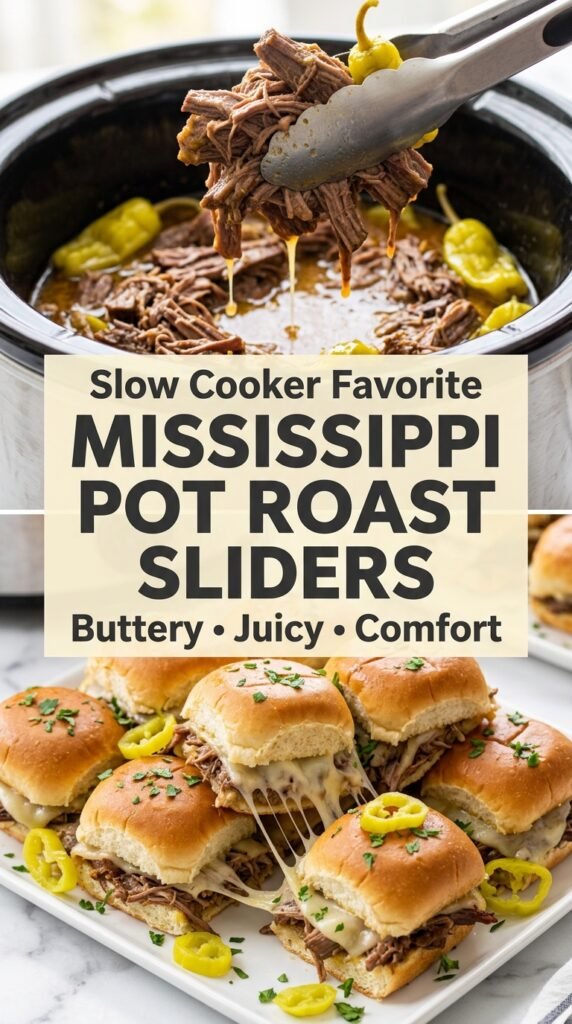
Crockpot Mississippi Pot Roast Sliders
Soft rolls, shredded chuck roast, and melted provolone turn into the kind of slider tray that disappears fast. The filling is rich and savory with a sharp little pepperoncini kick,…
Tip: save now, read later.
Soft rolls, shredded chuck roast, and melted provolone turn into the kind of slider tray that disappears fast. The filling is rich and savory with a sharp little pepperoncini kick, and the buttery tops bake into a golden crust that holds everything together without getting soggy. What makes these stand out is the way the slow cooker does the heavy lifting first, then the oven finishes the sandwiches so the cheese melts all the way through.
The pepperoncini juice matters here. It keeps the roast from tasting flat and gives the gravy a bright edge that cuts through the butter and cheese. Searing the beef first adds a deeper base note, but the slow cooker does the real work; that long cook is what turns a tough chuck roast into meat you can shred with almost no effort.
Below, I’ll walk through the part that keeps the sliders from turning mushy, plus a few smart ways to adapt them for different crowds. If you’ve ever had a roast sandwich fall apart before the second bite, this version fixes that.
The roast shredded into perfect little strands and the pepperoncini juice gave it just enough tang to cut through the cheese. I brought these to a game night and there wasn’t a slider left after ten minutes.
Save these Mississippi pot roast sliders for the night you want tender beef, melted provolone, and no-fuss party food.
The Trick to Keeping the Bottom Buns from Going Soft
The biggest failure point with roast sliders is steam. If you pile hot shredded beef straight onto the rolls and cover the pan too tightly, the bread soaks up moisture before the cheese has a chance to act like a barrier. That’s how you get a pan of sandwiches that taste great but collapse the second you pick one up.
This version avoids that by using cheese on both sides of the beef. The bottom layer protects the rolls, and the top layer melts into the meat so the sandwich slices cleanly after baking. The other thing that helps is letting the beef sit in its juices for a minute after shredding, then draining off any excess liquid before assembling. You want juicy filling, not wet bread.
Hawaiian rolls work better than plain sandwich rolls here because their slight sweetness plays against the tangy pepperoncini and salty gravy mix. They’re soft, but they still hold together if you bake the sliders long enough to set the structure without drying them out.
What Each Ingredient Is Doing in These Sliders
No image block is included for this recipe, so the ingredient notes start right here.
- Chuck roast — This is the cut that gives you rich, shreddable beef after a long slow cook. Leaner roasts can dry out before they get tender, which is why chuck works so well here.
- Ranch seasoning mix and au jus gravy mix — These are the shortcut seasonings that build the savory base fast. If you want to use homemade seasoning, you can, but you’ll need enough salt and herbs to replace both packets or the filling will taste flat.
- Butter — The butter melts into the roast and helps carry the seasoning through the meat. It also adds body to the juices, which keeps the shredded beef moist enough for sliders.
- Pepperoncini peppers and juice — The peppers bring gentle heat and tang, while the juice is what wakes the whole dish up. If you don’t want much heat, use fewer peppers but keep the juice; that’s where the signature flavor comes from.
- Hawaiian sweet rolls — These give you soft, slightly sweet buns that balance the salty, tangy filling. Standard dinner rolls work too, but the flavor won’t have the same contrast.
- Provolone cheese — Provolone melts smoothly and stays mild enough not to fight the beef. Mozzarella can work in a pinch, but it gives you a milder, stretchier melt and less flavor.
- Melted butter, parsley, and garlic powder — This topping gives the rolls color and a little garlic-bread finish. The parsley is mostly visual, but the garlic powder helps the tops taste as good as they look.
How the Roast Turns Into Slider Filling Without Drying Out
Searing for a Better Base
Heat the olive oil until it shimmers, then sear the chuck roast until each side has a deep brown crust. That crust gives the finished meat more flavor than a straight dump-and-go method ever will. If the pan is crowded or the heat is too low, the roast will gray instead of brown, and you’ll lose that caramelized edge.
Letting the Slow Cooker Do the Heavy Lifting
Place the roast in the slow cooker and layer the seasoning, butter, peppers, and juice on top. Don’t stir everything together at the start; the butter and liquid will melt down and distribute the seasoning on their own. Cook until the beef shreds easily with a fork. If it still resists, it needs more time, not more heat.
Shredding and Reabsorbing the Juices
Pull the roast out and shred it while it’s hot, then stir the meat back into the juices in the cooker. That’s the point where the filling gets its final seasoning and moisture. If the juices look greasy, spoon off a little of the fat first so the sliders don’t become slippery.
Assembling and Baking the Sliders
Keep the rolls connected in one slab and slice them horizontally so the tray bakes evenly. Layer cheese under the beef, then more cheese over the top before adding the bun lids. Bake covered long enough to melt the cheese, then uncover at the end so the tops turn golden instead of staying pale and soft.
Three Ways to Make These Sliders Work for Different Crowds
Dairy-Free Version
Use a dairy-free butter substitute and skip the provolone, or use a meltable plant-based cheese if you know it softens well in the oven. The roast itself still carries plenty of flavor from the seasoning packet and pepperoncini juice, so you won’t lose the heart of the dish. The filling won’t be as rich, but the texture stays the same.
Gluten-Free Swap
Use gluten-free rolls and replace the ranch and au jus packets with certified gluten-free versions or homemade blends. The texture of the buns will be a little more delicate, so let the sliders cool for a few minutes before cutting. That short rest helps the filling settle and keeps the halves from tearing apart.
For a Less Tangy Filling
Cut the pepperoncini juice back to 2 tablespoons and use only a few peppers. You’ll still get the signature Mississippi roast flavor, but it leans more savory and buttery than sharp and briny. This is the version to use if you’re serving people who like gentle flavors.
Storage and Reheating
- Refrigerator: Store the shredded roast in its juices for up to 4 days. Keep the slider components separate if you can, because assembled rolls soften quickly.
- Freezer: The beef freezes well for up to 3 months. Freeze it in a little of the cooking liquid so it reheats juicy instead of stringy.
- Reheating: Warm the beef covered in a skillet over low heat or in the microwave with a splash of juices. Reheat the sliders in the oven if they’re already assembled, and don’t blast them on high heat or the rolls will dry out before the cheese melts.
Questions I Get Asked About This Recipe
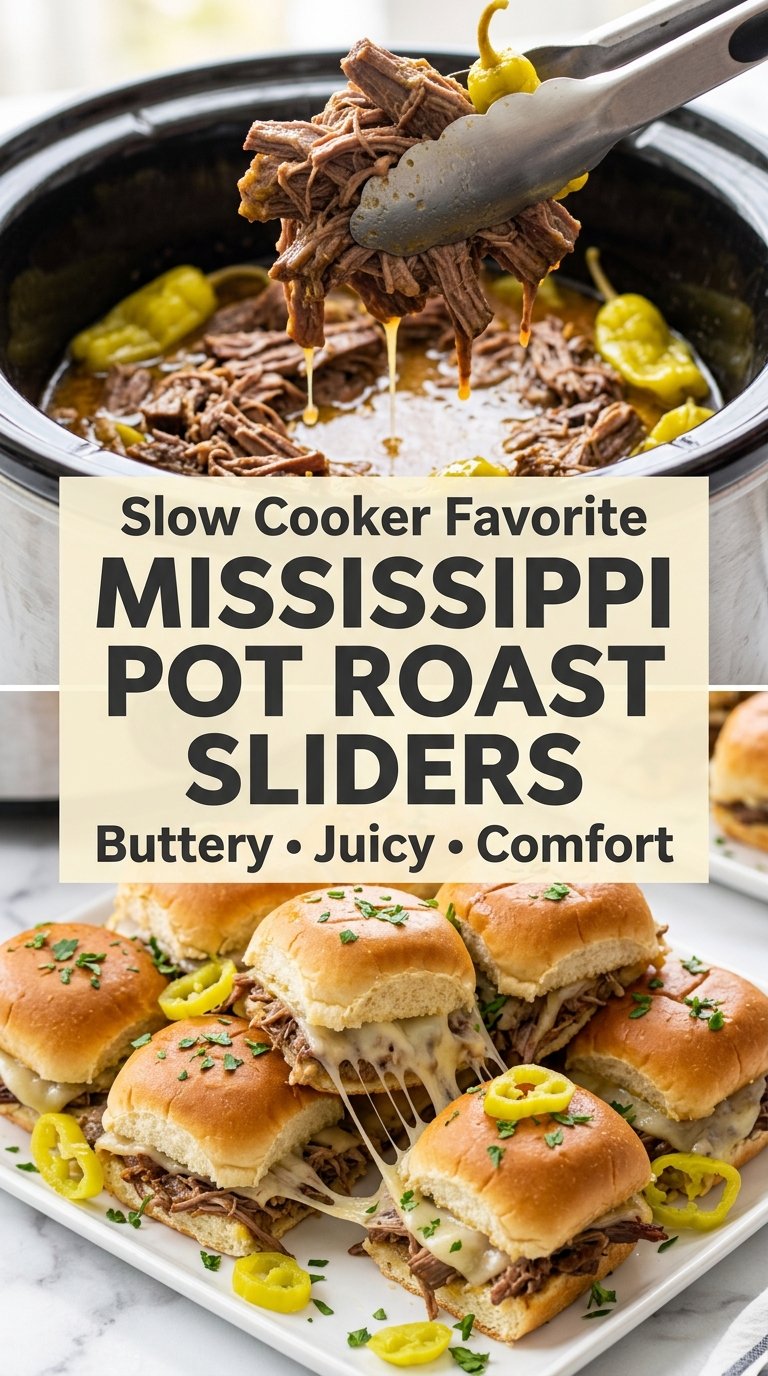
Crockpot Mississippi Pot Roast Sliders
Ingredients
Equipment
Method
- Heat 1 tbsp olive oil in a large skillet over medium-high heat and sear the chuck roast for 2–3 minutes per side until browned.
- Transfer the roast to a slow cooker and sprinkle the ranch seasoning mix and au jus gravy mix evenly over the meat.
- Place the sliced unsalted butter on top, add the pepperoncini peppers, and pour in the pepperoncini juice.
- Cover and cook on LOW for 8 hours or HIGH for 5 hours, until the beef is fork-tender and shreds easily.
- Remove the roast and shred it with two forks, then stir the shredded beef back into the cooking juices.
- Preheat the oven to 350°F, slice the Hawaiian sweet rolls in half without separating them individually, and place the bottom half in a baking dish.
- Layer provolone cheese over the rolls, pile the shredded Mississippi pot roast on top, then add the remaining provolone cheese.
- Place the top half of the rolls over the filling.
- Mix the melted butter, dried parsley, and garlic powder, then brush it over the tops of the rolls.
- Cover loosely with foil and bake for 15 minutes.
- Remove the foil and bake for 5–7 minutes until the tops are golden and the cheese is melted.
- Slice into individual sliders and serve warm with extra pepperoncini if desired.
