
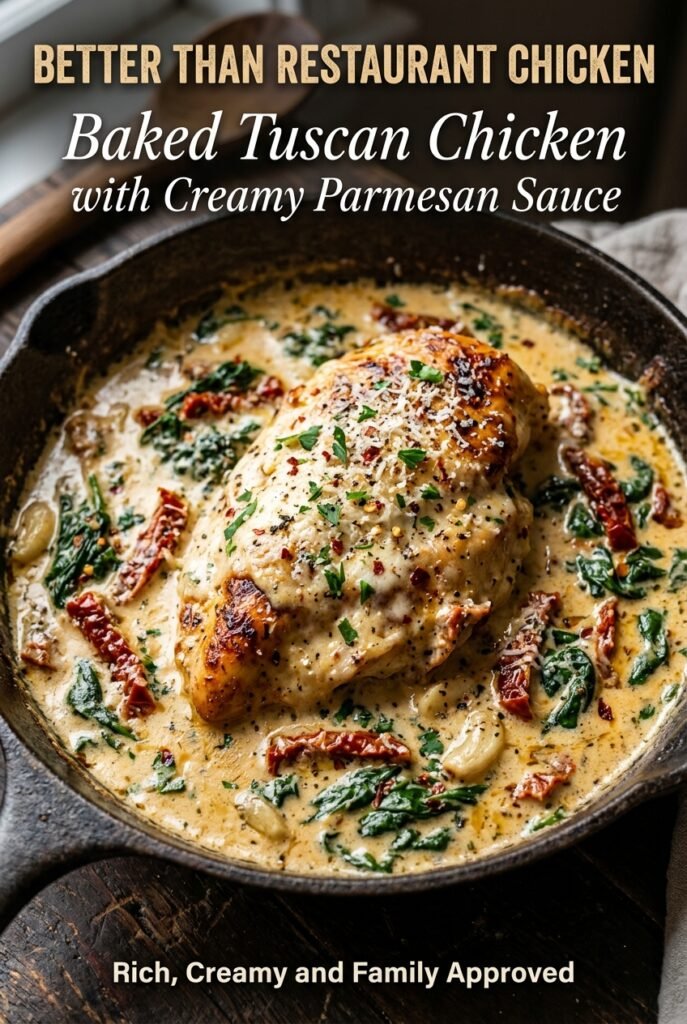
Baked Tuscan Chicken with Creamy Parmesan Sauce
Baked Tuscan chicken comes out with tender, juicy meat under a creamy Parmesan sauce that clings to every bite. The sun-dried tomatoes bring a concentrated sweetness, the spinach softens into…
Tip: save now, read later.
Baked Tuscan chicken comes out with tender, juicy meat under a creamy Parmesan sauce that clings to every bite. The sun-dried tomatoes bring a concentrated sweetness, the spinach softens into the sauce without disappearing, and the whole skillet finishes with the kind of comfort that makes people quiet down at the table for a minute.
What makes this version work is the balance of searing and baking. The quick stovetop sear gives the chicken color and helps build flavor in the pan, but the oven finishes the job gently so the breasts don’t dry out. The sauce is built right in the same skillet, which means the browned bits from the chicken melt into the cream instead of staying stuck to the pan.
You’ll also get the timing that keeps the sauce smooth and the chicken cooked through without turning stringy. A few small details matter here, especially when the Parmesan goes in and how long the sauce simmers before it heads to the oven.
The sauce thickened up perfectly and the chicken stayed juicy after baking. I used the extra basil on top and my husband kept going back for more sauce with bread.
Save this baked Tuscan chicken for a creamy skillet dinner with juicy chicken, sun-dried tomatoes, and a Parmesan sauce that bakes up beautifully.
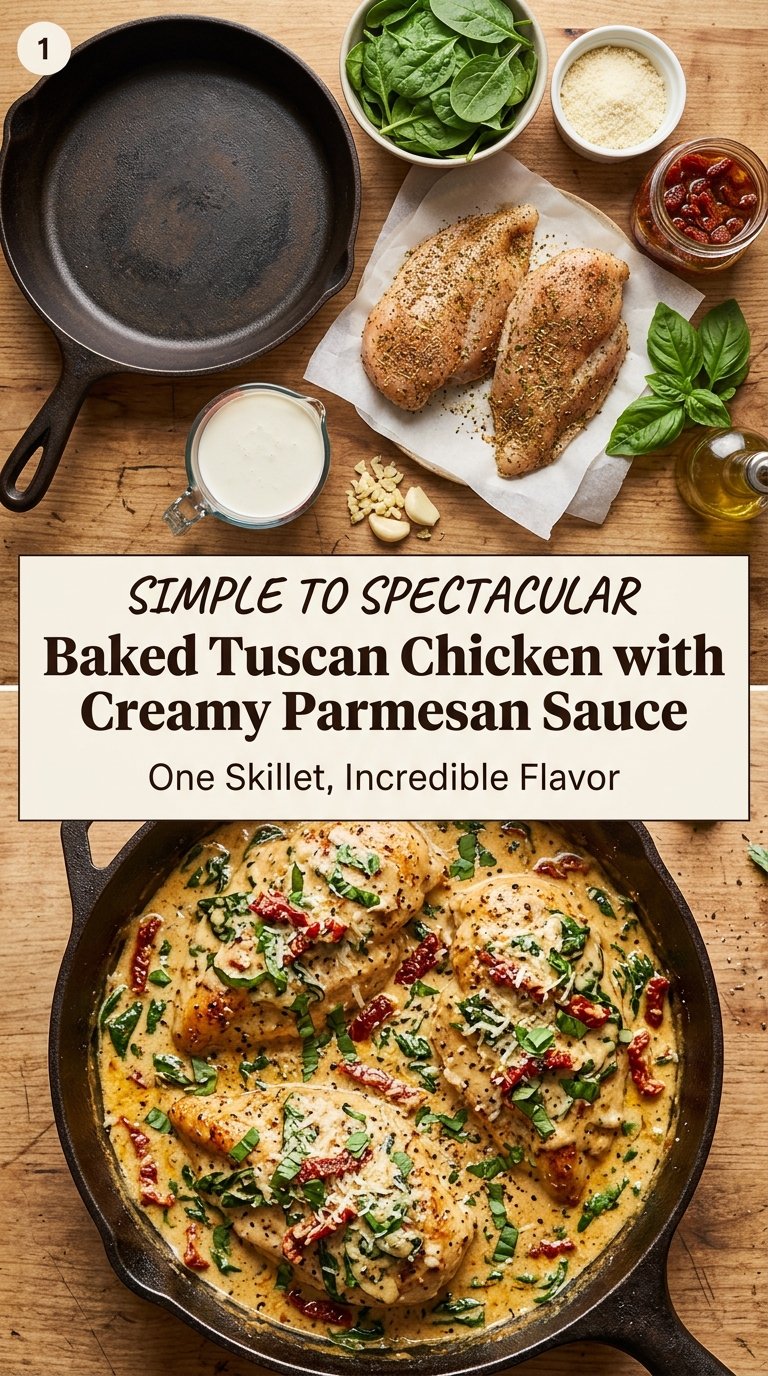
The Reason the Sauce Stays Creamy Instead of Breaking
The most common mistake with cream-based chicken dinners is pushing the heat too far once the dairy goes in. Cream and Parmesan don’t need a hard boil; they need gentle heat and a little time. If the sauce gets too aggressive, the cheese can turn grainy and the cream can separate before the chicken even reaches temperature.
This recipe avoids that by building the sauce in stages. First the garlic softens in butter, then the cream and Parmesan melt together off the strongest heat, and only after the sauce has started to thicken do the spinach and tomatoes go in. That short simmer gives the sauce enough body to coat the chicken without turning it heavy or greasy.
- Parmesan: Grate it yourself if you can. Pre-shredded cheese is coated to keep it from clumping in the bag, and that coating can leave the sauce sandy instead of smooth.
- Heavy cream: This is the ingredient that gives the sauce its stable, rich texture. Half-and-half can work in a pinch, but the sauce will be thinner and less forgiving on the heat.
- Sun-dried tomatoes: Oil-packed tomatoes bring the best texture here because they’re soft and flavorful. If you use dry-packed, chop them fine and soak them in hot water for a few minutes first so they don’t stay leathery.
- Chicken breasts: Even thickness matters more than size. Pound the thicker end so the chicken cooks evenly and doesn’t dry out before the center reaches 165°F.
Building the Skillet So the Chicken Finishes Juicy
Seasoning and Searing the Chicken
Season the chicken well on both sides before it hits the pan. The spice mix should look evenly dusted, not caked on. Sear it just until the surface turns golden, because the oven is doing the real cooking here. If the pan smokes hard or the seasonings start to burn, the heat is too high and the crust will taste bitter before the chicken cooks through.
Creating the Sauce in the Same Pan
After the chicken comes out, keep every browned bit in the skillet. That fond dissolves into the butter and cream and gives the sauce a deeper taste than anything you’d get from a clean pan. Add the garlic just long enough for it to smell fragrant, then stir in the cream and Parmesan until the sauce looks smooth and lightly thickened. If the cheese goes in while the burner is too hot, pull the skillet off the heat and whisk it in there.
Finishing in the Oven
Once the chicken goes back into the sauce, spoon some of that sauce over the top before the skillet goes in the oven. The sauce should bubble gently around the edges, not boil hard. Bake until the thickest part of the chicken reaches 165°F and the center feels firm when pressed. Let it sit for a few minutes before serving so the juices settle and the sauce clings instead of running off the plate.
How to Adapt This for a Different Pantry or Diet
Dairy-Free Swaps That Still Give You a Creamy Sauce
Use full-fat coconut cream or an unsweetened dairy-free cooking cream in place of the heavy cream, then swap the Parmesan for a dairy-free Parmesan-style substitute. The flavor shifts a little, but the sauce still gets that rich, spoonable texture. Keep the heat low, since some dairy-free alternatives split faster than cream.
Make It Gluten-Free Without Changing the Method
This recipe is naturally gluten-free as written, as long as your Parmesan and sun-dried tomatoes are packaged without any added thickeners. That means you don’t need a flour slurry or a separate roux to get body in the sauce. The cream and cheese handle it on their own.
How to Use Chicken Thighs Instead of Breasts
Boneless skinless thighs work well if you want a richer, more forgiving cut. They usually need a few extra minutes in the oven, but they stay juicy even if you take them a little past the mark. The sauce benefits from the extra drippings, so the finished dish tastes a touch deeper.
Stretching It for More People
Add another chicken breast or two and use a wider skillet or a baking dish that holds everything in a single layer. Crowding the pan makes the sauce thin out more slowly and can push the chicken to steam instead of brown. If you scale up the sauce, keep the garlic modest so it doesn’t overpower the Parmesan.
Storage and Reheating
- Refrigerator: Store leftovers in an airtight container for up to 3 days. The sauce will thicken as it chills.
- Freezer: It freezes, but the cream sauce can separate a bit when thawed. If you plan to freeze it, undercook the chicken slightly and reheat gently for the best texture.
- Reheating: Warm it slowly in a covered skillet over low heat with a splash of cream or broth. High heat is what turns the sauce grainy and dries out the chicken.
Answers to the Questions Worth Asking
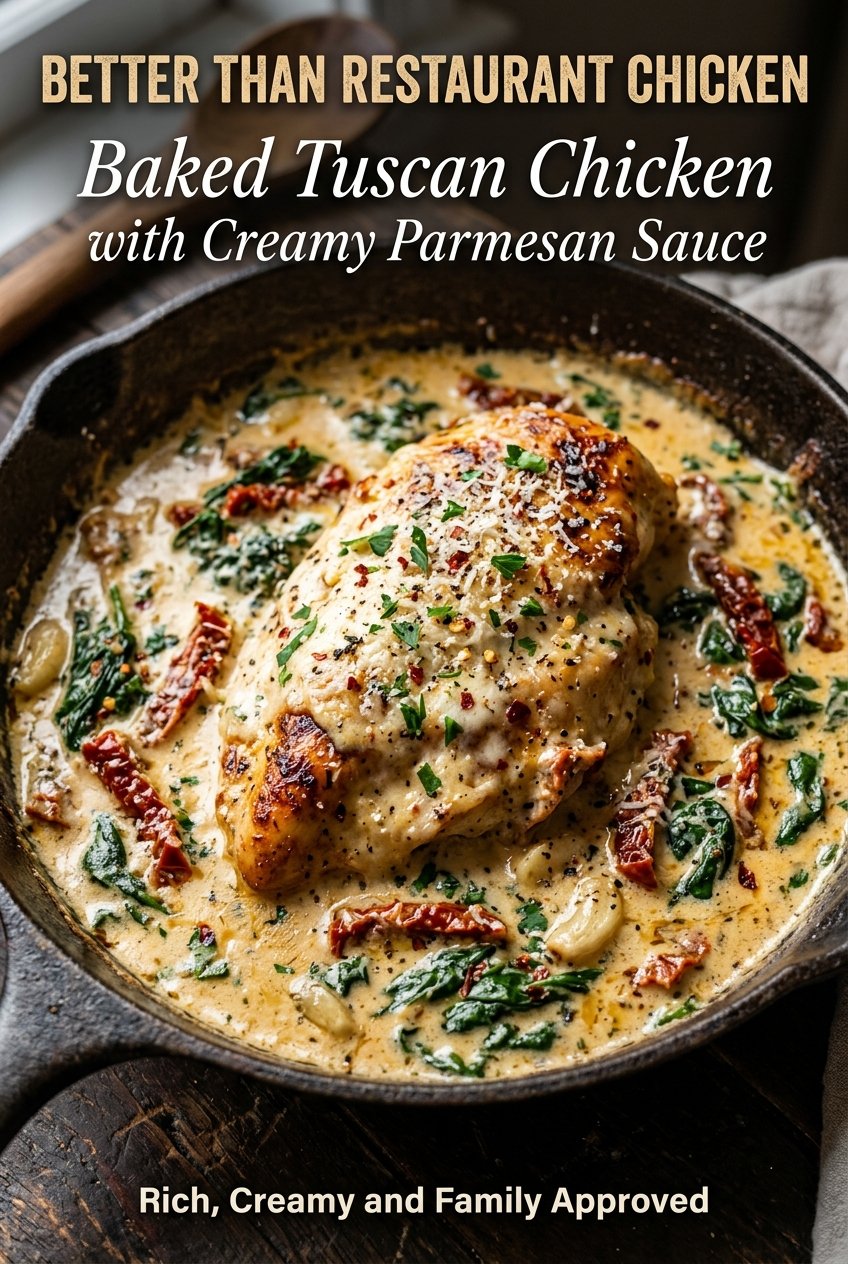
Baked Tuscan Chicken with Creamy Parmesan Sauce
Ingredients
Equipment
Method
- Preheat oven to 400°F (200°C).
- Season chicken breasts with Italian seasoning, garlic powder, paprika, salt, and pepper.
- Heat olive oil in an oven-safe skillet over medium-high heat.
- Sear chicken for 3 minutes per side until lightly golden.
- Remove chicken and set aside.
- Melt butter in the same skillet.
- Add garlic and cook for 30 seconds.
- Stir in heavy cream and Parmesan cheese.
- Add spinach, sun-dried tomatoes, Italian seasoning, and red pepper flakes.
- Simmer for 2–3 minutes until slightly thickened.
- Return chicken to the skillet and spoon sauce over the top.
- Transfer skillet to the oven.
- Bake for 15–18 minutes until chicken reaches 165°F (74°C).
- Garnish with basil and extra Parmesan before serving.
