
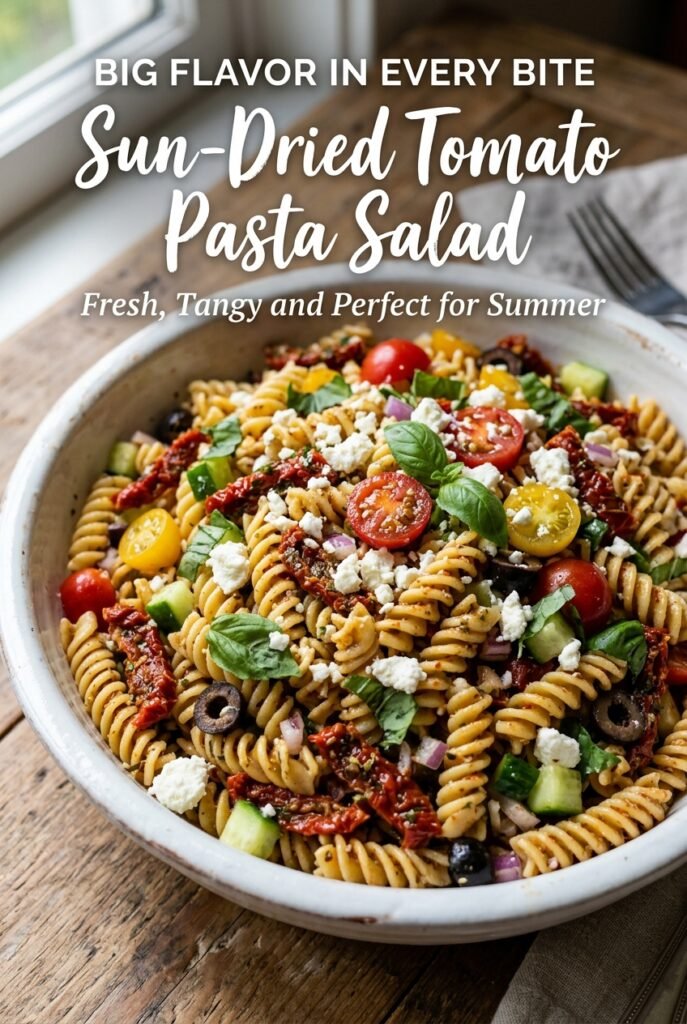
Sun-Dried Tomato Pasta Salad
Sun-dried tomato pasta salad lands in that sweet spot where a cold side dish still eats like a meal. The pasta holds onto the dressing, the tomatoes bring a concentrated…
Tip: save now, read later.
Sun-dried tomato pasta salad lands in that sweet spot where a cold side dish still eats like a meal. The pasta holds onto the dressing, the tomatoes bring a concentrated tang, and the feta cuts through everything with just enough salt to keep each bite lively. It’s the kind of bowl that disappears fast at a picnic and works just as well straight from the fridge for lunch the next day.
What makes this version worth keeping around is the balance. A good pasta salad needs acid, fat, and crunch, and this one has all three without turning muddy or heavy. The sun-dried tomatoes do most of the heavy lifting, so the dressing doesn’t have to be complicated. Red wine vinegar and lemon keep it bright, Dijon helps it cling, and a little basil at the end gives the whole thing a fresh finish instead of that dull, overmixed taste some pasta salads get after sitting awhile.
Below, I’ll walk through the small details that matter most: how to keep the pasta from drinking up all the dressing, when to add the feta so it stays crumbly, and a few swaps that still keep the salad sharp and balanced.
The dressing soaked in perfectly after chilling, and the sun-dried tomatoes gave it a bold, tangy bite without making it heavy. I made it for lunch prep and it stayed fresh for three days.
This sun-dried tomato pasta salad is the one to pin when you want a cold pasta dish with real punch, bright herbs, and a dressing that actually clings.
The Trick to Keeping Pasta Salad Bright Instead of Bland
The biggest mistake with pasta salad is treating it like a dump-and-stir dish. If the pasta is overcooked, it turns soft and starts collapsing under the dressing. If the dressing is too heavy or too sweet, the whole bowl tastes flat after a few minutes in the fridge.
Rotini works here because the spirals catch the dressing in all the little grooves. That matters more than people think. The other key is chilling long enough for the flavors to settle, but not so long that the cucumbers lose all their crunch. Thirty minutes is the minimum, and a couple of hours is even better if you’re serving it later.
- Al dente rotini — You need pasta with some bite so it keeps its shape after chilling. Softer pasta drinks up too much dressing and goes mushy.
- Sun-dried tomatoes — These bring concentrated flavor that fresh tomatoes can’t match. If yours are packed in oil, drain them lightly and chop them well so the oil doesn’t overpower the salad.
- Feta cheese — Use a block if you can and crumble it yourself. It stays firmer and tastes cleaner than the pre-crumbled kind.
- Dijon mustard — This does more than flavor the dressing. It helps the oil and acid stay emulsified so the salad coats evenly instead of pooling at the bottom.
What Each Ingredient Is Actually Doing in This Salad
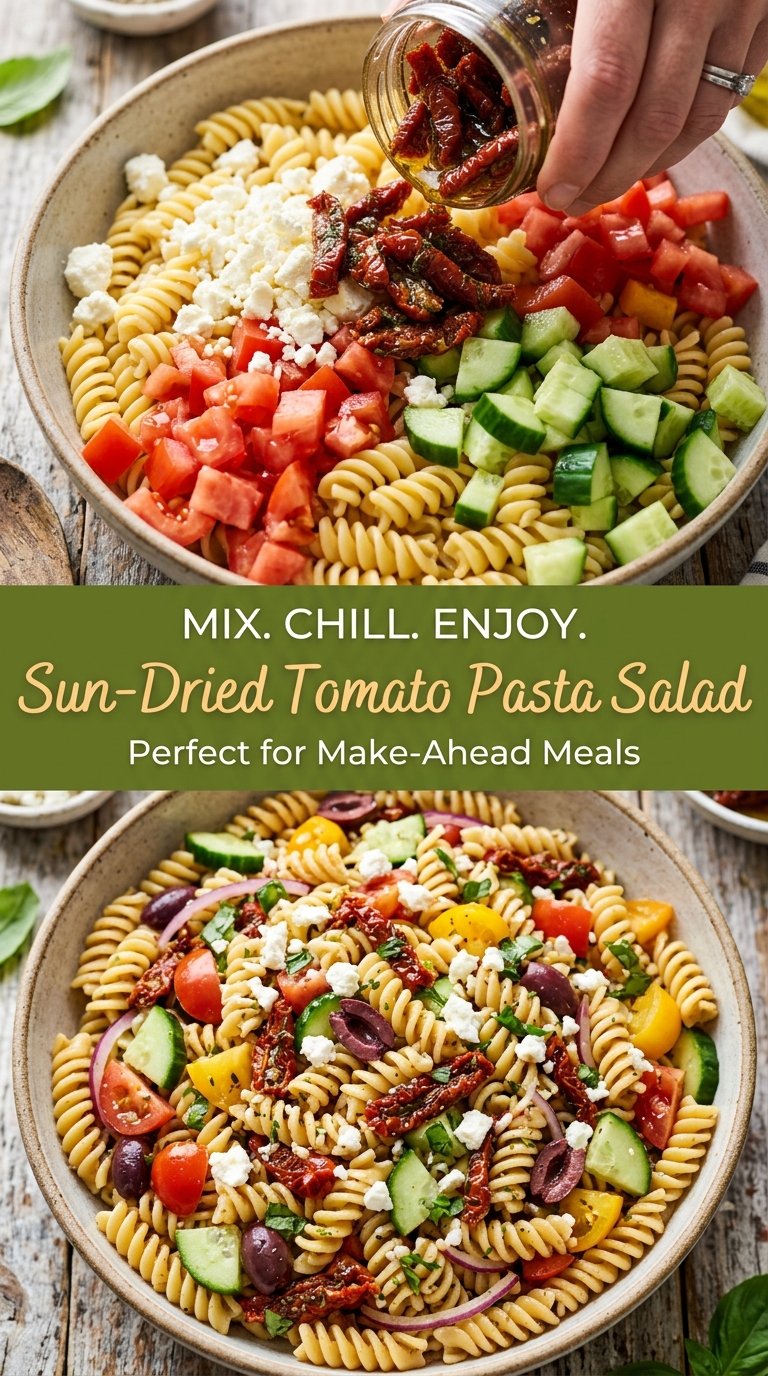
The cherry tomatoes add juiciness and a little sweetness, which keeps the sun-dried tomatoes from taking over. The cucumber brings the cold crunch that makes each bite feel fresh. Red onion gives sharpness, but it needs to be diced fine so it doesn’t swamp the bowl with raw bite.
Basil is best added at the end. If it sits in the dressing too long, it darkens and loses that fresh, almost peppery aroma. Black olives are optional in some pasta salads, but here they work because they echo the briny feta and give the salad a more Mediterranean edge.
- Cherry tomatoes — Use ripe ones with some give. Hard, watery tomatoes won’t contribute much besides bulk.
- Cucumber — Seedless or English cucumber works best because it stays crisp and doesn’t flood the salad with water.
- Red onion — Dice it small. Big pieces taste harsh, and the flavor gets stronger as the salad sits.
- Olive oil — Choose one you actually like the taste of. Since the dressing is uncooked, the oil is part of the final flavor, not just a neutral fat.
- Red wine vinegar and lemon juice — This pairing gives the dressing enough lift without tasting sour or thin. If you only use vinegar, the salad can taste sharp; if you only use lemon, it can lose depth.
Building the Bowl So the Dressing Stays Where It Belongs
Cook the Pasta Past Just Done
Boil the rotini until it’s al dente, then stop there. You want it tender with a little resistance in the center, not soft all the way through. As soon as it’s drained, rinse it under cold water so the cooking stops and the pasta doesn’t keep absorbing water from the dressing later. If you skip that rinse, the salad gets gummy and the herbs turn muddy.
Mix the Dressing Until It Looks Smooth
Whisk the olive oil, vinegar, lemon juice, Dijon, and seasonings until the dressing looks glossy and lightly thickened. If the oil is still sitting in separate beads, keep whisking a little longer. This is where the Dijon earns its place; it helps the dressing cling to the pasta instead of sliding off into the bottom of the bowl.
Add the Delicate Ingredients Last
Toss the pasta with the tomatoes, cucumber, onion, olives, and dressing first, then fold in the feta and basil near the end. That keeps the cheese from breaking into paste and keeps the basil from bruising. Let the salad sit in the fridge for at least 30 minutes before serving so the flavors can settle into the pasta without losing all the texture.
What to Change When You Need a Different Version
Make it dairy-free
Skip the feta and add a handful of chopped Kalamata olives or a few spoonfuls of toasted pine nuts for that salty, savory edge. You’ll lose the creamy crumble, but the salad still reads bright and complete.
Use a gluten-free pasta that holds shape
A sturdy gluten-free rotini works well here, but it needs to be cooked just until done and rinsed promptly. Softer gluten-free shapes can break apart once the dressing goes in, so choose a brand that keeps its structure after chilling.
Turn it into a heavier lunch salad
Add diced grilled chicken, chickpeas, or chopped salami if you want more protein. Chickpeas keep it vegetarian and soak up the dressing, while chicken makes the bowl more substantial without changing the flavor much.
Storage and Reheating
- Refrigerator: Store covered for up to 3 days. The cucumber softens a little, but the flavor stays strong.
- Freezer: Don’t freeze this salad. The vegetables lose their texture and the feta turns crumbly in the wrong way after thawing.
- Reheating: This salad is meant to be eaten cold. If it seems dry after chilling, stir in a splash of olive oil or a squeeze of lemon before serving instead of trying to warm it.
Answers to the Questions Worth Asking
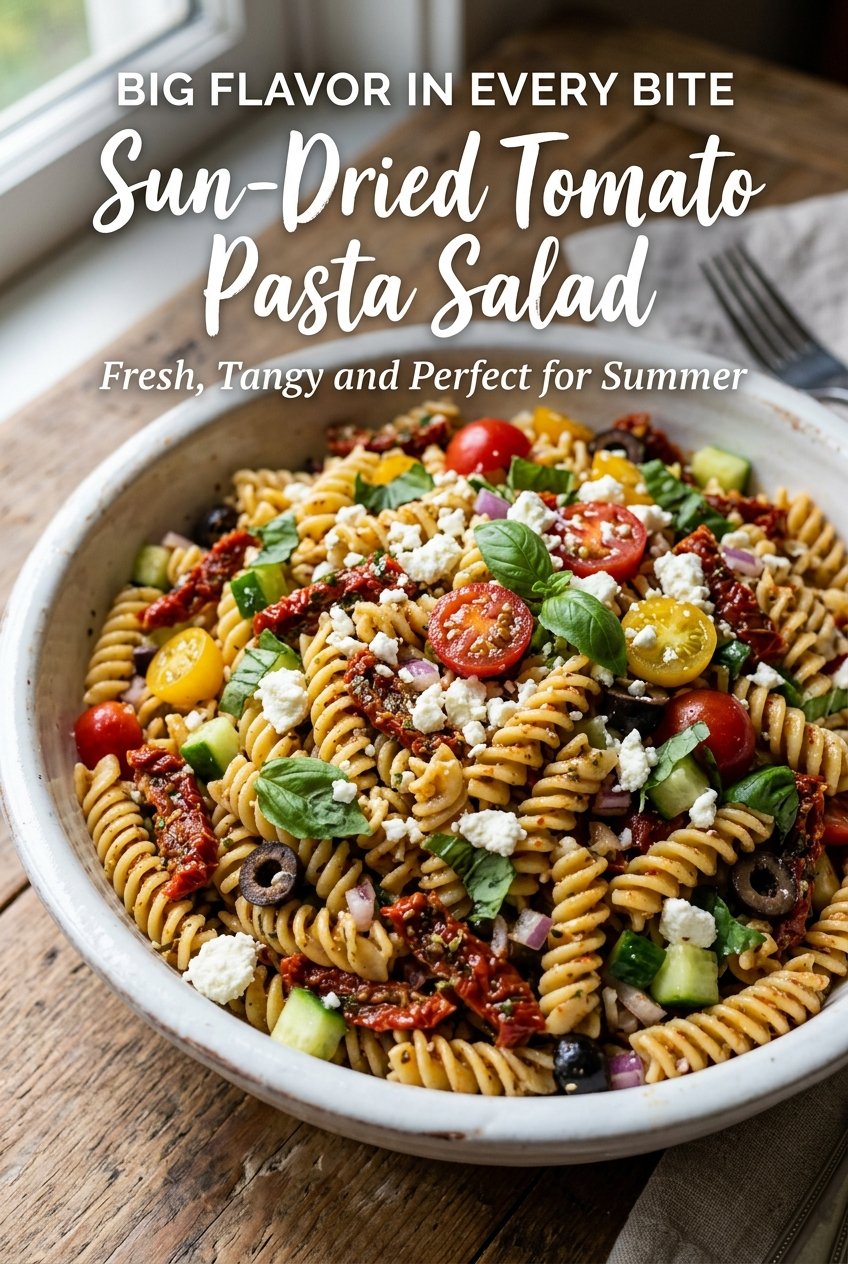
Sun-Dried Tomato Pasta Salad
Ingredients
Equipment
Method
- Cook rotini pasta according to package directions until al dente, stirring occasionally so it cooks evenly. Visual cue: the pasta should still have a firm center when you bite it.
- Drain and rinse the rotini pasta under cold water to stop cooking and keep it from turning mushy. Visual cue: the pasta looks cooler and slick rather than sticky.
- In a large bowl, combine the rotini pasta, sun-dried tomatoes, cherry tomatoes, cucumber, red onion, black olives, feta cheese, and basil. Visual cue: the mixture looks evenly speckled with tomatoes, basil, and feta.
- In a small bowl, whisk olive oil, red wine vinegar, lemon juice, Dijon mustard, Italian seasoning, garlic powder, salt, and black pepper until smooth. Visual cue: the dressing becomes slightly thickened and uniform in color.
- Pour the dressing over the salad and toss until evenly coated. Visual cue: pasta and vegetables look glossy and lightly tinted from the vinaigrette.
- Refrigerate the pasta salad for at least 30 minutes before serving so the flavors meld. Visual cue: it firms up slightly and tastes brighter after chilling.
- Garnish with extra basil and feta if desired right before serving. Visual cue: fresh green flecks and extra white feta on top.
