
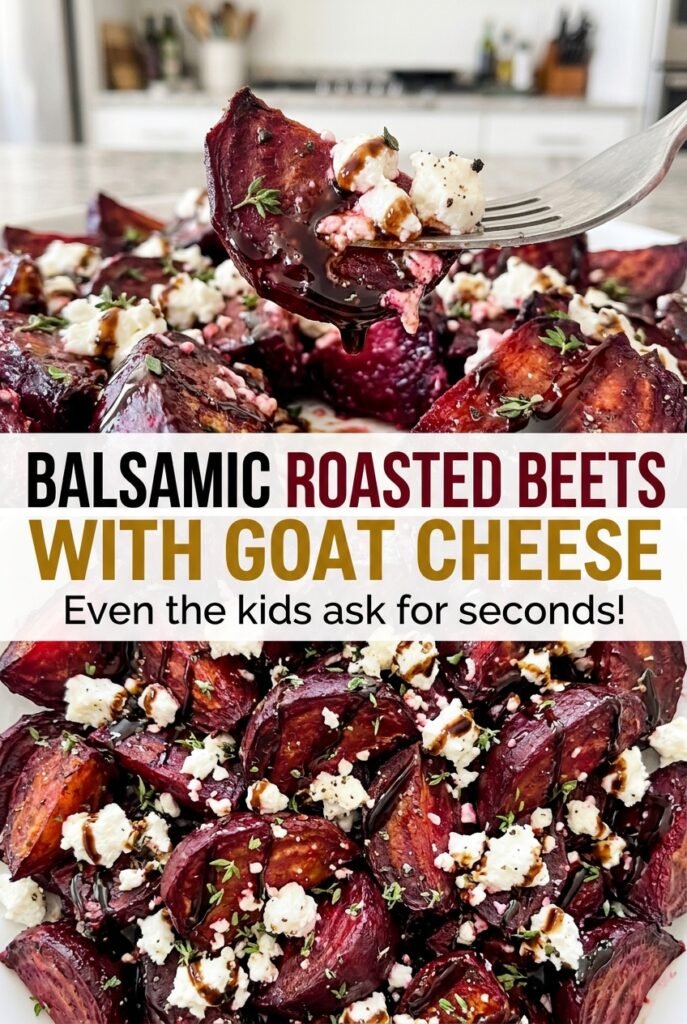
Balsamic Roasted Beets with Goat Cheese
The first thing you notice is the smell: earthy beets warming in the oven, then sharp balsamic rising as it hits the wedges. I like this combination because the beets…
Tip: save now, read later.
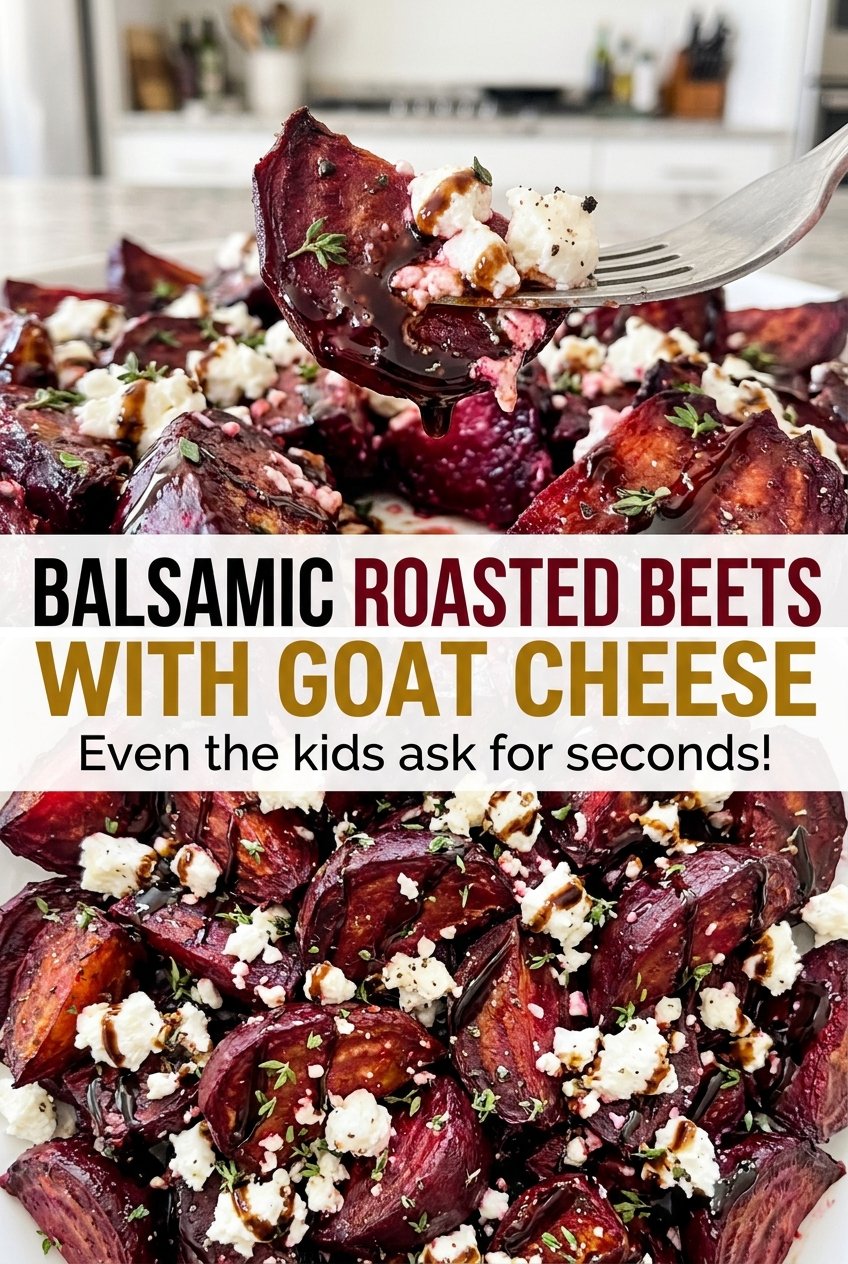
The first thing you notice is the smell: earthy beets warming in the oven, then sharp balsamic rising as it hits the wedges. I like this combination because the beets turn tender and sweet under their foil cover, while the vinegar brings enough brightness to keep each bite lively. A crumble of goat cheese adds a creamy, tangy finish without hiding the beets.
For Balsamic Roasted Beets with Goat Cheese, the beets go into the oven whole. That means there’s no peeling or chopping over a cutting board before roasting, and the foil helps them cook until tender without drying out. The timing varies with the size of the beets, so I use the largest one as my guide instead of trusting the clock alone.
Once the beets are easy to handle, their skins rub away with a paper towel, and the warm wedges take on the balsamic beautifully. It’s a simple side dish that serves four and looks striking on the table, with deep ruby beets and white goat cheese.
Kitchen Note
Wait until the beets are easy to handle before rubbing off the skins. A paper towel grips the loosened skin without scraping away much of the tender beet underneath.
Save these balsamic roasted beets with goat cheese for a side that pairs tender, earthy wedges with a bright vinegar finish.
Why the Foil Has to Seal Around the Beets
Whole beets take time to soften all the way through. Covering the baking dish tightly holds in the moisture released as they roast, creating a steamy environment around the beets while the olive oil and seasoning coat their skins. That gentle, enclosed heat gives the centers time to become tender without leaving the outside dry and leathery.
A loose foil cover lets more moisture escape, which can make the beets cook less evenly. Press the foil snugly around the rim of the 9×13-inch dish before it goes into the oven. You don’t need to add water to the dish; the beets provide the moisture for this covered roast. Keeping them whole also means fewer cut surfaces losing moisture during the long cooking time.
Beet sizes aren’t perfectly uniform, even when you buy medium ones. The largest beet is the most useful checkpoint because if its center is tender, the smaller ones will generally be ready too. A knife that catches or meets a firm spot means the biggest beet needs more time, even if the outside looks soft.
What the Beets, Balsamic, and Goat Cheese Each Bring
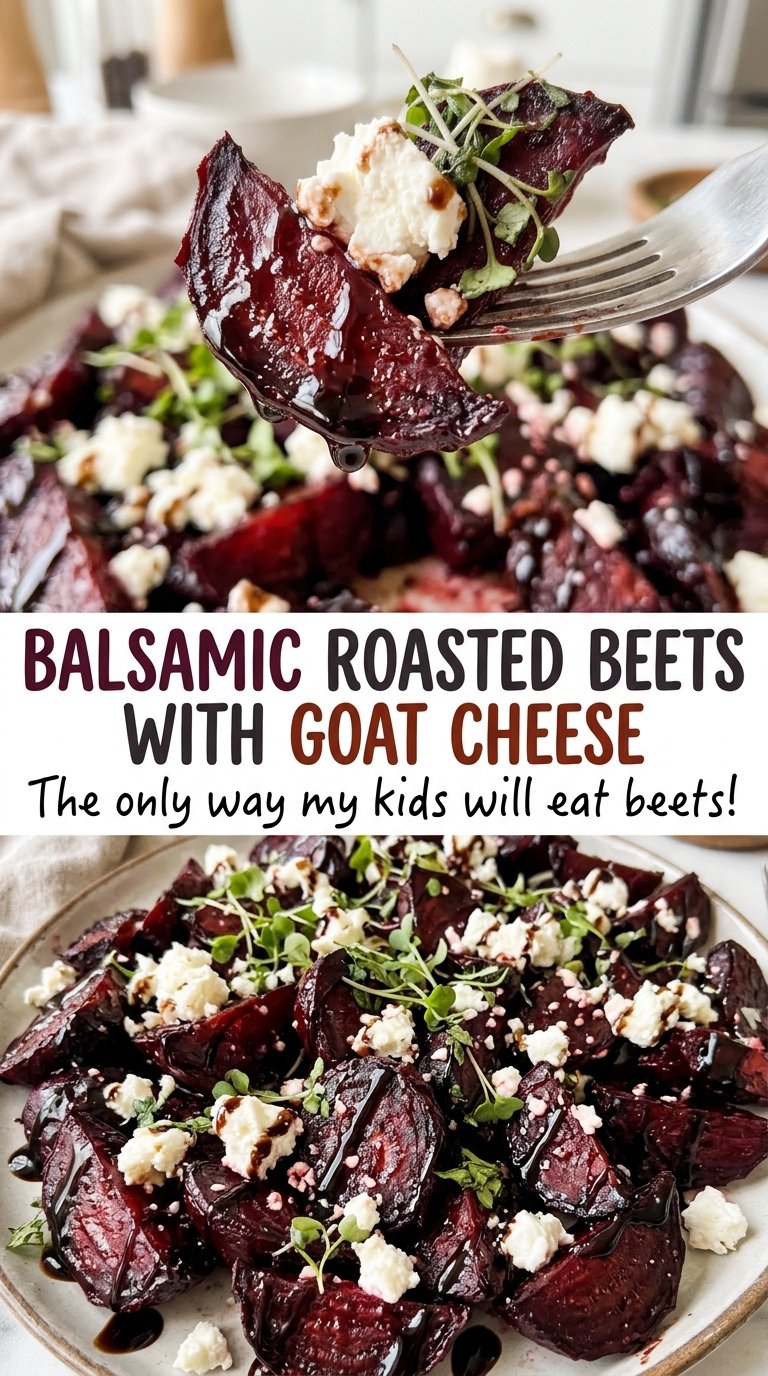
- Medium beets — Their size helps them roast at a similar pace, and their natural sweetness balances the vinegar. Choose firm beets without soft spots; because they’re roasted whole, there’s no need to peel them before cooking.
- Olive oil — A little oil helps the salt and pepper cling to the beet skins as they roast. An everyday olive oil works well here; a specialty bottle won’t make a noticeable difference once the beets are dressed.
- Kosher salt and black pepper — These season the beets before roasting, so the flavor isn’t limited to the balsamic on the surface. Use the kosher salt and black pepper listed for the recipe; no special grind or premium brand is needed.
- Balsamic vinegar — Regular pourable balsamic gives the warm beets a sharp, sweet-tart coating. The vinegar’s balance matters more than its age: a familiar everyday bottle is a good fit, while a thick glaze won’t behave the same way when tossed with the wedges.
- Goat cheese — Its soft texture and tangy flavor contrast with the sweet, earthy beets. A fresh, crumbly goat cheese is easiest to scatter over the finished dish; a firmer one still works if you crumble it by hand.
Roasting Whole Beets Until the Center Gives Easily
Coat and Seal the Whole Beets
Heat the oven to 400°F. Put the scrubbed, trimmed beets in a 9×13-inch baking dish, drizzle them with 1 tablespoon olive oil, and sprinkle with 1/2 teaspoon kosher salt and 1/4 teaspoon black pepper. Turn the beets to coat them, then cover the dish tightly with foil. A snug cover helps hold in the moisture as the beets roast.
Roast to the Largest Beet’s Center
Roast the covered beets for 50 to 70 minutes. Cooking time depends on the size of the beets, so use a knife rather than color or the timer alone to judge them. Slide the knife into the center of the largest beet; it should pass through easily. If you feel resistance, cover the dish again and continue roasting until the center is tender.
Let the Skins Release Before Cutting
Take the dish out of the oven and let the beets cool until they’re easy to handle, about 10 to 15 minutes. Rub off the skins with a paper towel, working over the dish or a washable surface to catch the beet juice. Once peeled, cut the beets into wedges. Don’t force a knife through a beet that still feels too hot to handle comfortably.
Dress the Wedges While They’re Warm
Toss the warm beet wedges with 2 tablespoons balsamic vinegar so the dressing coats their surfaces. Transfer them to a serving dish if needed, then top with 4 ounces crumbled goat cheese. Add the cheese after tossing so it stays visible against the beets instead of getting mixed into the vinegar.
Three Ways to Change the Cut or Finish
A Dairy-Free Beet Side
Leave off the goat cheese for a dairy-free version; the balsamic-coated beets still make a complete side. You’ll lose the creamy, tangy contrast, so the finished dish will taste more directly sweet and earthy.
Make Smaller Beet Bites
Cut the peeled beets into bite-size pieces instead of wedges. The smaller pieces give the balsamic more surface to cling to, and they’re easy to scoop alongside other food. Keep the roasting method the same so the beets still cook whole and stay moist.
Serve the Beets Chilled
Let the finished beets chill before serving for a firmer, cooler side. The balsamic tastes sharper when cold, and the goat cheese stays in distinct crumbles. This is a useful make-ahead option when you’d rather serve the dish straight from the refrigerator.
Storage and Reheating
- Refrigerator: Store leftovers in an airtight container for 3 to 4 days. The goat cheese may soften and take on some beet color.
- Freezer: Freeze the roasted, peeled beets before adding balsamic or goat cheese, in an airtight container for up to 3 months. Thaw them in the refrigerator, then warm and finish with the vinegar and cheese.
- Reheating: Warm the beets gently in the microwave in short bursts. Heating them too aggressively can make the goat cheese melt into the beets, so add fresh cheese after warming if you’ve kept it separate.
Questions That Come Up While Roasting Beets
Balsamic Roasted Beets with Goat Cheese
Ingredients
Equipment
Method
- Preheat the oven to 400°F.
- Put the beets in a 9x13-inch baking dish, drizzle with the olive oil, and sprinkle with the salt and pepper; turn to coat, then cover tightly with foil.
- Roast for 50 to 70 minutes, until a knife slides easily into the center of the largest beet.
- Let the beets cool until easy to handle, about 10 to 15 minutes.
- Rub off the skins with a paper towel.
- Cut the beets into wedges.
- Toss the warm beets with the balsamic vinegar and top with the goat cheese.
