

French Macarons
The batter should fall from the spatula in a thick ribbon, then slowly disappear back into the bowl. If it stays piled up, the shells can look rough; if it…
Tip: save now, read later.
The batter should fall from the spatula in a thick ribbon, then slowly disappear back into the bowl. If it stays piled up, the shells can look rough; if it runs flat, there’s no easy way to put the structure back. French macarons reward that close attention, but the cues are clear once you know what to watch for.
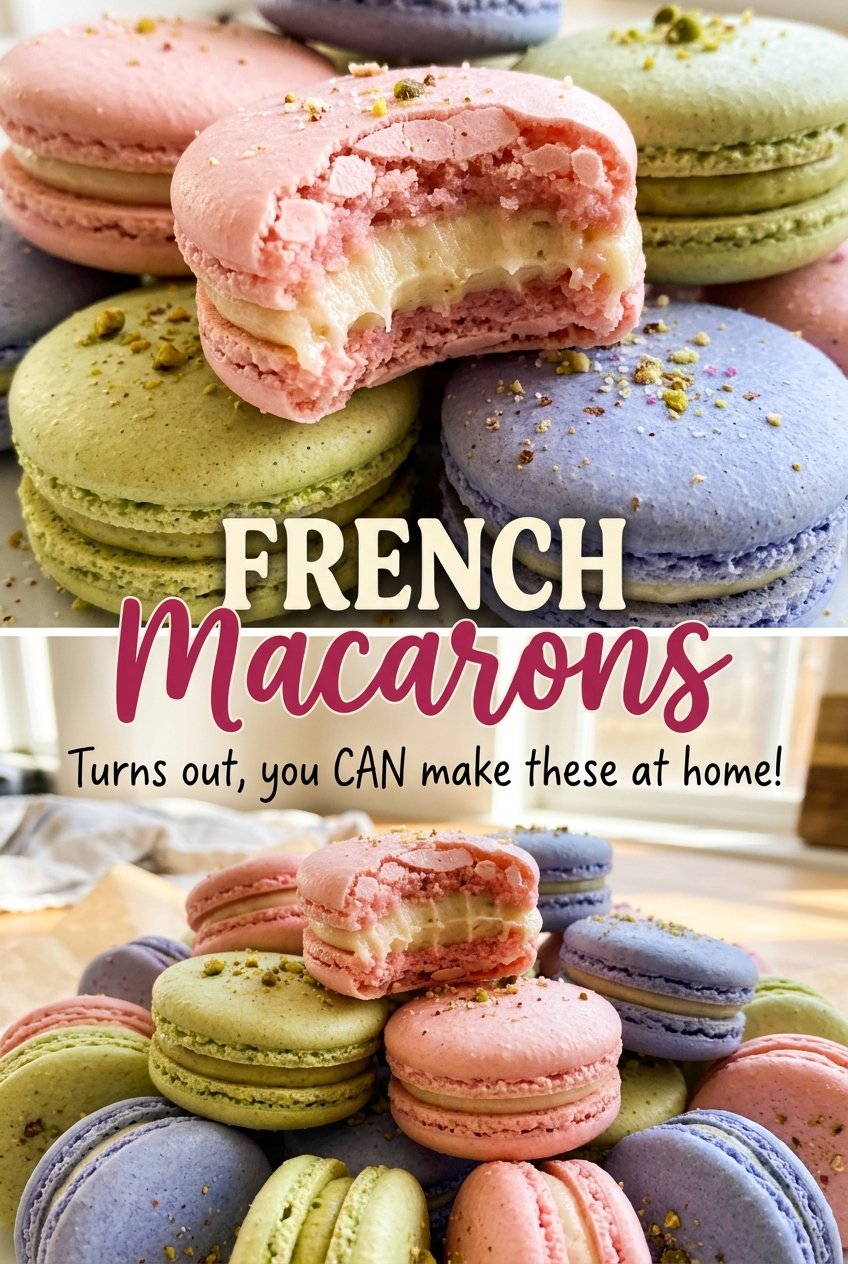
I treat the shells as a sequence of small checks rather than one long bake: finely sifted dry ingredients, glossy meringue, carefully folded batter, and a dry surface before the tray goes into the oven. The buttercream is straightforward, and a day in the refrigerator gives the assembled macarons time to mature. The finished shells are smooth and delicate, with vanilla buttercream tucked neatly between them.
Kitchen Note
Start with a completely clean, grease-free bowl for the egg whites. Even a thin film of fat can keep them from building the glossy foam these shells need.
Save these French macarons for a bake when you can give the shells time to dry and the vanilla buttercream a full day to mature between them.
Why Macaron Batter Has a Narrow Window Between Lumpy and Runny
Macaron batter changes quickly once the almond flour mixture meets the meringue. At first, it looks stiff and uneven, with streaks of dry ingredients. A few more folds bring it together; too many, and it loses the thickness needed to hold a piped circle. That’s why I fold in three additions and pause often to check the consistency instead of stirring continuously.
Look for a thick ribbon that falls from the spatula and settles back into itself in about 10–15 seconds. If it drops in clumps and keeps its shape, it needs a few more folds. If it streams off and disappears at once, the batter has gone too far. This check matters more than counting strokes, since the number of folds changes with the meringue and the way you fold. A steady hand here gives the shells a better chance of holding their round shape and forming feet in the oven.
Why Finely Ground Almond Flour and Room-Temperature Whites Matter
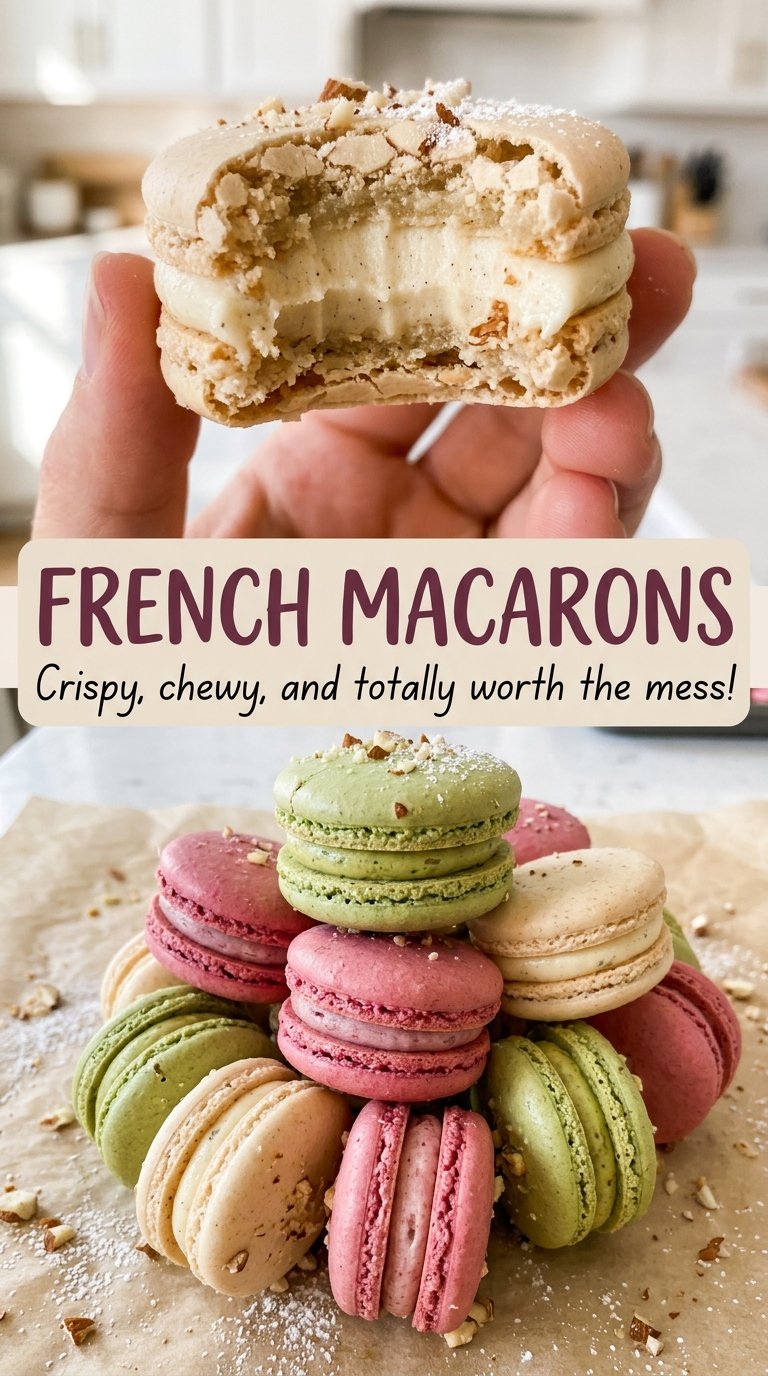
- Finely ground almond flour gives the shells their tender structure and smooth finish. The fine texture matters more here than choosing a premium brand; coarse almond meal won’t blend into the meringue as evenly. Sift it with the powdered sugar and press small clumps through rather than leaving them in the bowl.
- Powdered sugar combines with the almond flour to make the dry base fine and even. Sifting is worth the few extra minutes because lumps can carry through into the piped shells. The sifted sugar in the buttercream also helps keep the filling smooth.
- Egg whites create the foam that supports the shells. Bring them to room temperature before beating, and measure them by weight for this formula. There isn’t a simple substitute that behaves the same way in a French meringue.
- Granulated sugar is added gradually as the whites turn foamy, helping build the glossy, stiff-peaked meringue. Pouring it in slowly gives it time to incorporate as the mixer runs.
- Unsalted butter makes the filling rich and pipeable once softened. Use butter that yields when pressed but isn’t melted; a different fat won’t give this buttercream the same texture. Since the recipe uses unsalted butter, the small measured amount of fine salt stays in your control.
- Vanilla extract and heavy cream round out the buttercream. The cream helps it beat smooth and fluffy, while the vanilla is easy to taste in such a simple filling. I wouldn’t swap either one casually; changing them affects the filling’s texture or flavor.
From Glossy Meringue to Filled Shells: The Stages That Matter
Sift a Fine, Even Base
Line two baking sheets with parchment paper, fit a piping bag with a 1/2-inch round tip, and preheat the oven to 300°F. Sift the almond flour and powdered sugar together, pressing any small clumps through the sieve. Don’t skip the pressing: larger bits left behind can make the shell tops bumpy. Set the bowl aside while you beat the whites.
Build a Glossy, Stiff-Peaked Meringue
Beat the room-temperature egg whites on medium speed until foamy, then gradually add the granulated sugar while the mixer runs. Raise the speed to medium-high and beat for about 5–7 minutes. The meringue should look glossy and hold stiff peaks when you lift the beaters. Stop once it reaches that point rather than continuing to beat it dry.
Fold Until the Batter Settles Back Into Itself
Add the almond flour mixture to the meringue in three additions, folding each one in before adding the next. Keep folding until the batter falls in a thick ribbon and settles back into itself in about 10–15 seconds. Transfer it to the piping bag and pipe 1 1/2-inch circles about 1 inch apart on the lined sheets. Tap each sheet firmly on the counter several times, then pop any visible air bubbles with a toothpick.
Dry the Tops, Then Bake One Sheet at a Time
Let the piped shells stand at room temperature for 30–60 minutes, until the tops feel dry and aren’t tacky to a light touch. If the surface still feels sticky, give it more time rather than putting the tray in the oven early. Bake one sheet at a time for 14–16 minutes, until the shells have formed feet and the tops feel set. Cool them completely on the sheet before peeling them from the parchment.
Whip the Filling and Assemble Gently
Beat the softened butter and sifted powdered sugar on low speed until combined. Add the vanilla, fine salt, and heavy cream, then beat on medium-high for about 2 minutes, until the buttercream is smooth and fluffy. Match the cooled shells by size and spread or pipe about 1 teaspoon of filling onto the flat side of half of them. Top with the remaining shells and press gently until the filling reaches the edges.
Two Ways to Adjust the Balance of Shell and Buttercream
Make a shell-forward sandwich
Use a little less than the usual teaspoon of the same vanilla buttercream for each pair. The filling sits in a slimmer layer, so the almond shells take the lead and the sandwiches feel less rich.
Give the center more buttercream
For a more filling-forward bite, pipe slightly more of the prepared buttercream onto each shell, stopping when it reaches the edges as you press the top shell into place. The added creaminess makes each sandwich feel softer and richer.
Storage and Reheating
- Refrigerator: Keep the assembled macarons in an airtight container and refrigerate for at least 24 hours so they can mature. The method doesn’t set a longer storage window.
- Freezer: Freezing isn’t part of this method, so I don’t give a freezer timeline for these macarons.
- Reheating: They don’t need reheating. Bring them to room temperature for about 20 minutes before serving; don’t warm them, which can soften the shells and buttercream unevenly.
Questions That Come Up While Making French Macarons
French Macarons
Ingredients
Equipment
Method
- Line two baking sheets with parchment paper.
- Fit a piping bag with a 1/2-inch round tip.
- Preheat the oven to 300°F.
- Sift the almond flour and powdered sugar together into a bowl, pressing any small clumps through the sieve.
- In a clean, grease-free bowl, beat the egg whites with an electric mixer on medium speed until foamy.
- Gradually add the granulated sugar while beating.
- Raise the speed to medium-high and beat until the meringue is glossy and holds stiff peaks, about 5–7 minutes.
- Fold the almond flour mixture into the meringue in three additions.
- Continue folding until the batter flows in a thick ribbon and settles back into itself in about 10–15 seconds.
- Transfer the batter to the piping bag and pipe 1 1/2-inch circles about 1 inch apart on the prepared sheets.
- Tap each sheet firmly on the counter several times to release air bubbles, and pop visible bubbles with a toothpick.
- Let the piped shells stand at room temperature for 30–60 minutes, until the tops feel dry and are no longer tacky to a light touch.
- Bake one sheet at a time for 14–16 minutes, until the shells have formed feet and their tops feel set.
- Cool completely on the sheet before peeling the shells off the parchment.
- Beat the butter and powdered sugar in a medium bowl on low speed until combined.
- Beat in the vanilla, salt, and heavy cream on medium-high speed until smooth and fluffy, about 2 minutes.
- Match the cooled shells by size.
- Spread or pipe about 1 teaspoon of buttercream onto the flat side of half of the shells.
- Top with the remaining shells and gently press until the filling reaches the edges.
- Place the macarons in an airtight container and refrigerate for at least 24 hours.
- Bring to room temperature for about 20 minutes before serving.
