
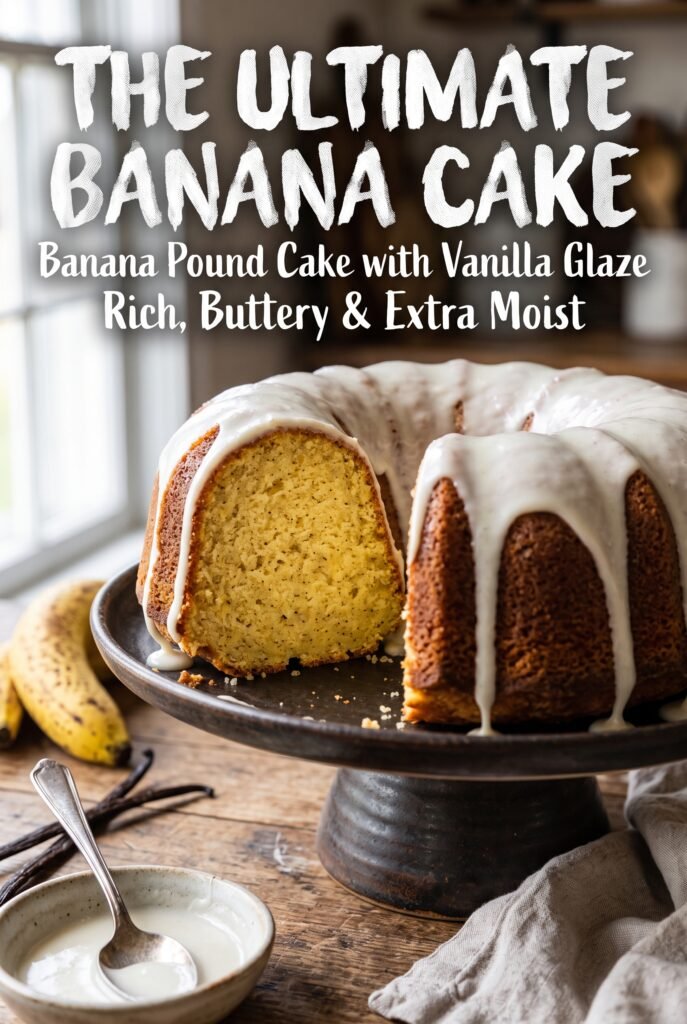
Banana Pound Cake with Vanilla Glaze
Banana pound cake has a way of disappearing faster than a standard banana bread ever does. The crumb is tighter, richer, and more polished, but it still carries that soft…
Tip: save now, read later.
Banana pound cake has a way of disappearing faster than a standard banana bread ever does. The crumb is tighter, richer, and more polished, but it still carries that soft banana flavor people expect from a good quick cake. The vanilla glaze on top finishes it with a thin, sweet shell that settles into the grooves of the Bundt and gives every slice a little extra lift.
What makes this version work is the balance. Sour cream keeps the batter plush without making it heavy, and the mashed bananas bring moisture and flavor without turning the cake gummy. The butter and sugar need a full, proper beat at the start because that aeration is what keeps a pound cake from eating like a brick. Once the dry ingredients go in, stop as soon as the batter comes together. Overmixing is the easiest way to lose the tender texture you worked to build.
Below, I’m walking through the small details that matter here: how ripe the bananas should be, why the pan prep matters more than usual, and how to glaze the cake so it looks neat instead of dripping off in a puddle.
The crumb stayed so soft for days, and the glaze set up beautifully instead of soaking straight into the cake. I used very ripe bananas and the flavor came through in every slice.
Save this banana pound cake for the next time you want a dense, buttery loaf-style cake with a glossy vanilla glaze.
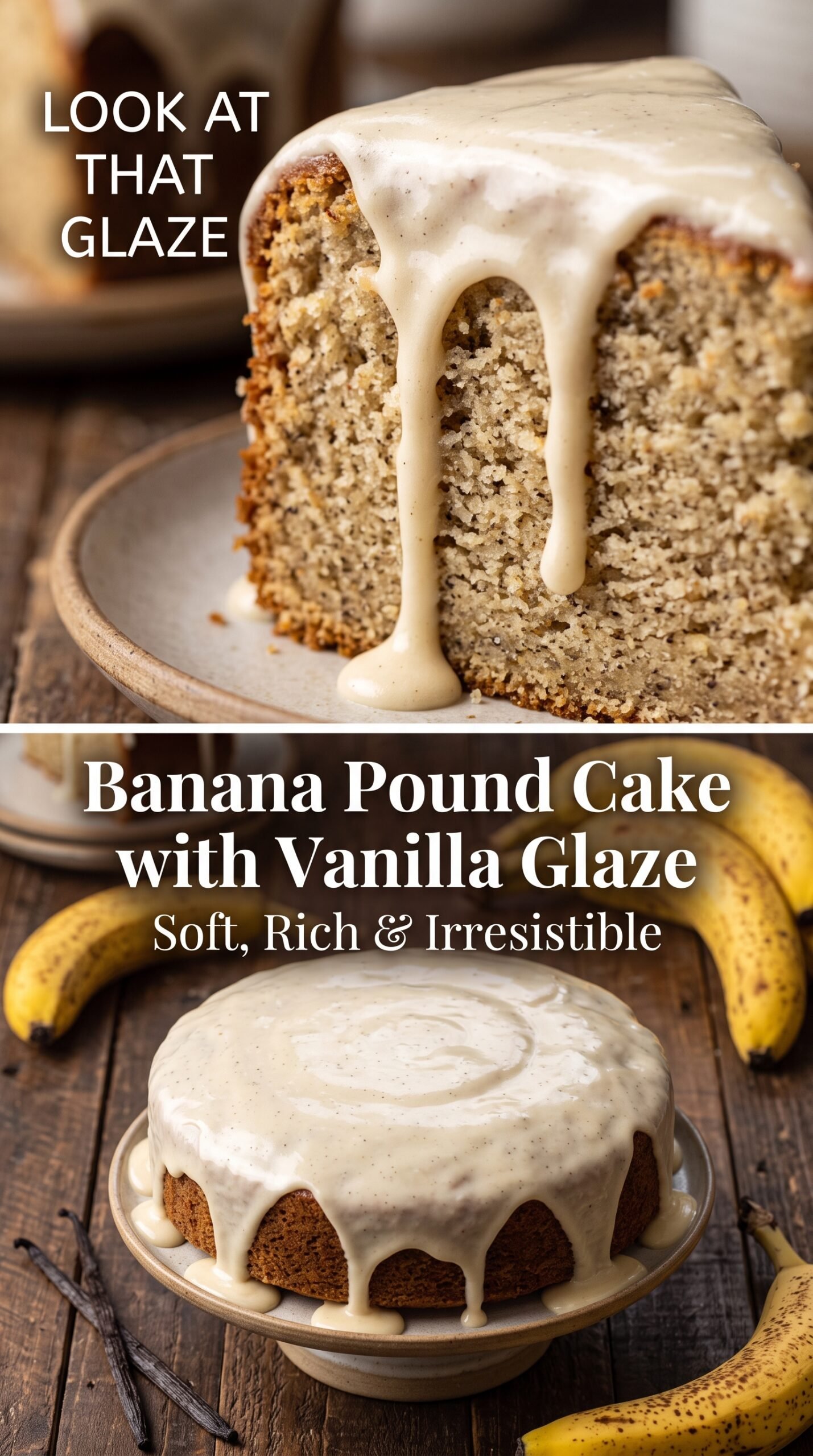
The Part That Keeps Banana Pound Cake Tender Instead of Heavy
Banana cakes often go wrong in one of two directions: they bake up dry, or they turn dense in a way that feels leaden instead of rich. The difference here is the order and the balance. Creaming the butter and sugar properly gives the cake its lift, while sour cream adds enough fat and moisture to keep the crumb soft even after a full bake in a Bundt pan.
The other trap is too much banana. More banana sounds like more flavor, but it can push the batter into a gummy, underbaked middle. One cup of mashed ripe banana gives you the flavor you want without collapsing the structure. The cinnamon is subtle, but it rounds out the banana instead of letting the cake taste flat.
- Bananas — Use bananas with plenty of brown spotting and soft flesh. They mash smoothly and bring the strongest flavor. If yours are frozen, thaw them first and drain off any excess liquid before measuring.
- Sour cream — This is what keeps the cake plush. Plain Greek yogurt works in a pinch, but it brings a slight tang and a firmer texture. Full-fat is best here.
- Butter — Softened butter creams with the sugar to create tiny air pockets. That step matters more than people think. Cold butter won’t trap enough air, and melted butter makes the cake dense.
- Bundt pan — A well-greased and floured pan is nonnegotiable. Banana batter loves to cling, especially in the ridges. Use a baking spray with flour or brush every curve with butter and dust it thoroughly.
Building the Batter So the Cake Bakes Evenly
Creaming the Butter and Sugar
Beat the butter and sugar until the mixture looks pale and fluffy, not just combined. Four minutes is a good benchmark, but the visual cue matters more than the clock. If you rush this stage, the cake will still bake, but it won’t have that fine, even crumb that makes pound cake worth making.
Adding the Eggs and Bananas
Add the eggs one at a time so the batter stays smooth and emulsified. If the mixture looks a little curdled after the bananas go in, that’s fine; it usually comes back together once the dry ingredients are added. The bananas should be mashed well, with only small lumps left for texture.
Folding in the Flour Without Toughening the Cake
Alternate the flour mixture with the sour cream, starting and ending with flour. That keeps the batter stable and helps it hold together in the pan. Stop mixing the moment the flour disappears. If you beat it past that point, the gluten tightens and the cake slices up chewy instead of tender.
Baking and Cooling
Bake until the top is deeply golden and a toothpick comes out clean from the center. The cake should also start pulling slightly from the edges of the pan. Let it sit in the pan for 15 minutes before turning it out, because that short rest helps it set without steaming itself into a soggy crust.
Three Ways to Make This Banana Pound Cake Work for Your Table
Dairy-Free Version
Swap the butter for a good plant-based baking stick and use full-fat coconut yogurt or a thick dairy-free sour cream alternative in place of the sour cream. The cake will still be moist, though the crumb may be a touch less rich and the glaze will taste a little more pronounced.
Gluten-Free Swap
Use a 1:1 gluten-free baking flour with xanthan gum already included. The batter should look slightly thicker, and the cake may need a few extra minutes in the oven. Let it cool fully before slicing so the crumb has time to set.
Turning It Into Muffins
Portion the batter into lined muffin cups and bake until the tops spring back and a tester comes out clean. You’ll lose the dramatic Bundt presentation, but you gain easier portions and a shorter bake time. The glaze can be drizzled lightly over the tops once they cool.
Storage and Reheating
- Refrigerator: Store covered for up to 5 days. The crumb stays moist, though the glaze softens after the first day.
- Freezer: This cake freezes well. Wrap individual slices tightly in plastic and freeze for up to 2 months. Thaw at room temperature for the best texture.
- Reheating: Warm slices briefly in the microwave, 10 to 15 seconds at a time, or toast them lightly in a skillet. Too much heat dries out the edges before the center warms.
Questions I Get Asked About This Recipe
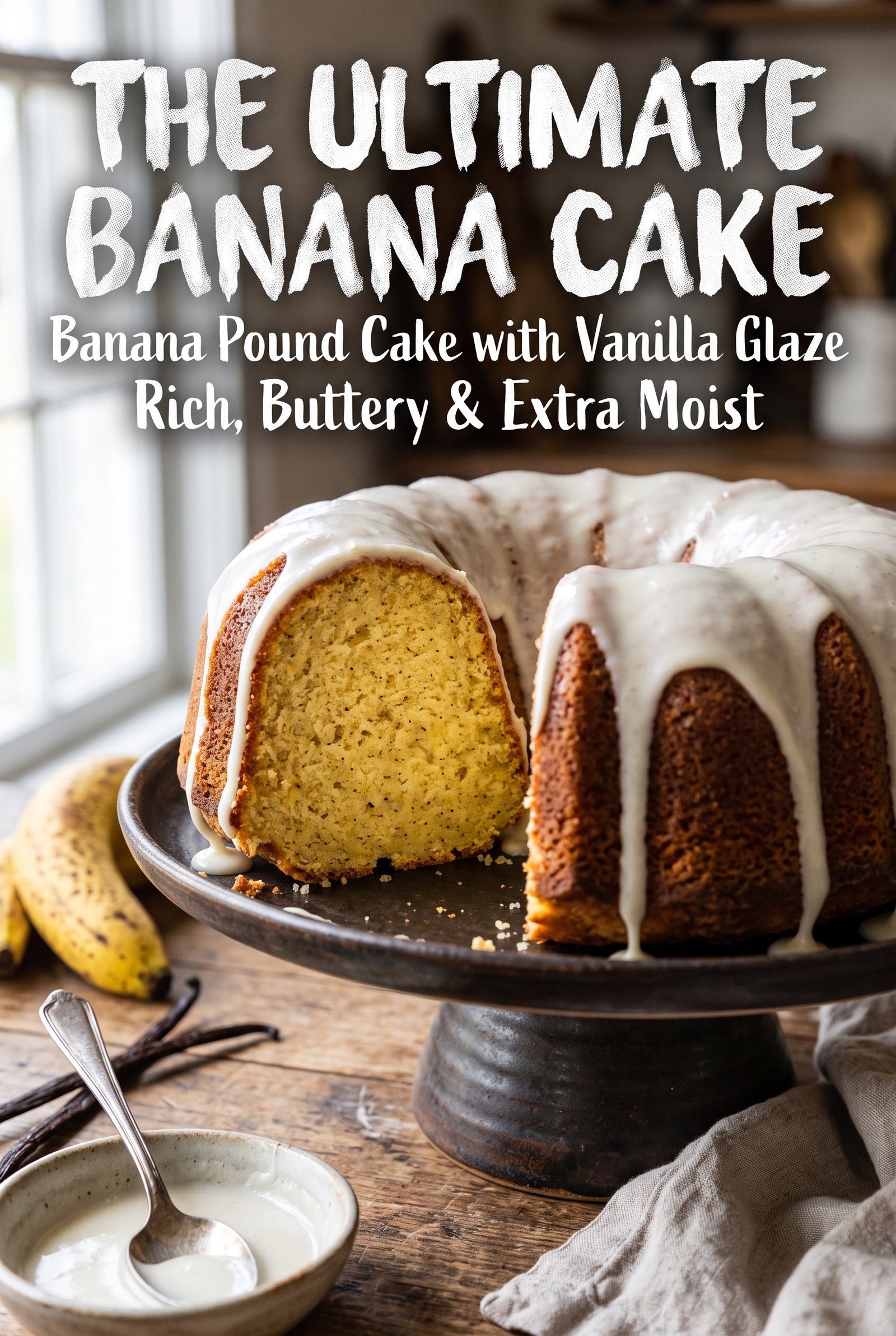
Banana Pound Cake with Vanilla Glaze
Ingredients
Equipment
Method
- Preheat oven to 325°F (163°C). Set aside for the Bundt pan prep to be ready right after.
- Grease and flour a 10-inch Bundt pan or tube pan. Coat thoroughly so the cake releases cleanly.
- Whisk together all-purpose flour, baking powder, baking soda, salt, and ground cinnamon. Mix until evenly colored with no dry pockets.
- Beat unsalted butter and granulated sugar until light and fluffy, about 4 minutes. Stop and scrape the bowl as needed so the mixture stays smooth.
- Add large eggs one at a time, beating well after each addition. This helps keep the batter emulsified and thick.
- Mix in vanilla extract and mashed ripe bananas. Beat just until combined so the banana flavor is distributed.
- Alternate adding the dry ingredients and sour cream, beginning and ending with the flour mixture. Mix each addition only until incorporated.
- Pour the batter into the prepared pan and smooth the top. Tap the pan gently to level the batter.
- Bake for 65–75 minutes, or until a toothpick inserted into the center comes out clean. The cake should look set and slightly golden.
- Cool in the pan for 15 minutes before transferring to a wire rack. This prevents sticking while the crumb firms up.
- Whisk together powdered sugar, whole milk, melted butter, vanilla extract, and salt until smooth. Add more milk by teaspoon if you want a thinner drizzle.
- Drizzle the vanilla glaze generously over the cooled cake. Let the glaze set before serving so it forms a silky crust.
