
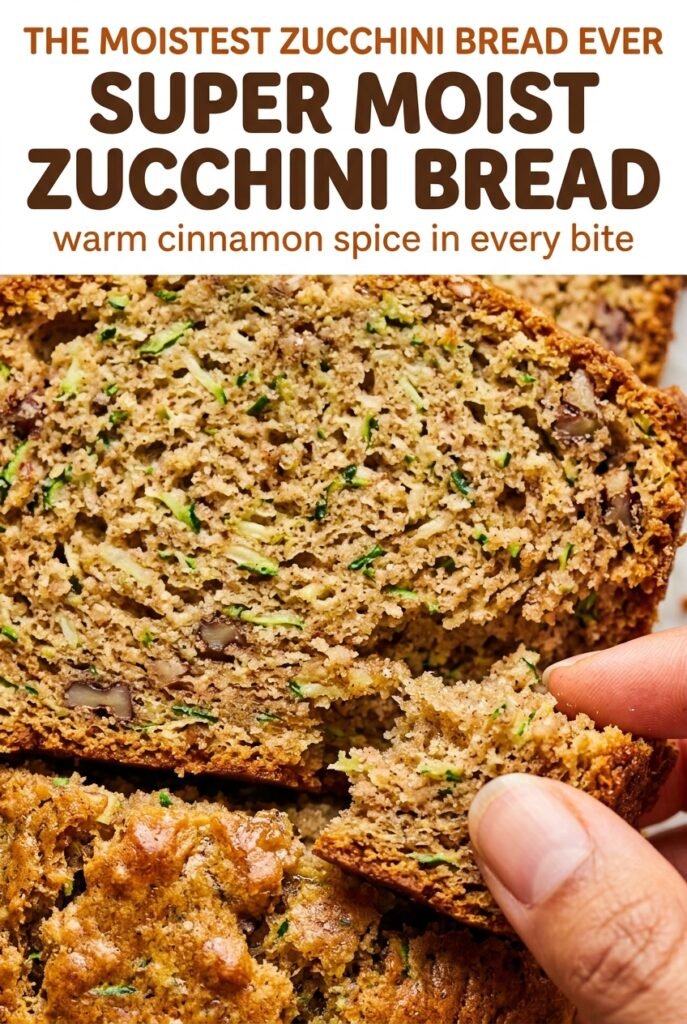
Super Moist Zucchini Bread
Super moist zucchini bread bakes up with a tender crumb, a gently sweet cinnamon warmth, and enough structure to slice cleanly without falling apart. The zucchini doesn’t make it taste…
Tip: save now, read later.
Super moist zucchini bread bakes up with a tender crumb, a gently sweet cinnamon warmth, and enough structure to slice cleanly without falling apart. The zucchini doesn’t make it taste like vegetables; it melts into the batter and keeps the loaf soft for days, which is exactly why this one earns a permanent spot on the counter when I’ve got a few extra zucchini to use up.
The trick is simple: squeeze the zucchini, but don’t wring it bone dry. You want enough moisture left in there to do its job without turning the batter heavy or gummy. Oil keeps the crumb soft in a way butter can’t quite match here, and the mix of white and brown sugar gives the loaf a deeper sweetness and a little extra tenderness. Cinnamon rounds everything out without overpowering the bread.
Below you’ll find the small details that matter most, from getting the batter mixed just enough to how to keep the loaves from sinking in the center. There’s also a few useful variations if you want to add nuts, skip them, or adjust the recipe for what’s already in your pantry.
The loaf came out incredibly tender and stayed moist for three days without getting soggy. I added the pecans and the texture was perfect with the cinnamon flavor.
Save this super moist zucchini bread for the days when you want a soft, cinnamon-scented loaf that stays fresh for days.
The Reason This Loaf Stays Tender Instead of Heavy
Most zucchini bread gets dense for one of two reasons: the batter gets overmixed, or the zucchini brings in too much water and turns the center gummy. This version avoids both problems by keeping the mixing gentle and by squeezing the zucchini just enough to remove the excess liquid, not all of it. That moisture is part of the bread’s structure, and once it’s gone, the loaf loses the soft crumb that makes zucchini bread worth baking.
The other thing that matters here is temperature. A moderate 325°F bake gives the loaf time to set through the middle before the outside overcolors. If you rush it at a hotter temperature, the crust looks done before the center catches up, and the result is a sunk middle with a wet line under the top.
What Each Ingredient Is Actually Doing in This Bread
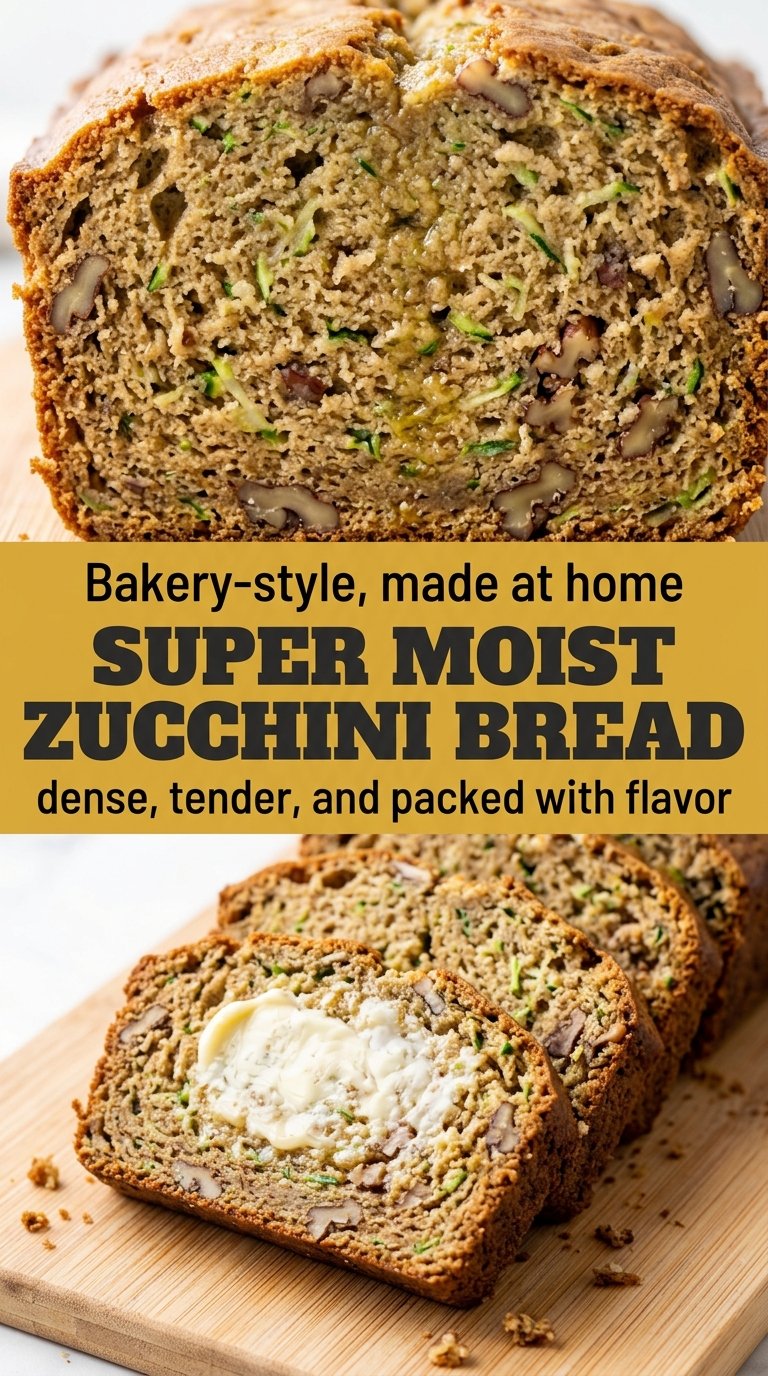
- All-purpose flour — This gives the loaf enough structure to hold the zucchini without turning cakey or fragile. Bread flour makes it too chewy, and cake flour can leave it too delicate for clean slices.
- Baking soda and baking powder — The combination helps the loaf rise evenly without tasting metallic. The soda reacts with the brown sugar and the natural moisture in the batter, while the baking powder gives a little extra lift.
- Cinnamon — This isn’t just background spice. It gives the bread its warm, bakery-style aroma and keeps the flavor from tasting flat.
- Vegetable oil — Oil keeps quick bread soft for days. Melted butter adds flavor, but it sets firmer once cooled, which works against the moist texture this loaf is known for.
- Brown sugar — Packed brown sugar adds depth and a softer crumb. If you swap it for all white sugar, the bread still works, but it loses some of that rich, almost caramel note.
- Zucchini — Grate it on the fine side and squeeze it in a clean towel or your hands. Too much water makes the center heavy; too little leaves the loaf drier than it should be.
- Pecans — Optional, but they add a nice crunch against the soft crumb. Walnuts work too, or leave them out entirely if you want a smoother slice.
How to Build the Batter Without Ruining the Crumb
Mix the dry ingredients first
Whisk the flour, leaveners, cinnamon, and salt together until they look completely even. That step matters more than it sounds like, because pockets of baking soda can leave bitter streaks in the finished bread. A quick, thorough whisk now gives you a more even rise later.
Beat the wet mixture until it lightens
When you beat the eggs with the oil and sugars, keep going until the mixture looks smooth and a little foamy. You’re not trying to whip air into it like cake batter, but you do want the sugar to dissolve enough that the loaf bakes up tender instead of gritty. The vanilla goes in here so it distributes through the whole batter.
Fold, don’t stir aggressively
Once the dry ingredients go in, stop mixing as soon as the flour disappears. Overworking the batter develops gluten, and that’s how zucchini bread turns tough. Fold in the zucchini and pecans at the end, then divide the batter right away so the loaf pans bake evenly.
Bake until the center is set, not dry
The tops should be domed and golden, and a toothpick inserted in the center should come out clean or with a few moist crumbs. If it comes out wet with streaks of batter, the center needs more time. Let the loaves cool in the pans for 15 minutes before turning them out, or they’re more likely to break while still warm.
How to Adapt This for Different Kitchens and Diets
Skip the nuts without changing the texture
Leave out the pecans and the loaf still bakes up soft and balanced. The batter doesn’t need them for structure; they’re there for crunch. If you want the same contrast without nuts, add a handful of chocolate chips or leave it plain.
Make it dairy-free without losing richness
This recipe is already dairy-free as written, which is part of why the crumb stays so soft. The oil carries the moisture better than butter would, so you don’t have to change anything to keep the texture intact.
Turn it into muffins
Spoon the batter into lined muffin cups and bake until the tops spring back and a tester comes out clean, usually much sooner than the loaves. You’ll lose the classic tall slice, but you gain faster bake time and easy grab-and-go portions.
Storage and Reheating
- Refrigerator: Store tightly wrapped at room temperature for up to 3 days, or refrigerate for up to 5 days if your kitchen runs warm. The crumb stays moist, though the chill can make it taste a little firmer.
- Freezer: This bread freezes well. Wrap whole loaves or individual slices tightly, then freeze for up to 3 months.
- Reheating: Thaw at room temperature and warm slices briefly in a toaster oven or microwave. The biggest mistake is blasting it too long, which dries out the edges before the center has a chance to soften.
Questions I Get Asked About This Recipe
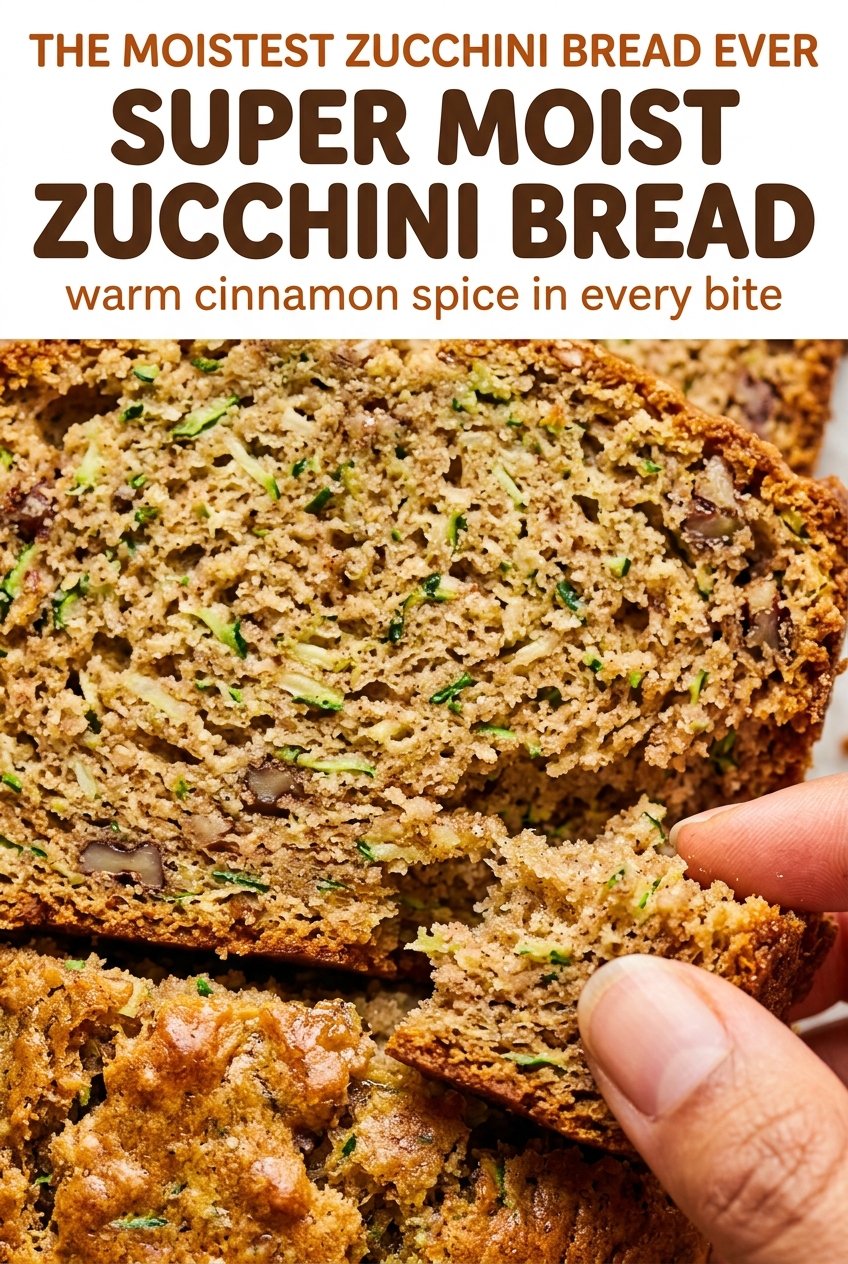
Super Moist Zucchini Bread
Ingredients
Equipment
Method
- Preheat oven to 325°F. Grease two 8x4-inch loaf pans so the batter releases easily.
- In a bowl, whisk together all-purpose flour, baking soda, baking powder, ground cinnamon, and salt. Mix until evenly combined with no cinnamon streaks.
- Beat eggs, vegetable oil, granulated sugar, brown sugar, and vanilla extract until smooth and slightly foamy. Stop when the mixture looks glossy and well aerated.
- Stir the dry ingredients into the wet mixture until just combined. Mix no more than necessary to keep the crumb tender.
- Fold in grated zucchini and chopped pecans, if using. Stop once zucchini is evenly distributed and no dry pockets remain.
- Divide batter evenly between the two pans and bake at 325°F for 55–60 minutes. The tops should be golden brown and domed, and a toothpick should come out clean.
- Cool in the pans for 15 minutes. The loaves should feel set at the edges before turning out.
- Turn out onto a wire rack and cool completely before slicing. Wait for full cooling so the center holds its cake-like texture.
