
Pina Colada Zucchini Bread
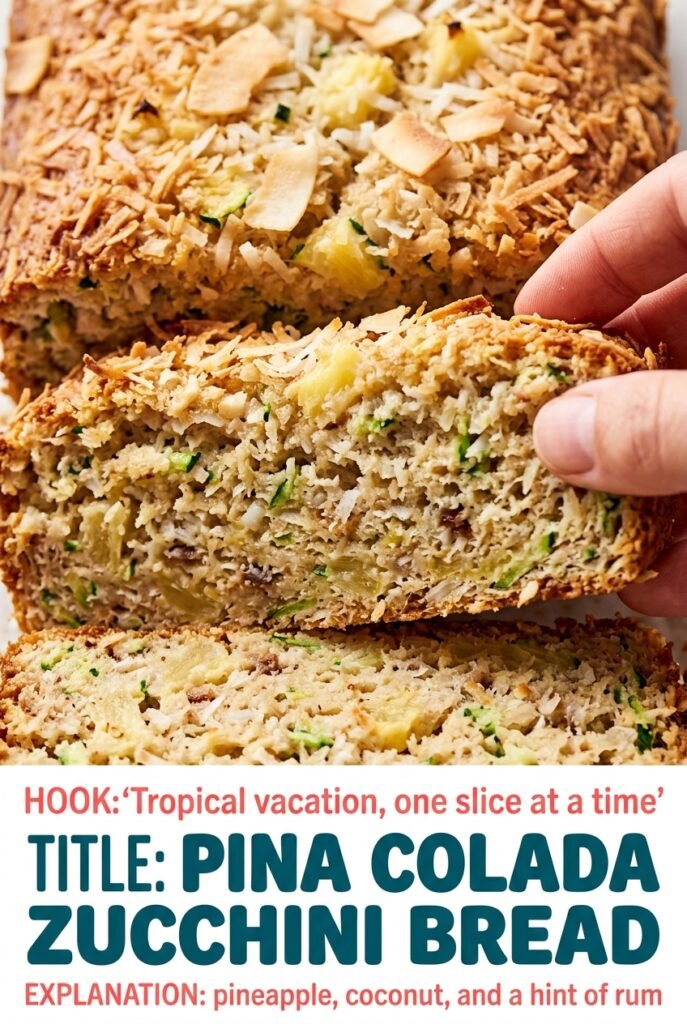
Pina colada zucchini bread comes out tender, fragrant, and just sweet enough to feel like a treat without crossing into dessert territory. The pineapple keeps the crumb soft, the coconut…
Tip: save now, read later.
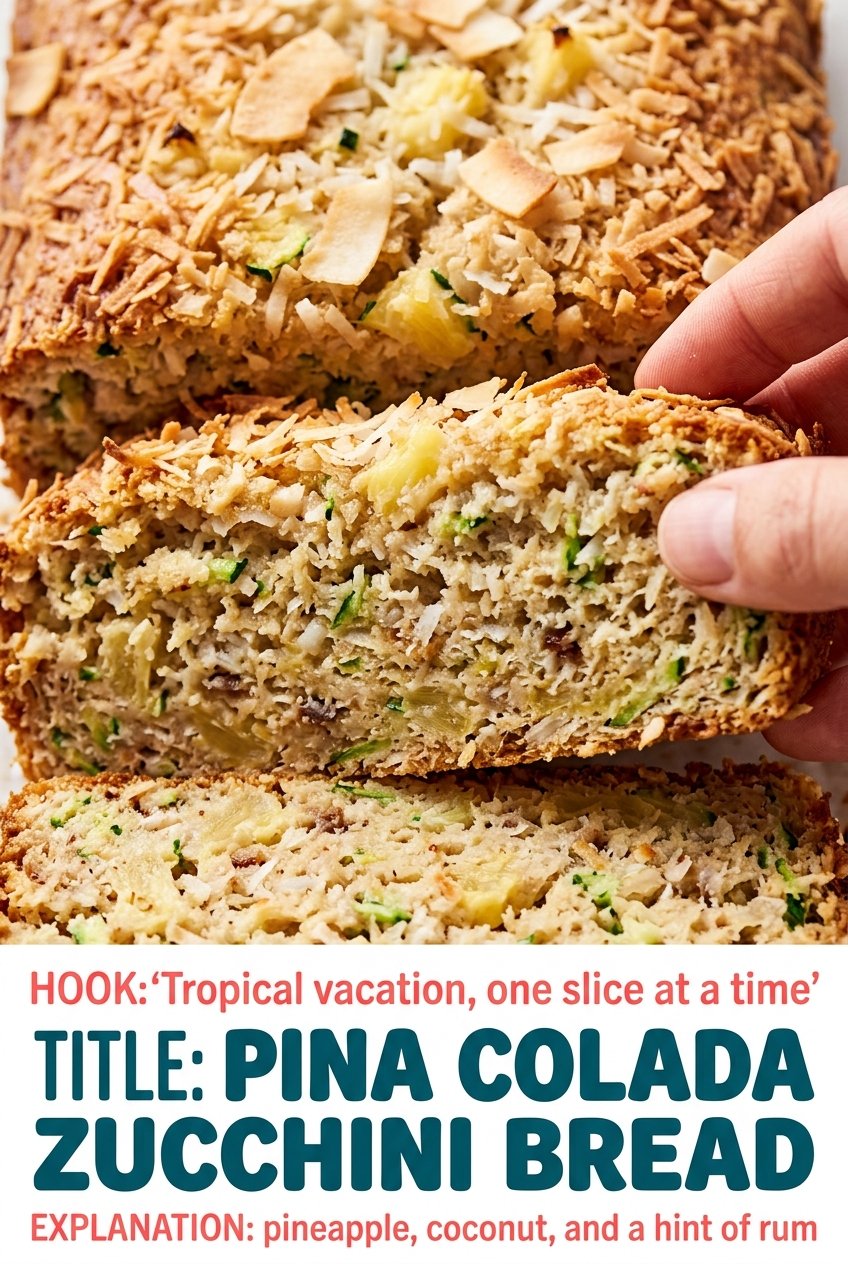
Pina colada zucchini bread comes out tender, fragrant, and just sweet enough to feel like a treat without crossing into dessert territory. The pineapple keeps the crumb soft, the coconut brings a little chew, and the zucchini disappears into the batter with nothing but moisture left behind. Toasted coconut on top gives each slice a crisp finish that plays against the soft interior in the best way.
The trick with this loaf is balance. Crushed pineapple adds flavor and softness, but it has to be drained so the batter doesn’t turn heavy or gummy. The zucchini needs to be squeezed well too; once it’s prepped properly, it blends into the crumb instead of leaving pockets of wet batter. Rum extract gives the loaf that classic piña colada note without adding alcohol, and it’s worth using if you want the flavor to read clearly.
Below you’ll find the method that keeps the loaf moist instead of dense, plus a few smart swaps for making it your own. If you’ve ever had quick bread collapse in the middle or bake up soggy near the center, the details here will help you avoid both problems.
The loaf came out so moist and the pineapple flavor was just right. I drained the fruit well like you said, and the middle baked through perfectly with that toasted coconut on top.
Save this piña colada zucchini bread for the days when you want a tropical loaf with a soft crumb and toasted coconut on top.
The Trick to Keeping This Loaf Moist Without Turning It Heavy
This bread lives or dies by moisture control. Zucchini, pineapple, eggs, and oil all bring softness, but if you treat them like a standard quick bread, the center can turn dense and damp. Drain the pineapple until it looks juicy but not wet, then squeeze the zucchini until it feels almost dry in your hands. That gives you enough moisture for a tender crumb without flooding the batter.
The other thing that matters is how gently you mix. Once the flour goes in, stir only until the dry streaks disappear. Overmixing builds structure in quick bread, which sounds helpful until the loaf bakes up tight and tough instead of light.
What Each Ingredient Is Doing in This Tropical Loaf
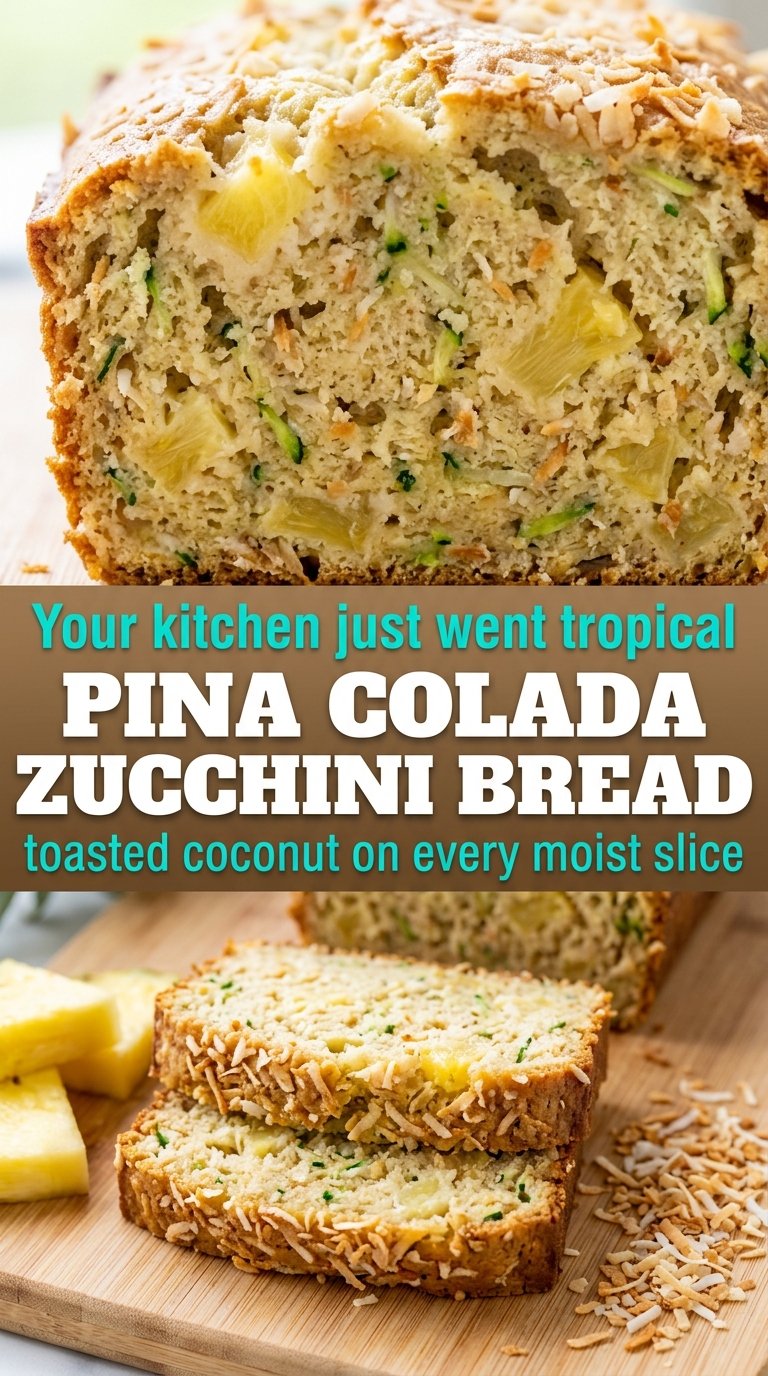
The ingredients here each pull their weight, so the loaf tastes intentional instead of like random add-ins. The pineapple gives the bread its bright sweetness and helps the crumb stay soft for days. The zucchini doesn’t add flavor so much as structure and moisture, and once it’s squeezed out properly, it melts right into the batter.
- All-purpose flour — The loaf needs enough strength to hold the pineapple and zucchini without collapsing. A 1:1 gluten-free baking blend can work if it includes xanthan gum, but the texture will be a little more delicate.
- Vegetable oil — Oil keeps the crumb tender even after the bread cools. Melted coconut oil works too, but it adds a stronger coconut note and firms up more when chilled.
- Crushed pineapple — This is the flavor anchor. Drain it well, then press it lightly with a spoon if it still looks wet; too much juice makes the center gummy.
- Zucchini — Grate it on the fine side of a box grater, then squeeze it in a clean towel or paper towels. If you skip that step, the loaf can look done on top while staying damp in the middle.
- Shredded sweetened coconut — Sweetened coconut brings chew and a little extra sweetness. Unsweetened coconut works if that’s what you have, but the loaf will taste less candy-like and the top won’t brown quite as fast.
- Rum extract — This gives the bread its piña colada character without alcohol. Vanilla can stand in, but the loaf will taste more like pineapple-coconut zucchini bread than a cocktail-inspired quick bread.
- Macadamia nuts — Optional, but they add a buttery crunch that fits the tropical flavor. Chop them small so they don’t sink or make slicing awkward.
How to Bake the Batter So the Center Sets Cleanly
Mixing the Dry Base
Whisk the flour, baking soda, baking powder, and salt together until the mixture looks even and light. That spreads the leaveners through the flour so the bread rises evenly instead of doming in one spot and collapsing in another. If the baking soda isn’t distributed well, you’ll get uneven tunnels and a faint metallic taste in the finished loaf.
Building the Wet Mixture
Whisk the eggs, oil, and sugar until the mixture looks smooth and slightly thickened, then stir in the drained pineapple and rum extract. This is where the flavor starts to come together. If the pineapple still has a lot of juice clinging to it, the batter can look loose at this stage and bake up gummy later.
Folding Without Beating the Batter
Add the dry ingredients to the wet bowl and fold just until you no longer see dry flour. Then fold in the zucchini, coconut, and macadamias, if you’re using them. The batter should look thick and spoonable, not pourable. If you keep stirring once everything is combined, the loaf will lose lift and bake up tight.
Knowing When It’s Done
Scrape the batter into the loaf pan, scatter the coconut over the top, and bake until the top is deeply golden and the center tests clean with a toothpick. The coconut should look toasted, not pale. If the top browns before the middle is set, lay a piece of foil loosely over the pan for the last 10 to 15 minutes so the crust doesn’t overcolor before the crumb finishes baking.
Three Ways to Make This Loaf Fit What You’ve Got
Dairy-Free From the Start
This loaf is already dairy-free as written, which makes it easy to serve to a crowd without changing a thing. Just keep an eye on any topping swaps you add later, since butter-based glazes or cream cheese drizzles would change that.
Gluten-Free with the Right Blend
A good cup-for-cup gluten-free flour blend can replace the all-purpose flour one for one if it already includes xanthan gum. The crumb will be a little more fragile, so let the loaf cool completely before slicing or it can crumble at the knife.
Skip the Nuts, Keep the Crunch
If you don’t want macadamias, leave them out and toast an extra tablespoon of coconut for the top. You lose the buttery crunch, but the coconut still gives the loaf enough texture to keep each slice interesting.
Vanilla Instead of Rum Extract
Vanilla extract softens the tropical edge and makes the loaf taste more like a pineapple-coconut breakfast bread. It’s the best swap if you want the flavor to stay kid-friendly or you don’t keep rum extract around.
Storage and Reheating
- Refrigerator: Store tightly wrapped for up to 5 days. The coconut topping softens a little, but the crumb stays moist.
- Freezer: It freezes well. Wrap the cooled loaf or individual slices in plastic, then foil, and freeze for up to 3 months.
- Reheating: Warm slices in a toaster oven or low oven for a few minutes. Microwaving too long can make the crumb rubbery and the coconut topping chewy in the wrong way.
Answers to the Questions Worth Asking
Pina Colada Zucchini Bread
Ingredients
Equipment
Method
- Preheat oven to 350°F and grease a 9x5-inch loaf pan.
- Set the loaf pan aside so it’s ready for batter.
- Whisk together flour, baking soda, baking powder, and salt in a mixing bowl until evenly combined.
- Whisk eggs, vegetable oil, and granulated sugar until smooth.
- Stir in crushed pineapple and rum extract (or vanilla extract) until distributed.
- Fold the dry ingredients into the wet mixture until just combined, avoiding overmixing.
- Fold in grated zucchini, shredded sweetened coconut, and chopped macadamia nuts if using.
- Pour batter into the prepared pan and sprinkle the remaining 2 tbsp shredded coconut over the top.
- Bake at 350°F for 55–65 minutes, until the coconut topping is toasted golden and a toothpick comes out clean.
- Cool the loaf in the pan for 10 minutes.
- Transfer to a wire rack and cool completely before slicing.
