
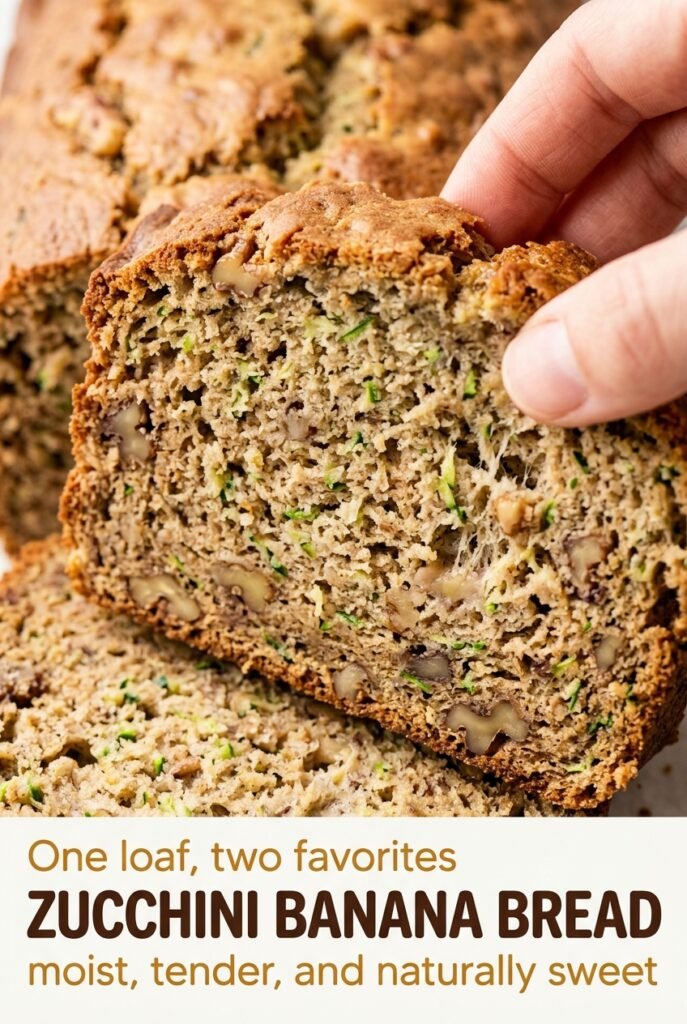
Zucchini Banana Bread
Zucchini banana bread bakes up with a soft, tender crumb and a deep, mellow sweetness that keeps each slice moist for days. The banana brings the flavor you expect from…
Tip: save now, read later.
Zucchini banana bread bakes up with a soft, tender crumb and a deep, mellow sweetness that keeps each slice moist for days. The banana brings the flavor you expect from a classic quick bread, but the zucchini is what keeps the loaf from drying out or turning heavy. You end up with something that tastes like banana bread at first bite, then finishes with a clean, plush texture that slices neatly without crumbling apart.
The trick here is balance. Ripe bananas add sweetness and body, while grated zucchini disappears into the batter and quietly does its job in the background. Squeezing the zucchini dry matters because too much water turns the loaf gummy in the center, but you don’t want to wring it out so hard that it becomes completely dry. A little moisture left behind is part of what makes the crumb stay soft after the bread cools.
Below you’ll find the small details that make this loaf dependable, from the right way to handle the zucchini to the best way to tell when the center is baked through. I also included a few smart variations if you want to add nuts, skip them, or adjust the loaf for the ingredients you already have on hand.
The loaf came out incredibly moist without being dense, and the zucchini vanished into the crumb. I was worried it would taste vegetal, but all I got was banana, cinnamon, and a perfect slice for breakfast the next day.
Zucchini banana bread stays tender for days, so save this loaf for the mornings when you want something soft, sweet, and reliable with your coffee.
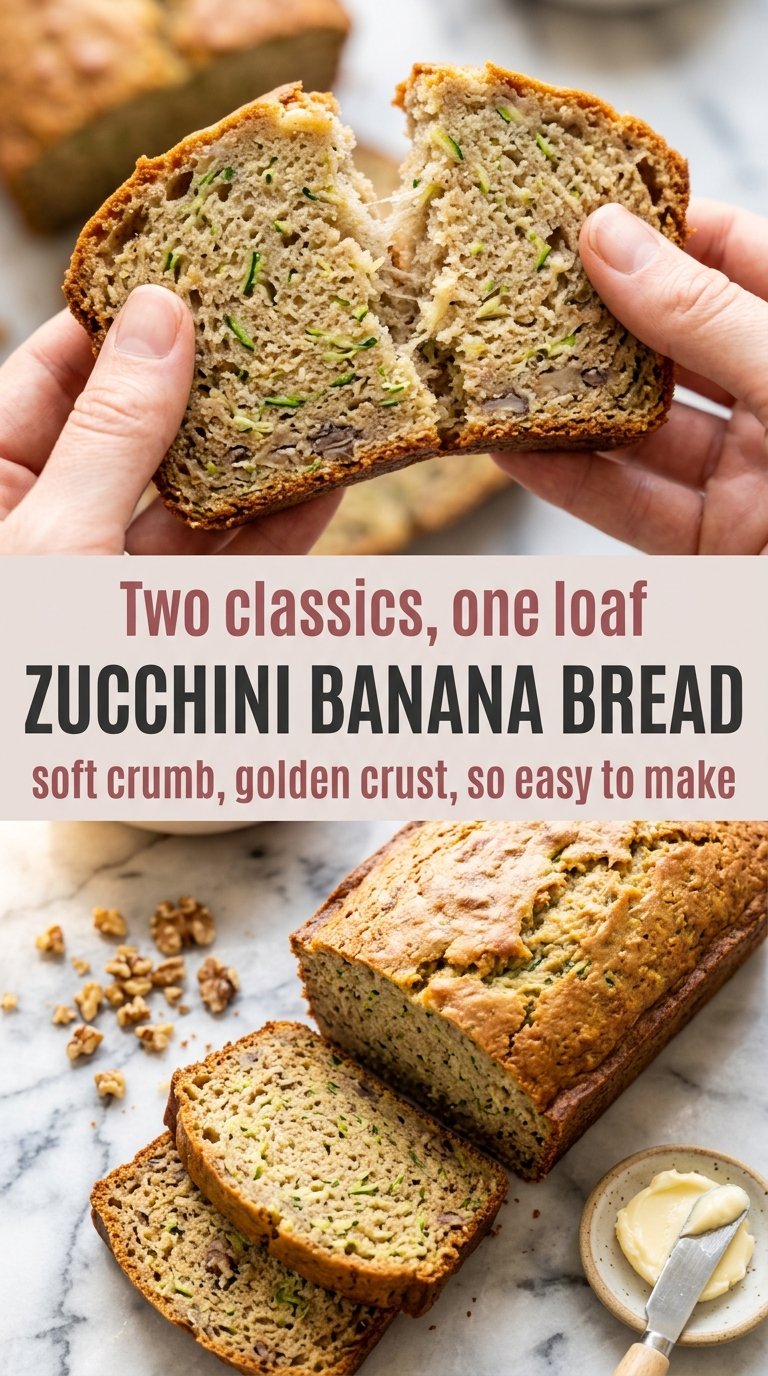
The Mistake That Turns Zucchini Banana Bread Heavy Instead of Tender
The fastest way to ruin a loaf like this is to treat it like a cake batter and beat it until smooth. Once the flour goes in, you want a few dry streaks left when you stop stirring. That last bit of mixing happens when the zucchini and nuts go in, and even then the batter should still look a little rough. Overmixing develops the gluten in the flour and gives you a tight, gummy crumb instead of the soft, bread-like slice you want.
The other trap is too much liquid from the zucchini. Grated zucchini holds a lot of water, and if that water ends up in the batter, the center can bake up wet even after the top looks done. Squeeze it out first, then let the banana bring the moisture and sweetness. That combination is what gives this loaf its balance.
- Bananas — Use very ripe bananas with plenty of brown spots. They mash smoothly and bring both sweetness and a fuller banana flavor. If yours are only yellow, the loaf will still work, but it won’t taste as deep or bake up quite as soft.
- Zucchini — Grate it on the fine side of a box grater, then squeeze it firmly in a clean towel or a handful at a time over the sink. You want it dry enough that it doesn’t drip, but not so dry that it turns stringy. This is the ingredient that keeps the crumb moist for days.
- Vegetable oil — Oil gives this bread a softer texture than butter does, especially after it cools. Melted butter can be used, but the loaf will set up a little firmer and lose some of that plush, tender feel.
- Brown sugar — The brown sugar adds a little molasses depth that works well with banana and cinnamon. If you only have granulated sugar, the loaf will still bake fine, but the flavor will be a touch flatter.
- Walnuts — Optional, but they add a welcome crunch against the soft crumb. Toast them first if you want more flavor. If you leave them out, nothing else in the recipe needs to change.
How to Mix, Fill, and Bake the Loaf So It Stays Soft
Start with the dry ingredients
Whisk the flour, baking soda, baking powder, cinnamon, and salt together first so the leaveners are evenly distributed. That matters because baking soda clumps easily, and a pocket of it can leave a bitter bite in the finished loaf. Once the dry mixture looks uniform, set it aside and build the wet bowl next.
Bring the wet mixture together without whipping it
Whisk the eggs, oil, and sugars until the mixture looks smooth and glossy, then stir in the mashed banana and vanilla. You don’t need to aerate it like cake batter. The goal is to dissolve the sugars enough that they won’t stay gritty, while keeping the mixture loose and easy to combine with the flour.
Fold just until the flour disappears
Add the dry ingredients to the wet mixture and fold gently with a spatula. Stop when you still see a few streaks of flour, then add the zucchini and walnuts. Those last folds should finish the job without turning the batter elastic. If you beat it hard at this point, the loaf bakes up dense and can sink slightly in the middle.
Bake until the center springs back
Scrape the batter into a greased 9×5-inch loaf pan and smooth the top. Bake at 350°F until the top is deep golden brown and a toothpick comes out clean or with just a few moist crumbs from the center, usually 55 to 65 minutes. If the top darkens before the center is done, tent it loosely with foil for the last 10 to 15 minutes so the middle can finish without overbrowning the crust.
Cool before slicing
Let the loaf rest in the pan for 10 minutes, then move it to a wire rack. Slicing too early traps steam and makes the crumb look underbaked even when it isn’t. Once it cools, the texture sets up and the slices hold together cleanly.
Three Small Changes That Still Give You a Good Loaf
Make it nut-free
Skip the walnuts entirely or replace them with chocolate chips if you want a sweeter loaf. Leaving them out doesn’t affect the structure, so the bread still bakes up tender and sliceable. Chocolate chips add richness, but they also make the loaf feel more like dessert than breakfast.
Swap in whole wheat flour
Replace up to half of the all-purpose flour with white whole wheat flour for a little more nutty flavor. More than that and the loaf starts to taste heavier and needs extra moisture, which this recipe already has plenty of. Keep the zucchini well squeezed so the crumb doesn’t turn pasty.
Make it dairy-free and vegetarian-friendly
This loaf is naturally dairy-free as written, and the eggs keep the structure steady without making it heavy. If you need an egg-free version, the bread changes quite a bit in texture and needs a different formula, so this isn’t a straight swap situation. For anyone avoiding dairy, this recipe already fits without changes.
Storage and Reheating
- Refrigerator: Store wrapped or in an airtight container for up to 5 days. The crumb stays moist, though the texture firms up slightly after chilling.
- Freezer: This loaf freezes well. Wrap individual slices or the whole cooled loaf tightly in plastic wrap, then foil, and freeze for up to 3 months.
- Reheating: Thaw slices at room temperature or warm them in a toaster oven for a few minutes. Microwaving too long makes the crumb rubbery, so use short bursts if that’s your only option.
Answers to the Questions Worth Asking
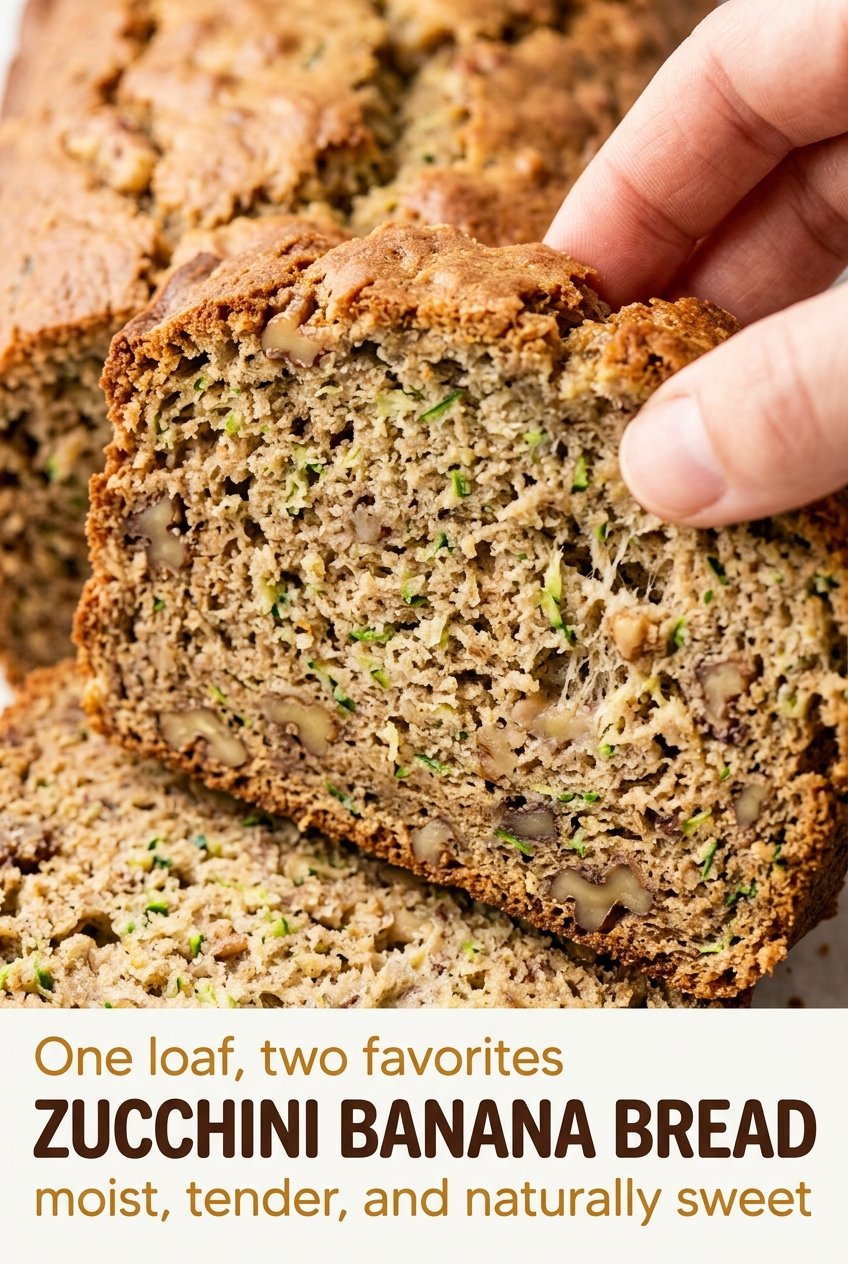
Zucchini Banana Bread
Ingredients
Equipment
Method
- Preheat the oven to 350°F. Grease a 9x5-inch loaf pan.
- Whisk together all-purpose flour, baking soda, baking powder, ground cinnamon, and salt in a bowl. Stop when the dry ingredients look evenly combined with no streaks of spices.
- Whisk eggs, vegetable oil, granulated sugar, and brown sugar until smooth. Stir in mashed ripe banana and vanilla extract until no banana lumps remain.
- Fold the dry ingredients into the wet mixture until just combined. Fold only until you no longer see dry flour, avoiding overmixing for a tender crumb.
- Fold in grated zucchini and chopped walnuts, if using. Mix gently until the zucchini is evenly distributed and the batter looks thick and cohesive.
- Pour batter into the prepared loaf pan. Bake at 350°F for 55–65 minutes, until a toothpick inserted in the center comes out clean and the top is deep golden brown.
- Let the loaf cool in the pan for 10 minutes. Transfer to a wire rack and cool completely before slicing.
