
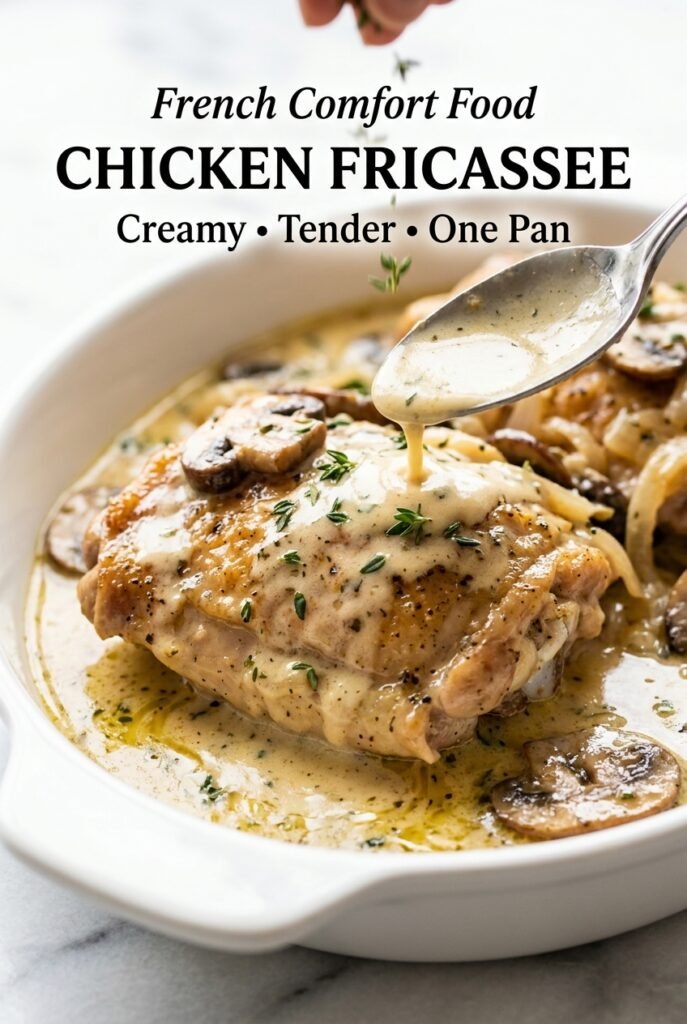
Classic Chicken Fricassee
Tender chicken thighs, mushrooms, onions, and a silk-smooth white wine cream sauce make chicken fricassee the kind of dinner that disappears fast once it hits the table. The chicken stays…
Tip: save now, read later.
Tender chicken thighs, mushrooms, onions, and a silk-smooth white wine cream sauce make chicken fricassee the kind of dinner that disappears fast once it hits the table. The chicken stays juicy because it simmers gently instead of getting blasted with heat, and the sauce turns velvety without feeling heavy or muddy. It’s the kind of one-pan meal that tastes like you spent all afternoon on it, even though most of the work is straightforward stovetop cooking.
What makes this version work is the order: a light sear for flavor, then a slow sauté on the mushrooms and onions so they give up their moisture before the flour goes in. That step keeps the sauce from turning pasty. The white wine adds brightness, the cream softens everything, and a little lemon juice at the end keeps the dish from tasting flat. Bone-in, skin-on thighs hold up better than leaner cuts here and give the sauce a deeper, more satisfying body.
Below you’ll find the timing cues that matter, plus a few practical swaps if you need to adjust for what’s in the fridge. The small details are what keep the sauce smooth and the chicken tender.
The sauce thickened beautifully and never turned grainy, even after I added the cream. My husband kept going back for more chicken and asked me to keep this one in the rotation.
Save this classic chicken fricassee for a silky white wine sauce, tender chicken thighs, and a one-pan dinner that feels special without extra fuss.

The Secret to Fricassee Is Gentle Browning, Not a Hard Sear
With chicken fricassee, the biggest mistake is treating the chicken like it needs a deep crust. It doesn’t. A light golden sear adds flavor to the pot, but if the chicken browns too aggressively before the braise, the finished sauce can taste heavy and the meat can dry out before it ever gets tender. You want color on the outside and enough moisture left inside to finish cooking slowly in the sauce.
The other place people lose this dish is with the flour. Dumping it straight into liquid leaves little lumps that never fully disappear. Coating the vegetables first and cooking the flour briefly gives the sauce structure and keeps the final texture smooth. Once the wine and broth go in, scrape up every browned bit from the bottom of the pot. That’s where the depth lives.
- Chicken thighs — Bone-in, skin-on thighs are the right cut here because they stay juicy through a long simmer. Boneless thighs work in a pinch, but they’ll need less time and won’t flavor the sauce quite as much.
- Cremini mushrooms — These hold onto enough texture to stay present in the sauce. White button mushrooms work, but they’re milder and a little softer once cooked.
- Dry white wine — This is what lifts the sauce out of “creamy” and into something balanced. Use something you’d actually drink, and if you skip the wine, replace it with extra broth plus a small squeeze of lemon at the end.
- Heavy cream — This gives the sauce its velvet finish. Half-and-half can work, but it’s more likely to thin out and won’t coat the chicken as deeply.
- Lemon juice and parsley — These go in at the end for brightness. If you add them too early, the flavor gets muted during the simmer.
Building the Sauce Without Breaking the Cream
Give the Chicken a Light Gold Color
Pat the thighs dry before they hit the pan. Moisture on the surface is what keeps them from searing properly. You’re looking for pale gold on each side, not a dark crust. If the heat is too high, the skin will scorch before the fat renders and the sauce will start with burnt bits instead of flavorful drippings.
Cook the Mushrooms Until Their Water Is Gone
Onions and mushrooms need time to soften and lose moisture before the flour goes in. If you rush this stage, the sauce turns watery later and the mushrooms taste steamed instead of savory. Let the pan go from glossy and wet to mostly dry, with the vegetables taking on a little color around the edges. That’s the point where the flavor starts to build.
Whisk in the Liquid Slowly
After the flour cooks for a minute, add the wine first and scrape the pot well. It should bubble up and loosen the browned bits cleanly. Then pour in the broth in a slow stream while whisking or stirring, so the flour disperses before it can clump. Add the cream over low heat, not high heat. Cream doesn’t need a boil to thicken; it needs a gentle simmer and a few minutes to settle into the sauce.
Finish With a Quiet Simmer
Once the chicken goes back into the pot, keep the heat low and cover it. The sauce should barely move, with only small bubbles around the edges. If it boils hard, the cream can separate and the chicken can tighten up instead of turning tender. Stir in the lemon juice and parsley right at the end so the sauce stays bright and clean.
Make It Dairy-Free With Coconut Cream
Swap the heavy cream for full-fat coconut cream and use a little extra lemon at the end to keep the sauce balanced. The result is still rich and silky, but it will carry a faint coconut note, so it works best if you’re after a creamy sauce rather than a strictly classic flavor.
Use Boneless Chicken Thighs for Faster Cooking
Boneless thighs shave off some simmer time and are easier to portion at the table. They won’t enrich the sauce quite as much as bone-in thighs, so don’t rush the mushroom and onion step if you want the final dish to taste full-bodied.
Make It Gluten-Free With a Small Flour Swap
Use a gluten-free all-purpose blend that includes xanthan gum, or thicken the sauce with a cornstarch slurry near the end instead of flour. The flour route gives the most classic texture, but cornstarch works well if you add it after the chicken is cooked and let the sauce bubble for a minute or two until glossy.
Storage and Reheating
- Refrigerator: Store for up to 3 days. The sauce will thicken as it chills.
- Freezer: It freezes, but cream sauces can separate a bit after thawing. Freeze in portions if you want, then whisk the sauce well while reheating.
- Reheating: Warm gently on the stovetop over low heat with a splash of broth. High heat is the fastest way to make the sauce grainy.
Answers to the Questions Worth Asking
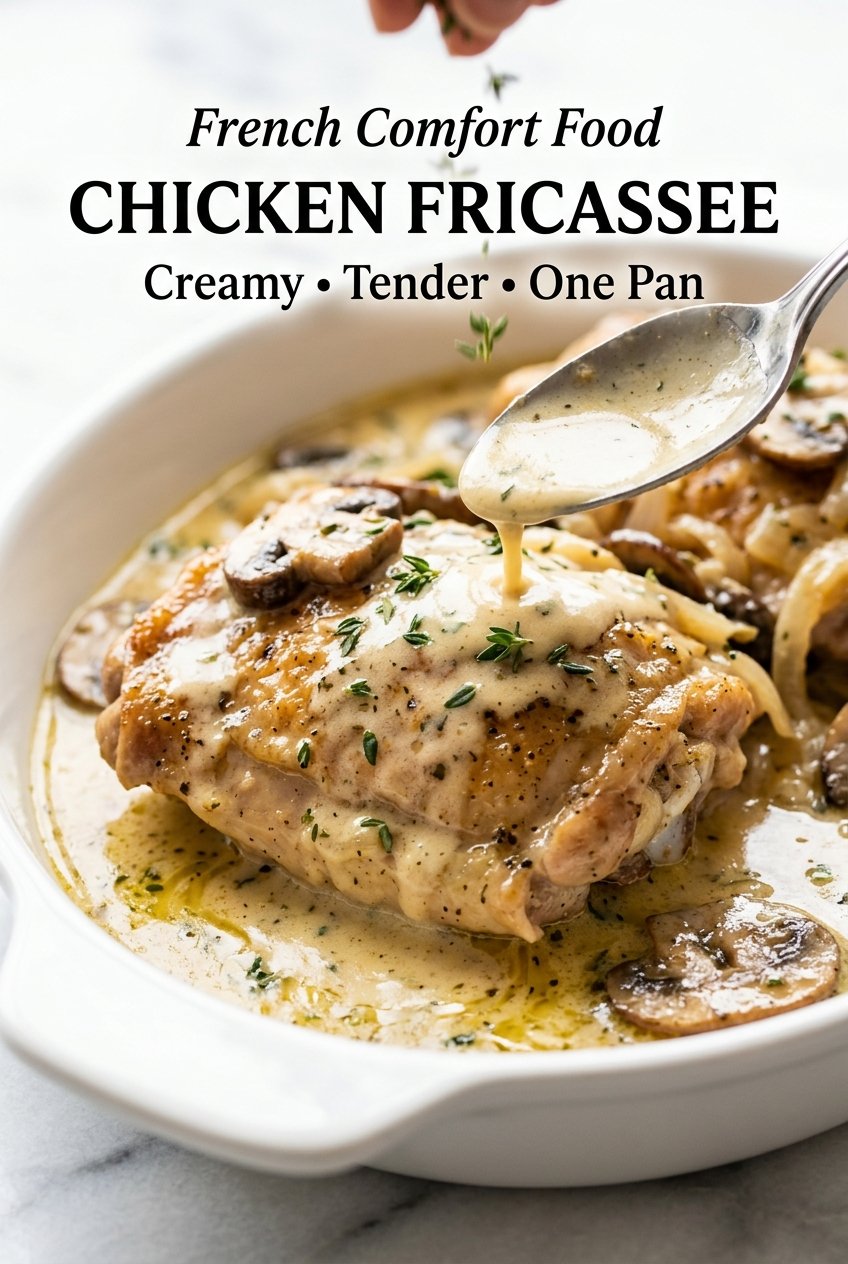
Classic Chicken Fricassee
Ingredients
Equipment
Method
- Pat the chicken thighs dry and season both sides with the salt and black pepper.
- Heat the olive oil and butter in a large Dutch oven over medium-high heat, then sear the chicken for 4–5 minutes per side until lightly golden without fully browning. Transfer the chicken to a plate.
- Add the onion and mushrooms to the pot and sauté for 6–8 minutes until softened and lightly caramelized.
- Stir in the garlic and cook for 30 seconds until fragrant.
- Sprinkle the flour over the vegetables and stir continuously for 1 minute to coat everything evenly.
- Pour in the white wine while scraping the bottom of the pot and simmer for 2 minutes until slightly reduced.
- Gradually whisk in the chicken broth until smooth, then stir in the heavy cream, thyme, and bay leaf.
- Return the chicken to the pot, nestling it into the sauce, cover, and simmer over low heat for 30–35 minutes until the chicken reaches 165°F and becomes fork-tender.
- Stir in the lemon juice and chopped parsley, then remove the bay leaf.
- Garnish with fresh thyme and serve over mashed potatoes, buttered noodles, or steamed rice.
