
Brown Butter Banana Bread
Brown butter banana bread has the kind of depth that plain banana bread never quite reaches. The crumb stays moist and tender, but the flavor goes a step further: nutty,…
Tip: save now, read later.
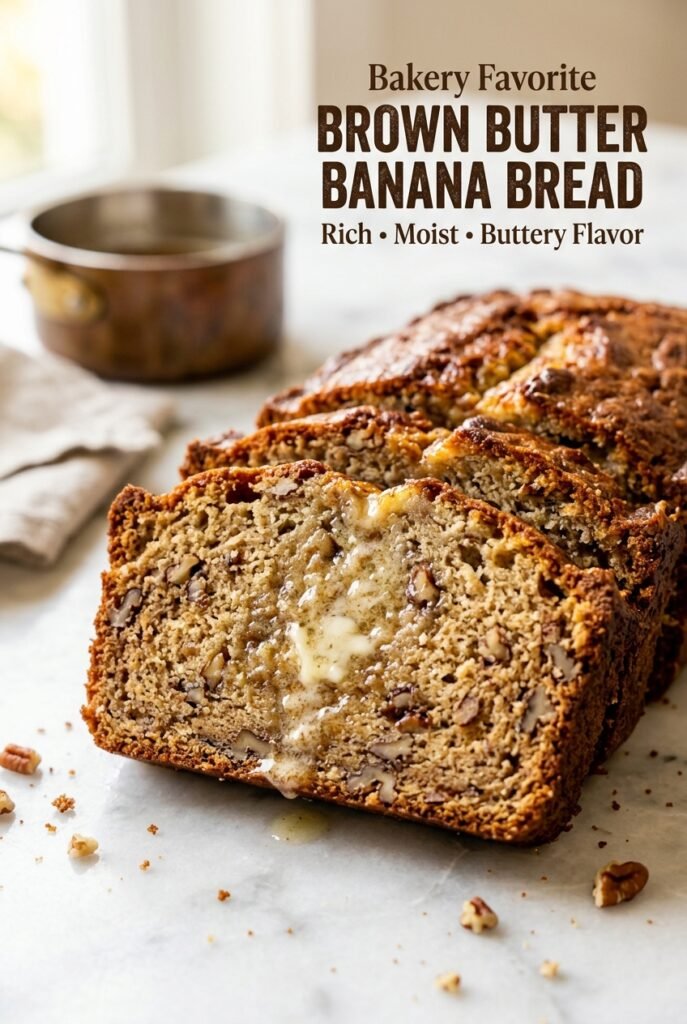
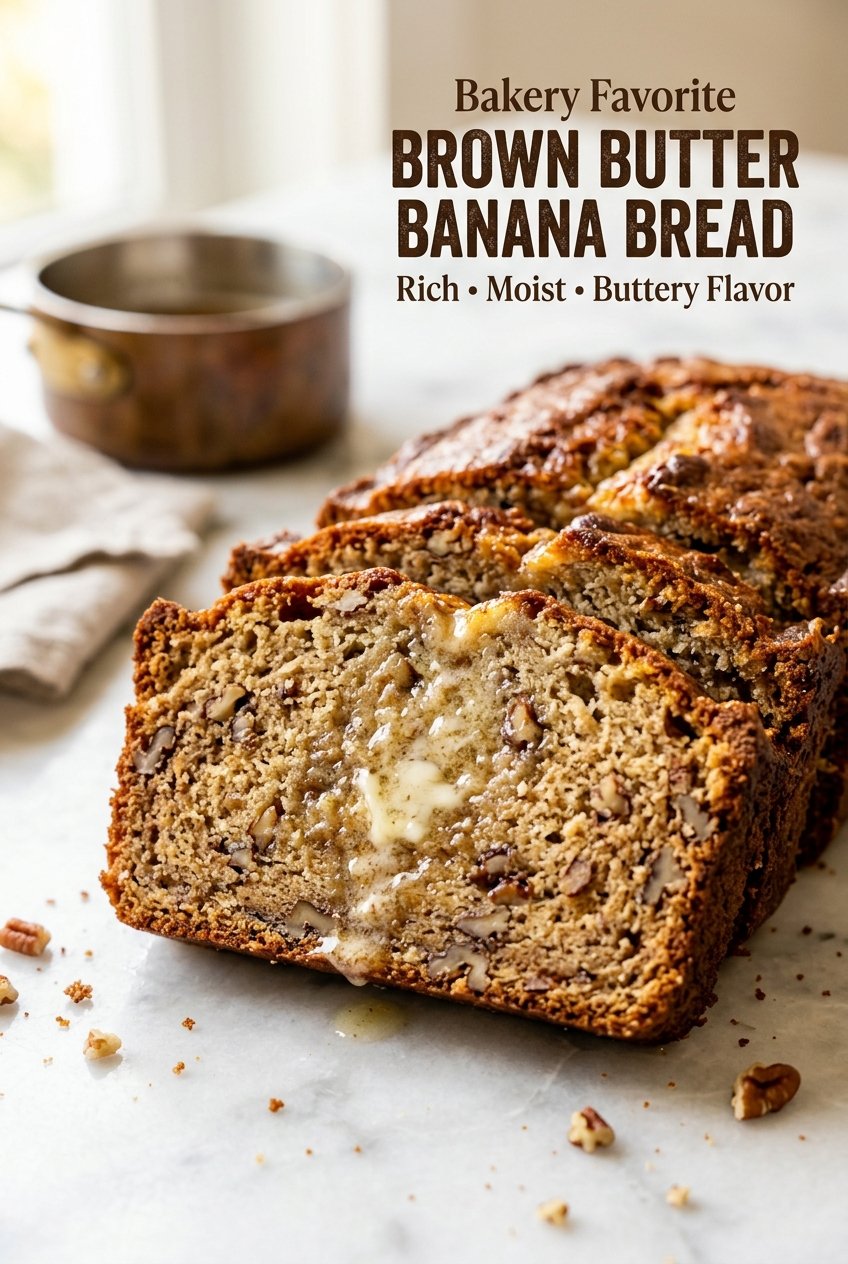
Brown butter banana bread has the kind of depth that plain banana bread never quite reaches. The crumb stays moist and tender, but the flavor goes a step further: nutty, caramelized butter wrapped around sweet bananas, warm spice, and toasted pecans. The top bakes into a deep golden crust with a crackly finish, while the center stays soft enough to slice cleanly without falling apart.
The trick is giving the butter time to brown before it ever meets the bananas. That extra few minutes changes everything. You’re not just adding fat here; you’re building a toasted, almost toffee-like base that makes the loaf taste richer without making it heavy. I also like the mix of brown sugar and granulated sugar because it keeps the bread from tasting flat and helps the crust bake up with a little more snap.
Below, I’ve included the part that matters most: how to brown the butter without going too far, how to keep the loaf from turning dense, and what to do if you want to swap the pecans or leave them out.
The browned butter gave the loaf such a deep, nutty flavor, and the crumb stayed moist for days. I loved the cracked top and the pecans added just enough crunch.
Save this brown butter banana bread for the days when you want a moist loaf with a deep, nutty crust and plenty of banana flavor.
The Butter Browning Stage Is Where the Flavor Starts
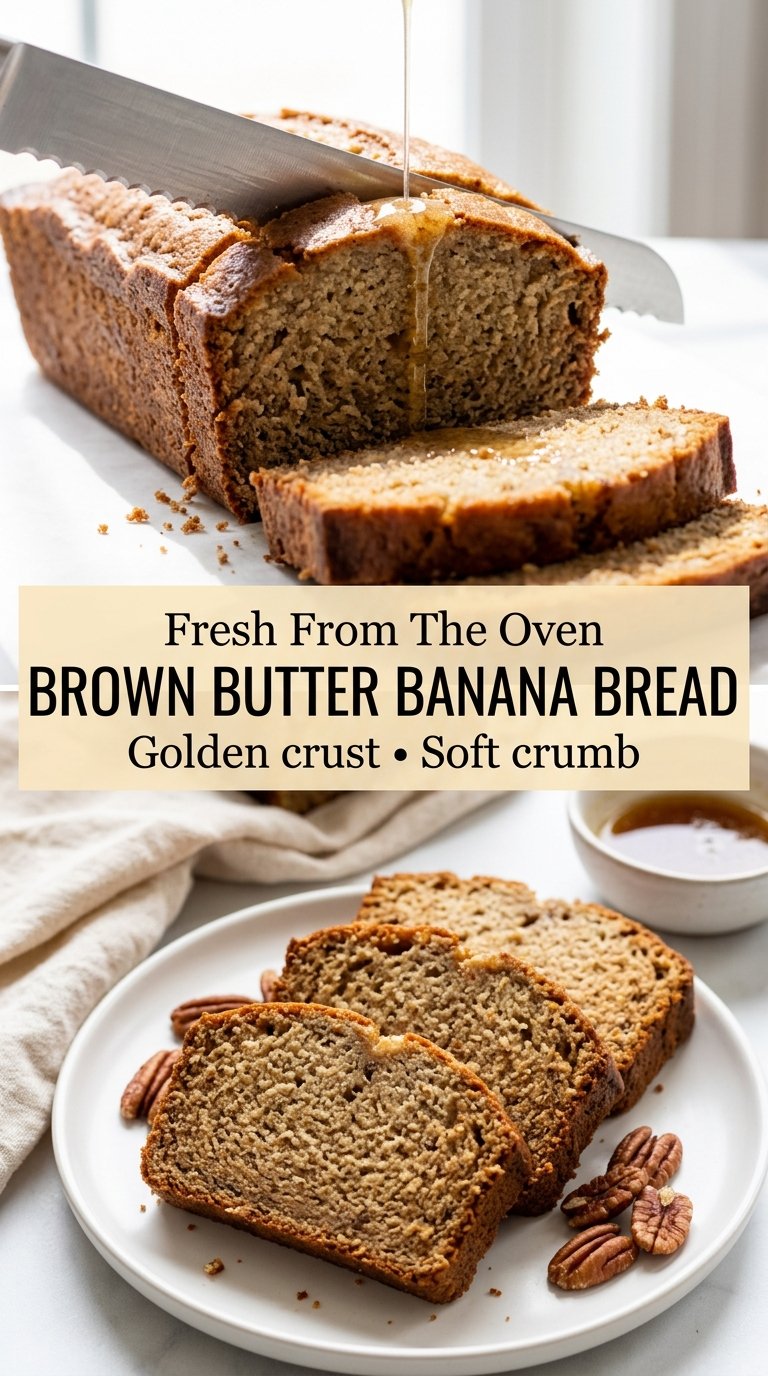
Banana bread can taste one-note if everything goes straight into a bowl and gets stirred together. Browning the butter first fixes that problem before the batter even exists. As the milk solids toast, the butter picks up a nutty aroma and a deeper color that carries through the whole loaf.
The other thing that matters here is not rushing the banana mixture. Ripe bananas bring moisture and sweetness, but they also make the batter heavy if you overmix once the flour goes in. Stir until the flour disappears and stop there. A few streaks are fine; overworking the batter is how you end up with a tight, rubbery loaf instead of a tender one.
- Browned butter — This gives the loaf its signature flavor. Use a light-colored pan so you can see the milk solids turn amber; if the butter goes past dark brown, it’ll taste bitter instead of nutty.
- Ripe bananas — Speckled, soft bananas are ideal because they mash smoothly and bring enough sweetness to balance the browned butter. Under-ripe bananas won’t give you the same moisture or flavor.
- Brown sugar — It adds molasses depth and helps the loaf stay soft. If you need to swap it, coconut sugar works, but the crumb will be a little drier and the flavor less rich.
- Pecans — They’re optional, but they add contrast against the soft crumb. Toast them first if you want a stronger nutty flavor and better crunch.
- Cinnamon and nutmeg — These spices round out the banana and butter without taking over. Freshly grated nutmeg is worth it if you have it; pre-ground still works just fine.
How to Build a Tender Loaf Without a Dense Center
Brown the Butter, Then Let It Cool
Melt the butter in a light-colored saucepan and keep it moving as it cooks. You’re looking for golden-brown flecks at the bottom and a scent that turns from creamy to toasted and nutty. Pull it off the heat as soon as it smells deep and aromatic, because it can go from browned to burnt in a matter of seconds. Let it cool for about 10 minutes so it doesn’t cook the eggs when you mix everything together.
Mix the Wet Ingredients Until Smooth
Whisk the browned butter with the mashed bananas, eggs, sugars, and vanilla until the mixture looks glossy and well combined. Small banana lumps are fine, but the eggs should be fully blended in so the batter bakes evenly. If the butter is too hot here, you’ll see little bits of egg start to set, which throws off the texture of the finished loaf.
Fold the Flour in Only Until It Disappears
Stir the dry ingredients into the wet mixture with a spatula, not a whisk, and stop the second you no longer see dry flour. Banana bread batter should look thick and a little lumpy. That’s normal. Overmixing builds gluten and gives you a gummy, tunneled loaf instead of the soft, even crumb you want.
Bake for the Crackly Top and Clean Center
Pour the batter into a prepared 9×5-inch loaf pan, smooth the surface, and add coarse sugar if you want extra sparkle and crunch. Bake until the top is deeply golden and the center tests clean or with just a few moist crumbs. If the loaf is browning too quickly before the center is done, tent it loosely with foil for the last 10 to 15 minutes.
Three Ways to Make This Banana Bread Fit Your Kitchen
Gluten-Free Version
Use a cup-for-cup gluten-free flour blend in place of the all-purpose flour. The loaf will still hold together, but it may bake up a little more delicate, so let it cool completely before slicing. If your blend doesn’t include xanthan gum, add the amount listed on the package.
Dairy-Free Swap
You can replace the butter with a good vegan butter substitute, but you’ll lose the browned-butter flavor that makes this loaf special. If you go this route, add an extra tablespoon of toasted pecans or a pinch more cinnamon to bring some of that warmth back.
No Pecans
Leave them out if you want a smoother slice or need to avoid nuts. The loaf will still be rich and moist, just a little softer in texture. You can replace them with chocolate chips, but the bread turns sweeter and loses some of its toasty edge.
Storage and Reheating
- Refrigerator: Store sliced or unsliced banana bread in an airtight container for up to 5 days. The crumb gets a little denser after day 2, but the flavor stays excellent.
- Freezer: This loaf freezes well. Wrap the cooled bread tightly in plastic, then foil, and freeze for up to 3 months. Slice first if you want grab-and-go pieces.
- Reheating: Warm slices in a toaster oven or microwave just until heated through. Too much heat dries out the crumb and makes the edges tough, so keep reheating short.
Answers to the Questions Worth Asking
Brown Butter Banana Bread
Ingredients
Equipment
Method
- Preheat the oven to 350°F and grease and line a 9×5-inch loaf pan with parchment paper. Make sure the paper fits up the sides so the loaf releases cleanly.
- Melt the unsalted butter in a light-colored saucepan over medium heat and cook for 5–7 minutes, stirring frequently. When it turns deep golden brown with a rich nutty aroma, remove from the heat and cool for 10 minutes.
- Whisk the browned butter, mashed ripe bananas, large eggs, light brown sugar, granulated sugar, and vanilla extract until smooth. Stop once the mixture looks uniform and glossy.
- Combine all-purpose flour, baking soda, baking powder, salt, ground cinnamon, and ground nutmeg in a separate bowl. Whisk just until the spices are evenly distributed.
- Fold the dry ingredients into the banana mixture just until combined, then stir in the chopped pecans. Avoid overmixing so the loaf stays tender.
- Pour the batter into the prepared loaf pan and smooth the top. Sprinkle with coarse sugar if using.
- Bake at 350°F for 55–65 minutes, until a toothpick inserted into the center comes out clean or with a few moist crumbs. Look for a deeply golden loaf with a beautifully cracked top.
- Cool in the pan for 15 minutes before transferring to a wire rack. Let the bread cool completely before slicing.
