
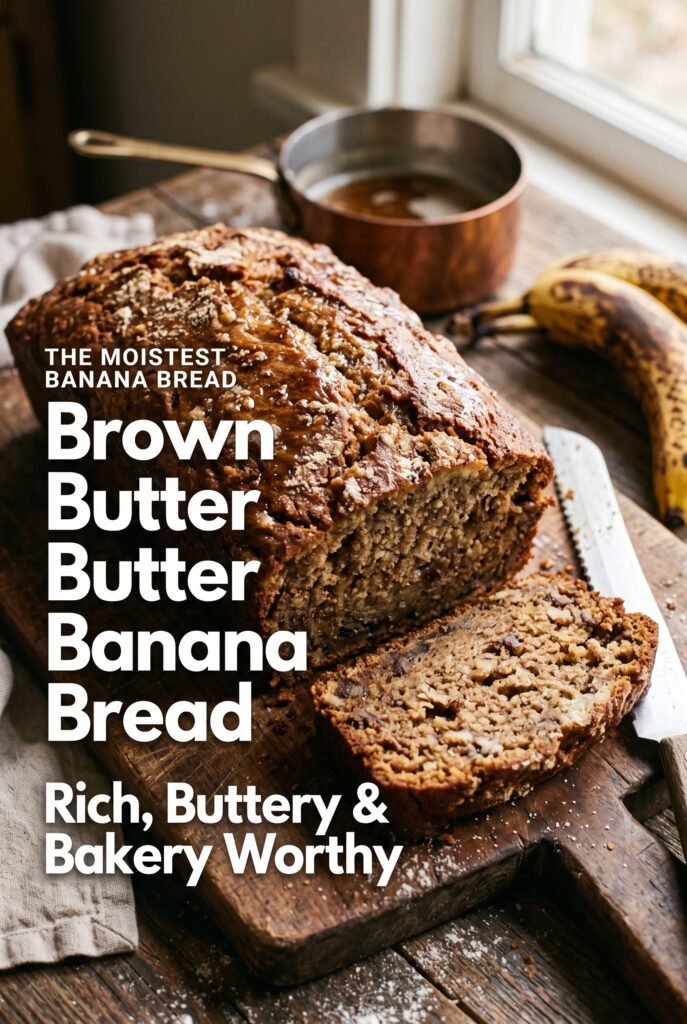
Brown Butter Banana Bread
Brown Butter Banana Bread earns its place in the rotation because it tastes like banana bread with the volume turned up. The crumb stays moist and tender, but the browned…
Tip: save now, read later.
Brown Butter Banana Bread earns its place in the rotation because it tastes like banana bread with the volume turned up. The crumb stays moist and tender, but the browned butter adds a nutty depth that makes each slice feel a little more special than the standard loaf. It still has that familiar banana sweetness, only now there’s a caramel edge and a richer finish that hangs around after the last bite.
The key is giving the butter enough time to toast before it goes into the batter. You want the milk solids to turn amber and smell like hazelnuts, not just melted and glossy. That step does more than add flavor; it also keeps the loaf from tasting flat, which matters when the ingredient list is built around ripe bananas and warm spices. Sour cream helps keep the crumb soft and gives the batter enough fat and acidity to bake up plush instead of heavy.
Below, I’ve included the exact visual cues I watch for in the pan, the swap I use when I want a nut-free loaf, and the one storage trick that keeps slices from drying out by day two.
The butter browning step made all the difference here. My loaf baked up with a tight, moist crumb and the banana flavor came through without tasting overly sweet. I also loved the coarse sugar on top because it gave the crust a little crunch.
Save this Brown Butter Banana Bread for the days when you want a loaf with a nutty crust, a moist center, and that extra caramelized butter flavor.
The Brown Butter Step That Makes This Loaf Taste Bakery-Quality
The biggest mistake with banana bread is treating it like a one-note quick bread. If you melt the butter and move on, the loaf will still bake up fine, but it won’t have the deep, toasty background flavor that makes people ask what you did differently. Browning the butter concentrates the dairy solids and gives the whole loaf a richer, more layered taste without adding any extra ingredients.
The second place people lose quality is overmixing. Once the flour goes in, stir just until the streaks disappear. A few small lumps are better than a tough loaf, and the batter should look thick and a little rough before it goes into the pan. That’s what bakes into a soft crumb instead of a tight, bready slice.
What Each Ingredient Is Doing in This Banana Bread
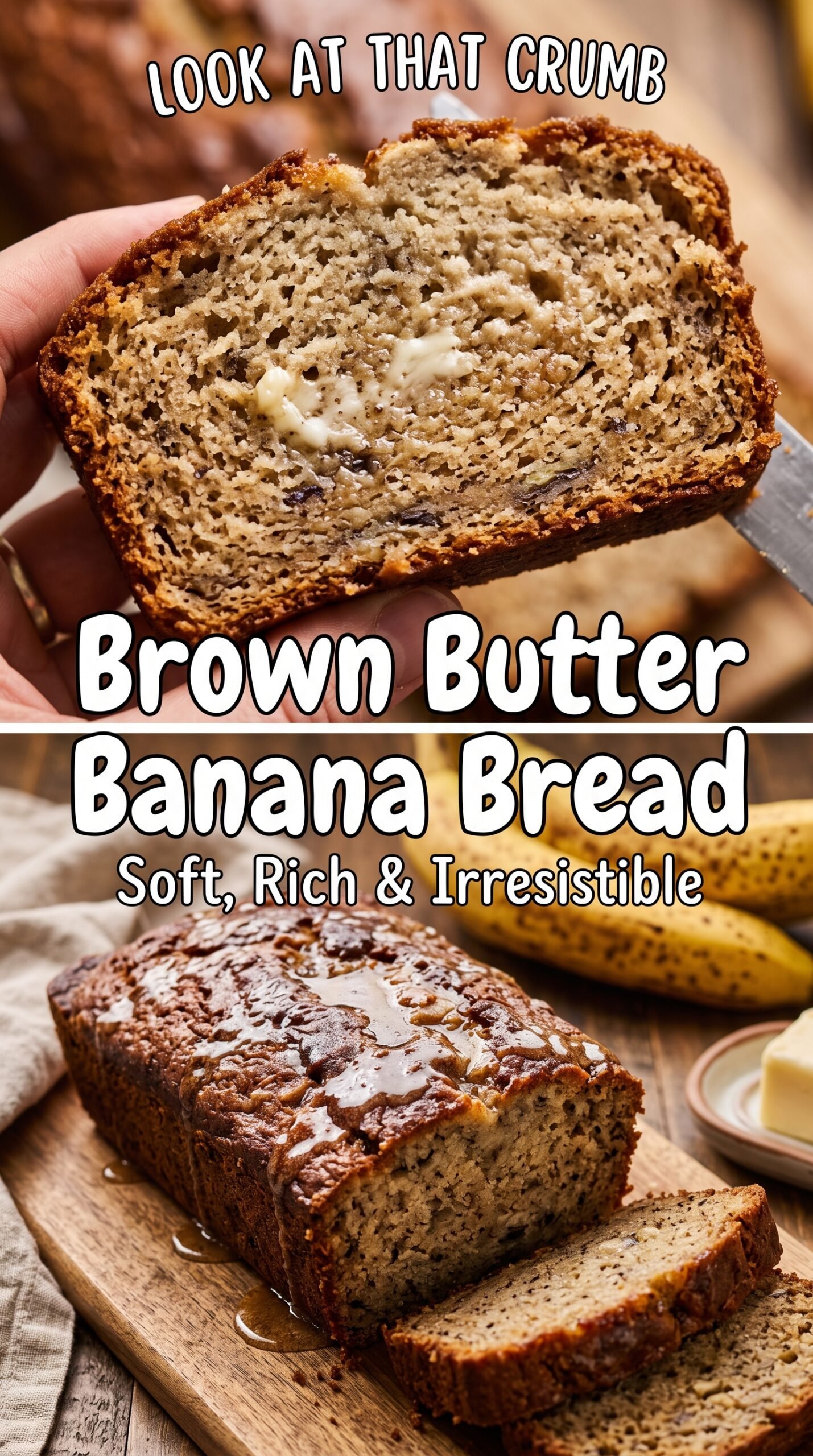
- Unsalted butter — This is the flavor base, and browning it is what turns a good loaf into a memorable one. Use unsalted butter so you control the salt level after the butter reduces during cooking.
- Ripe bananas — The bananas should be heavily speckled or nearly black on the peel. That extra ripeness gives you stronger banana flavor and enough natural sweetness to support the brown sugar.
- Brown sugar and granulated sugar — Brown sugar brings moisture and a caramel note, while granulated sugar helps the crumb bake up with a little structure. Using both keeps the loaf balanced instead of one-dimensional.
- Sour cream — This adds tang and tenderness. If you need a swap, plain Greek yogurt works, but use full-fat yogurt so the loaf doesn’t dry out.
- Walnuts — Optional, but they add a nice crunch that plays well with the soft crumb and browned butter. Toast them first if you have the extra minute; it sharpens their flavor and keeps them from tasting raw in the finished loaf.
Building the Batter Without Losing the Moist Crumb
Browning the Butter
Set the butter over medium heat and let it melt, foam, and then quiet down as the milk solids start to sink and toast. Stir or swirl the pan so the bottom doesn’t scorch. The moment you smell a nutty aroma and see amber flecks at the bottom, pull it off the heat and pour it into a bowl to cool for about 10 minutes. If it stays in the hot pan too long, it keeps cooking and can cross from browned to burned.
Mixing the Wet Ingredients
Whisk the browned butter with both sugars first so the sugar starts dissolving before the eggs go in. Then add the eggs, vanilla, mashed bananas, and sour cream. The mixture should look glossy and thick, with the banana fully dispersed but still a little textured. If the butter is too hot, it can scramble the eggs or melt the sugar unevenly, so that short cooling time matters.
Bringing the Batter Together
Fold the dry ingredients into the wet mixture just until the flour disappears. The batter should look dense and spoonable, not runny. If you keep stirring after the flour is incorporated, the loaf turns rubbery instead of tender. Add the walnuts last, and stop as soon as they’re distributed.
Baking Until the Center Sets
Scrape the batter into the prepared loaf pan and sprinkle the top with coarse sugar if you want a crisp, sparkly crust. Bake at 350°F until the top is deep golden and a toothpick comes out clean from the center, usually 55 to 65 minutes. If the top browns too fast while the middle is still soft, tent it loosely with foil for the last stretch. Let it cool in the pan for 15 minutes before lifting it out so the loaf sets instead of collapsing.
Three Ways to Make This Loaf Fit What You Need
Nut-Free Banana Bread
Skip the walnuts and bake the loaf as written. You’ll lose the crunch, but the browned butter still gives the bread enough depth that it doesn’t need the nuts to feel complete.
Dairy-Free Version
Use a plant-based butter that browns well and swap the sour cream for a thick dairy-free yogurt. The loaf will still be moist, though the browned butter flavor will be a little softer and less nutty than the original.
Extra-Spiced Loaf
Add an extra 1/4 teaspoon cinnamon or a pinch of cardamom for a warmer finish. Cardamom leans a little more floral, while extra cinnamon keeps the flavor more familiar and classic.
Storage and Reheating
- Refrigerator: Store wrapped or in an airtight container for up to 5 days. The crumb stays moist, but the browned butter flavor softens a little after the first day.
- Freezer: Banana bread freezes well. Wrap the cooled loaf or individual slices tightly in plastic, then foil, and freeze for up to 3 months.
- Reheating: Warm slices in a toaster oven or low oven until just heated through. A microwave works in a pinch, but too much time makes the crumb gummy and dulls the crust.
Answers to the Questions Worth Asking
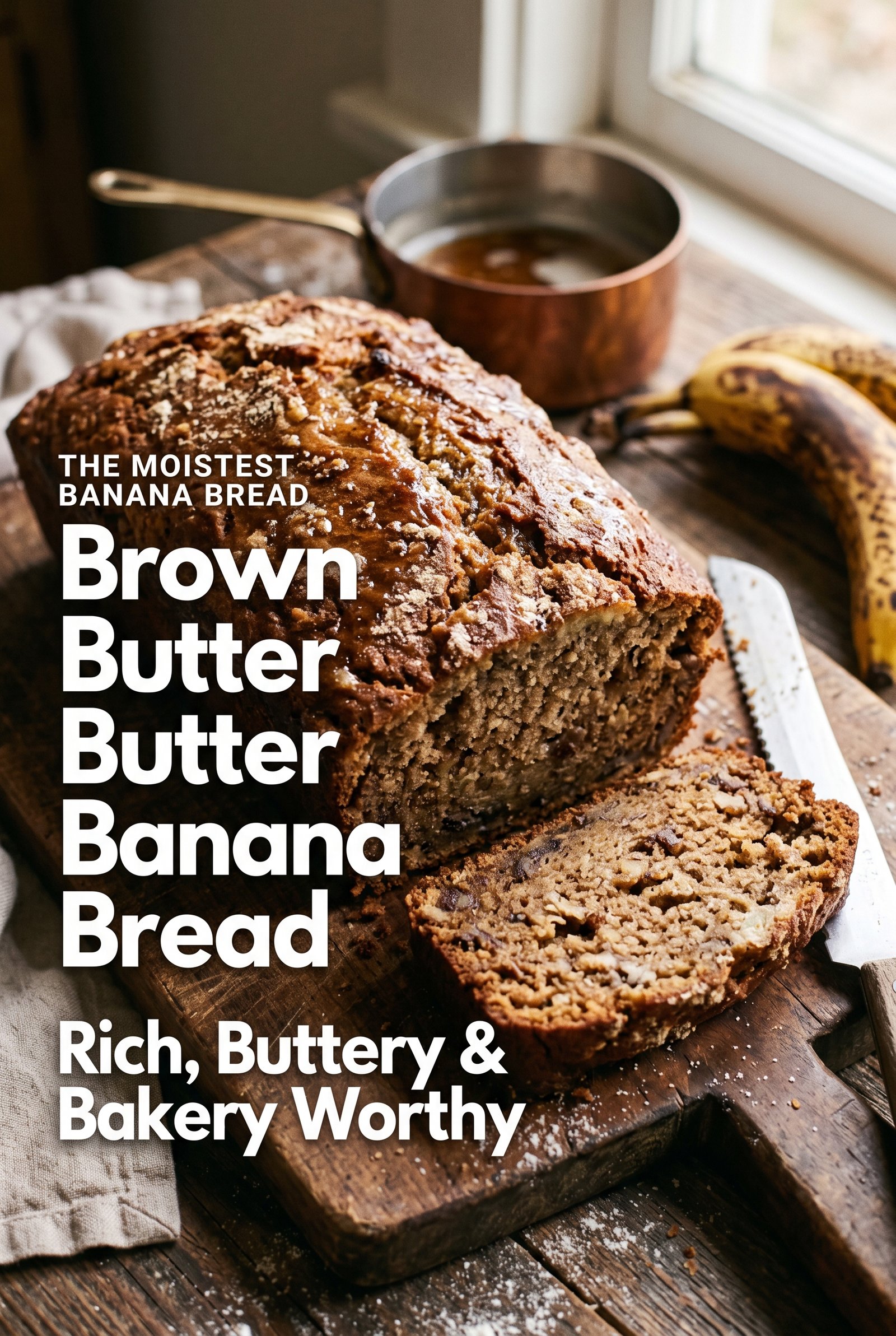
Brown Butter Banana Bread
Ingredients
Equipment
Method
- Preheat the oven to 350°F (175°C).
- Grease a 9×5-inch loaf pan and line with parchment paper.
- Melt the butter in a saucepan over medium heat until golden brown with a nutty aroma, about 5–8 minutes.
- Cool the browned butter for 10 minutes.
- Whisk together the all-purpose flour, baking soda, baking powder, salt, ground cinnamon, and ground nutmeg in a bowl.
- Whisk together the browned butter, light brown sugar, granulated sugar, large eggs, vanilla extract, mashed ripe bananas, and sour cream until smooth.
- Fold the dry ingredients into the wet ingredients until just combined.
- Fold in the chopped toasted walnuts if using.
- Pour the batter into the prepared loaf pan and sprinkle with the coarse sugar if using.
- Bake at 350°F (175°C) for 55–65 minutes, until a toothpick inserted into the center comes out clean.
- Cool the loaf for 15 minutes.
- Transfer to a wire rack, then slice and serve warm with butter if desired.
