
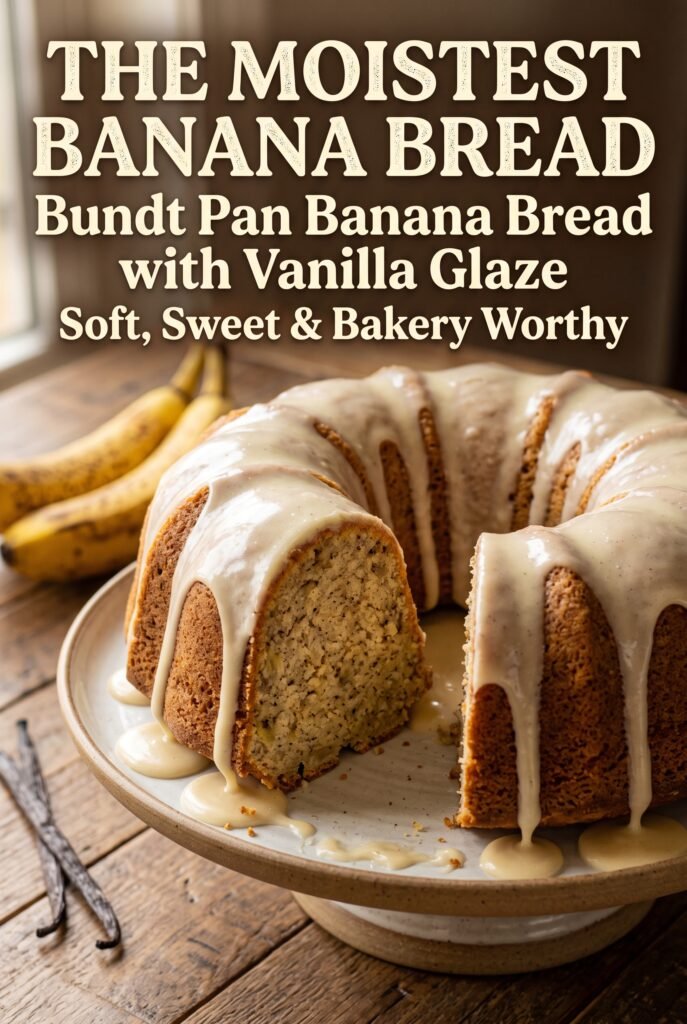
Bundt Pan Banana Bread with Vanilla Glaze
The first slice of Bundt pan banana bread should be plush and moist, with a tender crumb that holds together cleanly and a glossy vanilla glaze dripping down the ridges.…
Tip: save now, read later.
The first slice of Bundt pan banana bread should be plush and moist, with a tender crumb that holds together cleanly and a glossy vanilla glaze dripping down the ridges. Baking banana bread in a Bundt pan changes the whole experience: more surface area for caramelized edges, a prettier finish, and a loaf that feels a little more special without asking for any extra fuss.
The trick is balancing enough banana for flavor with enough structure to keep the cake from turning heavy. Sour cream and milk keep the crumb soft, while the mix of granulated and brown sugar gives you both lift and a deeper, almost caramel note. The glaze matters too. A thin glaze slides into the grooves and sets with a light sheen, while a thicker one stays put in ribbons over the top.
Below, I’ll walk you through the small details that keep this loaf from sticking, the ingredient swaps that actually work, and the timing cue that tells you when it’s done without drying it out.
The cake came out so moist and the glaze settled into every ridge of the Bundt pan. I was worried it would stick, but it released cleanly after 15 minutes and sliced beautifully once the glaze set.
Save this Bundt pan banana bread with vanilla glaze for the days when you want a tall, tender banana bread with bakery-style ridges and a silky finish.
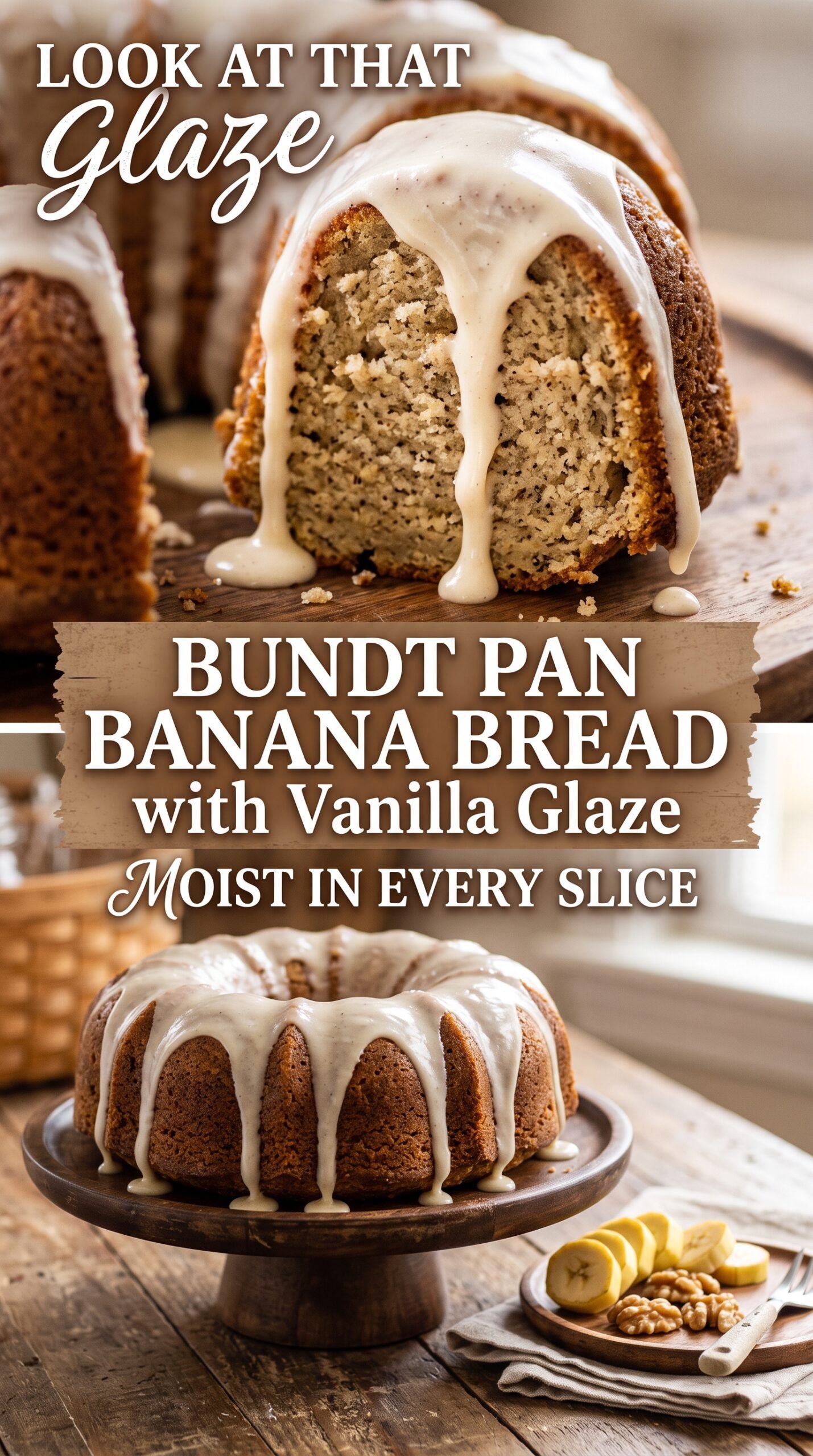
The Part That Keeps a Bundt Banana Bread from Baking Dense
A Bundt pan banana bread can go from tender to heavy fast if the batter is overmixed or the pan is underprepared. The goal is a batter that looks just combined, not whipped smooth. Once the flour goes in, every extra stroke works the gluten and tightens the crumb. That’s the fastest way to lose the soft, cake-like texture that makes this version worth baking.
The other trap is rushing the pan prep. Bundt pans have ridges and corners that love to hold onto cake, so a thorough greasing and flouring does more than prevent sticking. It preserves the shape and keeps the glaze from pooling in broken chunks instead of running neatly down the sides.
- Ripe bananas — The darker and softer they are, the better the flavor and moisture. Bananas that still have a little firmness won’t mash as smoothly and won’t give the same sweet, fragrant result.
- Sour cream — This is what keeps the crumb plush without making the loaf wet. Plain full-fat yogurt works in a pinch, but sour cream gives a slightly richer texture.
- Brown sugar — It adds depth and helps the bread stay soft for days. If you only have white sugar, the loaf will still bake, but the flavor will be flatter and the crumb a touch drier.
- Butter — Butter brings a clean, rich flavor that oil can’t fully match here. If you need to use oil, the bread will stay moist, but you’ll lose some of the flavor that makes the glaze and banana taste pop.
Building the Batter Without Beating the Life Out of It
Starting with the dry ingredients
Whisk the flour, baking soda, baking powder, salt, and cinnamon together first so the leaveners and spice are evenly distributed. That prevents bitter little pockets of baking soda and keeps the cinnamon from clumping. If your dry mix looks uneven now, it will bake unevenly later.
Creaming the butter and sugars
Beat the butter with both sugars until the mixture looks lighter and a little fluffy, not oily or grainy. This step gives the loaf some lift and helps create a finer crumb. If the butter is too cold, it won’t cream well; if it’s melted, the batter turns dense and greasy.
Adding the bananas and sour cream
Mix in the eggs one at a time, then add the vanilla, mashed bananas, and sour cream. The batter may look slightly curdled at this point, and that’s fine. Once the flour goes in, it smooths out. The mistake is overbeating after the bananas go in, which can make the loaf tough instead of tender.
Finishing the batter and baking
Add the dry ingredients gradually, alternating with the milk, and stop mixing as soon as the flour disappears. Scrape the bowl well so no dry streaks hide at the bottom. Pour the batter into the prepared Bundt pan and bake until a toothpick comes out clean or with just a few moist crumbs attached. If it comes out wet, give it a few more minutes; if it comes out bone-dry, the loaf may already be past its sweetest spot.
Make It Dairy-Free Without Losing the Tender Crumb
Swap the butter for a plant-based baking stick and use full-fat coconut yogurt or another thick dairy-free yogurt in place of the sour cream. The texture stays soft, though the flavor shifts a little depending on the substitute you choose. The glaze can be made with a non-dairy milk and the same powdered sugar.
How to Make It a Little Less Sweet
Cut the granulated sugar back by 2 tablespoons and keep the brown sugar as written. That small change softens the sweetness without changing the structure, and the banana flavor comes through more clearly. I wouldn’t reduce the sugar much more than that or the loaf starts to bake up drier.
Using Greek Yogurt Instead of Sour Cream
Plain Greek yogurt works well if it’s full-fat and not watery. The loaf will be slightly tangier and a touch less rich, but the crumb still stays moist. If the yogurt looks thin, strain it for a few minutes before measuring so the batter doesn’t loosen too much.
Storage and Reheating
- Refrigerator: Store covered for up to 4 days. The glaze may soak in a little, but the loaf stays moist.
- Freezer: Freeze the unglazed loaf, tightly wrapped, for up to 2 months. Add the glaze after thawing for the best texture.
- Reheating: Warm slices briefly in the microwave for 10 to 15 seconds or toast them lightly. Long reheating dries out the crumb fast, especially once the glaze is on.
Questions I Get Asked About This Recipe
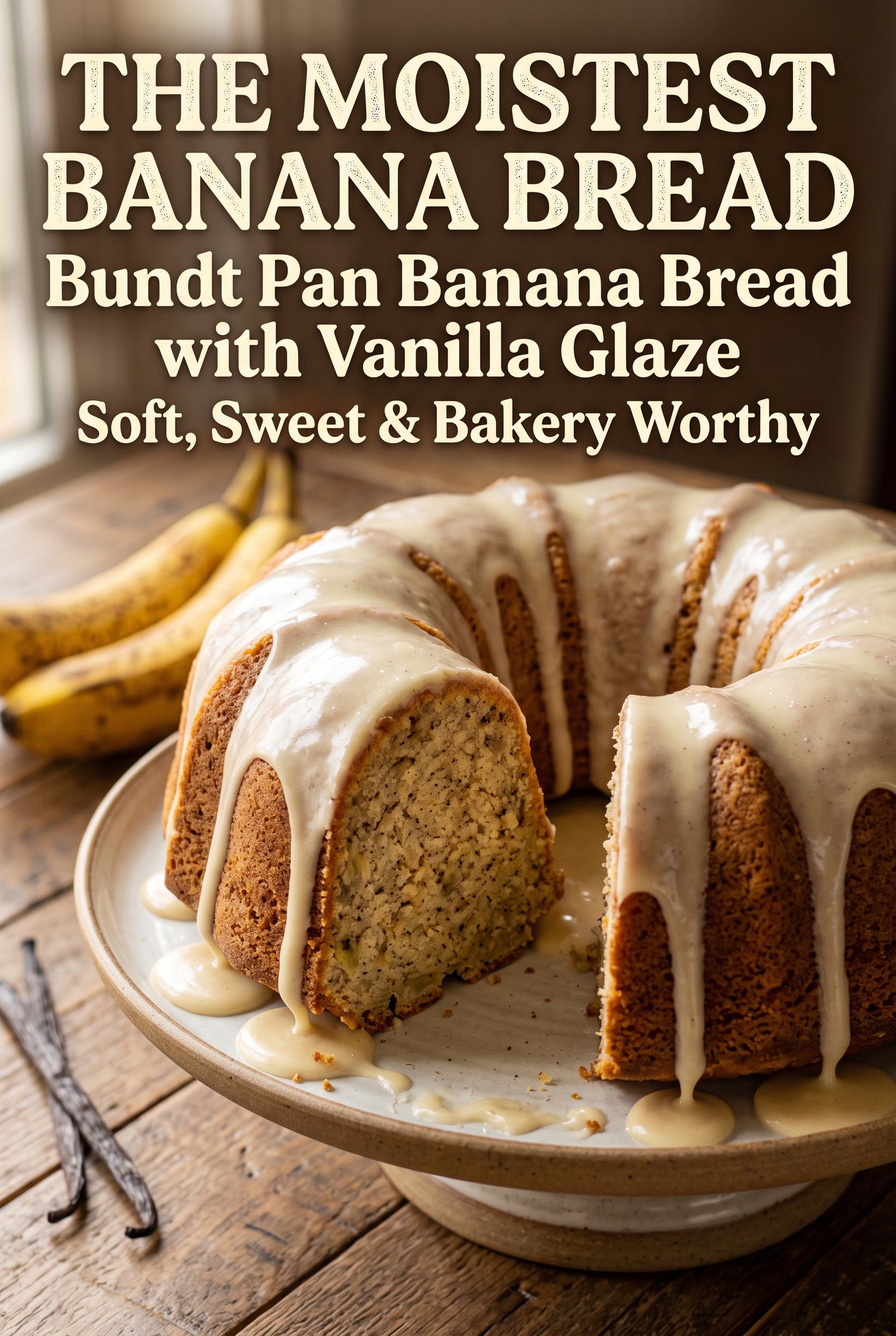
Bundt Pan Banana Bread with Vanilla Glaze
Ingredients
Equipment
Method
- Preheat the oven to 350°F (175°C). Set up a 10-inch Bundt pan so it’s ready to fill.
- Grease and flour a 10-inch Bundt pan. Tap out excess flour so the batter releases cleanly.
- Whisk together all-purpose flour, baking soda, baking powder, salt, and ground cinnamon. Whisk until the mixture is evenly speckled with cinnamon.
- In a separate bowl, beat unsalted butter, granulated sugar, and light brown sugar until light and fluffy. Look for a noticeably paler, thicker texture.
- Beat in the eggs one at a time. Mix only until each egg disappears before adding the next.
- Mix in vanilla extract, mashed ripe bananas, and sour cream. Stop mixing once the batter looks uniform and moist.
- Gradually add the dry ingredients, alternating with whole milk. Mix just until no dry streaks remain, for a tender crumb.
- Pour the batter into the prepared Bundt pan. Gently smooth the top so it bakes evenly.
- Bake at 350°F (175°C) for 50–60 minutes, until a toothpick inserted into the center comes out clean. The top should look set and lightly browned.
- Cool the banana bread in the pan for 15 minutes. Letting it rest helps the cake release without tearing.
- Transfer the Bundt to a wire rack. Cool until it’s fully cooled before glazing.
- Whisk together powdered sugar, melted butter, whole milk, vanilla extract, and salt until smooth. Adjust with more whole milk if needed for a pourable consistency.
- Drizzle the vanilla glaze over the cooled banana bread and allow it to set before slicing. Wait until the glaze looks slightly firm on the surface.
