
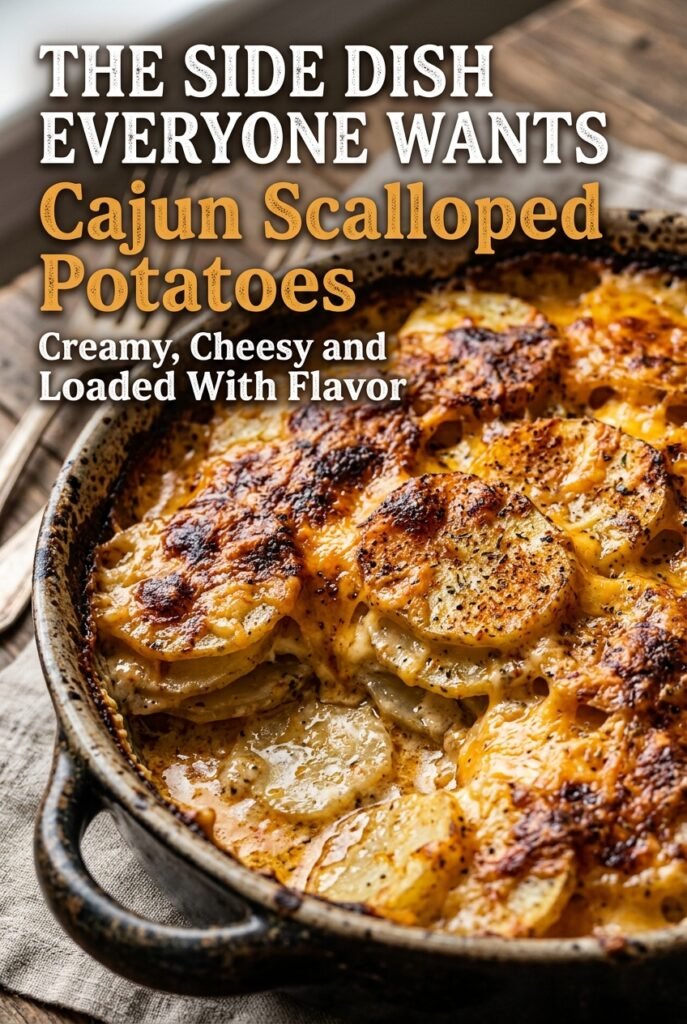
Cajun Scalloped Potatoes
Golden, bubbly Cajun scalloped potatoes hit the table with the kind of comfort that makes people pause mid-conversation. The potatoes turn tender without falling apart, the cream sauce stays rich…
Tip: save now, read later.
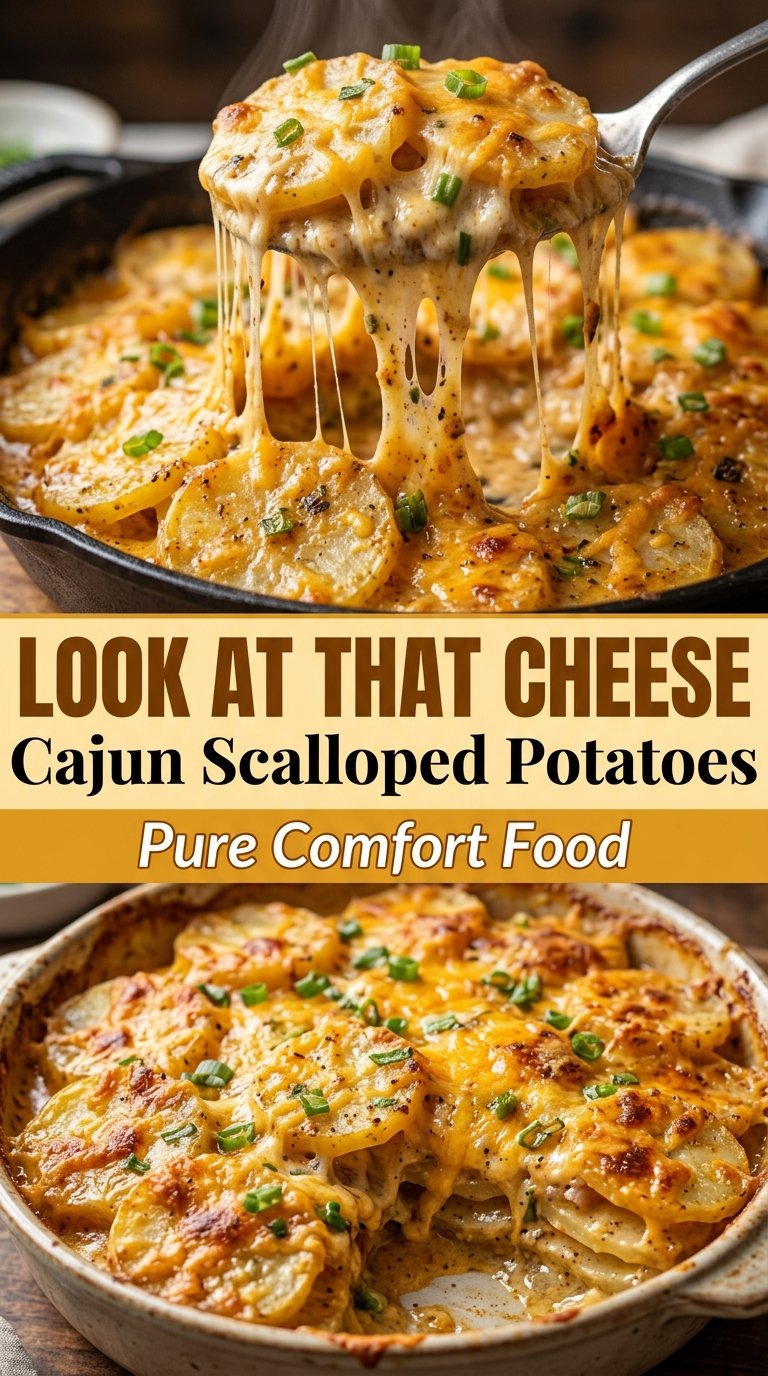
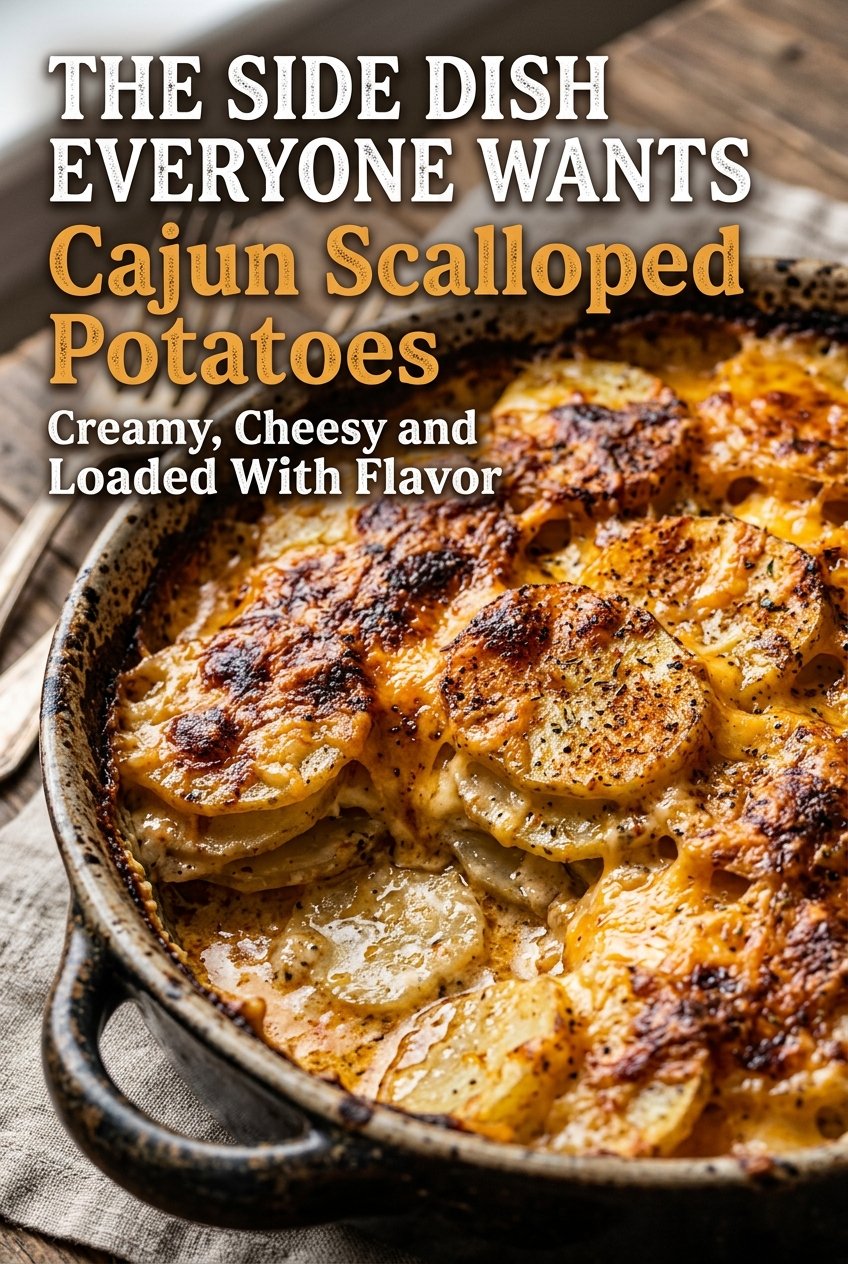
Golden, bubbly Cajun scalloped potatoes hit the table with the kind of comfort that makes people pause mid-conversation. The potatoes turn tender without falling apart, the cream sauce stays rich and spoonable, and the top bakes into a cheesy crust with just enough edge to keep every bite interesting. The Cajun seasoning doesn’t just sit on top; it works through the whole dish, so you get heat, garlic, paprika, and that savory Southern backbone in every layer.
What makes this version work is the balance between the sauce and the potatoes. The flour gets cooked with the butter, onion, and garlic before the dairy goes in, which keeps the sauce from tasting raw and helps it thicken enough to cling to the slices instead of running straight to the bottom of the pan. Russet potatoes are the right call here because they soften beautifully and help thicken the sauce a little as they bake. If you slice them evenly and give the dish enough covered baking time, the center cooks through before the top gets too dark.
Below, you’ll find the detail that matters most for getting the texture right, a few smart ingredient swaps, and the small things that keep this casserole from turning greasy or loose.
The sauce thickened up beautifully and the potatoes were tender all the way through without getting mushy. I used a little extra cheese on top and it came out with the best golden crust.
Save these Cajun Scalloped Potatoes for the nights when you want a cheesy baked side with bold seasoning and a crisp, golden top.
The Trick to Keeping Scalloped Potatoes Creamy Instead of Watery
Scalloped potatoes go sideways when the sauce is too thin, the potatoes are sliced unevenly, or the dish doesn’t get enough time under foil. The sauce should be lightly thickened before it ever touches the baking dish. That matters because raw cream and milk need help holding onto the potatoes as they bake, and the flour only does its job after it has had a minute to cook in the butter.
The other mistake is rushing the uncovered finish. Covered baking softens the potatoes all the way through, but the top won’t brown until the foil comes off. If you pull it too early, the center may still be firm even though the sauce looks done. Give it the full covered time, then finish uncovered until the top is bubbling at the edges and the cheese has developed those browned spots that tell you it’s ready.
What Each Ingredient Is Doing in This Dish
- Russet potatoes — These are the best choice because they soften into tender layers and help thicken the sauce naturally. Yukon Golds will work if that’s what you have, but the final texture will be a little waxier and less fluffy.
- Heavy cream and whole milk — The cream gives the dish its rich body, while the milk keeps it from feeling heavy. Using all milk makes the sauce thinner; using all cream makes it richer but heavier. This blend lands in the middle.
- Cajun seasoning and paprika — Cajun seasoning carries the main flavor, but paprika deepens the color and rounds out the spice. If your Cajun blend is salty, hold back a little salt until the sauce tastes balanced.
- Sharp cheddar and mozzarella — Cheddar brings the bite and the color, while mozzarella gives you that pull and stretch. If you swap in all cheddar, the flavor gets stronger but the top won’t melt quite as smoothly.
- Butter, onion, and garlic — This is the base that keeps the sauce from tasting flat. Cooking the onion first softens its sharpness, and the garlic only needs a short minute so it doesn’t turn bitter.
Building the Layers So the Potatoes Cook Evenly
Start the sauce before you touch the potatoes
Melt the butter and cook the onion until it turns soft and translucent, not browned. Add the garlic just long enough for it to smell fragrant, then whisk in the flour and let it cook for a minute so the sauce doesn’t taste pasty. Once the dairy goes in, keep whisking until the mixture looks smooth and slightly thickened. If it looks lumpy now, those lumps will show up later in the casserole.
Layer with intention, not chaos
Arrange the potato slices in even layers and pour the sauce over each one as you build the dish. This helps every layer get coated instead of leaving the bottom half dry and the top too wet. Sprinkle the cheeses between layers so they melt down through the potatoes instead of sitting only on top. Thin, even slices matter here; thick wedges won’t soften at the same rate and the center can stay firm.
Bake covered first, then brown the top
Covering the dish traps steam and lets the potatoes finish cooking without drying out. After about 50 minutes, remove the foil and keep baking until the top is deeply golden and the sauce bubbles around the edges. That last stretch is where the crust develops, but if the top starts browning too quickly, loosely tent it again and keep going until a knife slides through the center without resistance.
How to Adapt This for Different Kitchens and Different Crowds
Gluten-Free Version
Swap the all-purpose flour for a 1:1 gluten-free flour blend. The sauce will thicken the same way as long as you whisk it in fully and cook it with the butter for that full minute. The texture stays creamy, not grainy.
Lighter Dairy Swap
You can use half-and-half in place of the heavy cream if you want a slightly lighter casserole. The sauce won’t be quite as rich, and it may take a minute longer to thicken on the stove, but it still bakes up well. I wouldn’t go lower than that or the sauce can turn thin.
Extra-Spicy Cajun Potatoes
Add a pinch of cayenne or a little crushed red pepper if you want more heat. That keeps the same creamy base but gives the dish a sharper finish. Start small; Cajun seasoning blends vary a lot, and some are already hotter than others.
Storage and Reheating
- Refrigerator: Store leftovers covered for up to 4 days. The sauce will thicken as it chills, so the casserole will look firmer the next day.
- Freezer: It freezes, but the texture softens a bit after thawing because of the dairy and potatoes. Freeze in portions, wrap well, and thaw overnight in the refrigerator before reheating.
- Reheating: Warm covered in a 350°F oven until heated through, then uncover for a few minutes to re-crisp the top. The most common mistake is blasting it in the microwave, which can make the sauce separate and the potatoes go mealy.
Questions I Get Asked About This Dish
Cajun Scalloped Potatoes
Ingredients
Equipment
Method
- Preheat the oven to 375°F (190°C).
- Grease a 9×13-inch baking dish.
- Melt butter in a saucepan over medium heat.
- Add onion and cook for 3 minutes, stirring until softened.
- Stir in garlic and cook for 30 seconds, just until fragrant.
- Whisk in all-purpose flour and cook for 1 minute to remove the raw flour taste.
- Slowly whisk in heavy cream and whole milk until smooth and no lumps remain.
- Add Cajun seasoning, paprika, salt, and black pepper.
- Simmer for 3–4 minutes until slightly thickened, with a pourable consistency.
- Arrange one-third of the potato slices in the baking dish.
- Pour over one-third of the sauce.
- Sprinkle with one-third of the shredded sharp cheddar cheese and one-third of the shredded mozzarella cheese.
- Repeat the layers two more times, finishing with cheeses on top.
- Cover with foil and bake for 50 minutes.
- Remove the foil and bake another 20–25 minutes until golden brown and bubbly.
- Let rest for 10 minutes so the sauce sets and slices hold together.
- Garnish with chopped parsley and serve.
