

Chicken Cheesesteak Skillet
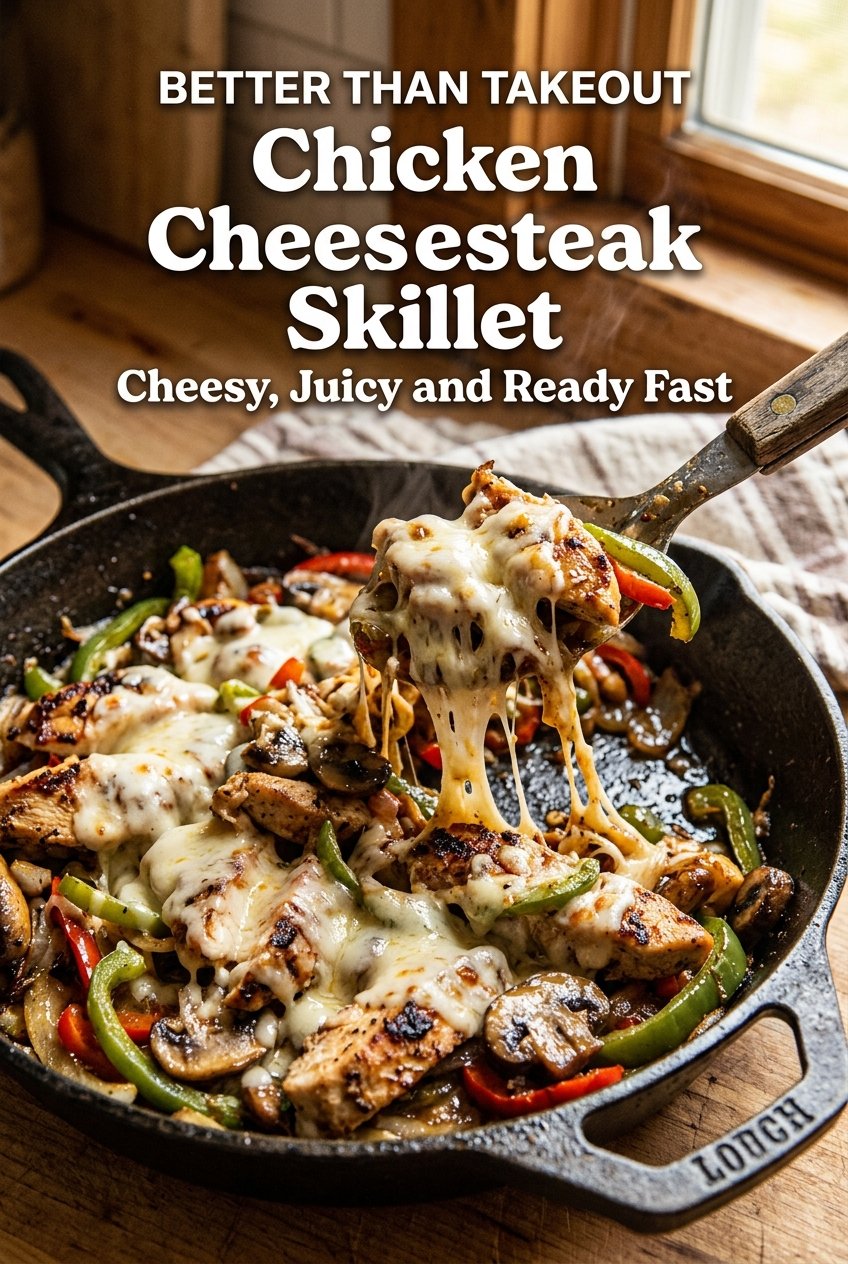
Juicy chicken, sweet peppers, soft onions, and mushrooms all tucked under a blanket of melted provolone make this chicken cheesesteak skillet feel like a full sandwich shop dinner without the…
Tip: save now, read later.
Juicy chicken, sweet peppers, soft onions, and mushrooms all tucked under a blanket of melted provolone make this chicken cheesesteak skillet feel like a full sandwich shop dinner without the extra pans. The chicken stays tender, the vegetables keep enough bite to taste like themselves, and the whole skillet comes together with the kind of browned edges and cheesy finish that makes people hover near the stove waiting for dinner.
What makes this version work is the order. The chicken gets a head start with the seasonings so it doesn’t taste flat, then the vegetables go in after the meat has had a chance to pick up some color. That keeps everything from turning watery. The provolone melts cleanly over the top and gives you that familiar cheesesteak pull without needing a heavy sauce.
Below you’ll find a simple way to keep the chicken from drying out, plus a few smart swaps if you want to change up the vegetables or serve it in a different way. It’s one of those skillet dinners that looks uncomplicated on paper and still lands like you put in more effort than you did.
The chicken stayed juicy and the peppers still had a little bite, which is exactly what I wanted. I served it over rice and the provolone melted into the pan juices so well that my husband asked if I could add this to the regular dinner rotation.
Save this chicken cheesesteak skillet for the nights when you want melted provolone, tender chicken, and a fast one-pan dinner without the sandwich mess.
The Trick to Keeping the Chicken Tender While the Vegetables Finish
Chicken breasts go dry when they spend too long in the pan before the vegetables are ready. Thin slicing helps, but the real fix is cooking the chicken just until it picks up color, then letting the onions, peppers, and mushrooms finish the job. By the time the skillet is covered and the cheese melts, the chicken has already passed the stage where it can turn stringy.
Another common problem is a wet skillet. Mushrooms and onions release a lot of liquid, and if the pan is overcrowded they steam instead of browning. Use a wide skillet and give the vegetables a little room so that moisture can cook off. That’s what gives you the savory, browned flavor you want instead of a soft, watery filling.
What Each Ingredient Is Doing in This Skillet

- Chicken breasts — Thinly sliced chicken cooks quickly and stays tender when it only needs a few minutes in the pan. If you cut it thicker, the outside will overcook before the center is done. Chicken thighs work too if you want a richer result and don’t mind a little more fat in the skillet.
- Bell peppers, onions, and mushrooms — This combination gives you the classic cheesesteak feel and the best balance of sweetness, moisture, and bite. The mushrooms add savoriness, but if you leave them out, the dish will still work. Just reduce the cooking time slightly because the pan will hold less moisture.
- Provolone — Provolone melts smoothly without separating, which is why it works better here than a lot of sharper cheeses. If you swap it, use another good melting cheese like mozzarella or white American. Pre-sliced cheese melts more evenly than thick blocks cut at home.
- Italian seasoning and paprika — These give the chicken enough background flavor to stand up to the vegetables and cheese. Paprika adds warmth and color, while the Italian seasoning keeps the skillet from tasting flat. If you want a more classic cheesesteak flavor, cut the Italian seasoning in half and add a little extra black pepper instead.
Building the Skillet in the Right Order
Season the Chicken First
Heat the olive oil in a large skillet over medium-high heat, then add the sliced chicken in a single layer. Let it sit long enough to pick up color before stirring. If you move it too soon, it will gray out and you lose the browned bits that give the pan flavor. The chicken only needs to be lightly browned at this stage because it finishes with the vegetables and cheese.
Cook the Vegetables Until the Pan Goes Dry
Add the onions, peppers, and mushrooms once the chicken has some color. Stir occasionally, but don’t rush this part; you’re waiting for the vegetables to soften and the mushroom liquid to cook off. If the skillet looks soggy, keep cooking for another minute or two until the bottom starts to sizzle again. That sound means the moisture is finally gone and the flavor can concentrate.
Let the Cheese Melt Without Overcooking Everything
Stir in the garlic for just 30 seconds, then spread the mixture evenly across the skillet and lay the provolone over the top. Cover the pan only until the cheese melts, usually 2 to 3 minutes. If you leave it covered too long, the vegetables can go limp and the chicken will keep cooking past the point where it stays juicy. Pull it off the heat as soon as the cheese looks glossy and fully softened.
Three Ways to Work This Into Your Weeknight Rotation
Dairy-Free Skillet With the Same Savory Base
Skip the provolone and finish with a dairy-free melting cheese if you have one that actually softens well. If you leave the cheese off entirely, the skillet still works, but it turns into more of a sauté than a cheesesteak-style dish. Add a splash of chicken broth at the end if you want a little gloss and extra pan sauce.
Extra Cheesy Sandwich Filling
If you’re serving this on rolls, let the mixture cook a minute longer uncovered so a little more moisture evaporates. That keeps the bread from getting soggy. Spoon it into toasted hoagie rolls and add an extra slice of provolone under the filling if you want the cheese to melt both under and over the chicken.
Lower-Carb Dinner Bowl
Serve the skillet over cauliflower rice or shredded lettuce if you want a lighter plate. The key is to keep the skillet mixture hot enough that the cheese melts on contact, then put it over the base right before serving. If the base is cold, the cheese firms up too quickly and you lose that stretchy texture.
Storage and Reheating
- Refrigerator: Store leftovers in an airtight container for up to 4 days. The vegetables soften a little more as they sit, but the flavor holds up well.
- Freezer: It freezes okay, but the peppers and mushrooms lose some texture. Freeze in portions for up to 2 months if you don’t mind a softer result after thawing.
- Reheating: Warm it in a skillet over medium-low heat with a splash of water or broth, then cover just until heated through. Microwaving works in a pinch, but it can make the chicken rubbery if you blast it too long.
Answers to the Questions Worth Asking
Chicken Cheesesteak Skillet
Ingredients
Equipment
Method
- Heat olive oil in a large skillet over medium-high heat.
- Add chicken and season with Italian seasoning, paprika, salt, and black pepper, then spread it into an even layer.
- Cook for 5–6 minutes until lightly browned.
- Add onions, green bell pepper, red bell pepper, and mushrooms to the skillet and stir to combine.
- Cook for another 6–8 minutes until vegetables soften.
- Stir in garlic and cook for 30 seconds.
- Spread the chicken-vegetable mixture evenly in the skillet.
- Lay provolone cheese slices over the top in a single layer.
- Cover for 2–3 minutes until the cheese melts.
- Sprinkle with chopped parsley and serve hot.
