
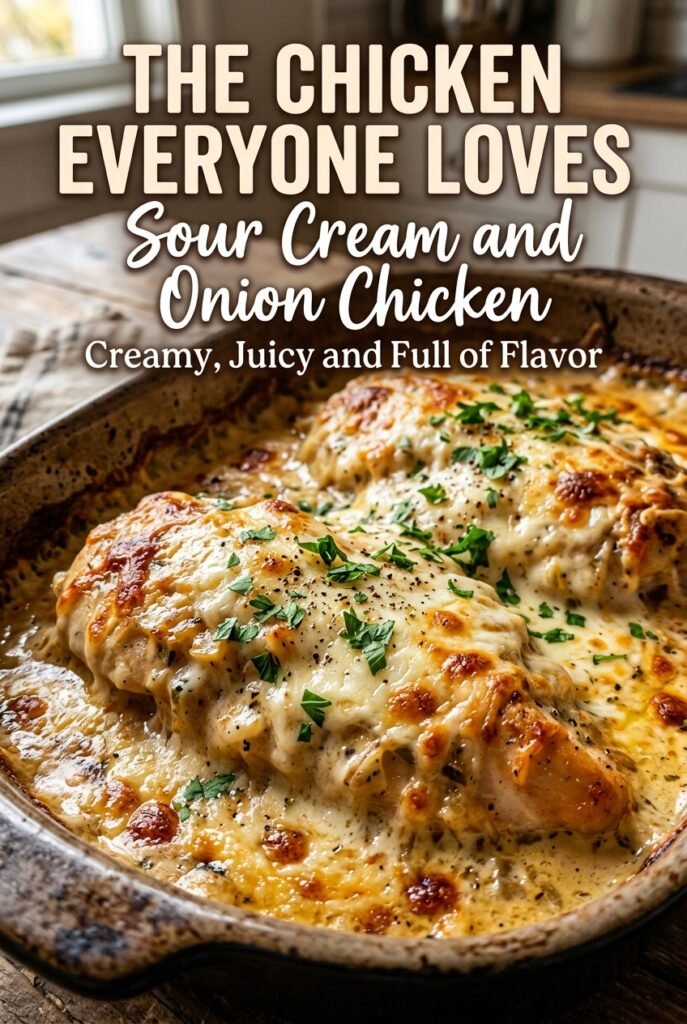
Sour Cream and Onion Chicken
Sour cream and onion chicken lands on the plate with a creamy sauce that clings to every bite, a savory onion seasoning that tastes deeper than the ingredient list looks,…
Tip: save now, read later.
Sour cream and onion chicken lands on the plate with a creamy sauce that clings to every bite, a savory onion seasoning that tastes deeper than the ingredient list looks, and chicken that stays juicy instead of drying out in the oven. The mozzarella on top melts into a browned, stretchy layer that gives each serving a little extra comfort without turning the dish heavy or fussy.
The trick here is using the onion soup mix as a built-in seasoning base, then stretching it with sour cream so the flavor coats the chicken instead of baking into a dry crust. Covering the dish first keeps the chicken tender, and removing the foil near the end lets the cheese brown and the sauce tighten up. Patting the chicken dry before it goes in the pan matters more than people think; wet chicken steams, and steamed chicken never gets the same texture.
Below, I’ve included the one timing detail that keeps the chicken from overbaking, plus a few swaps that work when you need to use what’s already in the fridge. Once you’ve made it once, this is the kind of dinner that starts showing up in the rotation without much planning.
The sauce baked up creamy instead of runny, and the onion flavor was spot-on without tasting salty. I followed the foil timing exactly and the chicken stayed juicy all the way through.
Save this sour cream and onion chicken for a creamy baked chicken dinner with juicy meat, melty cheese, and almost no cleanup.
The Reason the Chicken Stays Juicy Instead of Drying Out
The biggest mistake with baked chicken breasts is treating them like they need a long, uncovered roast from the start. That’s how you end up with stringy edges and a dry center. Here, the foil does the quiet work early on: it traps moisture, gently heats the chicken through, and keeps the sour cream mixture from tightening too fast.
The second mistake is piling on the cheese too early. Mozzarella melts best when it gets its own final stretch in the oven, after the chicken is already cooked through. That last uncovered bake gives you a little browning on top without pushing the meat past 165°F.
- Foil first, then no foil — that two-stage bake is what protects the chicken from drying out.
- Sour cream — it adds body and tang, and it helps the onion seasoning spread evenly over the chicken.
- Onion soup mix — this is the main flavor driver, so low-sodium substitutions won’t taste quite the same.
- Chicken breasts of even thickness — if one side is much thicker, pound it lightly so the whole tray finishes at the same time.
What Each Ingredient Is Actually Doing in This Dish
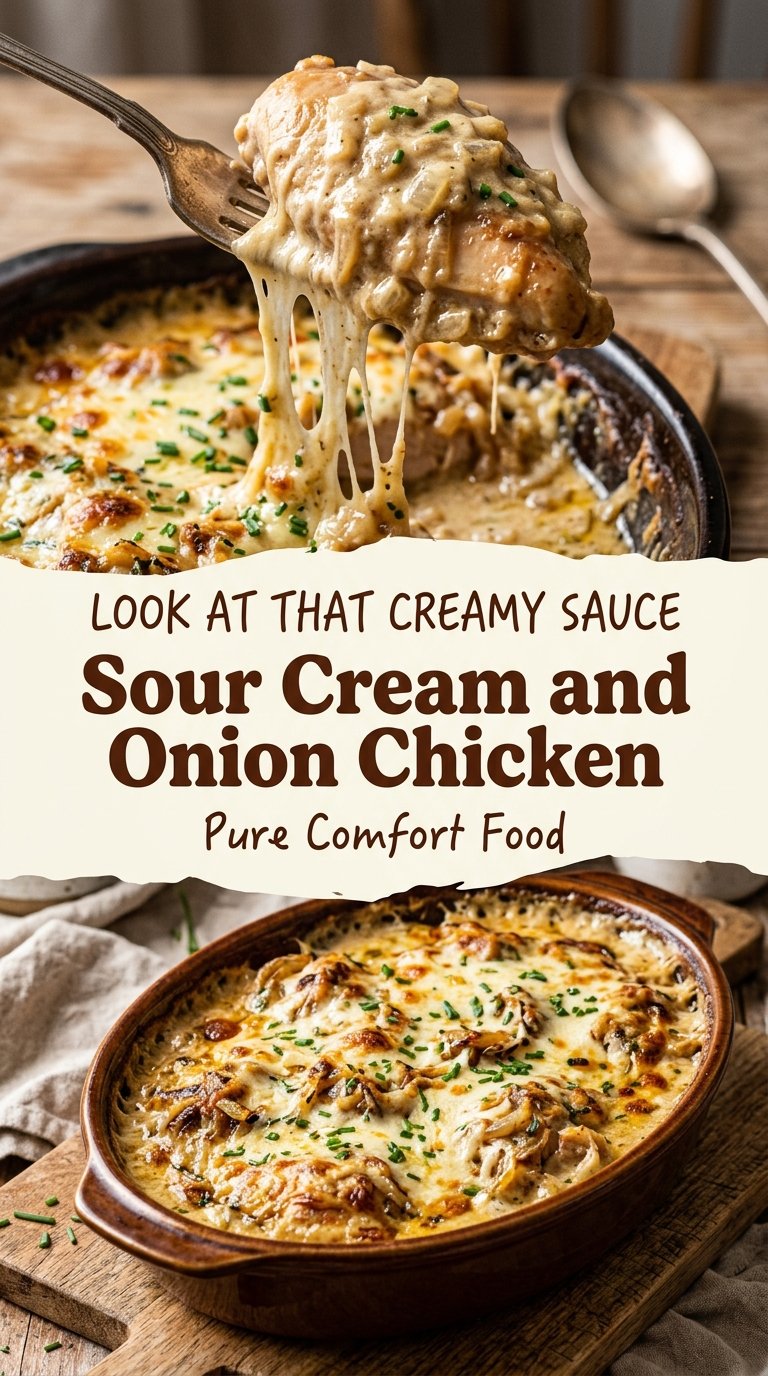
- Chicken breasts — Boneless, skinless breasts work because they cook quickly and slice cleanly under the creamy topping. If yours are thick in the center, pound them to an even thickness so they don’t dry out before the middle is done.
- Sour cream — This gives the sauce its tangy, plush texture. Full-fat sour cream holds up best in the oven; lighter versions can work, but they’re a little more likely to loosen and look thinner.
- Onion soup mix — This is where the savory depth comes from, and it does more than just add onion flavor. If you swap it out, you’ll need to season more aggressively with onion powder, salt, and a little bouillon or the dish can taste flat.
- Mozzarella cheese — Mozzarella melts into a soft blanket without overpowering the onion sauce. A low-moisture shredded mozzarella is the best choice here because it browns a bit better than fresh mozzarella.
- Paprika and garlic powder — These round out the seasoning so the sauce tastes built, not one-note. Smoked paprika changes the dish more than sweet paprika does, so use smoked only if you want a deeper, slightly woodsy finish.
- Parsley — This is mostly for freshness at the end. It cuts through the richness and keeps the finished dish from looking one-dimensional on the plate.
How to Layer the Chicken So the Sauce Bakes, Not Breaks
Mix the Sauce First
Stir the sour cream, onion soup mix, garlic powder, paprika, and black pepper until the mixture looks smooth and evenly speckled. If the seasoning is clumpy here, it will stay clumpy on the chicken. The sauce should be thick enough to spread but not so stiff that it tears when you drag a spoon through it.
Cover the Chicken Completely
Set the chicken in a lightly greased baking dish and spread the sauce all the way to the edges of each breast. Any bare spot will dry out faster than the rest of the meat. A thin, even layer works better than a thick mound in the middle, which can slide off when the chicken releases its juices.
Bake Covered, Then Finish Uncovered
Keep the dish covered for the first 30 minutes so the chicken cooks gently. When you remove the foil, the sauce should look hot and settled, not watery. Add the mozzarella at that point and bake until the chicken reaches 165°F and the cheese is melted with a few browned spots at the edges.
Let It Rest Before Serving
Give the chicken five minutes out of the oven before you cut into it. That short rest lets the juices settle back into the meat instead of running onto the cutting board. Spoon any sauce from the pan over the top before serving; that’s the part that carries the most onion flavor.
Three Ways to Make This Recipe Work for Different Kitchens
Dairy-Free Swap
Use a thick dairy-free sour cream and skip the mozzarella, or top the chicken with a little seasoned olive oil and breadcrumbs if you still want a finished surface. The texture changes a bit, but the onion seasoning still comes through clearly.
Chicken Thigh Version
Boneless thighs work well and stay even juicier than breasts, but they need a little more time in the oven. Bake until the thickest part reaches 165°F to 175°F, and expect a richer, slightly more savory result.
Gluten-Free Version
Use a certified gluten-free onion soup mix if you can find one. That keeps the flavor structure intact without changing the method, which matters more here than adding extra ingredients to cover the swap.
Make It Ahead
You can mix the sauce and coat the chicken a few hours ahead, then refrigerate the dish until baking time. If it goes into the oven cold from the fridge, add a few extra minutes to the covered bake so the center heats through evenly.
Storage and Reheating
- Refrigerator: Store leftovers in an airtight container for up to 3 days. The sauce thickens as it chills, which is normal.
- Freezer: It freezes, but the sour cream sauce can separate a little after thawing. Freeze in portions and thaw overnight in the refrigerator for the best texture.
- Reheating: Warm gently in a covered baking dish at 325°F until heated through, or reheat smaller portions in the microwave at half power. High heat is what dries out the chicken and makes the sauce look broken.
Answers to the Questions Worth Asking
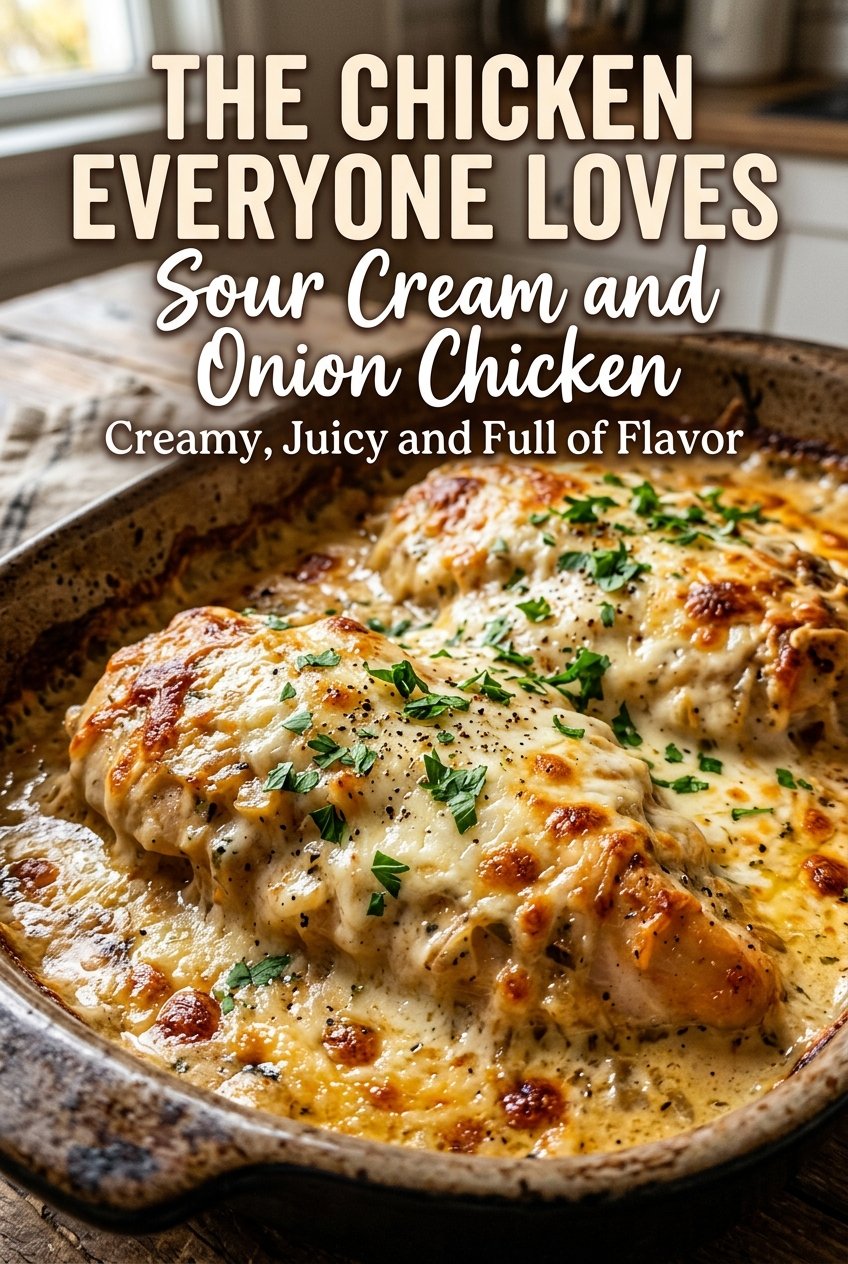
Sour Cream and Onion Chicken
Ingredients
Equipment
Method
- Preheat oven to 375°F (190°C). Set up a rack in the middle so the chicken bakes evenly.
- Lightly grease a 9×13-inch baking dish with cooking spray. Coat the bottom so the sauce doesn’t stick.
- Pat the chicken breasts dry and place them in the baking dish. Arrange them in a single layer for consistent cooking.
- In a bowl, mix sour cream, onion soup mix, garlic powder, paprika, and black pepper. Stir until the mixture is smooth and evenly combined.
- Spread the sour cream mixture evenly over the chicken. Make sure each breast is coated with a thick layer.
- Cover with foil and bake for 30 minutes at 375°F (190°C). Bake until the chicken looks set around the edges.
- Remove foil and sprinkle mozzarella cheese over the chicken. Spread it across the tops so it melts evenly.
- Bake uncovered for 15–20 minutes at 375°F (190°C) until the chicken reaches 165°F (74°C). Look for bubbling sauce and lightly golden cheese.
- Let the chicken rest for 5 minutes. The juices will redistribute so the breasts stay tender.
- Garnish with chopped parsley and serve. Plate with mashed potatoes, rice, or roasted vegetables.
