
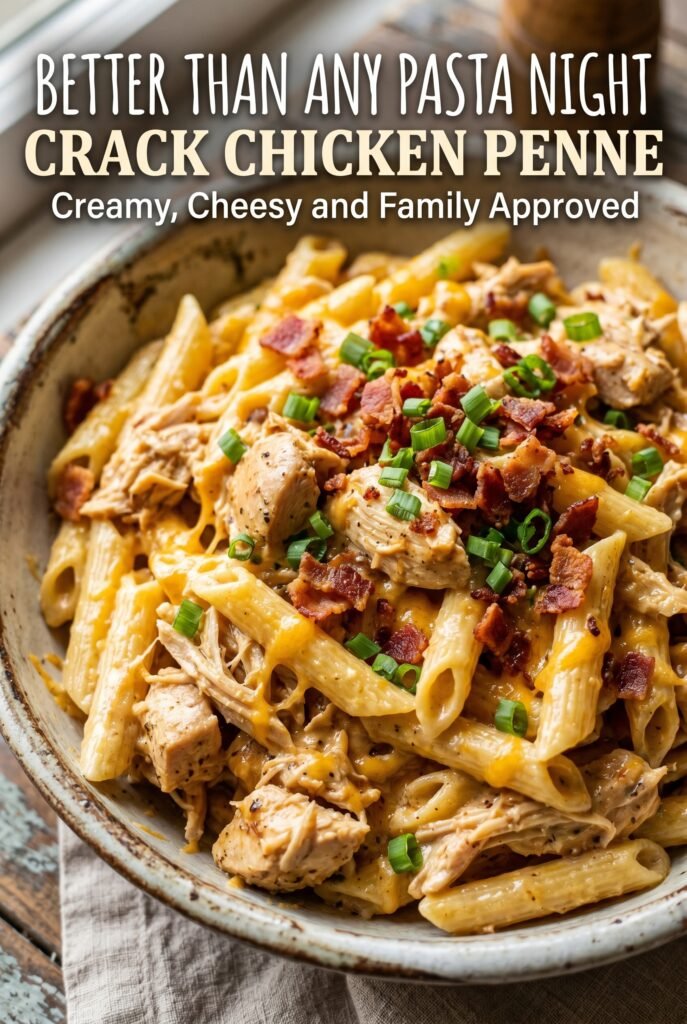
Crack Chicken Penne
Creamy, smoky, and just a little bit salty, Crack Chicken Penne hits the kind of comfort-food balance that keeps people going back for one more forkful. The sauce clings to…
Tip: save now, read later.
Creamy, smoky, and just a little bit salty, Crack Chicken Penne hits the kind of comfort-food balance that keeps people going back for one more forkful. The sauce clings to every ridge of the penne, the bacon stays crisp enough to cut through the richness, and the ranch seasoning brings in that familiar tang that makes the whole pan taste complete. It’s the sort of dinner that feels bigger than the effort it takes to make it, which is exactly why it lands in the weeknight rotation so easily.
What makes this version work is the order. The chicken gets cooked first so it can brown before the sauce goes in, and that browned fond on the pan bottom seasons everything that follows. Cream cheese and broth loosen into a smooth base, then the cheddar melts in at lower heat so the sauce stays glossy instead of grainy. The pasta gets tossed directly in that sauce, which lets the penne soak up flavor instead of sitting under it like an afterthought.
If you’ve had crack chicken dishes that felt too heavy or too salty, the details below will help. A little control over heat and timing keeps the sauce silky, and there’s a simple way to adjust the texture if you like it looser or thicker.
The sauce coated every piece of penne and didn’t turn gluey when I reheated the leftovers the next day. I also loved that the bacon stayed crisp on top instead of getting lost in the sauce.
Save this creamy Crack Chicken Penne for the nights when you want a rich, bacon-loaded pasta that comes together in one skillet.
The Reason the Sauce Stays Creamy Instead of Turning Grainy
Crack Chicken Penne only works when the dairy is handled gently. The biggest mistake is rushing the sauce over high heat after the cream cheese goes in. That’s how you get a broken, oily pan instead of a smooth, clingy sauce. Low to medium heat gives the cream cheese time to melt evenly, and the broth helps it loosen before the cheddar arrives.
The bacon also matters more than people think. If it goes into the sauce too early, it loses the crisp edge that gives each bite a little contrast. Stir most of it in near the end, then save a handful for the top so the final dish still has texture. That small detail keeps the pasta from tasting flat.
What Each Ingredient Is Actually Doing in This Dish

- Penne pasta — Penne holds onto the sauce better than long noodles because the ridges and tube shape trap the creamy coating. If you swap it, choose another short pasta with some texture, like rigatoni or rotini.
- Cream cheese — This is what gives the sauce its body. It needs to be softened so it melts smoothly; cold cream cheese is the fastest way to end up with little stubborn lumps in the pan.
- Ranch seasoning mix — Ranch seasoning brings salt, herbs, and tang in one move, which is why this dish tastes complete without a long ingredient list. Homemade ranch seasoning works too if you keep the salt level in check.
- Heavy cream — Heavy cream keeps the sauce rich and stable. Half-and-half can work in a pinch, but the sauce will be a little thinner and more likely to reduce quickly.
- Cheddar cheese — Sharp cheddar gives the sauce its main cheese flavor. Shred it yourself if you can, because pre-shredded cheese often contains anti-caking agents that make the melt less smooth.
- Bacon — Bacon adds salt, smoke, and crunch. Cook it until crisp enough to crumble cleanly, then add most of it at the end so it doesn’t go soft in the sauce.
Building the Sauce Before the Cheese Goes In
Cooking the Chicken First
Start by browning the diced chicken in olive oil until the pieces are fully cooked and lightly golden on the outside. The goal is not just doneness; it’s getting enough color in the pan to deepen the flavor of the sauce later. If the skillet looks dry before the chicken is cooked through, keep the heat steady and let the natural juices evaporate. Crowding the pan will steam the chicken instead of browning it, so use a large skillet and give the pieces some space.
Turning the Pan Drippings into Sauce
Once the heat drops to medium, add the cream cheese, ranch seasoning, broth, and heavy cream. Stir patiently and scrape up the browned bits from the bottom of the pan. Those bits are where a lot of the flavor lives, and they disappear into the sauce as it smooths out. If the mixture looks curdled at first, keep stirring over gentle heat; it usually comes together once the cream cheese fully melts.
Melting in the Cheddar Without Breaking It
Add the cheddar after the base is smooth and remove some of the heat if the pan is bubbling hard. Cheese melts best when the sauce is hot, not boiling. Stir until the sauce turns thick and glossy, then add the pasta and bacon. If you dump the cheese in too early or over high heat, the fat can separate and the sauce gets grainy instead of silky.
Finishing with the Pasta
Toss the cooked penne into the sauce and let it sit for a minute or two so the pasta can absorb some of that richness. Stir in most of the bacon, then finish with the rest and the sliced green onions. The dish should look glossy and loose enough to spoon, but not watery. If it tightens up too much in the pan, splash in a little reserved pasta water or broth to bring it back.
How to Adapt This for Different Kitchens and Different Eaters
Gluten-Free Crack Chicken Penne
Use a gluten-free penne that holds its shape well, and check the ranch seasoning label for hidden gluten. The sauce itself is naturally gluten-free, so the pasta is the only real swap. Cook the pasta just to al dente, because gluten-free noodles can go soft fast once they sit in the sauce.
Lighter Dairy Swap
You can use reduced-fat cream cheese and half-and-half, but expect a thinner sauce with a softer finish. The dish still tastes good, but it won’t cling to the pasta the same way. If you go this route, reduce the broth a little so the sauce doesn’t end up loose.
Bacon-Lover’s Version
Crisp an extra 2 slices of bacon and use them as the topping only. That gives you more crunch on the finish without overloading the sauce with bacon fat. It’s the easiest way to make the dish taste bigger without changing the base recipe.
Storage and Reheating
- Refrigerator: Store in an airtight container for up to 4 days. The sauce will thicken as it chills.
- Freezer: It freezes, but the dairy sauce can separate a bit when thawed. If you do freeze it, cool it completely first and reheat slowly.
- Reheating: Warm it in a skillet over low heat with a splash of broth or cream, stirring often. Microwaving on high tends to dry the pasta out and can make the sauce split.
Answers to the Questions Worth Asking
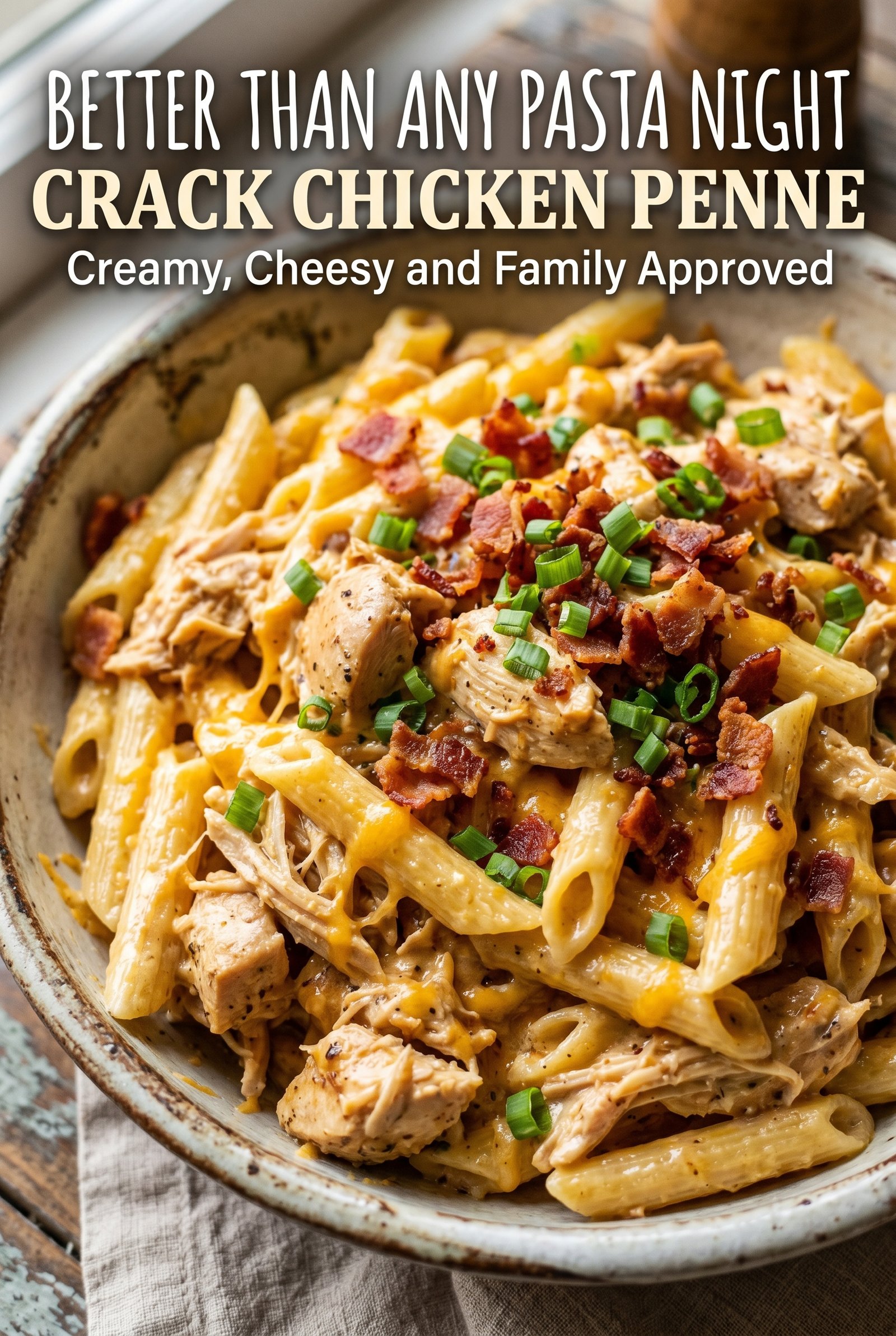
Crack Chicken Penne
Ingredients
Equipment
Method
- Cook penne according to package directions, then drain and set aside while you make the sauce.
- Heat olive oil in a large skillet over medium-high heat.
- Season the diced chicken with garlic powder and black pepper.
- Cook chicken in the hot skillet for 6–8 minutes, stirring occasionally, until golden and fully cooked.
- Reduce heat to medium, then add cream cheese, ranch seasoning mix, chicken broth, and heavy cream.
- Stir until smooth and creamy, scraping up any browned bits from the pan.
- Mix in cheddar cheese and stir until melted and glossy.
- Add drained penne and toss to coat thoroughly in the sauce.
- Stir in most of the bacon, reserving a little for topping.
- Simmer for 2–3 minutes, stirring so the pasta stays evenly coated.
- Garnish with the remaining bacon and the sliced green onions, then serve immediately.
