
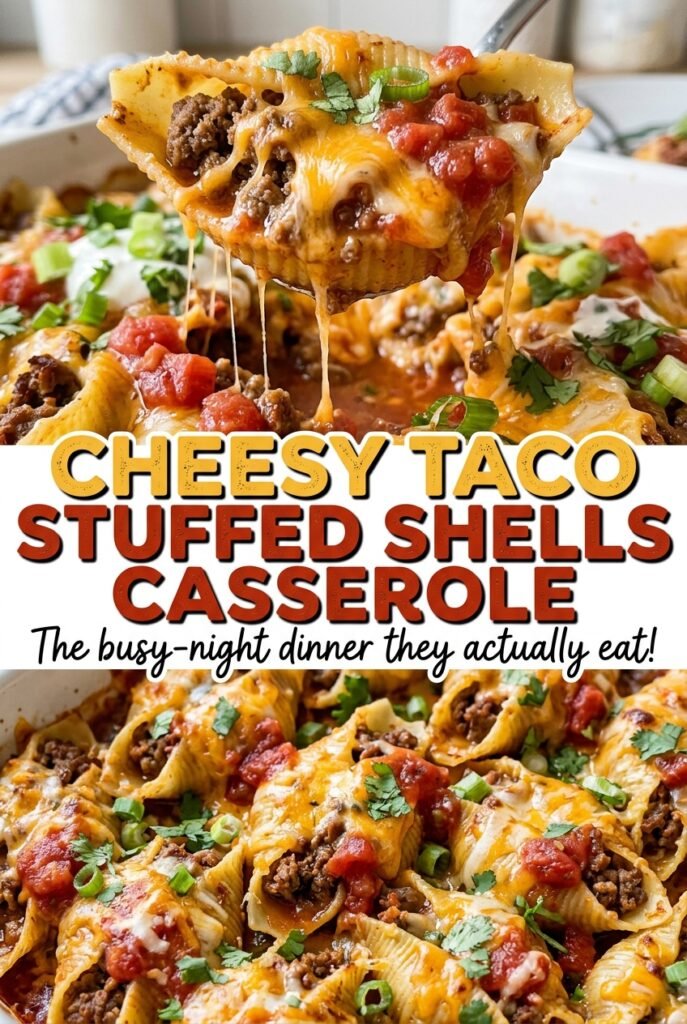
Cheesy Taco Stuffed Shells Casserole
When the foil comes off this casserole, salsa is bubbling around the shells and the cheese on top is just beginning to melt. That’s the moment I know the layers…
Tip: save now, read later.
When the foil comes off this casserole, salsa is bubbling around the shells and the cheese on top is just beginning to melt. That’s the moment I know the layers are doing their jobs: the filling stays tucked inside the pasta, while the salsa gives every bite a saucy base. Cheesy Taco Stuffed Shells Casserole brings the familiar taco-seasoned beef and melted cheese into a dinner that’s easy to portion.
I keep the beef mixture separate from the salsa and fill the shells before they go into the dish. That small choice lets the cream cheese and shredded cheese make a smooth, scoopable filling instead of a loose sauce. The shells cook first, so they’re tender after baking but still sturdy enough to pick up and fill. Each one comes out creamy in the middle, with melted cheese over the top and salsa underneath.
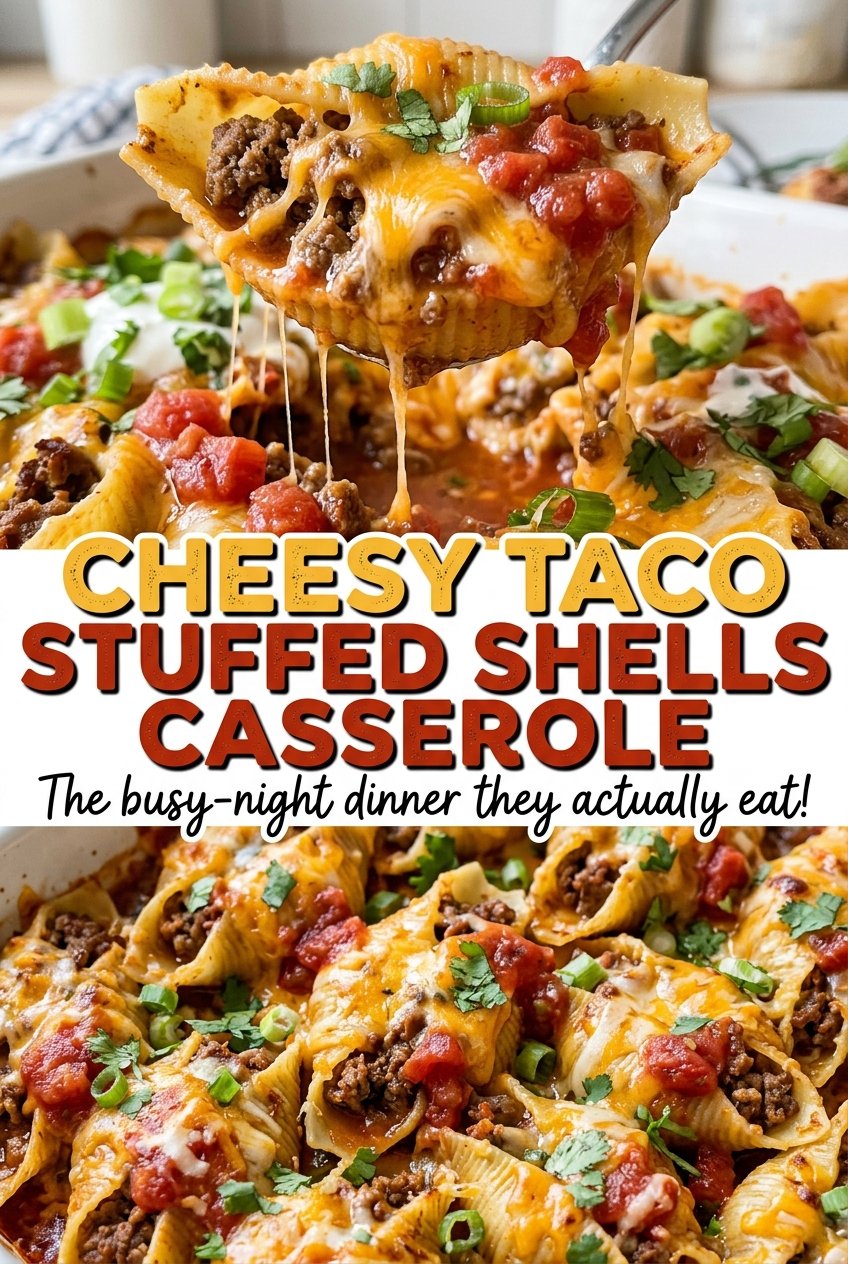
Kitchen Note
Let the cream cheese soften before it goes into the skillet. It blends into the warm beef much more smoothly, so you get a creamy filling instead of little cold lumps.
Save these Cheesy Taco Stuffed Shells for a cozy dinner with creamy taco filling, bubbling salsa, and a blanket of melted cheese.
Why the Salsa Belongs Under the Shells, Not in the Filling
It’s easy to think of salsa as another ingredient to stir into taco-seasoned beef, but it works better here as its own layer. The beef filling needs to stay thick enough to sit inside each shell. The salsa stays in the baking dish, where it adds moisture and flavor around the pasta without loosening the cream cheese mixture.
That separation also gives the casserole two distinct textures. The filling is creamy and substantial, while the pasta rests against a saucy base. Spread the salsa across the bottom of the dish before arranging the shells, and keep each shell filling-side up. This helps the filling stay where you put it as the cheese melts over the top.
There’s a practical benefit, too: the salsa keeps the undersides of the shells from baking directly against the dish. If you mix it into the filling instead, you lose that saucy layer and make the mixture harder to spoon into the pasta. Keeping the components in their own places is what makes this casserole feel like stuffed shells rather than a taco-pasta bake.
What the Beef, Cream Cheese, and Salsa Each Bring to These Shells
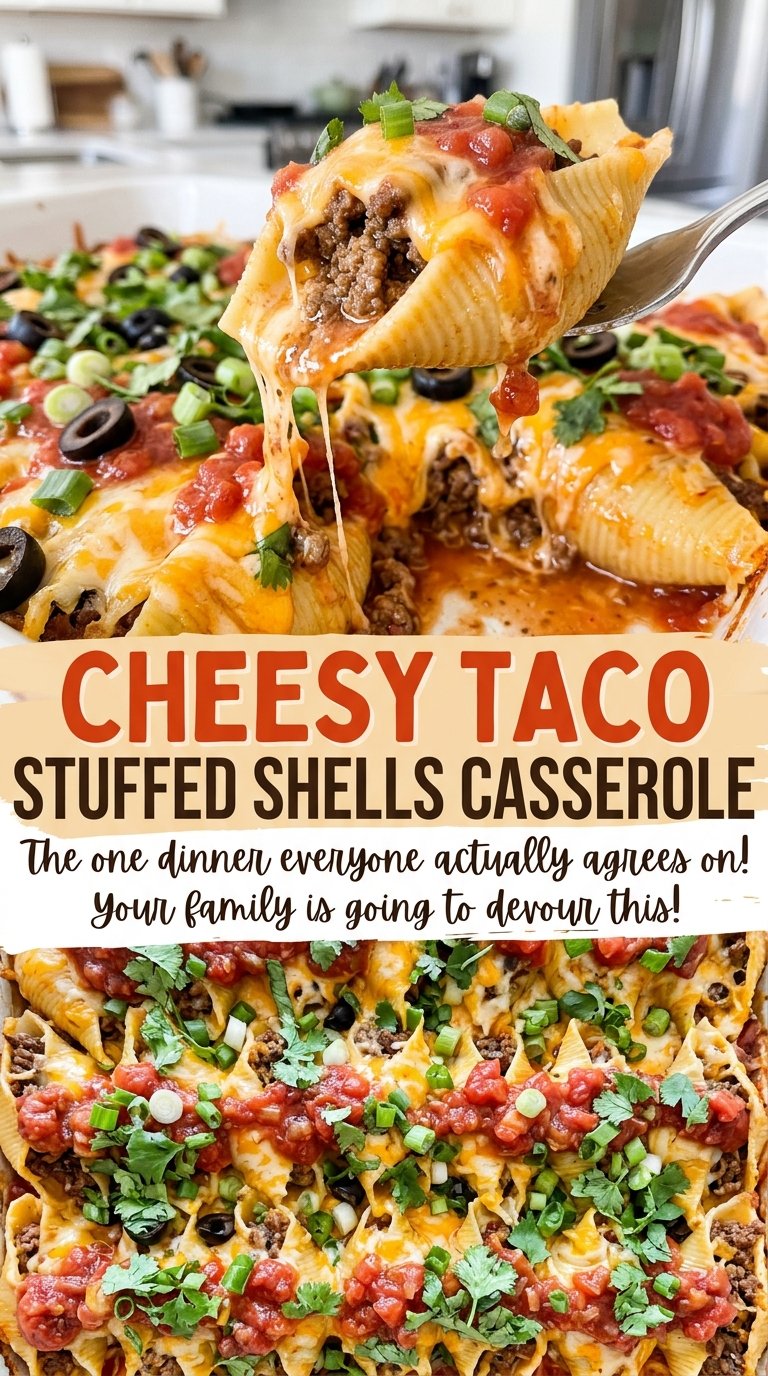
- Jumbo pasta shells — Their wide openings hold a generous scoop of filling, and their shape makes this a true stuffed-shell casserole. Check the shells as they cook and handle them gently after draining; cracked ones are harder to fill neatly.
- Ground beef — The 85% lean beef browns well and brings enough richness to balance the cream cheese. You don’t need an expensive cut for a seasoned filling that gets baked with cheese. Drain excess fat after browning so the filling doesn’t turn greasy.
- Taco seasoning and water — The seasoning packet gives the beef its familiar taco flavor, while the water helps distribute it through the meat. Simmering lets the liquid thicken around the beef; a different packet brand is fine, though the salt and heat level can vary.
- Block cream cheese — This gives the filling its creamy body and helps it hold together inside the shells. A softened block blends more smoothly than cream cheese from a tub, which tends to be looser. There isn’t a close swap that keeps the same texture.
- Mexican-blend cheese — This melts into the filling and forms the cheesy top. A standard shredded blend is a practical choice here; freshly shredded cheese also works if you want to grate it yourself.
- Salsa — Since it forms the sauce layer beneath the pasta, choose a salsa whose flavor you enjoy on its own. Chunky or smooth both work; the texture changes the sauce around the shells, not the filling.
How to Cook, Fill, and Bake the Shells Without Losing Their Shape
Cook the shells just to al dente
Heat the oven to 375°F and grease a 9×13-inch baking dish while a large pot of water comes to a boil. Add the kosher salt and jumbo shells, then cook them for 9 to 11 minutes or according to the package directions, stopping when they’re just al dente. They’ll soften more in the oven, so don’t wait for them to feel completely tender in the pot. Drain them carefully so the shells stay intact for filling.
Brown the beef and thicken the seasoning
Cook the ground beef in a 12-inch skillet over medium-high heat for 6 to 8 minutes, breaking it into small crumbles as it browns. Check that it reaches 160°F, then drain off the excess fat. Stir in the taco seasoning and water, and simmer for 2 to 3 minutes until the liquid thickens around the beef. If the mixture still looks watery, give it the full simmer rather than adding the cream cheese right away.
Make the filling creamy off the heat
Take the skillet off the heat before stirring in the softened cream cheese and 1 cup of the shredded cheese. Keep stirring until the mixture looks smooth and the cheese is evenly distributed; a few streaks of cream cheese mean it needs another moment of mixing. The filling should be thick enough to sit in a shell rather than run out of it. Let the hot beef do the melting instead of returning the skillet to the burner.
Fill, cover, and finish the casserole
Spread the salsa in the prepared dish, then fill each shell with the beef mixture and arrange the shells filling-side up. Sprinkle the remaining shredded cheese over the top. Cover the dish with foil and bake for 20 minutes, then uncover and bake for 10 minutes more, until the salsa is bubbling and the cheese has melted. Rest the casserole for 10 minutes before serving so the filling settles and the shells are easier to lift.
Three Ways to Change the Casserole Without Losing Its Stuffed-Shell Shape
Turn up the heat with spicy salsa
Use hot salsa in place of the regular salsa, keeping the same amount. The heat comes through in the sauce under the shells, while the cream cheese filling stays mellow and creamy.
Make a meatless black bean filling
Replace the beef with two 15-ounce cans of black beans, drained and rinsed. Lightly mash about half, then warm the beans with the taco seasoning and water until the mixture thickens before stirring in the cheeses. The filling is softer and more bean-forward, but still fits into the shells.
Use gluten-free jumbo shells
Swap in gluten-free jumbo shells and cook them according to their package directions, stopping when they’re just al dente. They can be more delicate than wheat pasta, so drain and fill them gently. The beef and cheese filling stays the same.
Storage and Reheating
- Refrigerator: Cover leftovers and refrigerate within 2 hours; they keep for 3 to 4 days. The pasta softens a little as it sits.
- Freezer: Freeze the cooled casserole in a tightly covered freezer-safe dish, or freeze portions in airtight containers, for up to 2 months for best quality. Thaw overnight in the refrigerator.
- Reheating: Reheat covered in a 350°F oven until the center reaches 165°F. Leaving it uncovered the whole time can dry the shells before the middle is hot.
Questions That Come Up Before These Taco Shells Go in the Oven
Cheesy Taco Stuffed Shells Casserole
Ingredients
Equipment
Method
- Heat the oven to 375°F.
- Grease a 9x13-inch baking dish.
- Bring a large pot of water to a boil, add the kosher salt and jumbo pasta shells, and cook until just al dente, about 9 to 11 minutes or according to the package directions.
- Drain the shells.
- In a 12-inch skillet over medium-high heat, cook the ground beef for 6 to 8 minutes, breaking it up, until browned and it reaches 160°F.
- Drain excess fat.
- Stir in the taco seasoning and water.
- Simmer for 2 to 3 minutes until thickened.
- Remove from the heat.
- Stir in the cream cheese and 1 cup of the shredded Mexican-blend cheese until smooth.
- Spread the salsa in the baking dish.
- Fill each shell with the beef mixture.
- Arrange the shells filling-side up in the dish.
- Sprinkle with the remaining 1 cup of shredded Mexican-blend cheese.
- Cover the dish with foil and bake for 20 minutes.
- Uncover and bake for 10 minutes until the salsa is bubbling and the cheese is melted.
- Let the casserole rest for 10 minutes before serving.
