

One Pot Creamy Tuscan Shrimp Orzo
When the broth starts disappearing into the orzo, the skillet goes from soupy to creamy in just a few minutes. That’s the point where I keep stirring and watch the…
Tip: save now, read later.
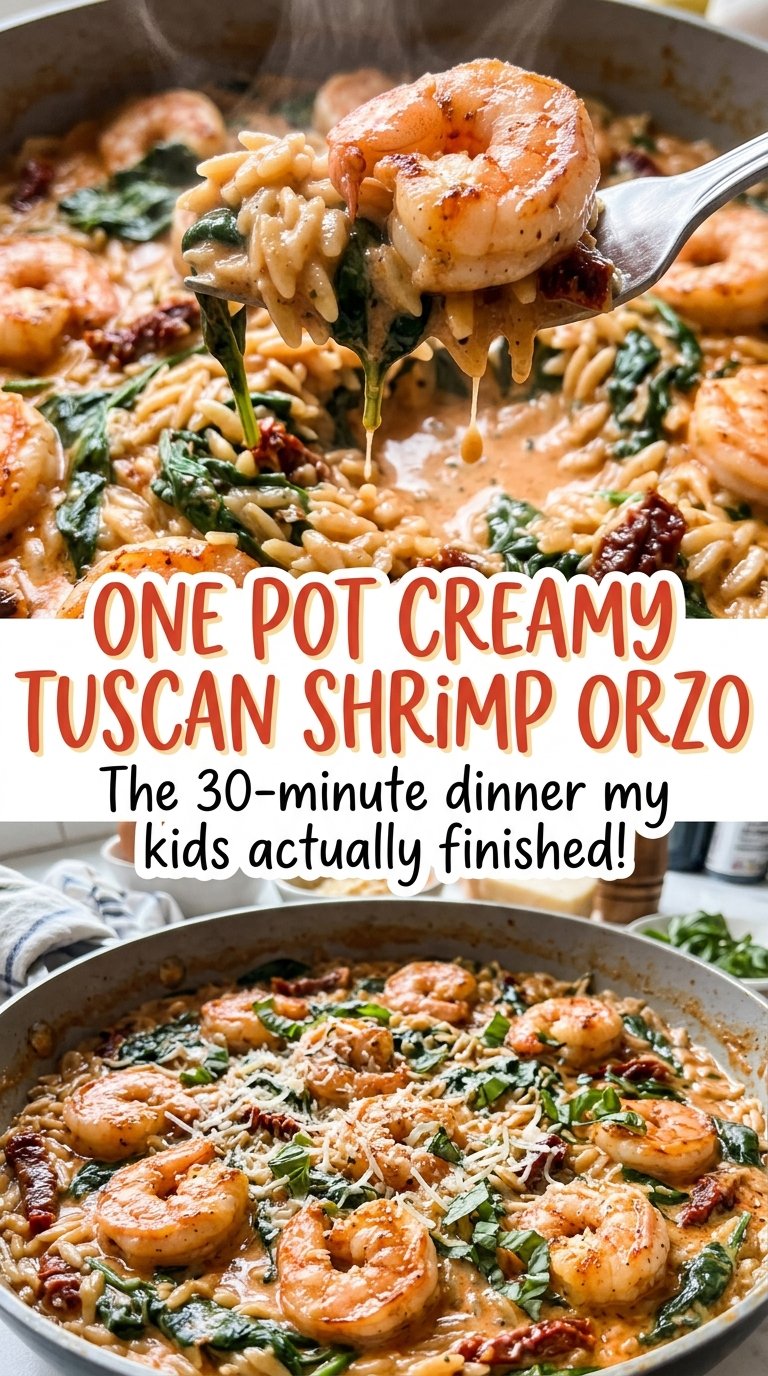
When the broth starts disappearing into the orzo, the skillet goes from soupy to creamy in just a few minutes. That’s the point where I keep stirring and watch the pasta closely, because orzo can catch on the bottom if it sits too long. This one-pot creamy Tuscan shrimp orzo brings the shrimp, sun-dried tomatoes, spinach, and Parmesan together in the same pan, with no separate pot of pasta to drain.
I like the way the oil from the tomatoes seasons the base before the broth goes in. The orzo cooks uncovered in that broth, then the cream and spinach join it near the end so the greens wilt without disappearing into the sauce. The shrimp cook right on top, under a lid, and the Parmesan goes in after the skillet leaves the heat. You get tender shrimp and a creamy, tomato-rich bowl with the orzo still pleasantly firm.

Kitchen Note
The shrimp finish quickly once the lid goes on, so I check them at the early end of the cooking window. Look for pink, opaque flesh, and use an instant-read thermometer in the thickest shrimp; they’re ready at 145°F.
Save this creamy Tuscan shrimp orzo for a one-pan dinner with tender shrimp, sun-dried tomatoes, and spinach.
Why the Orzo Simmer Comes Before the Cream
Orzo looks like rice, but it’s pasta, and it needs time in the broth to soften and release a little starch. That starch helps give the finished sauce its body. If cream goes in before the pasta has cooked through, the orzo still needs to absorb liquid, and the sauce can end up thinner than you want while the pasta is still firm.
Let the orzo simmer uncovered until it’s al dente and most of the broth has been absorbed. Stir it often, scraping across the bottom of the skillet; this keeps the pasta moving as the liquid reduces. Then stir in the cream and spinach, and let the shrimp finish cooking over the top. The order matters: each ingredient gets the kind of cooking it needs, and the sauce stays cohesive rather than turning watery.
Use a 12-inch high-sided skillet so there’s room to stir the orzo and arrange the shrimp without crowding the pan. The broth should simmer steadily, not boil hard. A vigorous boil can reduce the liquid before the pasta has had time to turn tender.
What the Tomatoes, Orzo, and Parmesan Each Bring
- Oil-packed sun-dried tomatoes — They bring concentrated tomato flavor, and their oil helps carry the garlic and seasonings through the base. Drain them before chopping so the skillet doesn’t get an extra pour of oil. Dry-packed tomatoes aren’t a direct swap here because they need rehydrating first.
- Orzo — Regular dry orzo cooks directly in the broth and gives the sauce a gently starchy texture. Don’t substitute rice and expect the same timing or liquid absorption; rice cooks differently, and this method is built around pasta.
- Large shrimp — Peeled and deveined shrimp make this a quick skillet dinner. Pat them dry before seasoning so excess surface moisture doesn’t dilute the sauce. Frozen raw shrimp work once fully thawed and patted dry.
- Low-sodium chicken broth — It supplies the liquid for cooking the orzo while keeping the finished dish from becoming too salty once Parmesan is added. Vegetable broth can replace it in the same amount, though the savory base will taste a little less chicken-forward.
- Heavy cream and Parmesan — Cream rounds out the tomato-and-garlic base, while finely grated Parmesan melts smoothly into the hot orzo. Freshly grated cheese gives the most even finish; a coarser shred takes longer to melt and can leave little pockets of cheese.
Build the Orzo Base Before the Shrimp Go In
Season the Shrimp
Toss the peeled, deveined shrimp with a portion of the kosher salt and the black pepper, then set them aside while you build the base. Patting them dry first helps the seasoning cling instead of sliding off on moisture. Keep them nearby, but don’t add them to the skillet yet; they need only a short cook at the end.
Soften the Tomatoes and Bloom the Seasoning
Heat the olive oil in a 12-inch high-sided skillet over medium heat, then add the drained, chopped sun-dried tomatoes. Cook them for 2 minutes, stirring so they soften and warm through. Add the minced garlic, Italian seasoning, and crushed red pepper flakes, and cook for 30 seconds. Garlic can scorch quickly, so stir continuously during this brief step.
Simmer the Orzo in Broth
Stir the dry orzo into the tomato mixture and cook for 1 minute so it’s coated in the seasoned oil. Pour in the chicken broth and the remaining salt, bring the pan to a simmer, and cook uncovered for 10–12 minutes. Stir often, paying attention to the bottom of the skillet where the pasta can stick. The orzo should be al dente, with most of the broth absorbed.
Wilt the Spinach and Cook the Shrimp
Reduce the heat to medium-low and stir in the heavy cream and baby spinach. Once the spinach starts to wilt into the pasta, arrange the seasoned shrimp over the orzo and cover the skillet. Cook for 3–5 minutes, until the shrimp are pink and opaque. If they still look translucent in the center, give them another short stretch under the lid and check again.
Finish with Parmesan Off the Heat
Take the skillet off the heat before stirring in the finely grated Parmesan. The residual heat melts the cheese into the creamy orzo without subjecting it to a direct burner. Let the pan stand for 2 minutes before serving; the sauce settles and thickens slightly as it rests.
Small Changes That Shift the Flavor
Make It Dairy-Free with Coconut Milk
Replace the heavy cream with the same amount of unsweetened full-fat coconut milk and leave out the Parmesan. The sauce will still be creamy, but it will have a light coconut note and less of the salty, savory finish that Parmesan brings.
Keep the Tomato-Garlic Flavor, Skip the Heat
Leave out the crushed red pepper flakes for a milder skillet. You’ll still get the savory garlic and sweet-tart tomato notes from the other seasonings, just without the lingering warmth.
Storage and Reheating
- Refrigerator: Store leftovers in an airtight container for 3–4 days. The orzo will absorb more sauce as it sits, so expect a thicker texture.
- Freezer: I don’t recommend freezing the finished dish. Creamy orzo can turn soft after thawing, and reheated shrimp can become firm.
- Reheating: Warm leftovers gently in a covered skillet over low heat with a splash of chicken broth, stirring occasionally. High heat can make the shrimp tough before the orzo warms through.
Questions That Come Up with Shrimp Orzo
One Pot Creamy Tuscan Shrimp Orzo
Ingredients
Equipment
Method
- Toss the shrimp with 1/4 teaspoon of the salt and the black pepper; set aside.
- Heat the olive oil in a 12-inch high-sided skillet over medium heat, then add the sun-dried tomatoes and cook for 2 minutes.
- Stir in the garlic, Italian seasoning, and red pepper flakes and cook for 30 seconds.
- Stir in the orzo and cook for 1 minute.
- Add the broth and remaining 1/2 teaspoon salt, bring to a simmer, and cook uncovered for 10–12 minutes, stirring often, until the orzo is al dente and most of the broth is absorbed.
- Reduce the heat to medium-low and stir in the heavy cream and spinach.
- Arrange the shrimp over the orzo, cover, and cook for 3–5 minutes, until the shrimp are pink, opaque, and reach 145°F.
- Remove the skillet from the heat and stir in the Parmesan.
- Let stand for 2 minutes before serving.
