

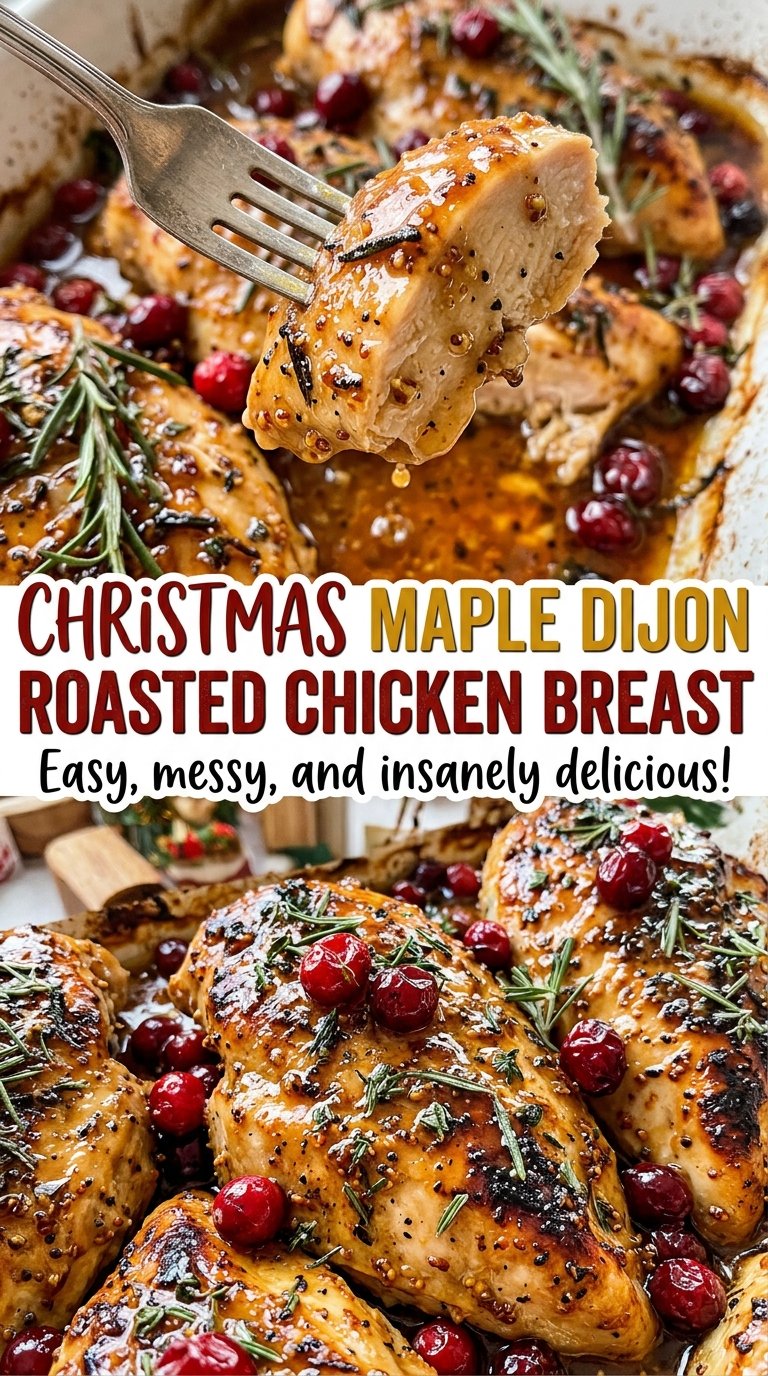
Christmas Maple Dijon Roasted Chicken Breast
The chicken is already beginning to brown when I reach for the maple-Dijon glaze—and that pause matters. These Christmas Maple Dijon Roasted Chicken Breasts get their first stretch in the…
Tip: save now, read later.
The chicken is already beginning to brown when I reach for the maple-Dijon glaze—and that pause matters. These Christmas Maple Dijon Roasted Chicken Breasts get their first stretch in the oven with just oil, salt, and pepper, so the skin has time to roast before the sweet glaze goes on.
Bone-in, skin-on breasts make a generous centerpiece without needing a whole bird, and the glaze brings together maple, sharp Dijon, a little vinegar, garlic, and fresh rosemary. I like how the mustard keeps the maple from tasting one-note sweet. Each breast gets a glossy coating near the end, then a short rest before the reserved glaze goes on at the table. The slices come out tender with a savory-sweet finish and plenty of character from the rosemary.

Kitchen Note
Set aside the serving glaze before the brush or your hands get anywhere near the raw chicken. I use a clean bowl for those two tablespoons, so the finishing spoonful stays ready for the table.
Save these Christmas Maple Dijon Roasted Chicken Breasts for a festive dinner with glossy maple glaze and a rosemary-Dijon finish.
Why Maple-Dijon Needs a Late Start in the Oven
Maple syrup brings natural sugars to the glaze, and those sugars can darken quickly in a hot oven. If the chicken went in already coated, the outside could get too dark before the thickest part of each breast was cooked through. Roasting the seasoned chicken first gives the skin and meat a head start without asking the glaze to sit through the whole cook.
I wait until each breast is around 150–155°F in its thickest part, then brush on the glaze and return the pan to the oven. That shorter final stretch gives the syrup time to cling and turn glossy while the chicken finishes cooking. The Dijon and vinegar also keep the glaze balanced, so the maple reads as warm and savory rather than candy-sweet. Watch the temperature, not just the clock: bone-in breasts can vary in size, and the thermometer tells you when each one is ready.
What Maple, Dijon, and Bone-In Chicken Each Bring to the Pan
- Pure maple syrup — It gives the glaze a woodsy sweetness that pancake syrup doesn’t quite match. Use pure maple syrup for the cleanest flavor; honey can stand in at the same amount, though it makes the glaze taste more floral.
- Dijon mustard — Dijon brings tang and helps the glaze coat the chicken evenly. A whole-grain mustard can work in its place if you like mustard seeds in the finish; the glaze will have a more textured look.
- Unsalted butter — Melted butter softens the sharper edges of the vinegar and mustard and gives the glaze a rounder finish. For a dairy-free version, olive oil works in its place; the glaze will be a little less rich.
- Apple cider vinegar — Its gentle fruitiness cuts through the maple and butter. White wine vinegar is a useful replacement, though its acidity tastes a little sharper.
- Fresh garlic and rosemary — Finely grated garlic spreads through the glaze rather than leaving large pieces on the skin, where they could darken. Fresh rosemary gives the chicken a fragrant, piney note; chop it finely so it doesn’t clump on the brush.
- Bone-in, skin-on chicken breast halves — The bone helps protect the meat as it roasts, while the skin gives the glaze a surface to cling to. Choose pieces of similar size when you can; very different sizes may finish at different times.
Roast the Chicken First, Then Paint on the Maple Glaze
Whisk the Glaze Until Smooth
Whisk the maple syrup, Dijon, melted butter, apple cider vinegar, grated garlic, and chopped rosemary together in a small bowl. The mixture should look uniform, with the mustard and butter dispersed through the syrup. Set aside two tablespoons in a clean bowl for serving before you handle the chicken. The rest is for brushing on during the final part of roasting.
Dry and Season the Chicken
Heat the oven to 400°F and pat the chicken dry with paper towels. Rub the pieces with olive oil, then season all over with kosher salt and black pepper. Arrange them skin side up in a 9×13-inch baking dish, leaving space between the pieces rather than stacking them. Dry skin gives the chicken a better start in the oven; damp skin can stay soft.
Roast Until the Chicken Is Nearly Done
Roast for 25 minutes, then check the thickest part of each breast with an instant-read thermometer, keeping the tip away from the bone. If a breast hasn’t reached 150–155°F, return the dish to the oven and check again in 5-minute increments. The bone can make a thermometer reading misleading, so place the probe in the meat itself. Check each breast separately instead of assuming they all finish together.
Glaze, Finish, and Rest
Brush the remaining glaze over the chicken once each breast reaches 150–155°F. Return the dish to the oven for 8–15 minutes, until the thickest part of each breast reaches 165°F. If the pieces are different sizes, keep checking the smaller ones so they don’t overcook while the larger ones finish. Rest the chicken for 10 minutes, then spoon the reserved glaze over it before serving.
Three Useful Ways to Adapt the Maple-Dijon Chicken
Make the Glaze Dairy-Free
Replace the melted butter with the same amount of olive oil. The glaze will lose a little of butter’s rounded richness, but the maple, Dijon, vinegar, garlic, and rosemary still make a balanced coating.
Trade Maple for Honey
Use honey in place of the maple syrup to give the glaze a more floral sweetness. Keep the same staged roasting method, and pay attention to the chicken’s temperature because honey can brown quickly once it hits the hot oven.
Use Thyme Instead of Rosemary
Fresh thyme gives the glaze a softer, more earthy herbal note. Chop it finely and use the same amount as the rosemary; the maple and mustard still come through clearly.
Storage and Reheating
- Refrigerator: Refrigerate cooked chicken within 2 hours and keep it covered for 3 to 4 days. The skin softens after chilling, but the meat stays good for slicing.
- Freezer: Freeze cooled portions in an airtight container for up to 4 months for best quality. Thaw overnight in the refrigerator before reheating.
- Reheating: Warm covered in a 325°F oven until steaming hot throughout. Keeping the dish covered helps the breast meat stay moist; prolonged uncovered reheating can dry it out.
Questions That Come Up While Roasting Maple-Dijon Chicken
Christmas Maple Dijon Roasted Chicken Breast
Ingredients
Equipment
Method
- In a small bowl, whisk together the maple syrup, Dijon mustard, melted butter, vinegar, garlic, and rosemary.
- Set aside 2 tablespoons of glaze in a clean bowl for serving.
- Heat the oven to 400°F.
- Pat the chicken dry.
- Rub the chicken with the olive oil.
- Season the chicken all over with the salt and pepper, then arrange it skin side up in a 9x13-inch baking dish.
- Roast for 25 minutes, then check the thickest part of each breast without touching the bone.
- Continue roasting in 5-minute increments until each reaches 150–155°F.
- Brush the remaining glaze over the chicken.
- Roast for 8–15 minutes, until the thickest part of each breast reaches 165°F.
- Rest the chicken for 10 minutes.
- Spoon the reserved glaze over the chicken before serving.
