
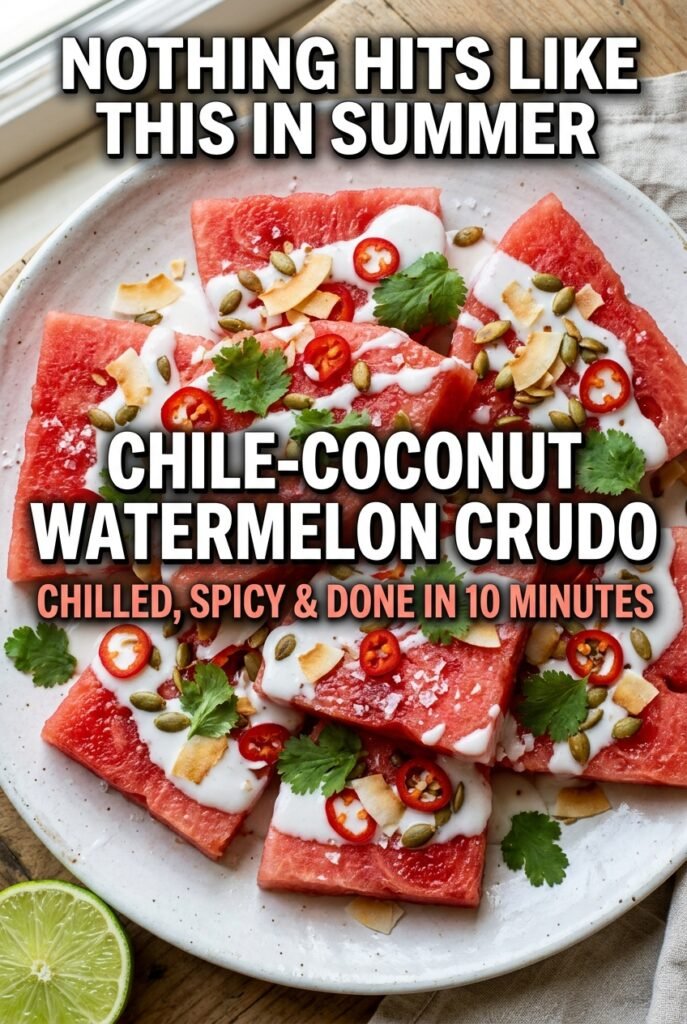
Chile-Coconut Watermelon Crudo
Cold watermelon gets transformed the second it’s dressed with coconut milk, lime, and a little chile heat. The cubes stay crisp and juicy, but the creamy dressing and salty-savory finish…
Tip: save now, read later.
Cold watermelon gets transformed the second it’s dressed with coconut milk, lime, and a little chile heat. The cubes stay crisp and juicy, but the creamy dressing and salty-savory finish make each bite taste layered instead of just refreshing. It’s the kind of dish that disappears fast because it hits sweet, tangy, spicy, and rich all at once.
The trick is to keep everything cold and keep the dressing light. Watermelon gives off juice as it sits, so this works best when the plate is chilled, the fruit is cut just before serving, and the coconut mixture is whisked until smooth enough to spoon over without sliding right off. Fish sauce adds depth that plain salt can’t give, but soy sauce works if you want a vegan version. Toasted coconut and pepitas bring the crunch that keeps the whole dish from feeling soft or one-note.
Below, I’ll walk through the small details that matter here, including how to slice the watermelon so it plates neatly and how to balance the dressing if your lime is extra sharp. I’ve also included a few smart variations and answers to the questions that come up most with this one.
The dressing was the perfect balance of creamy and tangy, and the watermelon stayed crisp even after I spooned everything on. I used the soy sauce version and the chile heat with the toasted coconut made it taste like something from a nice restaurant.
Save this Chile-Coconut Watermelon Crudo for the nights when you want something cold, spicy, and elegant without turning on the stove.
The Reason This Crudo Stays Crisp Instead of Turning Watery
Watermelon starts releasing juice the moment it hits salt, lime, and dressing. That’s fine if you want a juicy salad, but for crudo-style plating it can turn the whole dish muddy fast. The fix is to keep the dressing concentrated, the fruit well chilled, and the assembly fast so the watermelon stays glossy and structured.
The other mistake is tossing everything together like a salad. This dish works because the coconut-lime mixture clings in thin pools between the cubes instead of washing over them. That’s why the plate gets dressed, not the bowl. The toppings stay on top, the fruit stays intact, and every bite changes a little as you eat through the layers.
- Chilled watermelon — Cold fruit tastes cleaner and holds its shape better. Room-temperature watermelon softens faster and leaks more liquid once salted.
- Full-fat coconut milk — This gives the dressing its creamy body. Light coconut milk tastes thin here and won’t coat the fruit the same way.
- Fish sauce or soy sauce — This is the savory backbone. It keeps the dish from reading as candy-sweet; soy sauce works well if you want it vegan.
- Fresh chiles — Thin slices distribute heat without overwhelming the melon. Dried flakes work in a pinch, but fresh chile gives a brighter, cleaner bite.
What Each Ingredient Is Actually Doing in This Dish
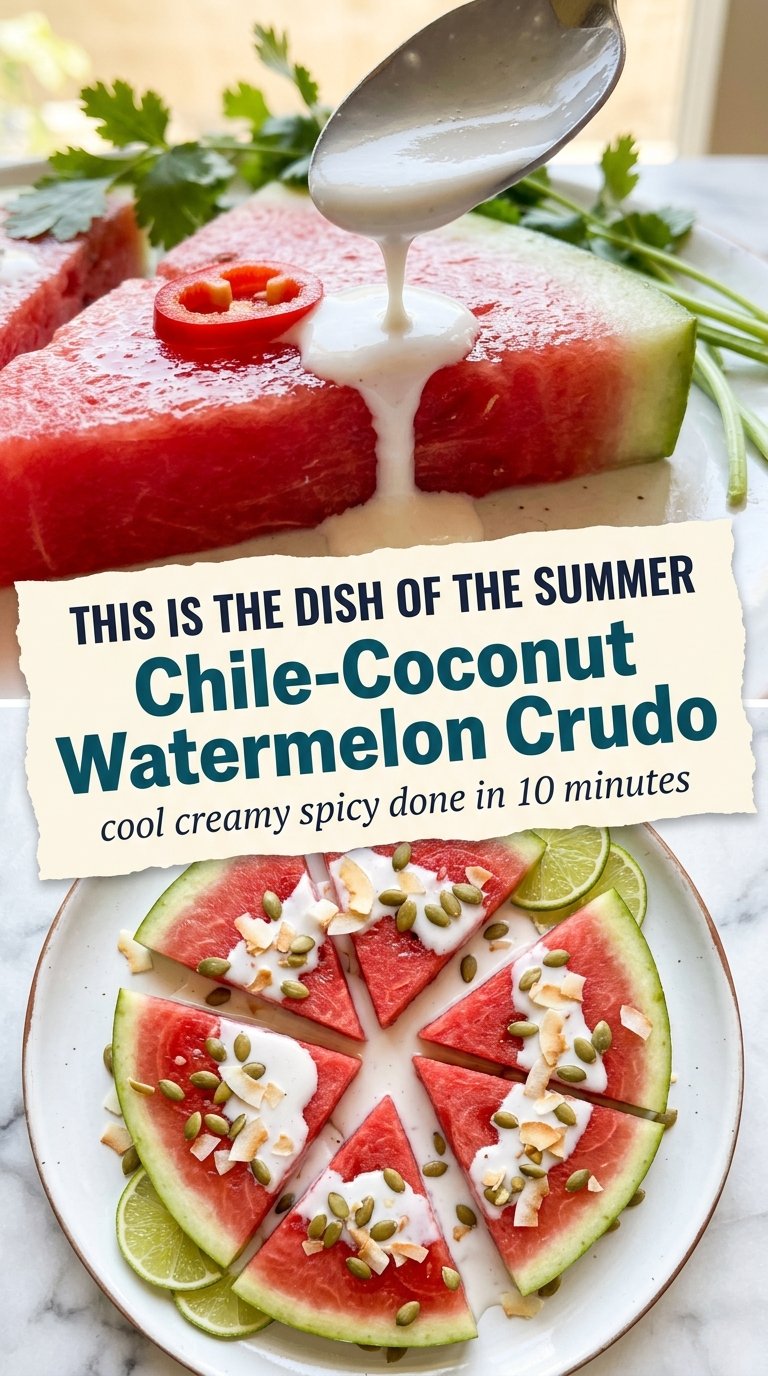
The watermelon is the base and it needs to be ripe, but not overripe. You want cubes that hold a clean edge when cut, not soft pieces that collapse as soon as they meet the dressing. If the melon is especially sweet, the lime and salt will balance it; if it’s a little flat, don’t try to rescue it with extra honey because that makes the whole dish taste heavy.
Full-fat coconut milk is the ingredient that gives this its restaurant feel. Shake the can well before opening, then whisk until smooth so the thicker part and the liquid are fully combined. Fresh lime juice matters here because bottled juice tastes blunt and can make the dressing taste thin instead of sharp. Honey or agave just rounds the edges; it shouldn’t make the dressing taste sweet.
For the garnish, use toasted coconut flakes and pepitas if you can. Untoasted coconut can taste dusty, and the pepitas add a nutty crunch that keeps the texture interesting. Cilantro is there for freshness, not as a main flavor, so use the leaves only. Thin lime rounds at the edge of the plate aren’t just decoration — they reinforce the bright acidity in the dressing.
How to Assemble It So the Plate Looks Intentional
Chilling the Plate First
Put your serving plate or shallow bowl in the refrigerator before you start anything else. A cold surface slows down the juice from the watermelon and helps the coconut dressing stay put instead of running to the bottom of the dish. If you skip this, the crudo still tastes good, but it loses that crisp, just-plated look within minutes.
Whisking the Dressing
Combine the coconut milk, lime juice, zest, fish sauce, honey, and salt in a small bowl and whisk until the mixture looks smooth and unified. Taste it before you plate anything. It should hit tangy first, then savory, then a soft sweetness at the end. If it tastes flat, it usually needs a pinch more salt rather than more honey.
Plating Without Crushing the Fruit
Arrange the watermelon in a loose single layer and spoon the dressing over it. Don’t toss it. Tossing bruises the cubes and makes the liquid collect too quickly. The best version looks a little irregular, with the dressing pooling in the gaps and the chiles and herbs scattered across the top like they landed naturally.
Finishing for Texture
Add the cilantro, coconut flakes, pepitas, and flaky salt right before serving. That timing keeps the crunchy pieces crisp and the herbs bright. If you add them too early, the coconut softens and the salt pulls extra juice from the melon. A few lime rounds around the edge finish it cleanly and give people an easy way to squeeze on more acidity.
Three Ways to Adapt This Watermelon Crudo Without Losing the Point
Make It Vegan Without Losing Savory Depth
Swap the fish sauce for soy sauce or tamari. You’ll lose a little of the briny complexity, but the dish still lands in the right place because the coconut, lime, and salt carry the rest. Tamari keeps the flavor a little rounder if you want a gluten-free option too.
Turn Down the Heat for a Milder Plate
Use just one thinly sliced Thai chile, or swap the fresh chile for a small pinch of red pepper flakes. Fresh chile gives a cleaner, brighter heat, while flakes read a little more direct and rustic. Either way, don’t bury the melon under too much spice — this dish works because the heat stays in the background.
Add More Protein for a Fuller Starter
A few torn pieces of avocado, thin slices of cucumber, or even chilled shrimp turn this into more of a first course. Keep the additions simple so they don’t compete with the coconut-lime dressing. If you add avocado, slice it at the very end so it doesn’t brown while the rest of the plate is being assembled.
Storage and Reheating
- Refrigerator: Store the components separately for up to 1 day. Once dressed, the watermelon softens fast and the plate turns watery.
- Freezer: Don’t freeze this dish. Watermelon loses its texture and becomes mushy after thawing.
- Reheating: No reheating needed. For leftovers, drain off excess liquid, add a fresh squeeze of lime, and finish with new herbs and crunchy toppings so the dish wakes back up.
Answers to the Questions Worth Asking
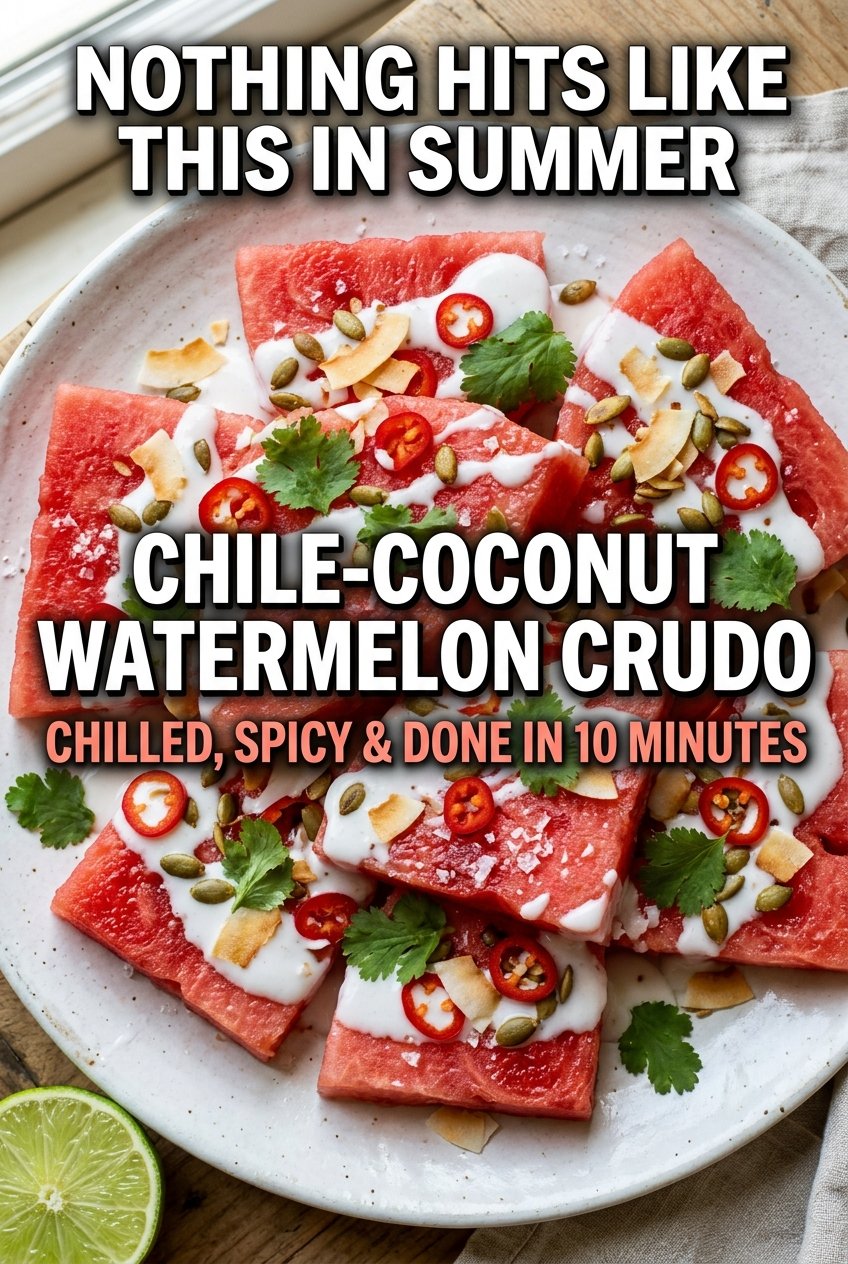
Chile-Coconut Watermelon Crudo
Ingredients
Method
- Chill your serving plate or shallow bowl in the refrigerator for at least 10 minutes, so the surface stays cold and the crudo remains bright.
- Whisk together full-fat coconut milk, fresh lime juice, lime zest, fish sauce, honey, and fine sea salt in a small bowl until fully combined, with no visible streaks.
- Taste the dressing and adjust as needed so it’s tangy, lightly sweet, and savory.
- Arrange seedless watermelon pieces flat on the chilled plate in a single loose layer, slightly overlapping so each bite gets some topping.
- Spoon or drizzle the coconut dressing over the watermelon without tossing, letting it pool and coat naturally for a glossy finish.
- Scatter thinly sliced fresh red Thai chiles and serrano pepper over the top, distributing evenly for controlled heat in every section.
- Add fresh cilantro leaves, toasted unsweetened coconut flakes, and toasted pepitas across the surface so toppings look fresh and crisp.
- Finish with a pinch of flaky sea salt and tuck a few thin lime rounds around the edges for a bright, restaurant-style presentation.
- Serve immediately and aim to eat within 10–15 minutes while the watermelon is cold and the toppings stay crisp.
