
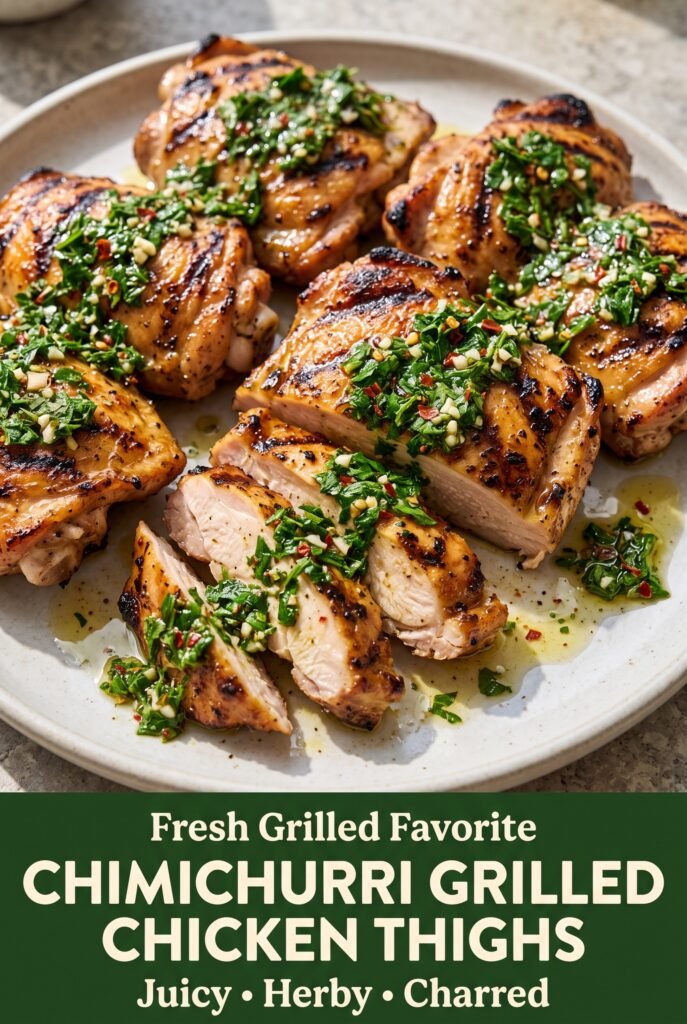
Chimichurri Grilled Chicken Thighs
Juicy grilled chicken thighs get a sharp, herb-heavy finish here, and that contrast is exactly why this dish works. The chicken picks up a smoky crust on the grill, then…
Tip: save now, read later.
Juicy grilled chicken thighs get a sharp, herb-heavy finish here, and that contrast is exactly why this dish works. The chicken picks up a smoky crust on the grill, then the chimichurri cuts straight through with garlic, parsley, oregano, and vinegar. You get meat that feels substantial and a sauce that wakes up every bite.
Chicken thighs are the right cut for this treatment because they stay forgiving over high heat. The spice rub builds a savory base before the chicken even hits the grill, and the chimichurri is kept fresh rather than cooked down, which preserves its brightness and bite. Letting the sauce sit for a few minutes after mixing matters more than people think; the garlic softens, the vinegar rounds out, and the herbs taste less raw.
Below, I’ve laid out the exact moments that matter on the grill, plus the swaps that still keep the chicken juicy and the chimichurri lively. If you’ve ever had herb sauce go muddy or chicken dry out before it was done, the notes here will help.
The chicken stayed incredibly juicy and the chimichurri was the perfect balance of tangy and garlicky. I let it sit for about 10 minutes before serving and the flavor got even better after the sauce had time to soak into the sliced thighs.
Save these Chimichurri Grilled Chicken Thighs for a smoky, juicy dinner with a bright garlic-herb finish.
The Secret to Chicken Thighs That Char Without Drying Out
Chicken thighs can handle heat better than breasts, but they still dry out if they sit on the grill too long or if the surface stays wet. Patting them dry first matters because moisture blocks browning. The spice rub also needs to go on before the grill, not after, because the paprika and cumin help build that deep savory edge while the outside sears.
The other mistake is cooking by the clock alone. Thighs vary in size, so the real target is a deep browned exterior and an internal temperature of 165°F at the thickest point. Pulling them at that temperature keeps the meat juicy, and the five-minute rest lets the juices settle instead of running out when you slice.
- Boneless, skinless chicken thighs — These stay tender on a hot grill and cook fast enough for weeknight timing. Bone-in thighs will work, but they need more time and a gentler heat so the outside doesn’t scorch before the center is done.
- Smoked paprika — This gives the chicken that grillhouse depth even if your grill isn’t putting out heavy smoke. Regular paprika works in a pinch, but the flavor is flatter.
- Ground cumin — Just a little adds warmth and makes the seasoning taste more complete. Don’t skip it unless you have to; it disappears into the background but changes the whole impression of the chicken.
- Fresh parsley and oregano — Fresh herbs are nonnegotiable for chimichurri. Dried herbs won’t give you the same sharp, green finish, and the sauce will taste dusty instead of bright.
- Red wine vinegar — This is what keeps the sauce lively and cutting. If you need a substitute, use lemon juice, but expect a cleaner citrus note instead of the deeper vinegar tang.
Building the Chimichurri So It Stays Bright, Not Bitter
Chimichurri should taste bold, grassy, and sharp, not like a puréed sauce or a pile of chopped herbs sitting in oil. The order matters. First the herbs, garlic, vinegar, salt, pepper, and flakes come together as a rough mixture, then the oil gets stirred in gradually so the sauce emulsifies just enough to coat the chicken without turning heavy.
If you mix the oil in too fast, the herbs can clump and the sauce won’t spread evenly over the sliced meat. If you make it too far ahead, the garlic can dominate. A short rest of 10 to 15 minutes is the sweet spot, where the flavors meld but the herbs still taste fresh.
Mixing the Herb Base
Chop the parsley and oregano finely enough that the sauce spoon on easily, but don’t grind them into a paste. You want texture. The garlic should be minced small so it blends into the herbs instead of landing in sharp little bursts on one bite and disappearing from the next.
Adding the Oil Slowly
Stir the olive oil in gradually while mixing, not all at once. That keeps the chimichurri loose and spoonable instead of greasy at the top and dry at the bottom. The finished sauce should look glossy, flecked with herbs, and loose enough to run over the chicken without pooling like salad dressing.
Letting the Sauce Sit
Set the chimichurri aside while the chicken cooks. That pause softens the raw edge of the garlic and gives the vinegar time to pull the whole sauce together. If it tastes a little aggressive at first, that usually settles after a few minutes on the counter.
Make It Dairy-Free and Gluten-Free Without Losing Anything
This recipe is already naturally dairy-free and gluten-free as written, which is part of why it’s such a useful dinner to keep around. The biggest thing to watch is any store-bought seasoning blend if you swap that in; some contain anti-caking additives or hidden gluten. Sticking to the ingredients listed keeps the chicken clean and the chimichurri sharp.
Use Chicken Breasts If That’s What You Have
Boneless chicken breasts can work, but they need a shorter grill time and more attention because they dry out fast. Pound them to an even thickness so the thin end doesn’t overcook before the thick end is done. The chimichurri helps a lot here because it adds moisture and brightness to a leaner cut.
Swap in Boneless Thighs or Bone-In Thighs
Boneless thighs are the fastest route and keep the same juicy texture. Bone-in thighs bring a little more flavor, but they need a lower grill zone or a longer finish over indirect heat so the outside doesn’t blacken before the bone gets hot. Expect a little more patience and an even better grilled flavor if you manage the heat well.
Turn It Into a Bigger Dinner
This scales well for a crowd because the chimichurri is easy to double and the chicken can be grilled in batches. Keep the finished thighs loosely covered while the rest cook so they stay warm without steaming themselves soft. Slice just before serving so the juices stay where they belong.
Storage and Reheating
- Refrigerator: Store the chicken and chimichurri separately for up to 4 days. The sauce will darken a little, but the flavor stays good.
- Freezer: The grilled chicken freezes well for up to 2 months. Chimichurri is better made fresh because the herbs lose their bright color and texture once thawed.
- Reheating: Reheat the chicken gently in a covered skillet over low heat or in a 300°F oven until just warmed through. High heat dries out thighs fast, especially once they’ve already been cooked and sliced.
Questions I Get Asked About This Recipe
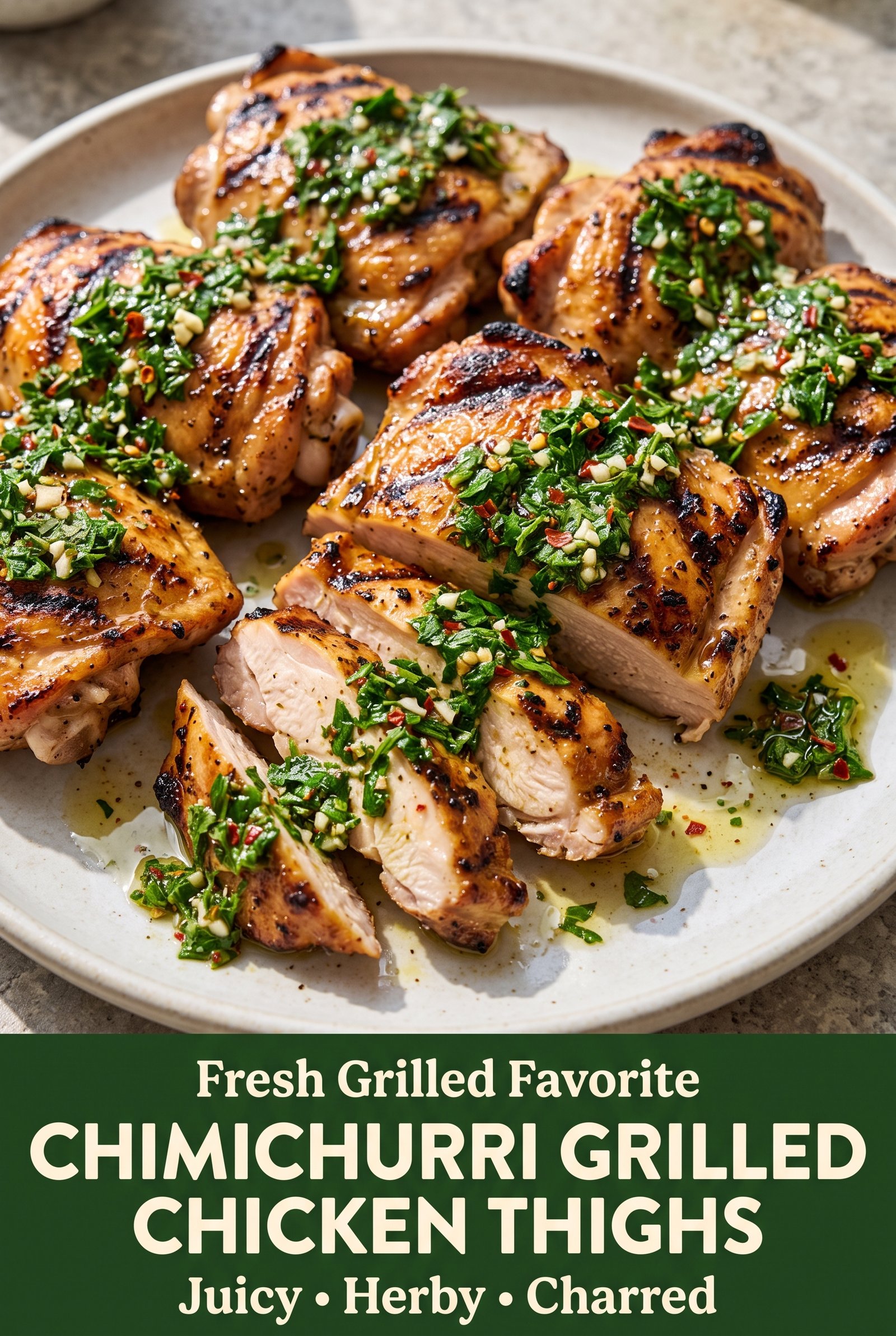
Chimichurri Grilled Chicken Thighs
Ingredients
Equipment
Method
- Pat the chicken thighs dry with paper towels and place them in a large bowl.
- Combine the olive oil, smoked paprika, garlic powder, kosher salt, black pepper, and ground cumin, then rub the mixture evenly over the chicken.
- Rest the seasoned chicken for 15–20 minutes while preheating the grill to medium-high heat.
- Combine the fresh parsley, fresh oregano, minced garlic, red wine vinegar, red pepper flakes, kosher salt, and black pepper in a bowl.
- Stir the extra-virgin olive oil gradually into the herb mixture, then set the chimichurri aside so the flavors can develop.
- Grill the chicken thighs for 5–7 minutes on the first side, until you see clear grill marks and charring.
- Flip the chicken thighs and grill for another 5–7 minutes, or until the thickest part reaches 165°F.
- Rest the grilled chicken for 5 minutes before slicing so the juices settle.
- Spoon plenty of fresh chimichurri over the chicken just before serving.
