
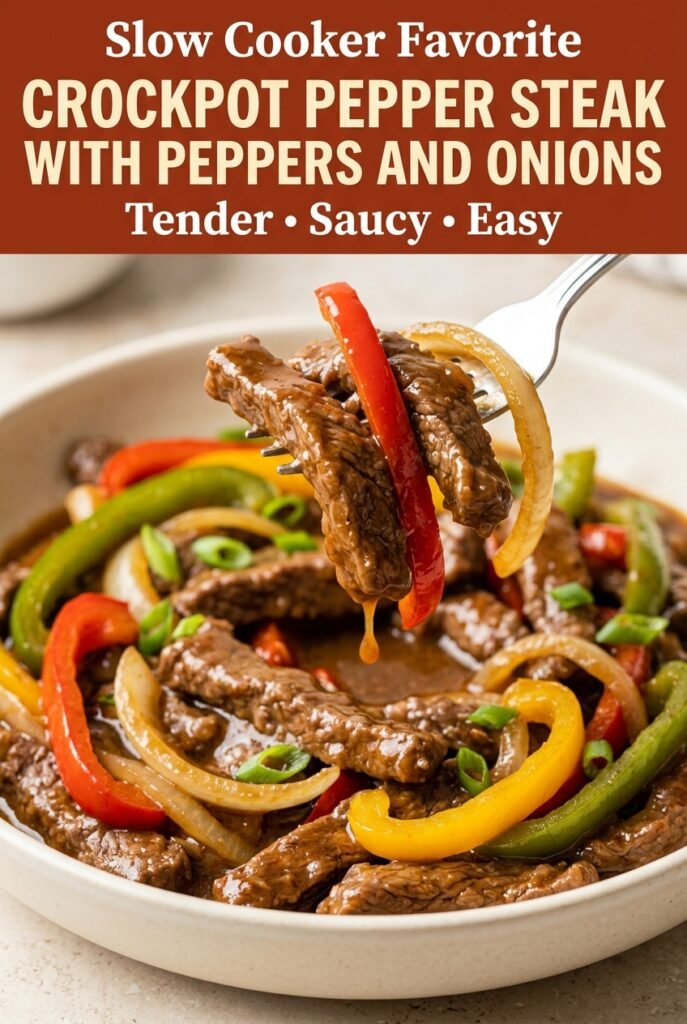
Crockpot Pepper Steak with Peppers and Onions
Crockpot pepper steak with peppers and onions earns its place in the dinner rotation because it gives you that takeout-style beef and glossy sauce without standing over the stove. The…
Tip: save now, read later.
Crockpot pepper steak with peppers and onions earns its place in the dinner rotation because it gives you that takeout-style beef and glossy sauce without standing over the stove. The beef turns fork-tender, the peppers soften just enough to stay sweet and recognizable, and the onions melt into the savory broth so every bite tastes built, not tossed together at the last minute.
The part that makes this version work is a light cornstarch coating on the beef before it ever hits the slow cooker. That extra dusting helps the meat brown faster in the skillet and gives the sauce a little body from the start. The finishing cornstarch slurry matters too, because pepper steak should cling to the beef and vegetables instead of pooling thinly at the bottom of the bowl.
Below you’ll find the small technique choices that keep the beef tender and the peppers from going soft and bland. There’s also a practical swap section and a few answers for the things that usually trip people up with slow cooker pepper steak.
The sauce thickened up beautifully in the last half hour, and the peppers still had a little bite instead of turning mushy. My husband said it tasted like our favorite takeout, only better.
Save this crockpot pepper steak for a tender beef dinner with glossy sauce and crisp-tender peppers.
The Sear That Keeps the Beef Tender Instead of Gray
Slow cooker pepper steak can go wrong before the lid even goes on. If the beef goes in raw and crowded, it steams, turns dull, and loses the beefy flavor that makes this dish worth making. A quick sear in batches gives the meat a browned surface and keeps the strips from clumping together in the sauce.
The other reason for searing is texture. That light cornstarch coating helps the beef pick up color in the skillet and gives the sauce a better grip later. Don’t chase a deep crust here; you’re not cooking a steak. You’re building flavor on the outside while keeping the inside supple enough to finish tender in the slow cooker.
What Each Ingredient Is Actually Doing in This Dish
- Beef sirloin — Sirloin gives you a tender result without needing the long braise that tougher cuts require. Slice it thinly across the grain so the finished beef stays easy to chew. Flank steak works too, but it leans a little chewier and benefits from the full low-and-slow cook time.
- Cornstarch — The first coating helps the beef brown and the second slurry thickens the sauce at the end. If you skip the slurry, you’ll still have good flavor, but the sauce stays thin and slips right off the meat. Arrowroot can replace the finishing cornstarch if you want a slightly glossier finish, but don’t overcook it after thickening.
- Low-sodium soy sauce and Worcestershire sauce — These bring the salty, savory backbone that makes the broth taste like a finished sauce instead of seasoned liquid. Low-sodium soy keeps the dish from getting harsh as it reduces. If all you have is regular soy sauce, cut back the added salt at the beginning.
- Tomato paste and brown sugar — Tomato paste deepens the sauce and gives it a little roundness, while brown sugar softens the salt and ginger. Together they keep the sauce from tasting flat. Don’t leave both out unless you want a sharper, thinner gravy.
- Bell peppers and onion — The peppers add sweetness and color, but they need the slow cooker, not a long stovetop simmer, so they stay recognizable. If you want firmer peppers, stir them in during the last hour instead of at the beginning. The onion can go in from the start because it melts down and helps flavor the sauce.
Building the Sauce So It Stays Glossy
Season and Coat the Beef
Toss the sliced sirloin with salt, pepper, and cornstarch until the surface looks lightly dusty, not pasty. That thin coating helps the meat brown and gives the sauce a head start on thickening. If the beef is wet when it hits the pan, it will spit and steam instead of sear, so pat it dry first if needed.
Brown the Meat in Batches
Heat the oil until it shimmers, then sear the beef in a single layer for 2 to 3 minutes. You want browned edges and a few dark spots, not a fully cooked center. Crowding the skillet is the fastest way to end up with gray beef, and gray beef means a flatter sauce.
Layer the Slow Cooker
Transfer the beef to the slow cooker and add the onion, peppers, and garlic. Whisk the broth, soy sauce, Worcestershire, brown sugar, ginger, and tomato paste until the paste disappears into the liquid. Pour it over the top and stir just enough to distribute everything without breaking up the pepper slices.
Finish With the Slurry
Cook until the beef gives easily when pressed with a fork, then stir in the cornstarch and cold water mixture during the last 20 to 30 minutes. Cold water matters because it keeps the starch from clumping before it reaches the heat. If you add it too early, the sauce can thin back out by the time dinner is ready.
How to Adapt This for Different Pans, Diets, and Busy Nights
Gluten-Free Pepper Steak
Use a gluten-free soy sauce or tamari and check that your Worcestershire sauce is gluten-free. The texture stays the same, and the sauce still thickens the same way. This is the easiest swap in the recipe because the flavor base comes from the same savory-sweet balance.
Lower-Sugar Version
Cut the brown sugar down to 1 teaspoon or leave it out entirely if your broth and soy sauce already taste balanced. The sauce will be a little sharper and more savory, which works well if you like the beef-forward side of the dish. Tomato paste still gives enough body to keep the sauce from tasting thin.
Using Flank Steak or Chuck Instead of Sirloin
Flank steak works if you slice it thinly against the grain and don’t overcook it past tender. Chuck can work too, but it needs the full low setting and may need a little extra time before it softens. Sirloin is still the cleanest choice for a tender result with less risk of stringy beef.
Storage and Reheating
- Refrigerator: Store in an airtight container for up to 4 days. The peppers soften a little more as it sits, but the flavor gets even deeper.
- Freezer: It freezes well for up to 2 months. Cool it completely first, then freeze in portions so the sauce doesn’t need to be thawed all at once.
- Reheating: Reheat gently on the stove or in the microwave with a splash of broth if the sauce has thickened too much. The common mistake is blasting it on high heat, which can tighten the beef and make the peppers collapse.
Answers to the Questions Worth Asking
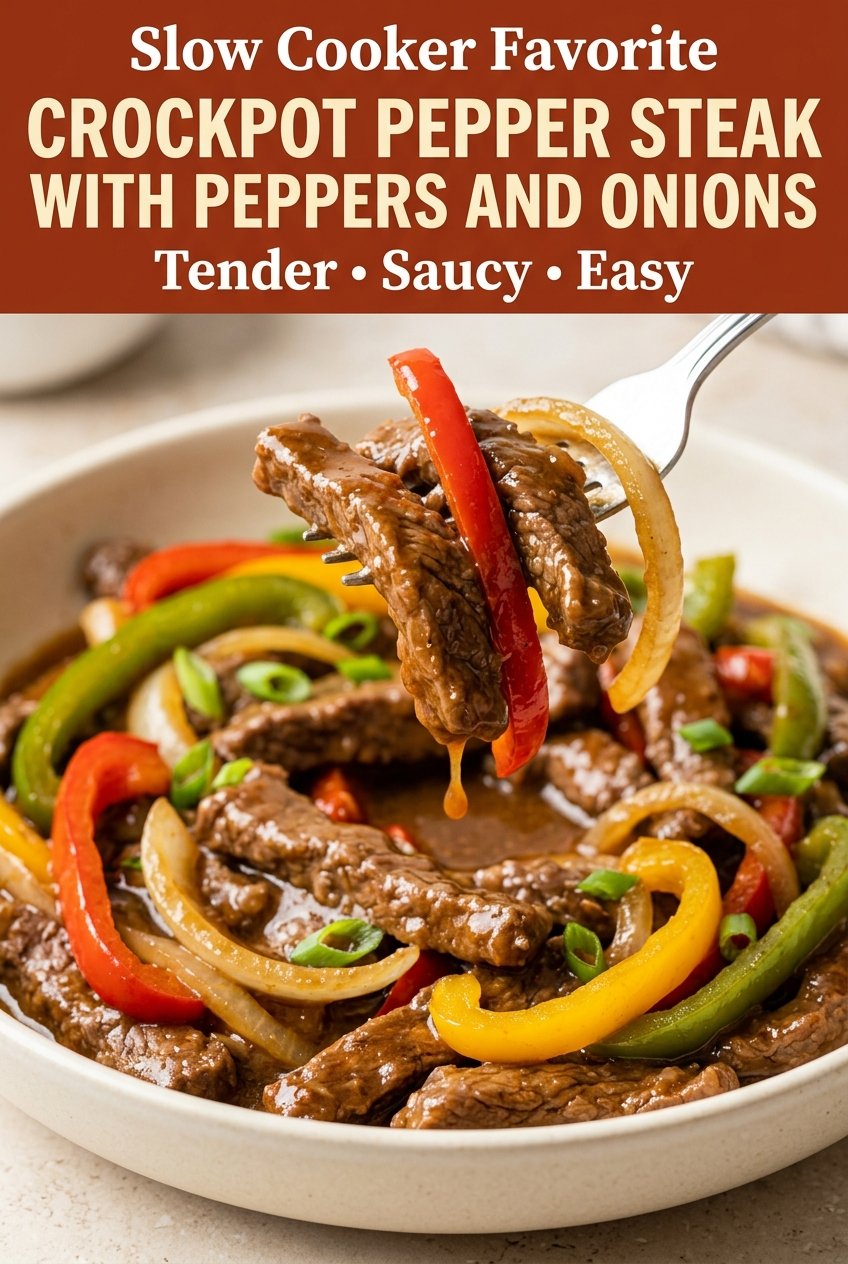
Crockpot Pepper Steak with Peppers and Onions
Ingredients
Equipment
Method
- Season the beef sirloin with the salt and black pepper, then toss to coat evenly.
- Toss the seasoned beef with 2 tbsp cornstarch until lightly coated.
- Heat the olive oil in a large skillet over medium-high heat until shimmering.
- Sear the beef for 2–3 minutes until lightly browned, working in batches to avoid overcrowding.
- Transfer the seared beef to a 6-quart slow cooker.
- Add the yellow onion, green bell pepper, red bell pepper, yellow bell pepper, and garlic to the slow cooker.
- Whisk the beef broth, soy sauce, Worcestershire sauce, brown sugar, ground ginger, and tomato paste until smooth.
- Pour the sauce over the beef and vegetables, then stir gently to distribute.
- Cover and cook on LOW for 5–6 hours or HIGH for 2½–3½ hours, until the beef is tender and the vegetables remain recognizable.
- Whisk 2 tbsp cornstarch with the cold water until smooth.
- Stir the cornstarch slurry into the slow cooker during the final 20–30 minutes.
- Cook until the sauce becomes glossy and slightly thickened, then sprinkle with the green onions and serve hot.
