
Grandma’s Ground Beef Stew
Hearty ground beef stew earns its place in the dinner rotation because it gives you all the comfort of a long-simmered beef stew without needing a full chuck roast or…
Tip: save now, read later.
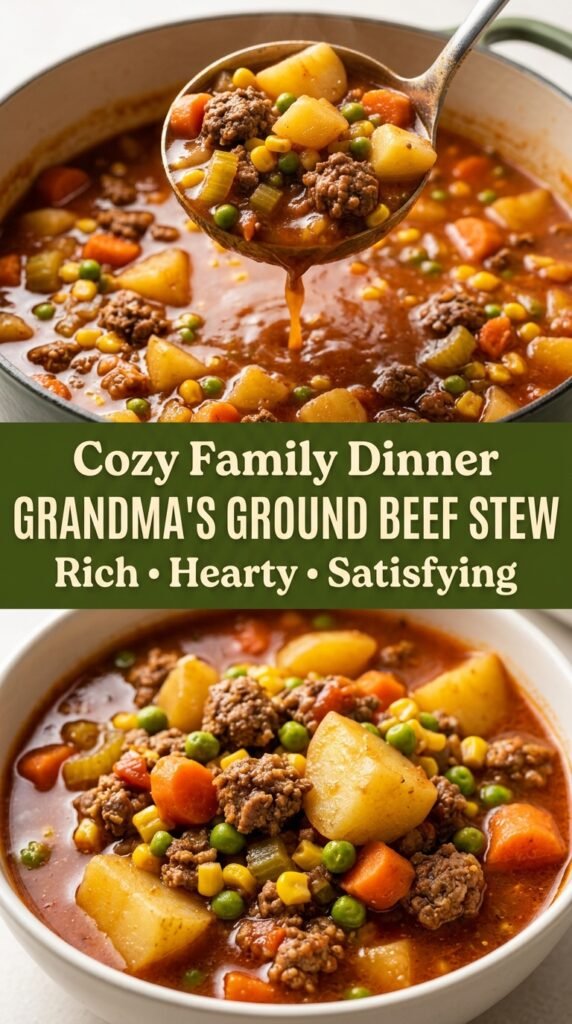
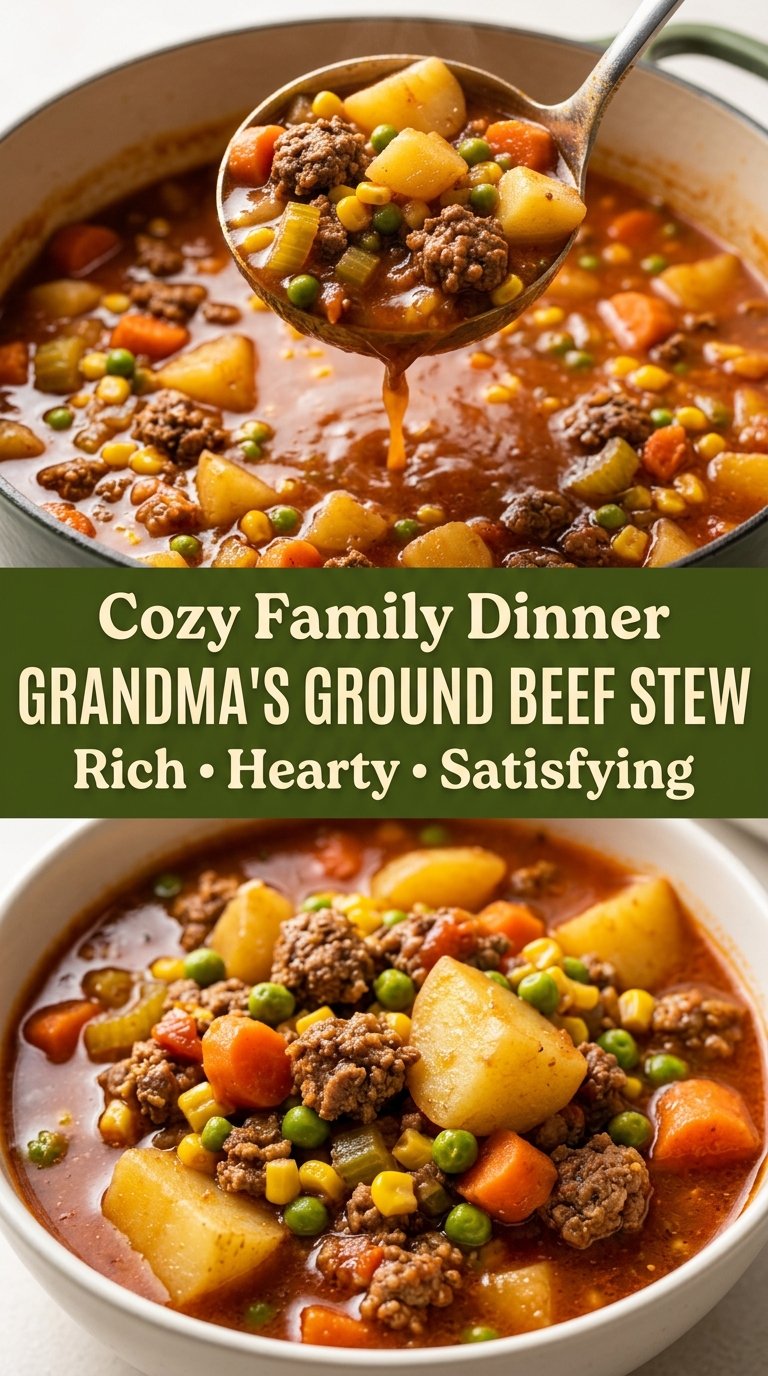
Hearty ground beef stew earns its place in the dinner rotation because it gives you all the comfort of a long-simmered beef stew without needing a full chuck roast or hours on the stove. The broth turns rich and savory, the potatoes soften just enough to hold their shape, and the vegetables stay distinct instead of cooking down into mush. It’s the kind of bowl that tastes like it’s been around a lot longer than it has.
What makes this version work is the order. Browning the beef first builds the base flavor, and cooking the tomato paste for a full minute pulls out that deep, almost sweet edge that plain broth can’t give you. Yukon Gold potatoes are the right choice here because they stay creamy without falling apart, and the cornstarch at the end thickens the broth without making it heavy or gravy-like.
Below, you’ll find the small choices that matter most, from how chunky to keep the beef to when the frozen vegetables go in. There’s also a note on swaps and reheating, because this stew is even better the next day when the flavors settle in.
The broth thickened up perfectly and the potatoes held their shape instead of turning to mush. I used a leaner ground beef and it still tasted rich and cozy, which was a nice surprise.
Save Grandma’s Ground Beef Stew for a cozy one-pot dinner with tender potatoes, sweet corn, and a rich tomato-beef broth.
The Step That Keeps the Broth from Tasting Flat
The biggest mistake with ground beef stew is treating the beef like it’s just there for protein. If you only cook it until the pink is gone and move on, the broth ends up tasting thin and one-note. You want some real browning on the meat and the pot, because those caramelized bits melt into the broth later and give the stew its backbone.
Tomato paste matters for the same reason. One minute in the hot pan changes it from raw and sharp to concentrated and round. That small step keeps the stew from tasting like beef broth with vegetables floating in it. Worcestershire sauce helps too, because it adds savory depth without making the stew taste like Worcestershire sauce.
- Ground beef — An 80/20 blend gives the best flavor and a little richness in the broth. If you use lean beef, the stew still works, but the finished bowl will taste a bit cleaner and less hearty.
- Yukon Gold potatoes — These stay tender and creamy without collapsing. Russets will thicken the broth more, but they can break down if you simmer them too long.
- Tomato paste — This is the ingredient that gives the broth its deep color and concentrated flavor. If you skip the quick sauté, the stew tastes flatter and more acidic.
- Beef broth — Use a broth you’d drink on its own if possible, because it’s the main liquid in the pot. A lower-sodium version works well here since the stew reduces a little as it simmers.
- Frozen peas and corn — Add them at the end so they stay sweet and don’t turn dull or mushy. Fresh works too, but frozen is easier and often better in texture.
Building the Stew So the Vegetables Stay Tender, Not Soft
Browning the Beef First
Heat the oil in a heavy Dutch oven and add the ground beef in a single layer if you can. Let it sit long enough to brown before breaking it up completely; that’s how you get flavor instead of gray crumbles. If the pan looks crowded and the beef starts steaming, cook it in batches so it can actually brown.
Softening the Aromatics
Add the onion after the beef has cooked and let it soften in the fat left behind. The onion should turn translucent and fragrant, not browned or crunchy. Stir in the garlic for just 30 seconds, because garlic burns fast and turns bitter once the heat has been on it too long.
Layering the Vegetables and Tomato Paste
Carrots and celery go in before the liquid so they can pick up the beef flavor in the pot. Stir the tomato paste into the hot vegetables and let it cook until it darkens slightly and smells richer. That one minute keeps the tomato flavor from tasting sharp later in the stew.
Simmering Until the Potatoes Are Just Tender
Once the broth and seasonings are in, bring everything to a gentle boil, then lower the heat to a steady simmer. You want small bubbles breaking the surface, not a hard boil, because aggressive heat can break the potatoes apart before the carrots are done. Stop cooking when a fork slips into the potatoes with little resistance but they still hold their shape.
Finishing with Peas, Corn, and a Light Thicken
Frozen peas and corn only need a few minutes, so add them near the end. Stir the cornstarch slurry in gradually while the stew simmers so the broth thickens evenly instead of turning lumpy in one spot. If the stew looks too thick after standing, a splash of broth loosens it right back up.
Make It Dairy-Free and Still Rich
This stew is already dairy-free as written, which makes it an easy one to keep on repeat. The richness comes from browning the beef well and letting the tomato paste cook before the broth goes in, so there’s no need for cream or butter to give it body.
Swap the Beef for Ground Turkey
Ground turkey works if you want a lighter stew, but it needs help from the other ingredients because it brings less fat and less natural depth. Use a little extra olive oil and don’t skip the tomato paste step, since that’s what keeps the broth from tasting thin.
Make It Gluten-Free
This recipe is naturally gluten-free as long as your Worcestershire sauce is certified gluten-free. The cornstarch slurry thickens the broth cleanly, so you don’t need flour or a roux to get that satisfying spoon-coating texture.
Stretch It for a Bigger Crowd
Add another cup of broth and an extra potato if you need to feed more people without changing the feel of the dish. The stew reheats well, so a larger batch is useful if you want leftovers that still taste balanced the next day.
Storage and Reheating
- Refrigerator: Store covered for up to 4 days. The broth will thicken as it sits, and the potatoes will soak up more of the liquid.
- Freezer: It freezes well for up to 3 months, though the potatoes soften a bit after thawing. Cool it completely before freezing in airtight containers.
- Reheating: Warm it gently on the stove over medium-low heat with a splash of broth or water. A hard boil can break the potatoes and make the beef dry out.
Answers to the Questions Worth Asking
Grandma's Ground Beef Stew
Ingredients
Equipment
Method
- Heat olive oil in a large Dutch oven over medium-high heat, then add the ground beef and cook for 6–8 minutes, breaking it into chunky crumbles until no pink remains. When done, the beef should look browned across the whole pot.
- Add the yellow onion and cook for 4 minutes until softened, stirring as needed so it doesn’t stick. The onions should turn translucent.
- Stir in the garlic and cook for 30 seconds until fragrant. Keep it moving so the garlic doesn’t brown too much.
- Add the carrots and celery and cook for 3–4 minutes, stirring occasionally. They should begin to soften but still hold shape.
- Stir in the tomato paste and cook for 1 minute to deepen its flavor. It should smell richer and look slightly darker.
- Add the Yukon Gold potatoes, diced tomatoes, beef broth, Worcestershire sauce, dried thyme, dried parsley, bay leaf, salt, and black pepper to the Dutch oven. Stir to combine so everything is evenly distributed.
- Bring the stew to a gentle boil, then reduce the heat to low and cover. Look for a steady simmer rather than a hard rolling boil.
- Simmer for 25–30 minutes until the potatoes and carrots are fork-tender. When you pierce a potato, it should slide off the fork easily.
- Stir in the frozen peas and frozen corn, then simmer uncovered for 5 minutes. The vegetables should be heated through and bright in color.
- Whisk the cornstarch with the cold water until smooth, then stir it gradually into the stew. Pour slowly to avoid lumps and keep the mixture silky.
- Simmer for another 3–5 minutes until the broth becomes slightly thick and glossy. Remove the bay leaf before serving.
- Serve hot in bowls so each portion gets plenty of ground beef, potatoes, carrots, peas, corn, and rich broth. Spoon the stew so the glossy broth coats the ingredients.
