

Guinness Beef Stew with Herb Dumplings
Guinness Beef Stew with Herb Dumplings lands in that sweet spot where the beef turns spoon-tender, the gravy tastes deep and savory instead of flat, and the dumplings steam up…
Tip: save now, read later.
Guinness Beef Stew with Herb Dumplings lands in that sweet spot where the beef turns spoon-tender, the gravy tastes deep and savory instead of flat, and the dumplings steam up light on top while soaking in just enough of the broth underneath. It eats like the kind of meal that slows everyone down at the table. There’s nothing delicate about it, and that’s exactly why it works.
The stout does more than add a dark color. It brings a roasted bitterness that keeps the stew from tasting heavy, especially once it’s simmered with beef broth, tomato paste, and Worcestershire. Browning the beef in batches matters here too, because those crusty bits on the bottom are what give the finished gravy its backbone. The dumplings are kept simple on purpose: cold butter, fresh herbs, and just enough mixing to hold them together without turning them tough.
Below, I’ve laid out the one part people usually rush, the ingredient choices that actually matter, and the small timing details that keep the dumplings fluffy instead of dense. If you’ve ever ended up with thin stew or gummy dumplings, this version gives you the fix.
The stew thickened up beautifully and the dumplings stayed fluffy even after the full 18 minutes. I was worried the Guinness would be too strong, but it just made the gravy taste richer and my husband asked for leftovers the next night.
Save this Guinness beef stew with herb dumplings for a cold-night dinner that turns stout, beef, and soft steamed dumplings into one pot of comfort.
The Browning Stage Is Where the Stew Gets Its Depth
The biggest mistake with beef stew is crowding the pan and letting the meat steam. If the pieces go in too close together, they give off moisture before the surface can brown, and you end up with gray beef and a flat-tasting broth. Browning in batches takes a few extra minutes, but those dark crusts are what turn the gravy from ordinary to rich and layered.
The other place people lose flavor is when they skip the step of cooking the tomato paste briefly. That minute in the hot pan darkens it a touch and pulls out a sweeter, more concentrated taste. Then the Guinness goes in to loosen all that fond from the bottom, so nothing is wasted.
- Beef chuck — This cut has enough connective tissue to become tender after a long simmer. Lean stew meat dries out more easily and can turn stringy before the broth has time to develop.
- Guinness stout — The stout gives the gravy its roasted edge. If you need a substitute, use another dry stout or dark beer rather than something sweet, or the stew will taste muddled.
- Tomato paste — This is the quiet backbone of the sauce. It adds body and a little sweetness, and cooking it briefly before adding liquid keeps it from tasting raw.
- Cold butter for the dumplings — Cold butter is what gives the dumplings lift. As it melts in the oven-like steam, it creates little pockets that keep the dough tender instead of dense.
- Fresh parsley and thyme — Fresh herbs make the dumplings taste bright enough to stand up to the heavy stew. Dried herbs can work in a pinch, but use less because they read more concentrated.
Building the Stew So the Gravy Comes Together on Its Own
Browning the Beef Without Steaming It
Season the chuck first, then toss it lightly in flour so the surface can build a thin crust. Brown only a single layer at a time in hot oil until the meat releases cleanly and the bottom of the pan has dark brown bits, not black ones. If the pan looks crowded, split the batch again. Pale beef at this stage means pale stew later.
Softening the Vegetables and Concentrating the Base
Cook the onion, carrots, and celery until the onion looks translucent and the carrots start to soften at the edges. Stir in the garlic and tomato paste only after that, because garlic burns fast and tomato paste needs direct heat to lose its raw taste. When the Guinness hits the pan, scrape firmly along the bottom. That’s where the best flavor lives.
Simmering Until the Beef Relaxes
Add the broth, Worcestershire, thyme, bay leaf, and potatoes, then bring everything to a gentle simmer, not a hard boil. A rolling boil tightens the beef and keeps the sauce from settling into a smooth, glossy consistency. Cover and cook low and slow until the chuck yields easily to a fork and the broth looks naturally thickened from the flour and collagen. If the liquid drops too much before the meat is tender, add a splash of broth, not water.
Dropping the Dumplings and Leaving Them Alone
Mix the dumpling dough only until it comes together. Overworking it makes the dumplings heavy. Drop them over a steady simmer with a little space between each one, then cover the pot and keep the lid closed for the full cook time. Lifting the lid lets the steam escape, and steam is what cooks the dumplings through.
What to Change When You Need a Different Version
Gluten-Free Stew Thickened Without the Flour Dusting
Use a gluten-free all-purpose blend in the stew and dumplings, but choose one that includes xanthan gum or another binder. The stew won’t rely quite as much on the initial flour coating for thickening, so let it simmer uncovered for the last few minutes if you want a slightly tighter gravy. The dumplings will still steam up tender, though they may be a touch more delicate.
Dairy-Free Dumplings That Still Stay Soft
Swap the butter for a solid plant-based butter and use an unsweetened dairy-free milk. Keep both cold, because the texture of the dumplings depends on that fat staying in little pieces until the steam works on it. The flavor stays savory, though the crumb will be a little less rich than the original.
No Alcohol Version with the Same Dark, Savory Feel
Replace the Guinness with an equal amount of extra beef broth plus 1 to 2 teaspoons of balsamic vinegar and a teaspoon of soy sauce or tamari. You won’t get the exact roasted bitterness of stout, but you will keep the deep color and the savory backbone that makes the stew taste fuller.
Make It Ahead for Better Flavor the Next Day
Cook the stew base a day ahead and chill it without the dumplings. The flavor gets even deeper after a night in the fridge, and the fat on top is easy to skim if needed. Add the dumplings only when you reheat the stew, because they’re best when steamed fresh.
Storage and Reheating
- Refrigerator: Store leftovers in a sealed container for up to 4 days. The dumplings will absorb more gravy as they sit and become softer.
- Freezer: The stew freezes well, but the dumplings soften noticeably after thawing. If you want the best texture, freeze the stew without dumplings and add fresh ones when reheating.
- Reheating: Warm gently on the stovetop over low heat with a splash of broth to loosen the gravy. A hard boil can make the beef stringy and can break apart the dumplings.
The Things That Trip People Up With This Dish
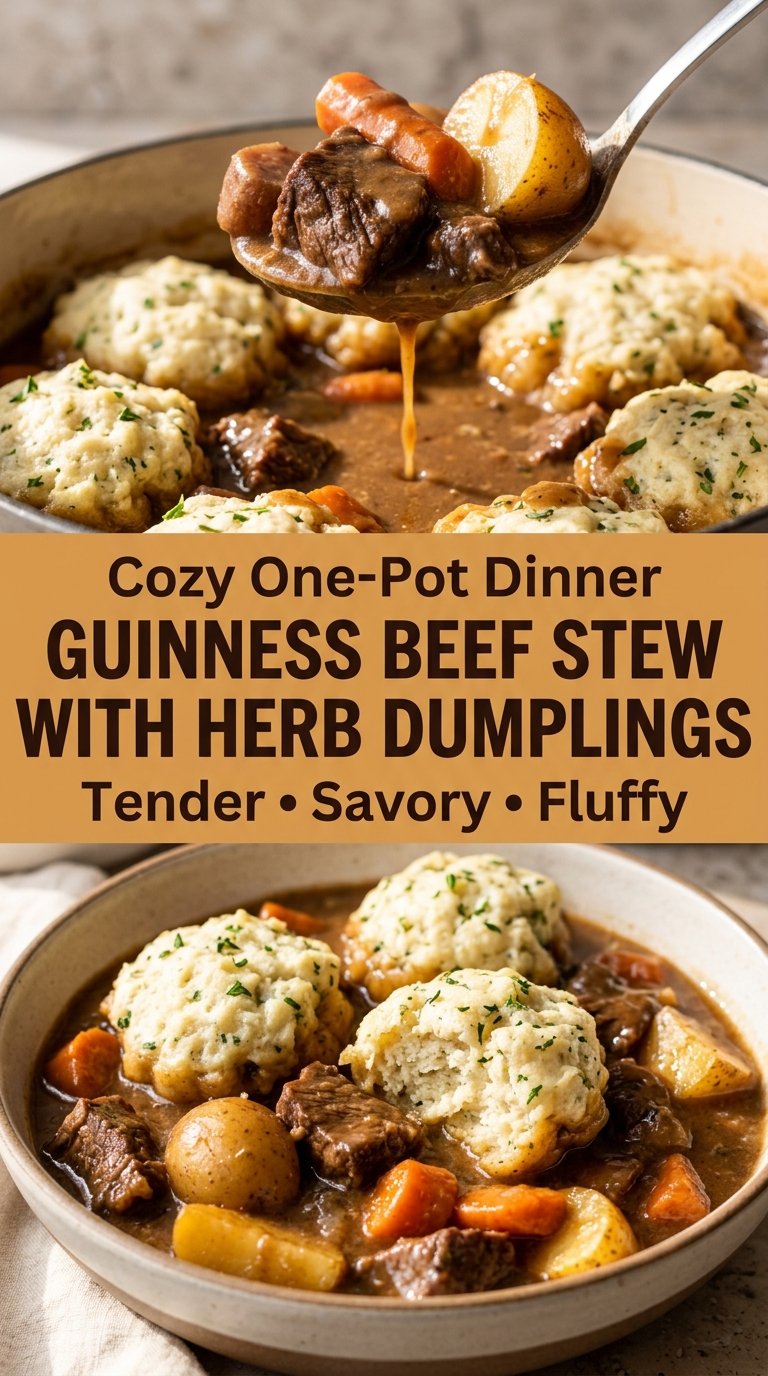
Guinness Beef Stew with Herb Dumplings
Ingredients
Equipment
Method
- Season the beef chuck with salt and black pepper, then toss with 3 tbsp all-purpose flour until lightly coated and ready to brown.
- Heat olive oil in a Dutch oven over medium-high heat and brown the beef in batches for 3–4 minutes per side until a deep crust forms, then transfer to a plate.
- Add the yellow onion, carrots, and celery to the Dutch oven and cook over medium heat for 5–6 minutes until slightly softened.
- Stir in the garlic and tomato paste and cook for 1 minute until fragrant.
- Pour in the Guinness stout and scrape the browned bits from the bottom, then simmer for 3–4 minutes.
- Return the beef to the Dutch oven, then add beef broth, Worcestershire sauce, dried thyme, bay leaf, and baby potatoes.
- Bring the stew to a gentle simmer, cover, and cook over low heat for 1½–2 hours until the beef is fork-tender and the gravy has thickened.
- Combine 1½ cups all-purpose flour, baking powder, salt, parsley, and fresh thyme leaves, then cut in the cold butter until the mixture resembles coarse crumbs.
- Stir the milk into the dumpling mixture just until a soft dough forms, avoiding overmixing.
- Drop heaping spoonfuls of dough over the simmering stew, leaving a little space between each dumpling.
- Cover and cook over low heat for 15–18 minutes without lifting the lid, until the dumplings are fluffy and cooked through.
- Remove the bay leaf and serve the stew with herb dumplings nestled in the stout gravy over the beef and vegetables.
