
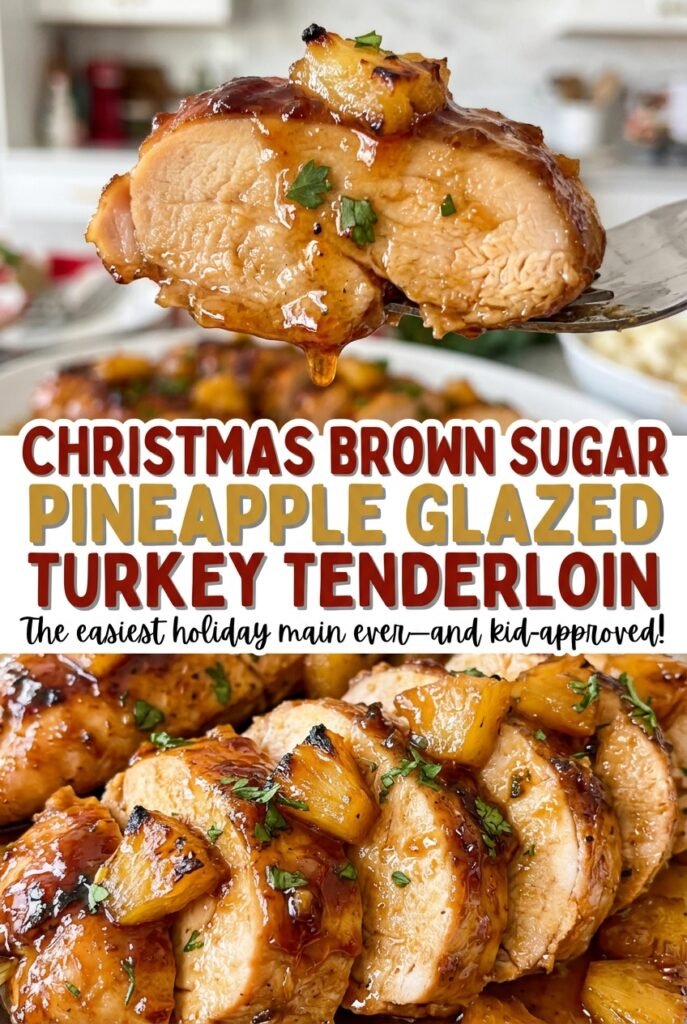
Christmas Brown Sugar Pineapple Glazed Turkey Tenderloin
The pineapple glaze starts out thin and cloudy, then turns dark, glossy, and fragrant as it simmers. That change is what makes Christmas Brown Sugar Pineapple Glazed Turkey Tenderloin feel…
Tip: save now, read later.
The pineapple glaze starts out thin and cloudy, then turns dark, glossy, and fragrant as it simmers. That change is what makes Christmas Brown Sugar Pineapple Glazed Turkey Tenderloin feel festive without asking you to roast a whole bird. The tenderloins cook quickly, and the sweet-tart glaze gives each slice a shiny finish.
I learned to treat the glaze like a finishing coat, not a marinade. Pineapple juice and brown sugar have plenty of natural sweetness, so the glaze needs time to reduce on the stove before it goes near the turkey. Brushing it on in stages lets the coating build without sitting in the oven for the full roast.
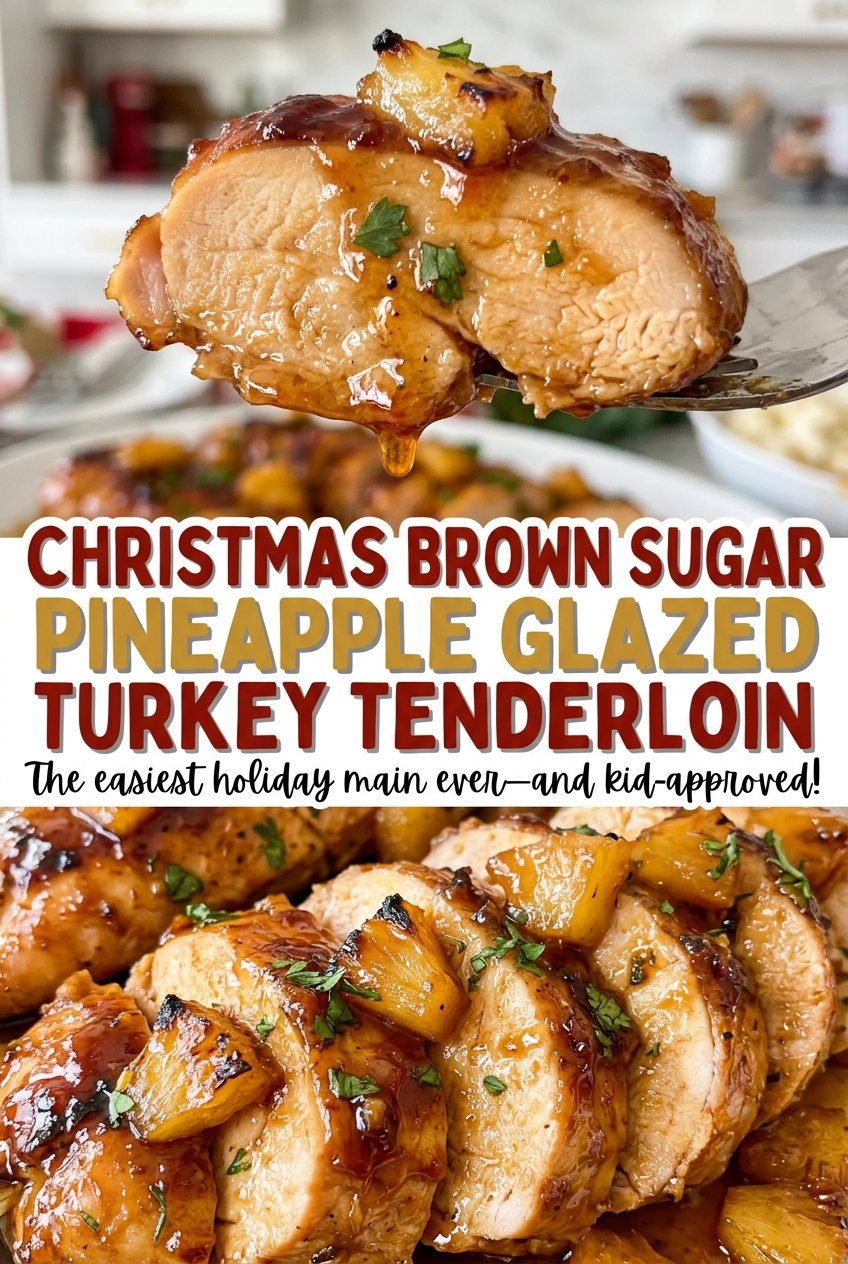
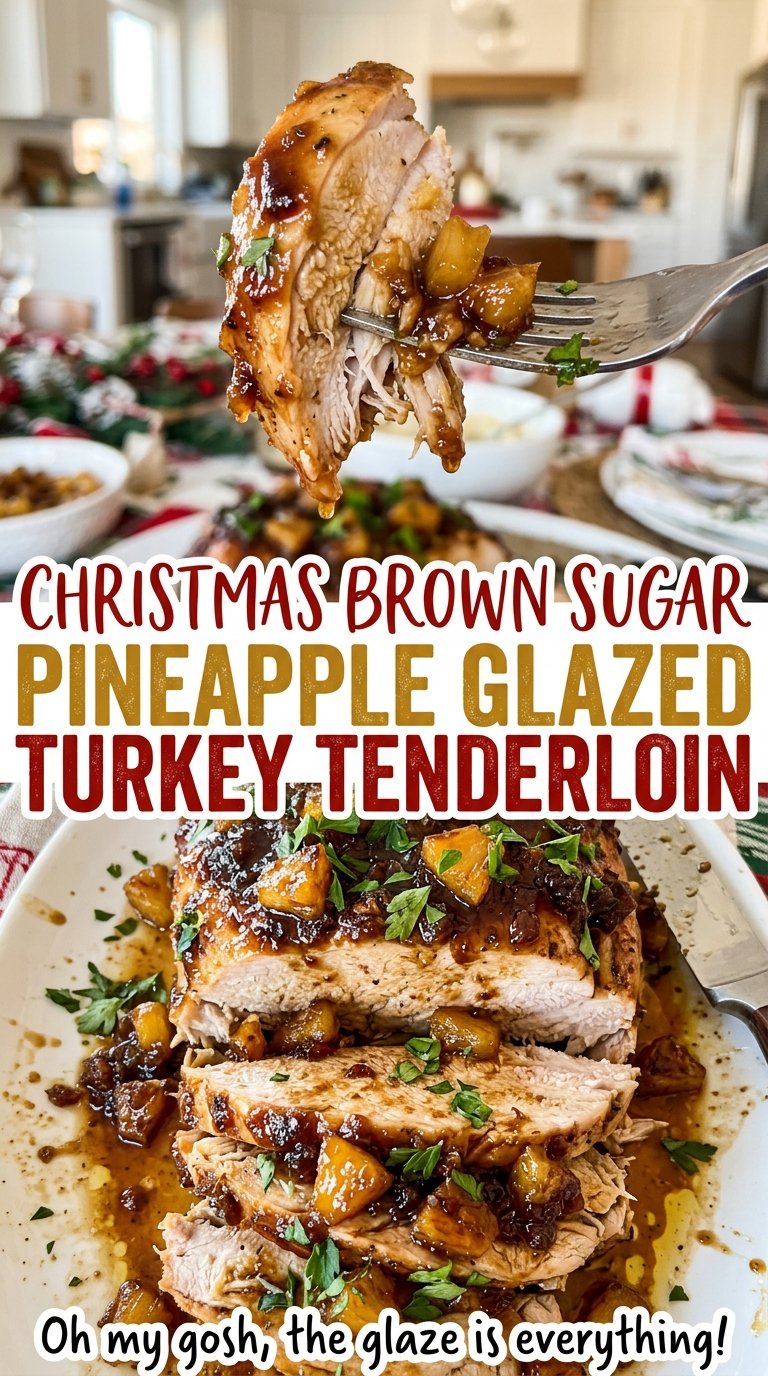
The result is tender turkey with a lightly spiced, tangy-sweet outside and extra glaze for serving. Slice it after a short rest, and the glossy edges look right at home on a holiday table.
Kitchen Note
Measure the glaze for serving before the turkey goes into the dish, and keep that bowl away from the raw turkey and basting brush. It gives you a clean portion to bring to the table, with no guesswork about what touched the poultry.
Save this Christmas brown sugar pineapple glazed turkey tenderloin for a holiday meal with a quick roast and a glossy, spiced finish.
Why the Pineapple Glaze Goes on Near the End
A sugary glaze can go from shiny to scorched if it spends the whole roasting time exposed to high oven heat. Here, the turkey gets a head start in the oven before any glaze touches it. That gives the meat time to begin roasting while the glaze stays fresh and bright instead of darkening too quickly.
Brushing in two coats matters for more than appearance. The first layer gets a few minutes of oven heat to cling to the surface; the second adds a fresh sheen and gives the spices another chance to perfume the outside. If you pour all the glaze on at once, it’s more likely to run into the baking dish than form an even coating. A measured portion stays back for serving, so every slice can get a little extra without relying on the glaze from the roasting pan.
What Gives This Glaze Its Sweet-Tart Balance
- Pineapple juice — This supplies the fruit acidity and the liquid that reduces into the glaze. Plain, unsweetened juice keeps the balance predictable; a sweetened pineapple drink can make the finished glaze too sugary. Orange juice works as a substitute, but the result tastes more citrusy and less distinctly pineapple.
- Light brown sugar — It adds sweetness and a mild molasses note that deepens as the glaze cooks. Dark brown sugar can stand in if that’s what you have; expect a slightly more pronounced molasses flavor.
- Dijon mustard and apple cider vinegar — Dijon keeps the glaze from tasting one-note sweet, while the vinegar adds a clean tang. Smooth Dijon blends in neatly; whole-grain mustard works too, though you’ll see its seeds in the finished glaze. White wine vinegar can replace the cider vinegar with a gentler fruitiness.
- Cinnamon and ground cloves — These bring warmth without making the glaze taste like dessert. Cloves are potent, so measure carefully rather than adding an extra shake from the jar.
- Turkey tenderloins — Tenderloins cook faster than a whole turkey and make easy, even slices. Choose pieces that look moist and firm, and pat away surface moisture before seasoning so the oil and seasoning coat them instead of sliding around.
- Neutral oil, kosher salt, and black pepper — The oil helps the seasoning coat the turkey and greases the dish; a neutral-tasting oil won’t compete with the fruit and spices. Freshly ground pepper gives a more fragrant finish, but standard ground pepper works fine.
Reducing the Glaze Before the Turkey Roasts
Simmer Until It Turns Syrupy
Whisk the pineapple juice, brown sugar, Dijon, apple cider vinegar, cinnamon, and cloves together in a medium saucepan. Bring the mixture to a simmer over medium heat, then stir often as it reduces for 10–15 minutes. It should decrease to about two-thirds of its starting volume and look syrupy, not watery. Take the pan off the heat and measure a quarter cup into a small bowl for serving.
Season the Tenderloins Evenly
Heat the oven to 400°F and use a teaspoon of the oil to grease a 9×13-inch baking dish. Pat the turkey dry, then rub it with the remaining oil so the salt and pepper adhere all over. Set the tenderloins in the prepared dish without leaving any unseasoned sides. If the surface is still damp, the seasoning can slide off rather than stay in place.
Build the Glaze in Two Coats
Roast the turkey for 15 minutes before brushing on half of the remaining glaze. Return it to the oven for 5 minutes, then brush on the rest and continue roasting for 5–15 minutes more. The glaze should look glossy, and the thickest part of the turkey should reach 165°F; the final roasting time depends on the size and thickness of the pieces. Rest the tenderloins for 5–10 minutes before slicing, then serve with the reserved glaze.
Three Easy Ways to Adapt the Holiday Glaze
A little heat with the holiday spices
Whisk a pinch of cayenne into the glaze ingredients before simmering. It adds a gentle warmth behind the pineapple and brown sugar without changing the roasting method; add more only if you want the heat to be noticeable.
Use orange juice for a citrus variation
Replace half of the pineapple juice with orange juice. The glaze keeps its fruitiness but shifts toward a brighter citrus taste, with a little less of pineapple’s distinctive tang.
Make it gluten-free
Use gluten-free Dijon mustard in place of regular Dijon. The tangy mustard note stays in the glaze, and the other listed ingredients are naturally gluten-free.
Storage and Reheating
- Refrigerator: Store sliced turkey in an airtight container for 3–4 days. The glaze will thicken as it chills, and the turkey won’t be quite as juicy as it is freshly roasted.
- Freezer: Freeze portions in airtight freezer containers or wrap them well to protect against freezer burn; they keep their best quality for about 2–3 months. Thaw overnight in the refrigerator.
- Reheating: Warm slices covered in a 300°F oven with a spoonful of reserved glaze, or microwave them in short bursts until hot throughout. Avoid prolonged uncovered heating, which dries out lean turkey.
Questions That Come Up Before the Turkey Goes in the Oven
Christmas Brown Sugar Pineapple Glazed Turkey Tenderloin
Ingredients
Equipment
Method
- Whisk the pineapple juice, brown sugar, Dijon mustard, vinegar, cinnamon, and cloves in a medium saucepan.
- Bring to a simmer over medium heat, then simmer for 10–15 minutes, stirring often, until reduced to about 2/3 cup and syrupy.
- Remove from the heat and measure 1/4 cup glaze into a small bowl to serve with the turkey.
- Heat the oven to 400°F.
- Use 1 teaspoon of the oil to grease a 9x13-inch baking dish.
- Pat the turkey dry.
- Rub it with the remaining oil and season all over with the salt and pepper.
- Place the turkey in the prepared dish.
- Roast for 15 minutes.
- Brush half of the remaining glaze over the turkey.
- Roast for 5 minutes.
- Brush the turkey with the rest of the glaze.
- Roast for 5–15 minutes more, until glossy and 165°F in the thickest part.
- Rest the turkey for 5–10 minutes before slicing.
- Serve with the reserved glaze.
