

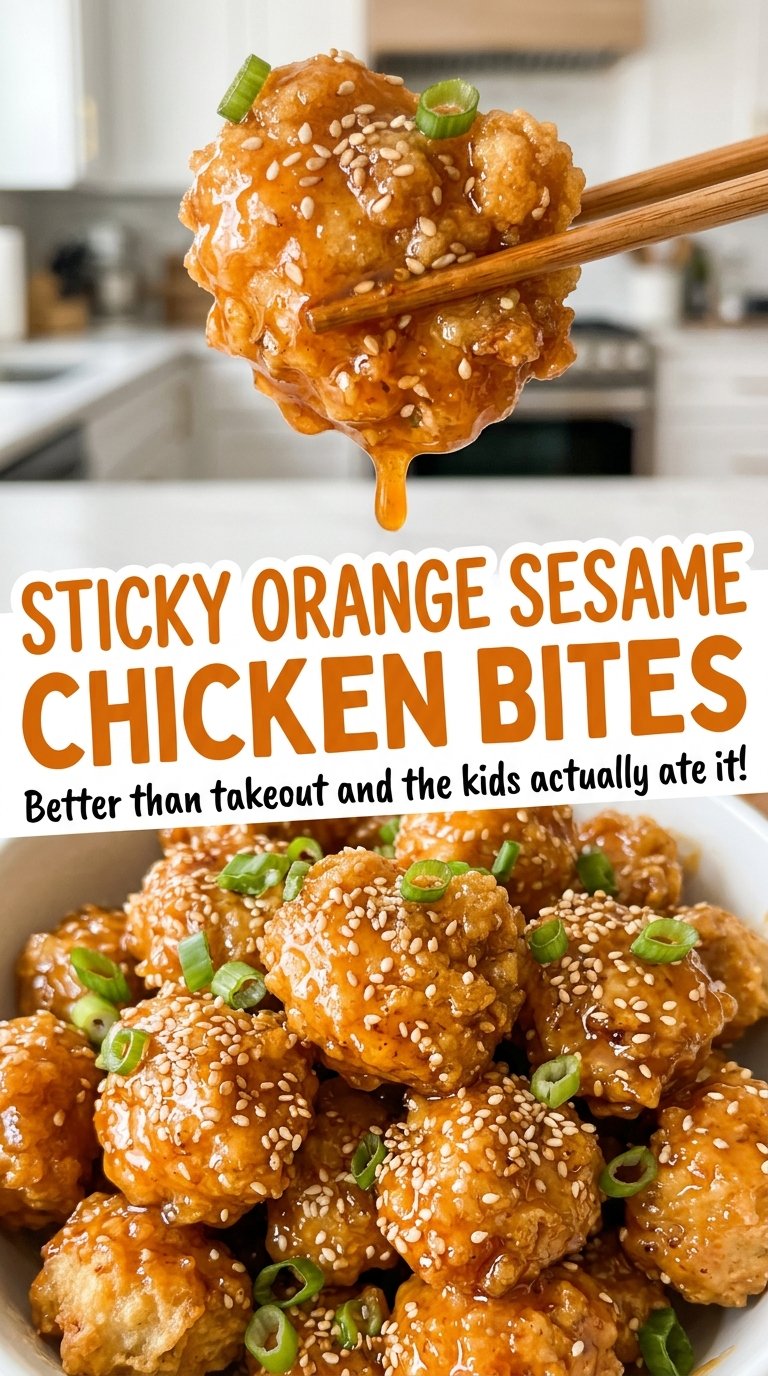
Sticky Orange Sesame Chicken Bites
When the chicken hits the skillet, the cornstarch changes from powdery white to a thin, golden crust. That’s the moment these Sticky Orange Sesame Chicken Bites start to feel different…
Tip: save now, read later.
When the chicken hits the skillet, the cornstarch changes from powdery white to a thin, golden crust. That’s the moment these Sticky Orange Sesame Chicken Bites start to feel different from takeout-style chicken that’s been sitting under sauce too long. I cook the pieces in batches so the coating browns instead of steaming, then bring everything together in a bright orange glaze.
The sauce gets its citrus character from both orange juice and finely grated zest. Juice gives it body; zest brings the fragrant orange oils that keep the honey and soy sauce from tasting too sweet or heavy. Once the glossy sauce clings to each piece, sesame oil and sesame seeds finish the skillet with a toasty edge.

Kitchen Note
Cut the chicken into pieces close to the same size. When they’re all about an inch across, they cook at a similar pace and you’re less likely to have a few dry pieces while the larger ones finish.
Save these Sticky Orange Sesame Chicken Bites for a night when you want golden chicken coated in a glossy, citrusy sauce.
Why Frying the Chicken in Batches Makes the Coating Stay Golden
It’s easy to look at a skillet full of chicken and think one round will save time. The trouble is that crowded pieces release moisture into the pan, and the temperature drops when too much cold chicken goes in at once. Instead of browning, the coating can turn pale and soft. A single layer gives each piece contact with the hot skillet, which is what builds that lightly crisp outside before the sauce goes on.
I divide the chicken into three batches and cook each in its own layer. The first batch shouldn’t be piled up along the edge while the middle cooks; give the pieces a little room and turn them every couple of minutes. Add fresh oil for each round so the coating has enough fat to brown. The finished bites won’t stay crisp once they meet the sauce, but they’ll keep their golden crust underneath the sticky glaze instead of starting out soggy.
This small bit of patience also makes it easier to judge doneness. When you’re turning a manageable layer, you can check a thick piece without digging through a crowded pan.
Why Orange Zest Matters More Than Extra Orange Juice
- Orange juice and zest — The juice supplies the sauce’s citrus base, while finely grated zest adds a more concentrated orange aroma. A fresh orange is useful for zesting; for the juice, a plain carton of orange juice works. Grate only the colored peel, not the bitter white pith.
- Chicken breasts — Boneless, skinless breasts cook quickly and give the bites a lean, tender center. Cut them into even pieces so the coating browns before the meat dries out.
- Eggs and cornstarch — Beaten egg helps the starch cling to the chicken, and the starch makes the coating crisp in the skillet. Shake off extra starch; a thick, dusty layer is more likely to turn pasty than lightly golden.
- Soy sauce, honey, and rice vinegar — Soy sauce brings savory depth, honey gives the glaze its sticky sweetness, and rice vinegar keeps the orange from tasting flat. A naturally brewed soy sauce is a good everyday choice; the sauce is balanced around its salty, savory character.
- Garlic and fresh ginger — These give the sauce a fresh, savory backbone beneath the citrus. Freshly grated ginger has a brighter bite than dried ginger, and minced garlic disperses more evenly than large chunks.
- Vegetable or canola oil — Either neutral oil works for frying without competing with the orange sauce. Use toasted sesame oil only at the finish; its stronger aroma is best stirred in off the heat.
- Sesame seeds — They add a nutty finish and a little texture on top. Toasted seeds have a deeper aroma, but plain sesame seeds are fine here.
From Egg-Coated Chicken to Glossy Orange Glaze
Coat the Pieces Without Leaving a Thick Starch Layer
Season the chicken with kosher salt and black pepper, then beat the eggs in a shallow bowl. Toss the chicken in the egg until the pieces are coated, and dredge them in cornstarch. Lift each piece out and shake off the excess so the coating stays light rather than clumping in the skillet.
Brown the Chicken in Three Skillet Batches
Heat two tablespoons of oil in a 12-inch skillet over medium-high heat until it shimmers. Add one-third of the chicken in a single layer and cook for 6–8 minutes, turning the pieces every couple of minutes. Look for an even golden surface, then check the thickest piece for 165°F. Repeat with the remaining chicken and oil in two more batches.
Simmer the Orange Mixture Before Thickening
While the chicken cooks, whisk together the orange juice, zest, soy sauce, honey, rice vinegar, garlic, and ginger. In a separate small cup, stir the cornstarch with cold water until the mixture is smooth, with no dry pockets at the bottom. Carefully pour off the oil and wipe the skillet clean before adding the orange mixture. Bring it to a simmer over medium heat and let it simmer for two minutes.
Finish the Sauce Off the Heat
Whisk the cornstarch slurry once more, then pour it into the simmering sauce while whisking. Cook for 1–2 minutes, until the sauce turns glossy and thickens enough to coat a spoon. Take the skillet off the heat before stirring in the toasted sesame oil. Add the chicken and toss until the pieces are evenly coated, then sprinkle with sesame seeds and serve.
Two Easy Ways to Adapt the Orange-Sesame Chicken
Make It Gluten-Free with Tamari
Swap the soy sauce for the same amount of certified gluten-free tamari. The sauce keeps its savory balance, though tamari can taste a little richer, so choose one you already like in sauces.
Leave Out the Sesame for a Citrus-Soy Finish
For a sesame-free version, omit both the toasted sesame oil and sesame seeds. The orange, ginger, garlic, and soy still make a full-flavored glaze, but you’ll lose the nutty aroma and finish.
Storage and Reheating
- Refrigerator: Store leftovers in a covered container for 3–4 days. The coating softens as it sits in the sauce.
- Freezer: Freeze the cooled chicken and sauce together in an airtight container for up to 2 months. The glaze may loosen slightly after thawing, but stirring during reheating brings it back together.
- Reheating: Warm gently in a skillet over medium-low heat, stirring occasionally until hot throughout. High heat can make the honeyed sauce scorch before the chicken warms through.
Questions I Get Asked About These Orange Chicken Bites
Sticky Orange Sesame Chicken Bites
Ingredients
Equipment
Method
- Season the chicken with kosher salt and black pepper.
- Beat the eggs in a shallow bowl.
- Toss the chicken in the eggs.
- Dredge the chicken pieces in the cornstarch, shaking off excess.
- Heat 2 tablespoons oil in a 12-inch skillet over medium-high heat until shimmering.
- Cook one-third of the chicken in a single layer for 6–8 minutes, turning every couple of minutes, until golden and 165°F in the thickest piece; repeat with the remaining chicken and oil in 2 batches.
- Whisk the orange juice, orange zest, soy sauce, honey, rice vinegar, garlic, and ginger in a bowl.
- Stir the cornstarch and cold water together in a small cup until smooth.
- Carefully pour off the oil and wipe the skillet clean.
- Add the orange mixture and bring it to a simmer over medium heat.
- Simmer for 2 minutes, whisk in the cornstarch slurry, and cook for 1–2 minutes until glossy and thickened.
- Remove the skillet from the heat, stir in the sesame oil, and toss the chicken in the sauce to coat.
- Sprinkle with sesame seeds and serve.
