
Christmas Eggnog Mini Bundt Cakes
The first thing I check when a mini Bundt cake comes out of the pan is the edge where the ridges meet the center tube. Those little grooves can hold…
Tip: save now, read later.
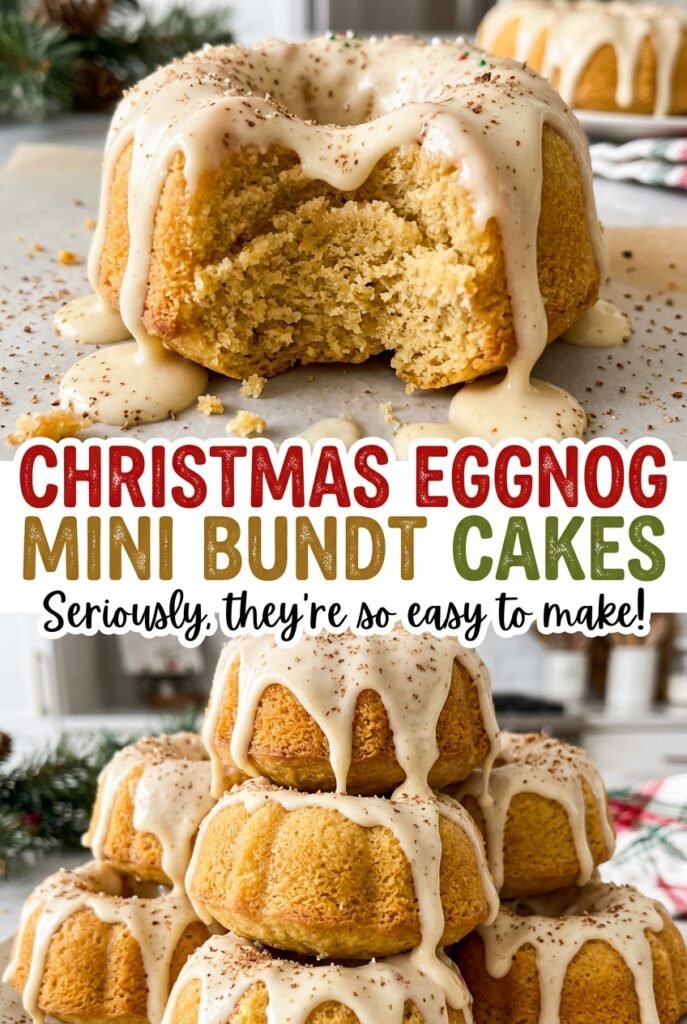
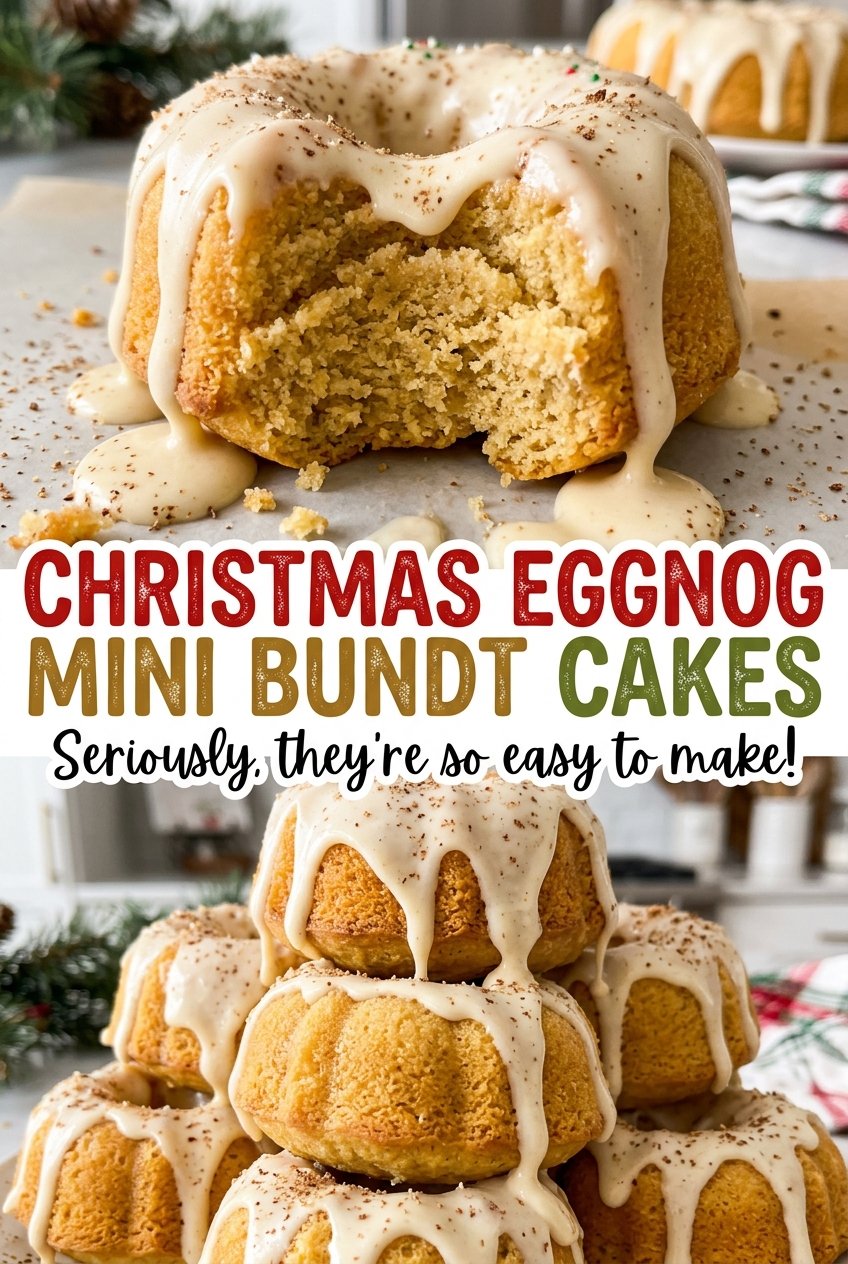
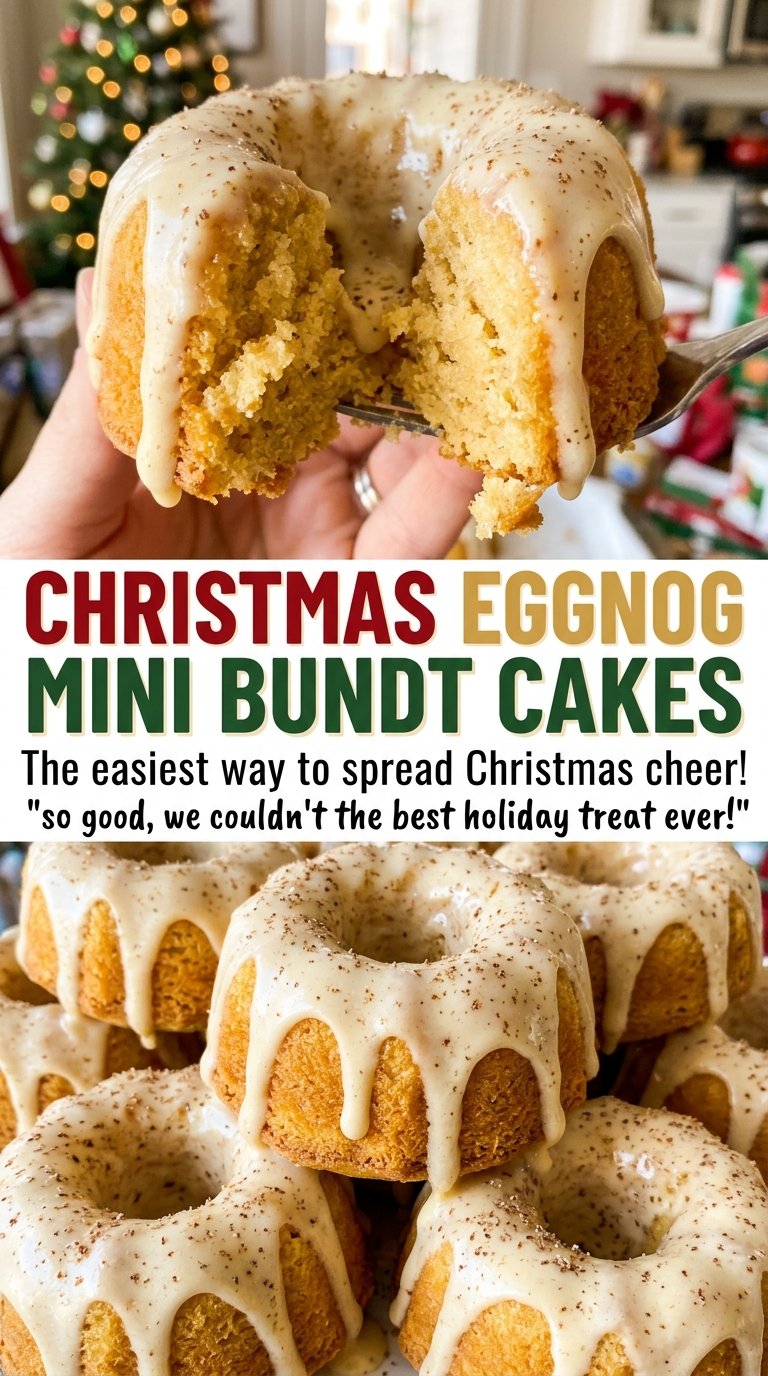
The first thing I check when a mini Bundt cake comes out of the pan is the edge where the ridges meet the center tube. Those little grooves can hold onto batter if the pan isn’t greased and floured thoroughly, so I take a moment with every cavity before I start mixing. These Christmas eggnog mini Bundt cakes bake up tender, with nutmeg in the batter and a simple powdered-sugar glaze that settles into the ridges.
The batter gets its lift from creamed butter and sugar, then the flour mixture and eggnog go in by turns. That order keeps the mixture from becoming loose all at once, and mixing only until combined helps the cakes stay soft instead of tough. I portion the batter to about two-thirds full so each cake has room to rise without losing its shape. Once the glaze sets, the small cakes are ready to serve with a delicate, sweet finish.
Kitchen Note
Let the cakes cool in the pan for 10 minutes before turning them out. Inverting them while they’re piping hot makes the delicate ridges more likely to break; waiting much longer can make them cling to the pan.
Save these Christmas eggnog mini Bundt cakes for a tender, nutmeg-scented bake with a simple glaze that catches in every ridge.
Why the Eggnog Goes In Between the Flour Additions
Pouring all the eggnog into the creamed butter at once can make the mixture look curdled, and adding all the flour at once can leave you mixing longer than you need to. Here, I add the flour mixture in three portions and the eggnog in two, starting and finishing with flour. That pattern keeps the batter coming together gradually instead of making it fight its way from dry to wet in one big jump.
Use low speed once the flour enters the bowl. You’re not trying to beat extra air into the batter at this point; the creaming has already done that work. Stop when the last visible streaks of flour disappear. A few extra seconds of mixing might seem harmless, but overworking a small cake batter can leave the crumb firmer and less tender than you want.
The batter should be thick enough to scoop into the little wells, not runny enough to pour like a drink. Divide it evenly and keep each cavity around two-thirds full. That gives the cakes space to rise while preserving the scalloped Bundt shape.
What the Eggnog, Nutmeg, and Butter Contribute
- Eggnog — It provides the liquid for the batter and gives the cakes their defining flavor. Use eggnog you enjoy drinking, since its taste carries through the finished crumb. Keep it alongside the flour additions rather than pouring it in all at once.
- Ground nutmeg — Nutmeg gives the cakes their warm, recognizable note without needing extra spices. Freshly ground nutmeg has a more pronounced aroma, but the ground nutmeg in your spice cabinet works well here. Measure it carefully so it complements rather than overwhelms the eggnog.
- Unsalted butter — Softened butter can trap air when beaten with the sugar, helping build a light cake texture. Let it soften enough to give slightly when pressed, but don’t use melted butter; melted butter won’t cream in the same way.
- Eggs — Room-temperature eggs blend more readily into the creamed butter mixture than cold eggs do. Add them one at a time so each can be incorporated before the next goes in.
- All-purpose flour and baking powder — Flour gives the little cakes structure, while baking powder supplies lift. Whisk them together with the salt and nutmeg so the leavener is distributed before it reaches the batter.
- Powdered sugar and water — These two ingredients make a straightforward glaze that drizzles over the cooled cakes. Whisk until smooth before you spoon it over; lumps show clearly against the finished cake.
How to Mix and Bake Cakes That Keep Their Mini Bundt Shape
Prepare the Pan and Dry Mixture
Heat the oven to 350°F, then thoroughly grease and flour all 12 cavities of the mini Bundt pan. Get into the narrow grooves as well as the flat surfaces; missed spots are where cakes tend to stick. Whisk the flour, baking powder, salt, and nutmeg in a medium bowl until evenly combined. Set that bowl aside before you start creaming.
Cream the Butter and Sugar
Beat the softened butter and granulated sugar on medium speed for 2 to 3 minutes. Watch for the mixture to turn pale and fluffy, rather than stopping while it still looks dense and yellow. Scrape down the bowl if the butter is clinging to the sides. Beat in the eggs one at a time, then mix in the vanilla extract.
Alternate the Flour and Eggnog
Add the flour mixture in three additions, alternating with the eggnog in two additions, and start and finish with flour. Keep the mixer on low so the batter doesn’t get overworked. Pause to scrape the bowl if dry flour is hiding at the bottom. Once everything is just combined, stop mixing.
Bake, Cool, and Glaze
Divide the batter evenly among the cavities, filling each about two-thirds full. Bake for 18 to 22 minutes, until a toothpick inserted in a cake comes out with a few moist crumbs; wet batter means the centers need more time. Cool in the pan for 10 minutes, then invert the cakes onto a wire rack and let them cool completely. Whisk the powdered sugar and water until smooth, drizzle over the cooled cakes, and wait for the glaze to set before serving.
Two Ways to Finish These Eggnog Mini Bundt Cakes
Leave the Cakes Unglazed
Skip the powdered-sugar glaze for a less sweet finish that lets the nutmeg and eggnog come through more plainly. The cakes will still have their ridged shape, but they won’t have the thin, sweet coating the glaze adds.
Keep the Glaze to a Light Drizzle
Drizzle the smooth glaze in a narrow stream over the cooled cakes instead of covering their tops. This keeps more of the browned ridges visible and gives each bite a lighter touch of sweetness while using the same simple powdered-sugar-and-water finish.
Storage and Reheating
- Refrigerator: Store the cakes in an airtight container for up to 4 days. The crumb will feel firmer when chilled, so let a cake sit at room temperature briefly before eating.
- Freezer: Freeze the cooled, unglazed cakes in a sealed freezer container for up to 2 months. Thaw them at room temperature, then glaze if you want the finished cakes decorated.
- Reheating: These cakes are best at room temperature; if you prefer one warm, microwave it briefly in short bursts. Don’t heat a glazed cake for too long or the glaze can soften and turn sticky.
Questions That Come Up With Mini Bundt Cakes
Christmas Eggnog Mini Bundt Cakes
Ingredients
Equipment
Method
- Heat the oven to 350°F.
- Thoroughly grease and flour a 12-cavity mini Bundt pan.
- Whisk the flour, baking powder, salt, and nutmeg in a medium bowl.
- Beat the butter and granulated sugar in a large bowl with an electric mixer on medium speed for 2 to 3 minutes, until pale and fluffy.
- Beat in the eggs one at a time, then beat in the vanilla extract.
- Add the flour mixture in three additions, alternating with the eggnog in two additions, beginning and ending with the flour mixture; mix on low just until combined.
- Divide the batter evenly among the pan cavities, filling each about two-thirds full.
- Bake for 18 to 22 minutes, until a toothpick inserted in a cake comes out with a few moist crumbs.
- Cool the cakes in the pan for 10 minutes, then invert them onto a wire rack and cool completely.
- Whisk the powdered sugar and water in a small bowl until smooth.
- Drizzle the glaze over the cooled cakes and let set before serving.
