

Crispy Garlic Parmesan Smashed Potatoes
The edges are what make these potatoes worth the extra step: they turn deeply golden in the oven while the centers stay soft enough to break apart with a fork.…
Tip: save now, read later.
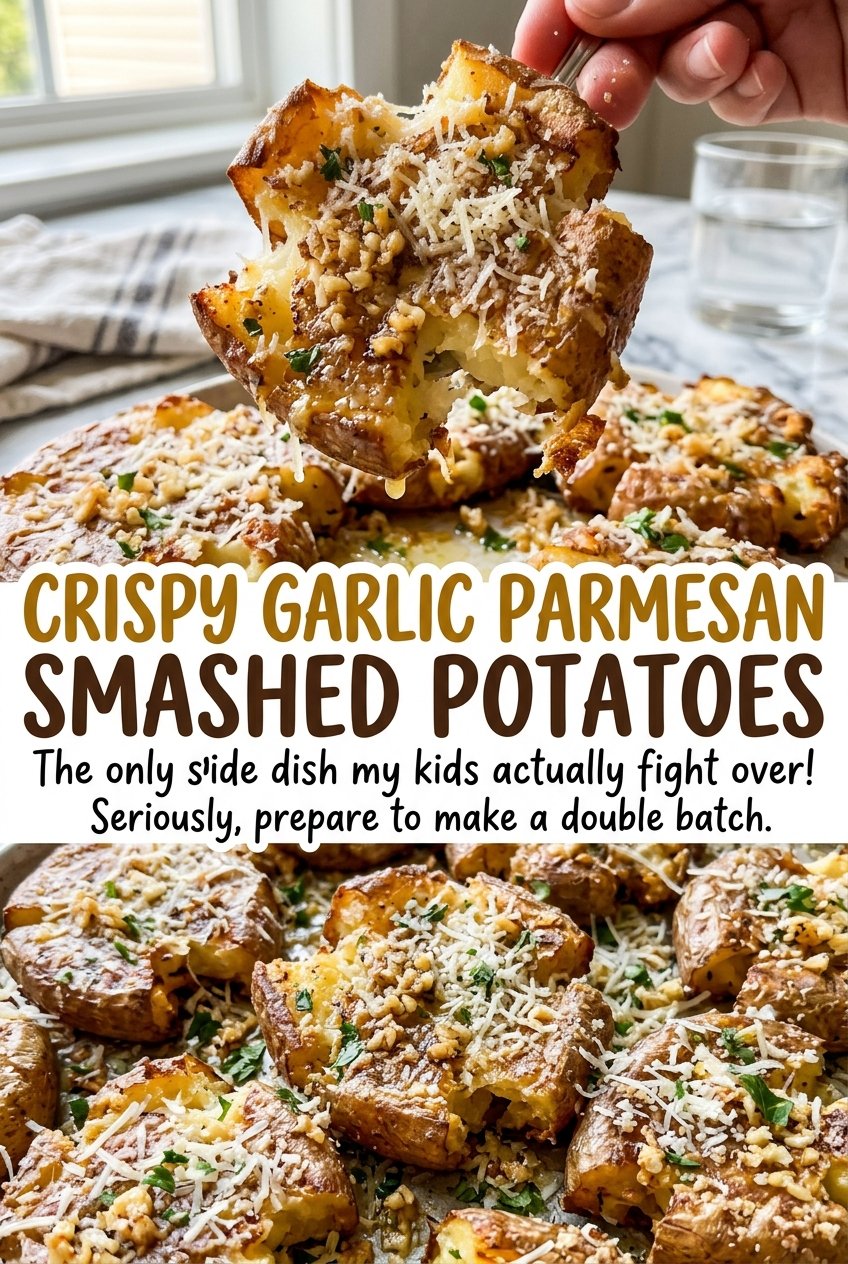
The edges are what make these potatoes worth the extra step: they turn deeply golden in the oven while the centers stay soft enough to break apart with a fork. The first time I made them, I was surprised by how much the gentle smash changed the texture. A whole roasted potato gives you a few crisp spots; a smashed one gives the baking sheet plenty of edges to work on. These crispy garlic Parmesan smashed potatoes are the kind of side dish I keep coming back to when plain boiled potatoes won’t do.
I use baby potatoes because they cook through quickly and hold together when pressed. Olive oil helps them brown, and garlic and Parmesan go on near the end so both stay fragrant rather than spending the whole roast in the oven. They’re best hot from the pan, when you can still hear a little crackle at the edges and the cheese is just melted over the tops.
Kitchen Note
Serve these straight from the oven if you want the sharpest contrast between crisp edges and fluffy centers. As they sit, the steam softens the crust, so I bring the baking sheet to the table while everything is still hot.
Save these crispy garlic Parmesan smashed potatoes for a dinner when you want golden edges, soft centers, and a quick cheesy finish.
The Boil Gives the Centers a Head Start Before the Oven
Starting with raw potatoes can leave you waiting for the middle to soften while the outside dries out. Here, boiling gets the baby potatoes tender first, so the oven can spend its time building color and crispness instead of cooking all the way through. That division of work is what gives you a soft center without sacrificing the browned edges.
The smash matters, too, but it isn’t about flattening each potato into a thin wafer. Keeping them around half an inch thick leaves enough potato inside for a creamy bite, while the broken, uneven surfaces catch the oil and brown against the hot pan. Press gently; a potato that stays mostly in one piece is easier to lift and still has plenty of edges to crisp. If a few split, leave them in place—the loose pieces brown along with the larger potatoes.
Why Finely Grated Parmesan Belongs on These Potatoes
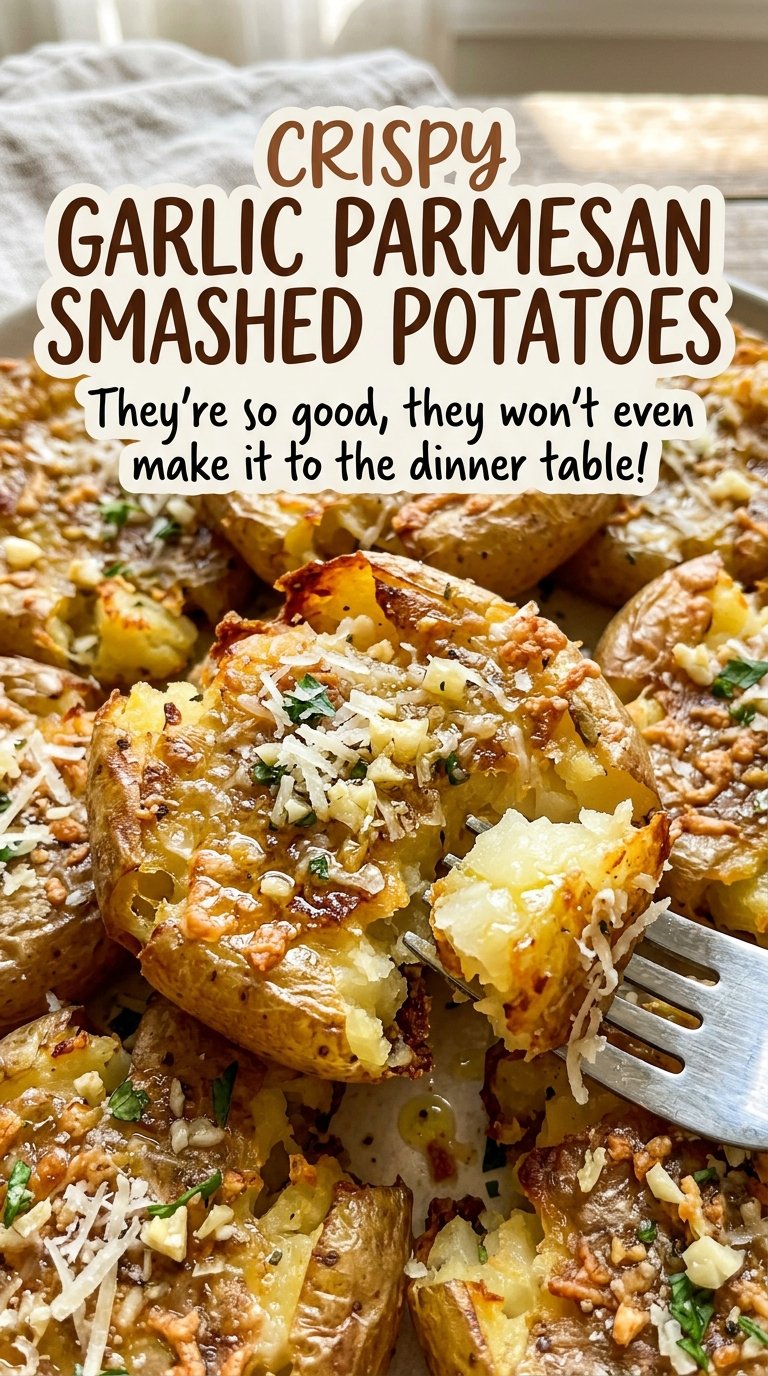
- Baby potatoes — Their small size makes them easy to boil whole and smash into portions with tender centers. Red or yellow baby potatoes both work; choose potatoes that are close in size so they cook at a similar pace. There’s no need to buy a specialty variety.
- Olive oil — It coats the rough surfaces and helps them brown in the oven. A standard olive oil is fine here; save a delicate finishing oil for another dish. Spread the oil across the potatoes rather than leaving it pooled in one spot.
- Fresh garlic — Finely minced garlic gives the topping its sharp, aromatic bite. Fresh cloves are worth using because the small pieces release their fragrance quickly during the short final bake. Keep the mince fine and fairly even so larger bits don’t stay raw while smaller bits brown too much.
- Finely grated Parmesan — Fine shreds settle over the uneven potato surfaces and melt quickly. A wedge grated just before cooking gives the most even melt, while finely grated store-bought Parmesan is convenient. Coarse shreds won’t cover the potatoes as evenly during the brief finish.
- Fresh parsley — Chopped parsley adds a clean, green finish against the salty cheese and roasted garlic. Use fresh parsley for its brighter taste and sprinkle it on after baking, not before. If you leave it out, the potatoes will still be savory, just less fresh-tasting at the finish.
From Tender Centers to Garlic-Scented Edges
Boil the Potatoes Until a Knife Slides In Easily
Heat the oven to 425°F and set out a rimmed baking sheet. Put the baby potatoes in a large pot with 3 quarts of water and 1 1/2 teaspoons of the kosher salt, then bring the water to a boil. Cook for 15–20 minutes, checking the largest potato with a knife; it should slide in easily. If the center still feels firm, give the potatoes a little more time within that range rather than pulling them early.
Steam-Dry, Then Smash Gently
Drain the potatoes in a colander and let them steam dry for 5 minutes. This gives surface moisture a chance to escape before the potatoes go onto the baking sheet. Arrange them on the sheet and gently press each one until it’s about 1/2 inch thick. If you press too hard, they can break into pieces; that’s not a disaster, but keeping most of each potato intact makes serving easier.
Roast Until the Edges Turn Deeply Golden
Drizzle the olive oil over the smashed potatoes and bake for 25–30 minutes. Look for deeply golden color and crisp edges, not just a pale, softened surface. The centers should remain tender while the thinner parts around the edges brown. Give the potatoes the full roast time needed to reach that color; taking them out as soon as they’re warm won’t build the same crisp crust.
Add the Garlic and Parmesan at the Finish
Sprinkle the finely minced garlic and Parmesan over the potatoes, then return the pan to the oven for 4–5 minutes. The cheese should melt and the garlic should smell fragrant; the short finish keeps the garlic from roasting for the entire bake. Pull the pan once those cues show up, then scatter over the chopped parsley and the remaining 1/2 teaspoon of kosher salt. Serve hot.
Small Changes That Keep the Crisp-Edged Potato Idea Intact
A dairy-free garlic version
Leave off the Parmesan and keep the garlic, olive oil, and parsley. The potatoes will still crisp, but the topping will be less salty and won’t have the melted-cheese finish. Add the remaining salt as usual so the potatoes are seasoned throughout.
A garlic-free Parmesan version
Skip the minced garlic and keep the Parmesan and parsley. The result is milder, with the cheese taking the lead rather than the sharp aroma of roasted garlic. Keep the cheese’s short oven finish so it melts without overbrowning.
Use red baby potatoes for a firmer bite
Red baby potatoes work in place of yellow ones and tend to hold their shape well when smashed. The centers can feel a little firmer and waxier, while the crisp edges and garlic-Parmesan topping stay the same. Keep the knife test as your guide because potato size affects how quickly they cook.
Storage and Reheating
- Refrigerator: Refrigerate leftovers within 2 hours and keep them in an airtight container for 3–4 days. The edges soften as they sit.
- Freezer: Freezing isn’t my first choice; cooked potatoes can turn mealy after thawing, and the crisp texture doesn’t come back as well.
- Reheating: Arrange leftovers in one layer on a baking sheet and reheat at 425°F until hot through and crisp again; an instant-read thermometer should reach 165°F. Avoid the microwave if crisp edges matter, since it heats the centers but leaves the crust soft.
Questions That Come Up While the Potatoes Roast
Crispy Garlic Parmesan Smashed Potatoes
Ingredients
Equipment
Method
- Heat the oven to 425°F.
- Set a rimmed baking sheet aside.
- Put the potatoes, water, and 1 1/2 teaspoons of the salt in a large pot.
- Bring to a boil and cook for 15–20 minutes, until a knife slides easily into the largest potato.
- Drain the potatoes.
- Let them steam dry in the colander for 5 minutes.
- Arrange the potatoes on the baking sheet.
- Gently smash each one to about 1/2 inch thick.
- Drizzle the potatoes with the olive oil.
- Bake for 25–30 minutes, until deeply golden and crisp around the edges.
- Sprinkle the garlic and Parmesan over the potatoes.
- Bake for 4–5 minutes, until the cheese is melted and the garlic is fragrant.
- Sprinkle with the parsley and the remaining 1/2 teaspoon salt.
- Serve hot.
