

Christmas Eve Baked Stuffed Shrimp
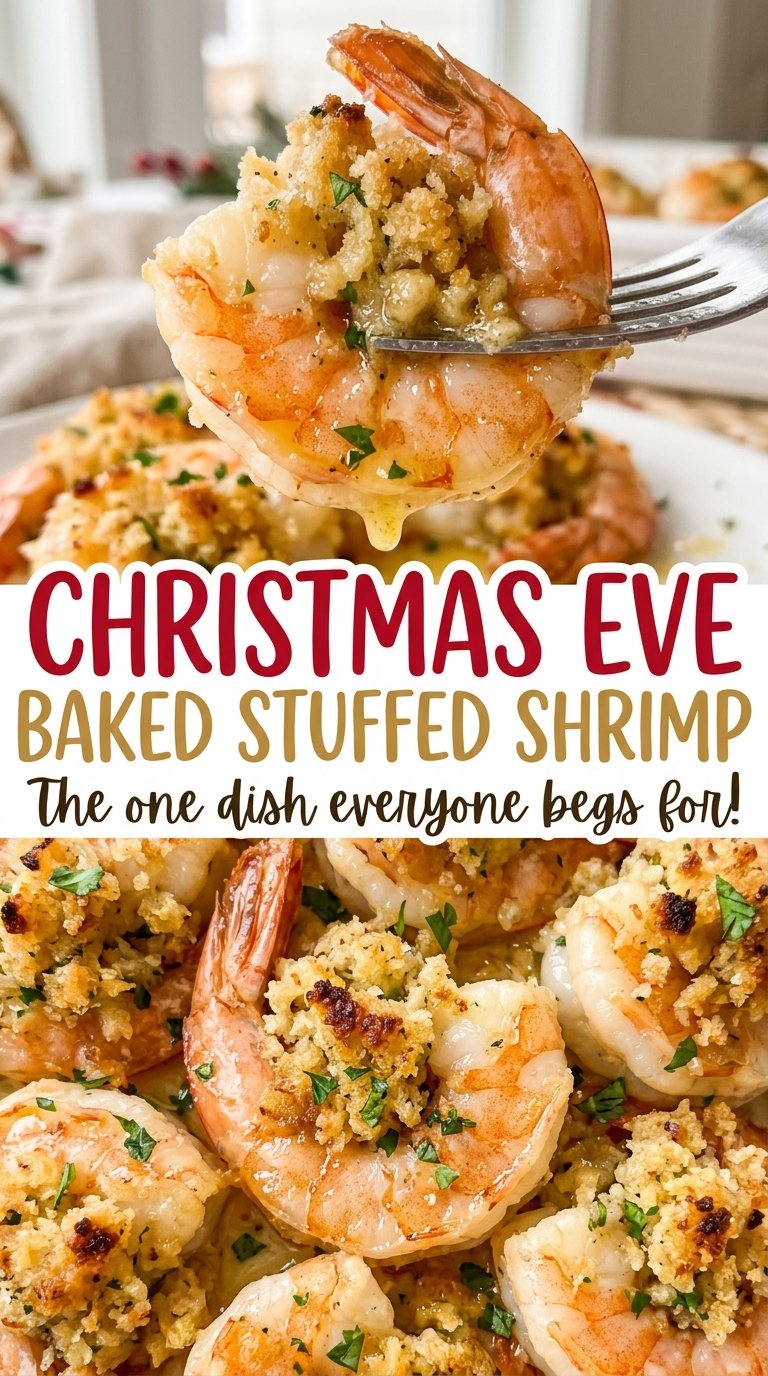
The cracker topping is the first thing to turn golden in the oven, while the shrimp underneath stay tender and sweet. I learned to keep the filling in a mound…
Tip: save now, read later.
The cracker topping is the first thing to turn golden in the oven, while the shrimp underneath stay tender and sweet. I learned to keep the filling in a mound rather than spreading it over the whole shrimp; that way every bite gets a little browned, buttery crumb. These Christmas Eve baked stuffed shrimp bring the feel of a special seafood dinner without asking you to juggle several pans at once.
The stuffing comes together in a small skillet, where the shallot softens in butter before the garlic goes in. Then the buttery crackers, parsley, Old Bay, lemon juice, and water turn into a savory topping that’s easy to divide among the shrimp. I arrange the butterflied shrimp cut sides up in a 9×13-inch dish, spoon the crumbs into each opening, and let the oven do the rest. The shrimp come out opaque, the tops lightly browned, and the lemony cracker stuffing stays tender under its crisp edges.

Kitchen Note
Stir the cracker mixture until the crumbs look evenly damp, with no dry pockets hiding at the bottom of the bowl. The water and lemon juice should moisten the crumbs without making them soggy, so they’ll mound neatly into the shrimp.
Save these Christmas Eve baked stuffed shrimp for a seafood dinner with tender shrimp and a buttery, lightly browned cracker topping.
Why the Butterflied Opening Holds the Best Part of the Bite
Jumbo shrimp give the stuffing somewhere to sit, instead of leaving it loose on the bottom of the baking dish. Butterflying creates a shallow pocket, and arranging each shrimp cut side up keeps the crumbs gathered where they can brown. The 16–20 count size matters here: smaller shrimp have less room for the topping and are easier to overcook while you wait for the crumbs to color.
Keep the shrimp in a single layer rather than stacking or overlapping them. That gives the heat room to reach each piece evenly, and it makes it much easier to check that the shrimp are opaque throughout. Leave the tails on as you arrange them; they also give you a convenient place to pick up each shrimp when serving. This is a simple detail, but it’s what makes the dish feel like stuffed shrimp rather than shrimp buried under a cracker crust.
What the Crackers, Butter, and Old Bay Each Bring
- Jumbo shrimp — Look for peeled, deveined shrimp in the 16–20 count range so there’s enough surface to butterfly and fill. The source preparation leaves the tails on; buy them already peeled and deveined if that saves time, then butterfly them before arranging.
- Buttery round crackers — These make a richer, more tender stuffing than plain dry crumbs because they bring both crunch and buttery flavor. Crush them finely so the topping sits inside the shrimp rather than spilling over the sides. For a gluten-free version, use gluten-free buttery round crackers in the same volume; the topping will keep its buttery character, though the exact browning depends on the brand.
- Unsalted butter — Butter carries the softened shallot and garlic into the stuffing, then adds a glossy finish over the crumbs. Unsalted butter lets the measured kosher salt and Old Bay season the dish without adding an unpredictable amount of salt.
- Shallot and garlic — Shallot gives the filling a mellow onion flavor, while a small amount of garlic makes it savory without taking over. Chop the shallot finely so it softens quickly and blends into the cracker mixture; mince the garlic so it cooks through in its short time in the skillet.
- Old Bay, parsley, and lemon juice — Old Bay gives the crumbs their familiar seafood-seasoned character, while parsley adds a fresh, green note. Fresh lemon juice brings brightness to the butter and crackers. Bottled lemon juice works in a pinch, but fresh juice tastes cleaner here.
Building the Stuffing and Baking It Without Drying the Shrimp
Arrange and season the butterflied shrimp
Heat the oven to 400°F and lightly coat a 9×13-inch baking dish with cooking spray. Arrange the peeled, deveined, butterflied shrimp in one layer with the cut sides facing up, then season them with kosher salt and black pepper. Take a moment to open each butterfly so there’s room for the filling; if the shrimp are lying flat with the cut side down, the stuffing won’t have a pocket to rest in. Keep the tails attached.
Soften the shallot before adding garlic
Melt 2 tablespoons of unsalted butter in a small skillet over medium heat. Stir in the finely chopped shallot and cook until softened, about 2 minutes. Add the minced garlic and cook for 30 seconds; garlic burns quickly, so don’t leave it sizzling while you measure the other ingredients. Transfer the mixture to a bowl once the garlic is fragrant and no longer raw-smelling.
Moisten, mound, and bake until opaque
Stir the crushed crackers, parsley, Old Bay, lemon juice, and water into the shallot mixture until evenly moistened. Divide the stuffing among the shrimp, mounding it in each butterflied opening rather than pressing it into a flat layer. Melt the remaining 2 tablespoons of butter and drizzle it over the stuffing. Bake for 12–16 minutes, until the shrimp are opaque throughout and reach 145°F and the stuffing is lightly browned; check the thickest shrimp so you don’t leave the whole pan in longer than it needs.
Easy Ways to Adapt These Stuffed Shrimp
Make the stuffing gluten-free
Swap in gluten-free buttery round crackers, crushed to the same fine texture. Keep the rest of the stuffing and method unchanged. The flavor stays close to the original, although some gluten-free crackers brown faster or absorb moisture differently, so use the shrimp’s doneness as your guide.
Make a milder, less seasoned topping
Use less Old Bay in the cracker mixture if you prefer a gentler seafood seasoning. The butter, shallot, garlic, and lemon still make a savory topping, but the shrimp’s sweet flavor comes through more clearly.
Serve them as tail-free bites
Remove the tails before arranging the shrimp if you’d rather serve each piece as a ready-to-eat bite. Keep the shrimp butterflied and cut side up so the stuffing still has a place to sit. The pieces are a little less easy to pick up, but they’re convenient for a fork-and-plate dinner.
Storage and Reheating
- Refrigerator: Refrigerate leftovers within 2 hours and keep them covered for 3–4 days. The cracker topping softens as it sits.
- Freezer: Freeze cooled shrimp in a single layer until firm, then transfer them to an airtight freezer container for up to 2 months. The shrimp remain usable, but the stuffing loses its crisp texture after thawing.
- Reheating: Warm leftovers in a 325°F oven until the center reaches 165°F. The microwave works in short bursts, but it tends to make the shrimp rubbery and the topping soft.
Questions That Come Up Before the Shrimp Go in the Oven
Christmas Eve Baked Stuffed Shrimp
Ingredients
Equipment
Method
- Preheat the oven to 400°F.
- Lightly coat a 9x13-inch baking dish with cooking spray.
- Arrange the shrimp in a single layer, cut sides up.
- Season the shrimp with the salt and black pepper.
- Melt 2 tablespoons of the butter in a small skillet over medium heat.
- Add the shallot and cook, stirring, until softened, about 2 minutes.
- Add the garlic and cook for 30 seconds.
- Transfer the shallot mixture to a bowl and stir in the crushed crackers, parsley, Old Bay seasoning, lemon juice, and water until the crumbs are evenly moistened.
- Divide the stuffing among the shrimp, mounding it in the butterflied openings.
- Melt the remaining 2 tablespoons butter and drizzle it over the stuffing.
- Bake for 12-16 minutes, until the shrimp are opaque throughout and reach 145°F and the stuffing is lightly browned.
