

Brown Butter Mashed Rutabaga
The rutabaga cubes can look perfectly tender on the outside and still resist a fork in the middle, so I check the largest piece before draining the pot. Once they’re…
Tip: save now, read later.
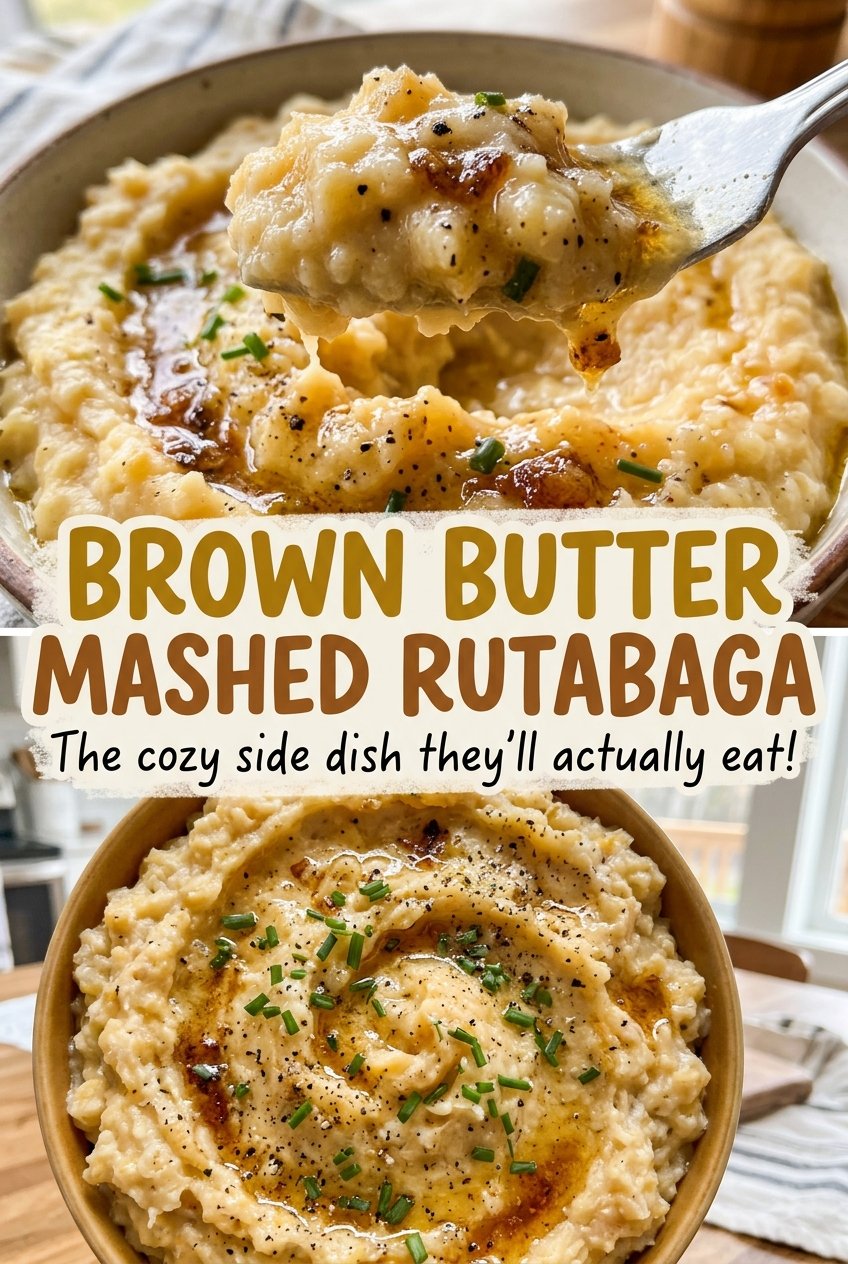
The rutabaga cubes can look perfectly tender on the outside and still resist a fork in the middle, so I check the largest piece before draining the pot. Once they’re soft all the way through, a little browned butter does more than add richness: its toasted, nutty smell gives the mild sweetness of the rutabaga a savory edge. That’s what makes this brown butter mashed rutabaga feel different from a plain root-vegetable mash.
Rutabaga has its own texture, and I don’t try to make it behave exactly like potatoes. I drain it well, return it to the warm pot for a minute or two, and let the extra moisture cook off before adding cream. Then I mash until it’s mostly smooth, leaving the finished side hearty rather than airy. Each bite is soft and creamy, with little flecks of black pepper and the deep, warm flavor of browned butter.
Kitchen Note
The salt goes in at two different points: some seasons the cooking water, and the rest goes into the mash at the end. I taste after that final stir, because the rutabaga’s sweetness can make the seasoning seem quieter until everything is combined.
Save this brown butter mashed rutabaga for its creamy texture and the nutty, toasted butter stirred through every serving.
Why Rutabaga Mash Won’t Turn Fluffy Like Mashed Potatoes
Rutabaga has less of the starchy, pillowy quality people expect from a potato mash. Even when it’s fully tender, it makes a denser, more substantial side, with a gentle sweetness that comes through clearly. Trying to beat that texture into something airy can leave you with a pasty mash instead of a soft one.
That’s why I aim for “mostly smooth,” not whipped. A few tiny soft pieces are fine, and the cream should loosen the mash without making it runny. Brown butter helps, too: the toasted flavor gives the rutabaga a savory counterpoint without covering up its character. If you’re serving someone who expects a classic potato side, tell them this is a root-vegetable mash with a little more heft. Its appeal is in that tender, rich texture—not in pretending to be potatoes.
Keep the cubes even so they soften at roughly the same pace, and don’t keep mashing once the texture is where you want it. Rutabaga is sturdy enough to hold a little shape. That makes this a comfortable side to serve alongside a meal with gravy or pan juices, but it’s satisfying on its own, too.
What Rutabaga, Butter, and Cream Each Bring to the Pot
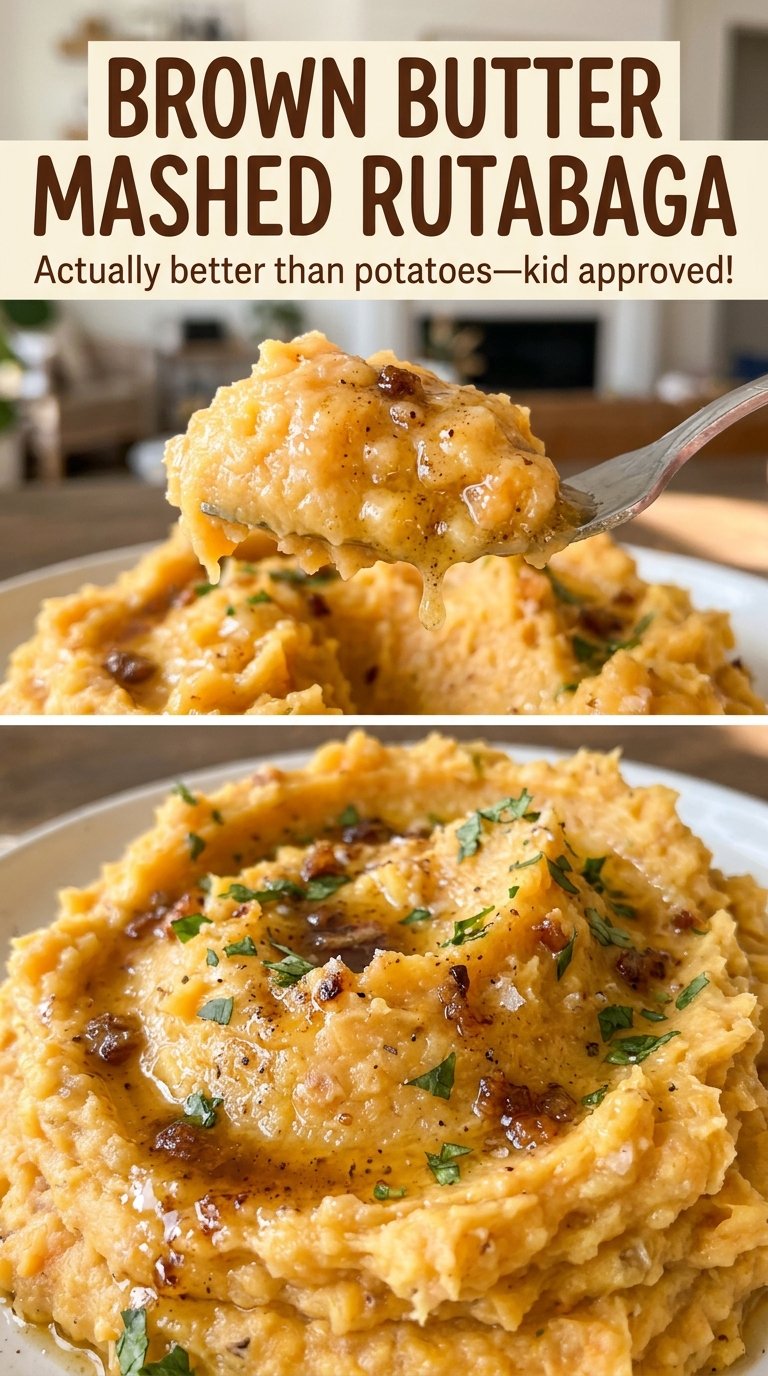
- Rutabaga — Choose firm roots that feel heavy for their size, without soft spots. Peeling away the thick exterior matters; it stays tough even after the cubes are tender. Turnips can replace some of the rutabaga if that’s what you have, though they bring a sharper flavor and soften sooner, so check them early.
- Unsalted butter — Butter is the source of the mash’s nutty browned flavor, and unsalted butter lets you control the seasoning. If you only have salted butter, use it and taste carefully before adding the final salt. For a milder result, regular unsalted butter can be melted and added without browning, but you’ll lose the toasted aroma.
- Heavy cream — Cream adds a smooth, rich finish without watering down the mash. Half-and-half is a practical substitute if you want a lighter result; the mash will be less rich and a little looser. Pour it in with the butter so both can be worked through evenly.
From Fork-Tender Cubes to a Nutty, Creamy Mash
Simmer the Rutabaga Until the Center Gives Easily
Put the peeled, 1-inch cubes in a 5-quart pot and cover them with cold water by 1 inch. Add 1 teaspoon of the kosher salt, bring the water to a boil over high heat, then lower the heat to maintain a simmer. Cook uncovered for 25 to 35 minutes, checking the largest cube with a fork; it should slide in easily, not meet a firm center. If the pieces are still resistant, keep simmering and check again rather than draining them early.
Brown the Butter Without Letting It Go Too Far
While the rutabaga simmers, melt the butter in an 8-inch skillet over medium heat, swirling the pan often. It takes 4 to 6 minutes for the milk solids to turn golden brown and the butter to smell nutty. Watch the color closely near the end, because the change from golden to too dark happens quickly. Take the skillet off the heat once it reaches that golden, nutty stage.
Steam Off the Water Left in the Pot
Drain the rutabaga well, then return it to the same pot over low heat. Stir for 1 to 2 minutes, until the excess moisture evaporates. This brief step gives the cream and butter room to cling to the vegetables instead of pooling at the bottom. Keep the heat low and stir; the goal is to dry the surface, not brown the cubes.
Mash Until Creamy, Then Season the Finish
Add the browned butter and heavy cream to the pot, then mash until mostly smooth. A hand masher gives you control over the final texture, so stop when the larger pieces are gone and the mixture looks creamy. Stir in the remaining 1/2 teaspoon of salt and the black pepper. Scrape the bottom and sides once as you stir so the browned butter and seasoning are distributed throughout.
Three Ways to Adapt This Rutabaga Mash
Make It Dairy-Free
Use plant-based butter sticks and unsweetened oat cream in place of the dairy ingredients. Plant butter won’t develop the same browned milk solids, so melt it rather than waiting for a dairy-style nutty aroma. The result is still creamy, with a milder flavor and less of the distinctive brown-butter toastiness.
Use White Pepper for a Softer Look
Swap the black pepper for white pepper if you want the mash to stay pale and the pepper flavor to feel more subtle. Add it at the same finishing point, after mashing. White pepper has its own earthy warmth, so the finished side will taste slightly different rather than simply less peppery.
Use a Hand Mixer for a More Uniform Texture
If you prefer fewer small pieces, use a hand mixer on low after adding the butter and cream. Stop as soon as the mash looks mostly smooth; mixing longer than needed can make the texture heavy. A hand masher is still the better choice when you want more control and a little rustic texture.
Storage and Reheating
- Refrigerator: Cool and refrigerate within 2 hours. Keep covered for 3 to 4 days; the mash will firm up as it chills.
- Freezer: Freeze in an airtight, freezer-safe container for up to 2 months. Thaw overnight in the refrigerator; the texture may be a little less smooth after thawing.
- Reheating: Warm gently in a covered saucepan over low heat, stirring occasionally, until steaming hot throughout. Don’t use high heat or leave the pot unstirred, since the bottom can scorch before the center warms.
Questions That Come Up When Cooking Rutabaga
Brown Butter Mashed Rutabaga
Ingredients
Equipment
Method
- Place the rutabaga in a 5-quart pot and cover with cold water by 1 inch; add 1 teaspoon of the salt.
- Bring to a boil over high heat, reduce the heat to maintain a simmer, and cook uncovered for 25 to 35 minutes, until fork-tender.
- While the rutabaga cooks, melt the butter in an 8-inch skillet over medium heat, swirling often, for 4 to 6 minutes, until the milk solids are golden brown and the butter smells nutty; remove from the heat.
- Drain the rutabaga well and return it to the pot.
- Cook over low heat for 1 to 2 minutes, stirring, until excess moisture evaporates.
- Add the browned butter and heavy cream to the pot and mash until mostly smooth.
- Stir in the remaining 1/2 teaspoon salt and the black pepper.
