

Fig and Walnut Baked Camembert
The first thing I notice when this comes out of the oven is how the Camembert gives slightly under a gentle press while the rind still holds its shape. That’s…
Tip: save now, read later.
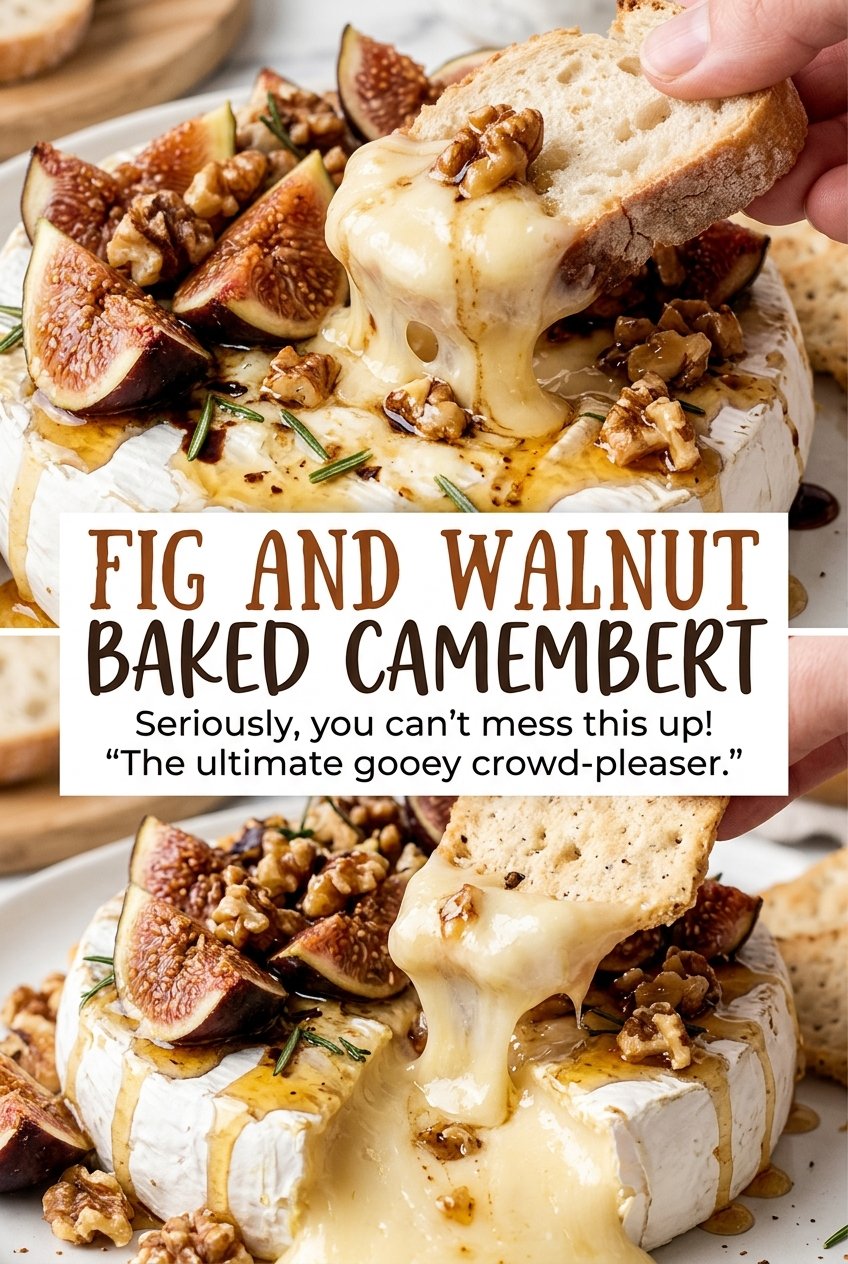
The first thing I notice when this comes out of the oven is how the Camembert gives slightly under a gentle press while the rind still holds its shape. That’s the sweet spot for Fig and Walnut Baked Camembert: warm and soft in the center, ready for a spoonful of fig preserves and a scattering of toasted walnuts. It’s a simple appetizer for six, but the contrast between the sweet topping and the earthy cheese makes every part count.
I bake the wheel whole in a small oven-safe dish, then add the topping after it rests. That keeps the preserves, honey, and thyme distinct instead of baking them into the cheese. Toasting the walnuts separately brings out their aroma and lets them stay crisp against the soft Camembert. Set the dish out while it’s still warm, with a small knife or spoon for serving, and the glossy fig topping is ready to share.
Kitchen Note
Let the cheese rest before adding the toppings. Those five minutes give the center a moment to settle, so the preserves spread across the top instead of running straight off the warm wheel.
Save Fig and Walnut Baked Camembert for an easy warm appetizer with a sweet fig finish and crunchy toasted walnuts.
Why the Camembert Goes Into the Oven Whole
Cutting a soft cheese wheel into pieces before baking gives the melted interior more places to escape. Keeping the Camembert whole lets its rind act as a little container while the center warms. The shallow crosshatch on top creates a place for the cheese to open gently, without slicing through the wheel or removing the rind that holds it together.
There’s a narrow difference between warm and pleasantly soft and baked until the cheese has lost its body. Use the center’s feel as your cue rather than waiting for the whole wheel to look dramatically melted. A gentle press should find a yielding middle; the rind can still look intact. Since Camembert wheels vary a little from one brand to another, that texture cue is more useful than expecting every wheel to look identical at the same minute.
What the Fig, Walnut, and Thyme Bring to the Wheel
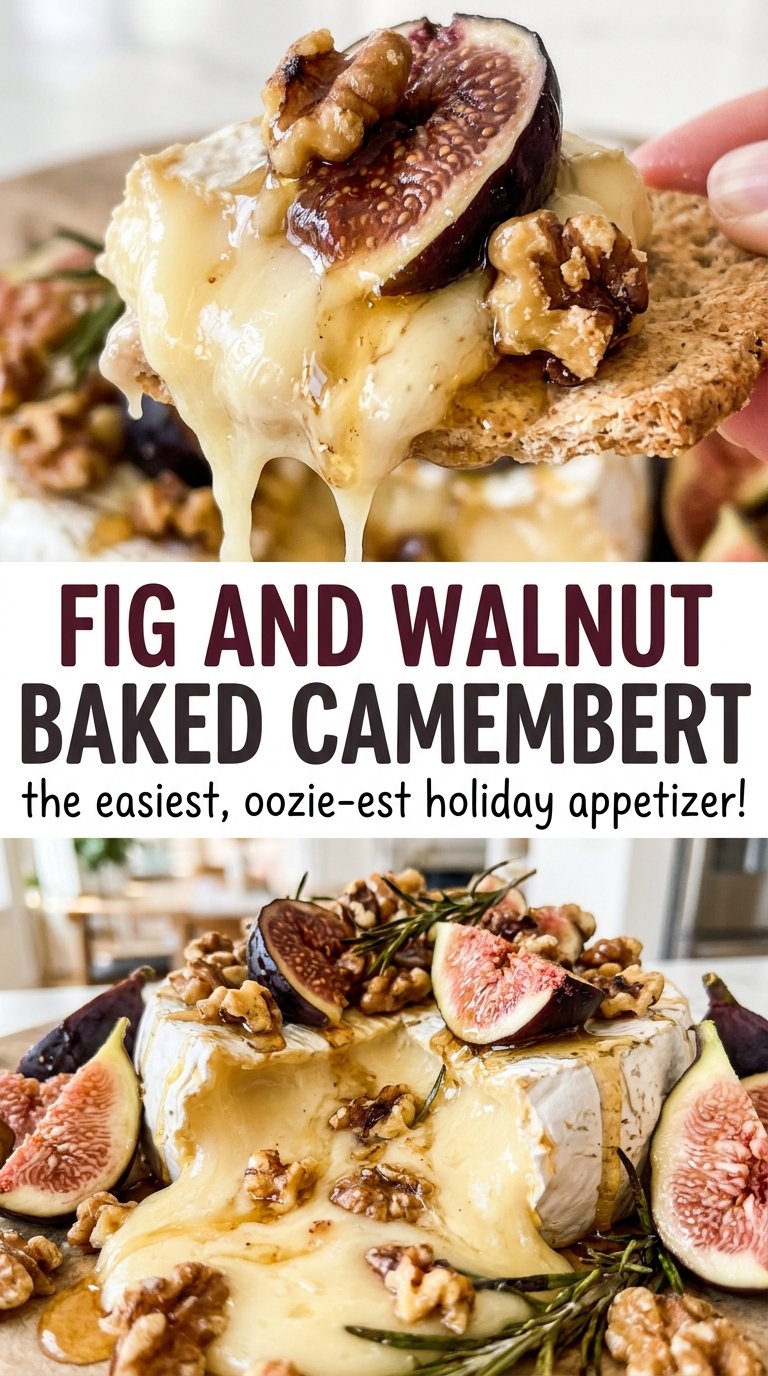
- Camembert — The wheel’s bloomy rind keeps the softened cheese contained, while the mild, creamy interior gives the fig topping room to stand out. Choose a fresh 8-ounce wheel with intact packaging; Camembert is the defining ingredient here, and swapping in a firmer cheese won’t give you the same soft center. Remove all packaging before baking.
- Fig preserves — Preserves cling to the warm surface and bring sweetness with small pieces of fruit. A smooth, inexpensive jar works well; there’s no need for a specialty brand. Apricot preserves can stand in one-for-one if fig preserves aren’t available, though the fruit flavor will shift from jammy fig to brighter apricot.
- Walnuts — Their toasted, slightly bitter edge balances the sweet preserves, and their crunch is a welcome contrast to the cheese. Fresh walnuts matter more than an expensive brand: if they smell stale or bitter before toasting, that taste will carry through. Chopped pecans work in the same amount, with a milder, sweeter crunch.
- Honey and fresh thyme — Honey adds a light finishing sweetness, while thyme gives the topping an herbal note that keeps it from tasting one-dimensional. Use fresh thyme leaves for the cleanest flavor and easy sprinkling. If needed, maple syrup can replace the honey in the same amount; the result will taste a little more like maple. Dried thyme is more concentrated, so use a small pinch in place of the fresh leaves.
- Olive oil — A thin coat keeps the cheese from sticking to the baking dish. Any ordinary olive oil is fine; save a more expensive finishing oil for another use. Melted butter works for greasing the dish if olive oil isn’t on hand.
The Short Bake That Keeps the Center Soft
Toast the walnuts until fragrant
Set a small skillet over medium heat and add the chopped walnuts. Stir often for 3 to 4 minutes, watching for a warm, nutty aroma rather than waiting for every piece to turn dark. Walnuts can go from toasted to bitter quickly, especially at the smaller pieces. Transfer them to a plate as soon as they smell fragrant.
Score the wheel and bake
Heat the oven to 375°F, then lightly grease a 5-inch oven-safe baking dish with the olive oil. Remove every bit of packaging from the Camembert and set the wheel in the dish. Use a knife to score a shallow crosshatch across the top rind; keep the cuts near the surface rather than slicing deeply into the cheese. Bake for 12 to 15 minutes, checking for a soft center when gently pressed.
Rest, then finish the topping
Take the dish from the oven and let the Camembert rest for 5 minutes. Spread the fig preserves over the warm top, then scatter the toasted walnuts and fresh thyme leaves across it. Drizzle with the honey last so you can see where it lands instead of stirring the topping together. Serve while the center is still soft and the walnuts retain their crunch.
Easy Ways to Adjust the Topping
Make it nut-free
Leave out the walnuts for a nut-free version and keep the preserves, honey, and thyme. You’ll lose the crisp, nutty contrast, but the warm cheese and fruit topping still work together. If you’re cooking for someone with a serious allergy, use ingredients and equipment that haven’t been exposed to their allergen.
Keep the finish less sweet
Omit the honey and let the fig preserves provide all the sweetness. The topping will taste more fruit-forward, with the thyme and toasted walnuts coming through more clearly.
Storage and Reheating
- Refrigerator: Cover leftovers and refrigerate within 2 hours; eat within 3 to 4 days. The cheese will firm up once chilled, and the walnuts will soften against the topping.
- Freezer: Freezing isn’t recommended. Camembert’s texture can turn grainy or separate after thawing, and the topping loses its fresh crunch.
- Reheating: Put the leftovers in an oven-safe dish and warm them in a low oven just until the cheese softens. Avoid prolonged heating, which can make the cheese oily; the walnuts won’t return to their original crispness.
Questions That Come Up Before Baking Camembert
Fig and Walnut Baked Camembert
Ingredients
Equipment
Method
- Heat a small skillet over medium heat and toast the walnuts, stirring often, for 3 to 4 minutes, until fragrant.
- Transfer the toasted walnuts to a plate.
- Heat the oven to 375°F and lightly grease a 5-inch oven-safe baking dish with the olive oil.
- Remove any packaging from the Camembert, place it in the dish, and score the top rind in a shallow crosshatch pattern.
- Bake for 12 to 15 minutes, until the center feels soft when gently pressed.
- Let the Camembert rest for 5 minutes.
- Spread the fig preserves over the warm cheese, then top with the toasted walnuts, honey, and thyme leaves.
