
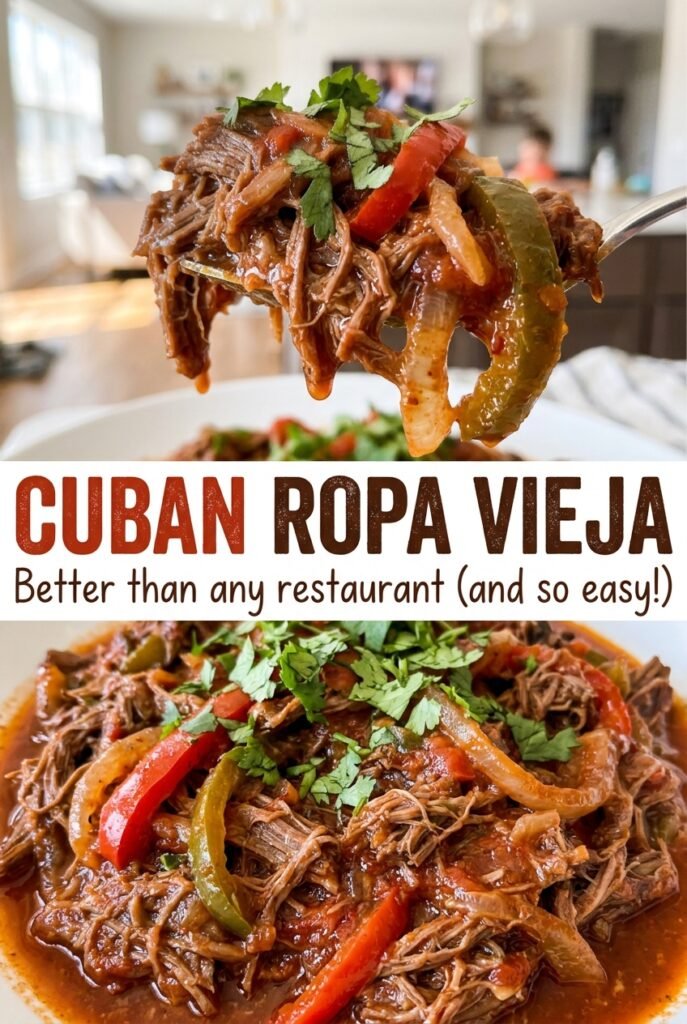
Cuban Ropa Vieja
When the lid comes off a long braise, the steak should give easily under a fork, and the peppers should have softened into the tomato-rich sauce. That’s the moment I’m…
Tip: save now, read later.
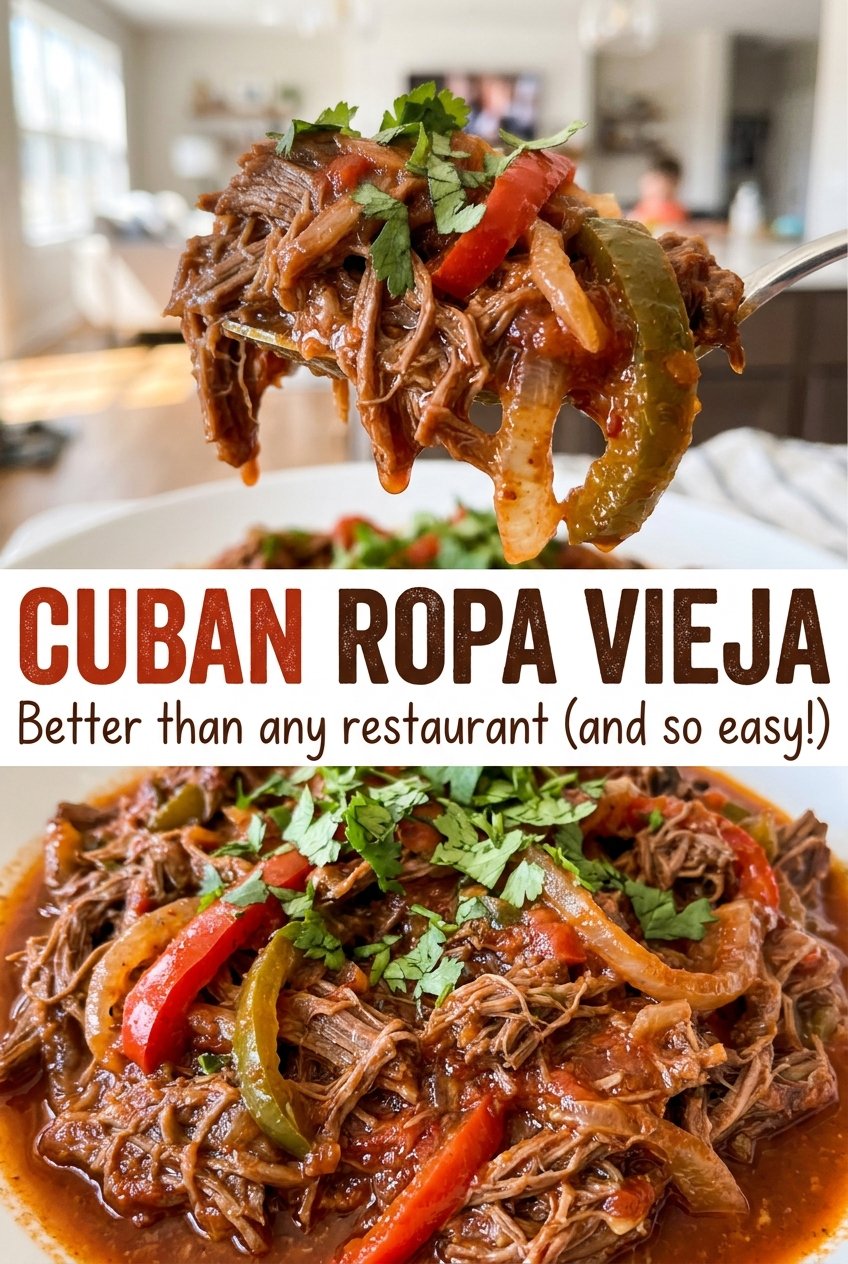
When the lid comes off a long braise, the steak should give easily under a fork, and the peppers should have softened into the tomato-rich sauce. That’s the moment I’m looking for with Cuban ropa vieja. The beef doesn’t need to be chopped into tiny pieces; once it’s tender, two forks pull it into the long strands that make this dish feel right.
I brown the flank steak first, then build the sauce in the same Dutch oven with onion, red and green bell peppers, garlic, cumin, and oregano. That browned layer on the bottom is worth keeping. The covered oven braise gives the meat time to soften, while a short simmer after shredding thickens the sauce before the olives and red wine vinegar go in. The finished beef is tender, savory, and just sharp enough at the edges.
Kitchen Note
Cut the flank steak crosswise into two pieces before you season it, rather than slicing it into strips. The larger pieces are easier to brown and stay manageable for shredding after the braise.
Save this Cuban ropa vieja for a slow-braised dinner with tender beef, soft peppers, and a bright olive finish.
Why the Peppers Belong in the Sauce, Not Just Beside the Beef
Ropa vieja gets its character from more than tender shredded steak. The onion and two colors of bell pepper soften right into the braising liquid, so each forkful carries both meat and vegetables. Keep them sliced rather than chopping them fine: they’ll turn supple during the long cook but still show up as distinct ribbons in the finished sauce.
The sauce also has to work twice. It surrounds the steak while it braises, then gets a short uncovered simmer on its own after the meat comes out. That second stage concentrates the tomato and beef flavors without asking the already-tender strands to cook away in a bubbling pot. The pimiento-stuffed olives and red wine vinegar go in at the end, where their salty, tangy edge can stay clear instead of fading through the whole braise.
That’s a useful distinction if you’re used to making shredded beef by reducing everything together. Here, lift out the meat before thickening the sauce. You’ll get a more clingy coating and strands that stay distinct, rather than beef that feels lost in a thin, overworked liquid.
What the Beef, Peppers, and Briny Finish Each Bring
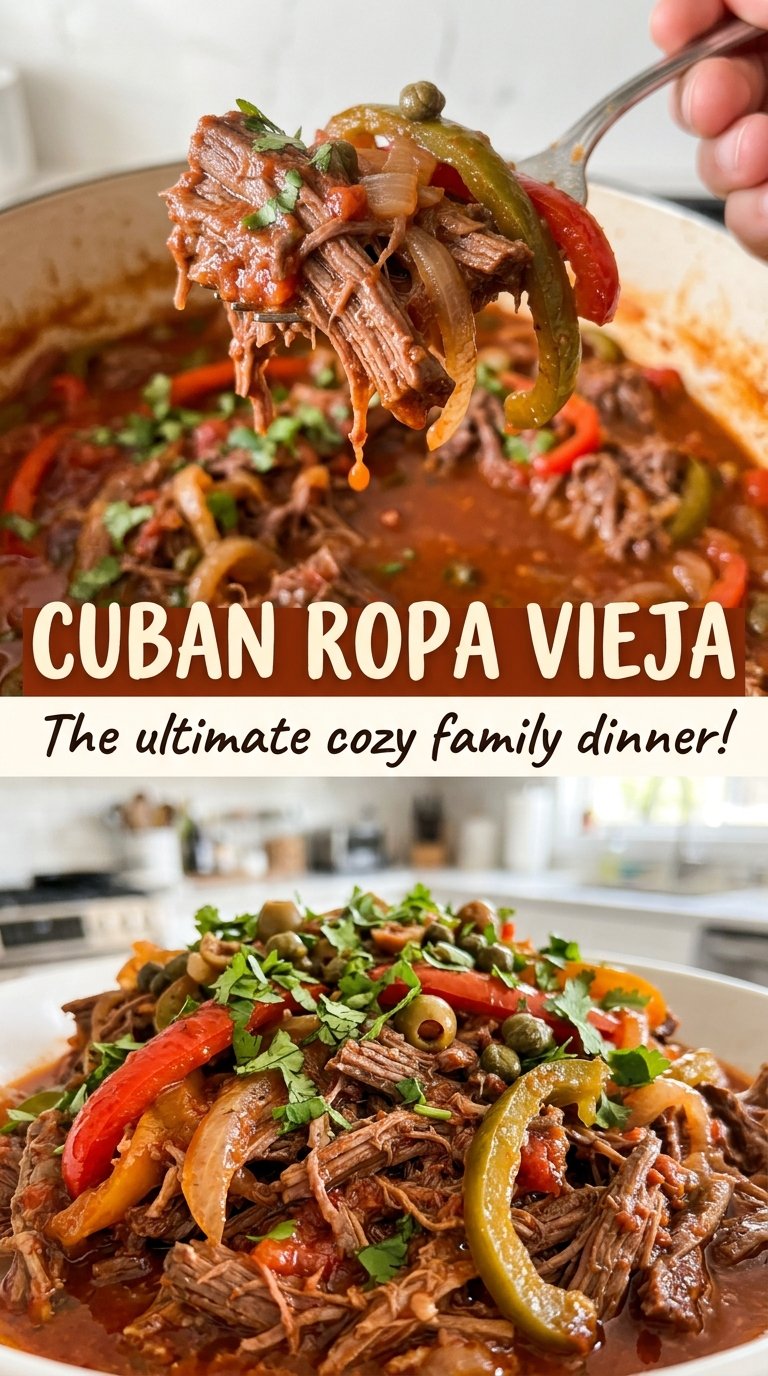
- Flank steak — Its long grain gives you the characteristic strands once it’s fork-tender. Choose a fresh-looking piece with an even thickness so it cooks at a similar pace; there isn’t another ingredient in this lineup that can stand in for the beef and give the same result.
- Yellow onion and bell peppers — The onion brings sweetness as it softens, while the red and green peppers give the sauce a gentle sweet-and-savory contrast. Firm peppers are fine at any reasonable price. If you only have one color, use it in place of the other; red tastes sweeter, while green is more vegetal.
- Tomato paste and crushed tomatoes — The paste adds concentrated tomato flavor, and the crushed tomatoes provide the liquid base. Cooking the paste with the spices briefly keeps it from tasting raw. Use canned crushed tomatoes; extra crushed tomatoes won’t replace the concentrated quality of the paste.
- Low-sodium beef broth — It carries the browned beef flavor into the braise while leaving room to season with the kosher salt. Stick with low-sodium broth if you want control over the finished saltiness, since the olives add their own briny note later.
- Cumin, oregano, and bay leaves — Ground cumin and dried oregano season the tomato base, and the bay leaves infuse the liquid during the covered cook. Dried oregano is the right fit here; fresh herbs won’t behave the same way over this long braise.
- Pimiento-stuffed green olives and red wine vinegar — The sliced olives add a salty, savory bite, and the vinegar sharpens the sauce just before serving. Use olives already sliced or slice them before they go in; there’s no need for a premium olive, but the pimiento-stuffed kind gives the finish its familiar taste.
The Dutch-Oven Sequence That Builds Tender Beef and a Thick Sauce
Brown the Flank Steak First
Heat the oven to 300°F, then season the steak all over with kosher salt and black pepper. Warm the olive oil in a 6-quart Dutch oven over medium-high heat and brown the pieces for 3 to 4 minutes per side. Give the beef room to make contact with the pot; a deep brown crust is what you want, not gray meat that has steamed. Transfer it to a plate once both sides are browned.
Soften the Peppers and Start the Tomato Base
Add the thinly sliced onion and both bell peppers to the same pot, then cook over medium heat for 6 to 8 minutes, stirring occasionally. They should be softened, with the onion turning translucent around the edges. Stir in the minced garlic, tomato paste, cumin, and oregano and cook for 1 minute. Add the crushed tomatoes, beef broth, and bay leaves, scraping the browned bits from the bottom into the liquid.
Braise Until a Fork Meets No Resistance
Return the steak and any juices from the plate to the pot, then cover it and transfer it to the oven. Bake for 2 1/2 to 3 hours, until the meat is fork-tender. A clock gives you a useful window, but the texture decides when it’s ready: the fork should slide in easily, and the meat should pull apart without a fight. Keep the pot covered during this stage.
Shred the Beef and Finish the Sauce
Move the steak to a cutting board and discard the bay leaves. Shred the meat with two forks, then simmer the sauce uncovered over medium heat for 8 to 12 minutes, stirring occasionally, until it’s slightly thickened. Stir the beef, sliced olives, and red wine vinegar into the sauce and simmer for 2 to 3 minutes, just until heated through. The sauce should coat the strands instead of pooling thinly underneath them.
Small Changes That Suit the Pot You’re Making
A less briny finish
Reduce the sliced olives or leave them out. The beef and tomato sauce will still be savory, but you’ll lose the salty, tangy pockets that make the finished dish taste especially bright.
Choose one pepper color
Use red bell pepper in place of green, or green in place of red, if that’s what you have. The sauce will lean sweeter with red pepper and more vegetal with green, but the braise works either way.
Lower the added sodium
Leave out the kosher salt and use the listed black pepper for seasoning instead. Low-sodium beef broth is already part of the dish; the olives and canned tomatoes still contribute sodium, so expect a less salty but still well-seasoned sauce.
Storage and Reheating
- Refrigerator: Refrigerate leftovers within 2 hours and keep them in a covered container for 3 to 4 days. The sauce thickens as it chills, and the beef may seem firmer straight from the fridge.
- Freezer: Freeze the beef with its sauce in airtight portions for up to 3 months for best quality. Thaw it in the refrigerator before reheating.
- Reheating: Warm it gently in a covered saucepan over low heat, stirring now and then, until it reaches 165°F. High heat can dry the shredded strands before the sauce has warmed through.
Questions That Come Up While Making Cuban Ropa Vieja
Cuban Ropa Vieja
Ingredients
Equipment
Method
- Heat the oven to 300°F.
- Cut the steak crosswise into 2 pieces and season all over with the salt and pepper.
- Heat the olive oil in a 6-quart Dutch oven over medium-high heat.
- Brown the steak for 3 to 4 minutes per side, then transfer it to a plate.
- Add the onion and bell peppers to the pot and cook over medium heat for 6 to 8 minutes, stirring occasionally, until softened.
- Stir in the garlic, tomato paste, cumin, and oregano and cook for 1 minute.
- Add the crushed tomatoes, broth, and bay leaves, scraping up any browned bits.
- Return the steak and any accumulated juices to the pot, cover, and bake for 2 1/2 to 3 hours, until the steak is fork-tender.
- Transfer the steak to a cutting board, discard the bay leaves, and shred the meat with two forks.
- Simmer the sauce uncovered over medium heat for 8 to 12 minutes, stirring occasionally, until slightly thickened.
- Stir the shredded steak, olives, and vinegar into the sauce and simmer for 2 to 3 minutes, until heated through.
