
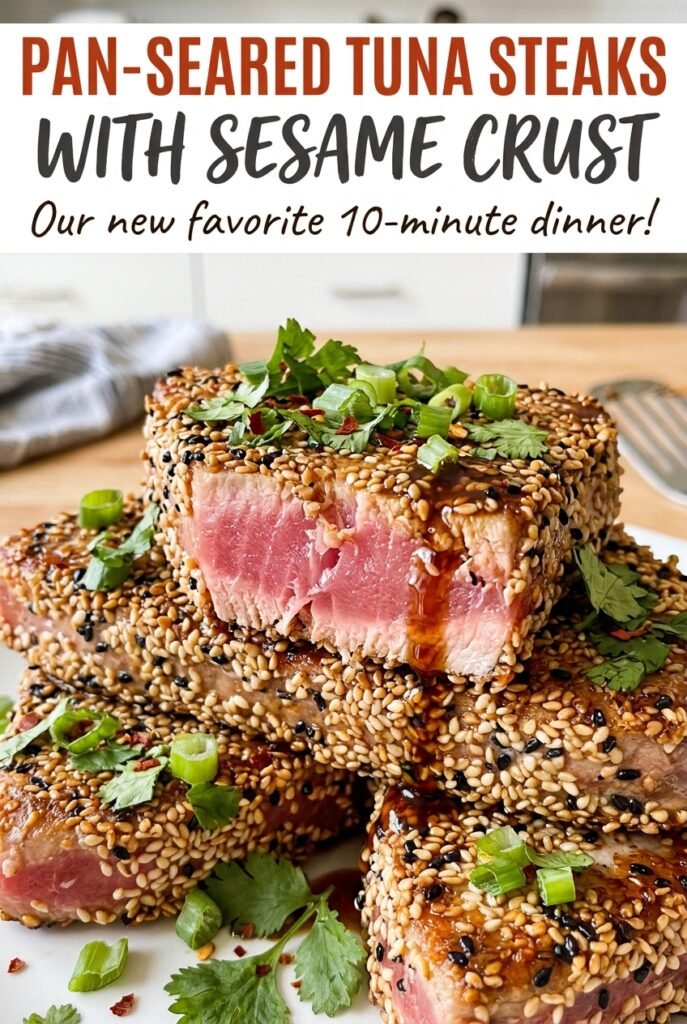
Pan-Seared Tuna Steaks with Sesame Crust
Sesame seeds can go from pale to too dark while the center of a tuna steak is still cooking. I keep an eye on the crust, but I don’t use…
Tip: save now, read later.
Sesame seeds can go from pale to too dark while the center of a tuna steak is still cooking. I keep an eye on the crust, but I don’t use its color to decide when the fish is done. These pan-seared tuna steaks with sesame crust are thick enough to give the center time to cook, with a savory coating that turns fragrant in the skillet.
The steaks are brushed with low-sodium soy sauce and toasted sesame oil before the seeds go on, so the coating has something to cling to. Patting the tuna dry first helps, too: excess moisture makes it harder for the seeds to stay put. Once the skillet is hot, the cooking itself is straightforward, and a thermometer takes the guesswork out of the center. A squeeze of lemon at the table cuts through the rich sesame aroma.
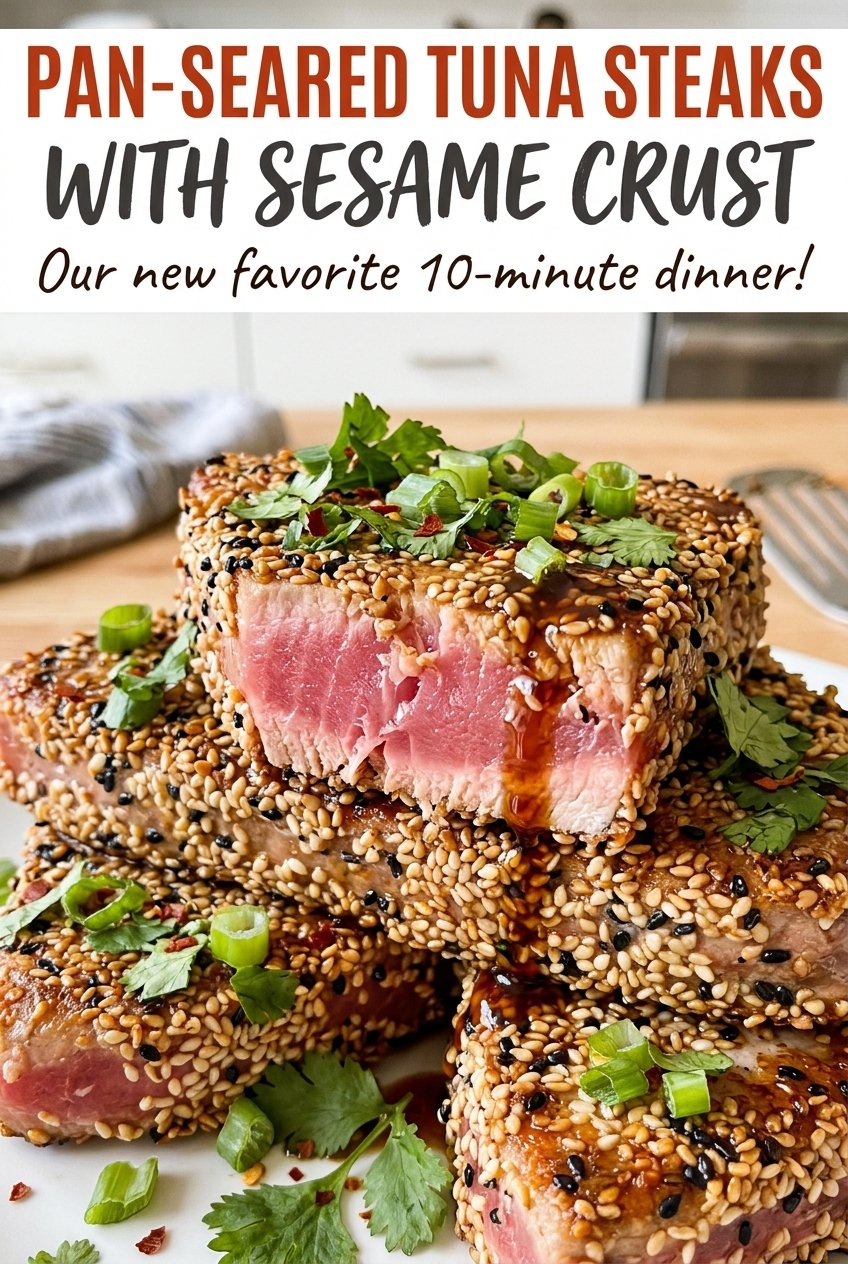
Kitchen Note
Give the tuna its full 3-minute rest on the plate before serving. Moving or slicing it the moment it leaves the skillet can disturb the sesame coating, and that short pause gives the crust a chance to settle.
Save these pan-seared tuna steaks with sesame crust for a skillet dinner with a savory coating and bright lemon wedges.
Why the Sesame Crust Can’t Tell You When the Tuna Is Done
The outside of these steaks gives you a useful warning about heat, but it can’t tell you what’s happening in the middle. Sesame seeds are small and exposed directly to the skillet, while a tuna steak that’s 1 to 1 1/4 inches thick needs longer for its center to reach the right temperature. A handsome brown crust and a cooked-through center don’t arrive on the same schedule every time.
That’s why I treat the thermometer as the doneness check and the seeds as the cue to manage the burner. If the sesame starts darkening too quickly, lower the heat to medium rather than pulling the tuna early. The crust can keep browning even when the center needs more time, so a quick temperature reading in the thickest part is more dependable than judging by color or the clock alone. The goal is an evenly coated steak with sesame that smells toasted, not scorched.
The Tuna, Sesame, and Oil Choices That Shape the Crust
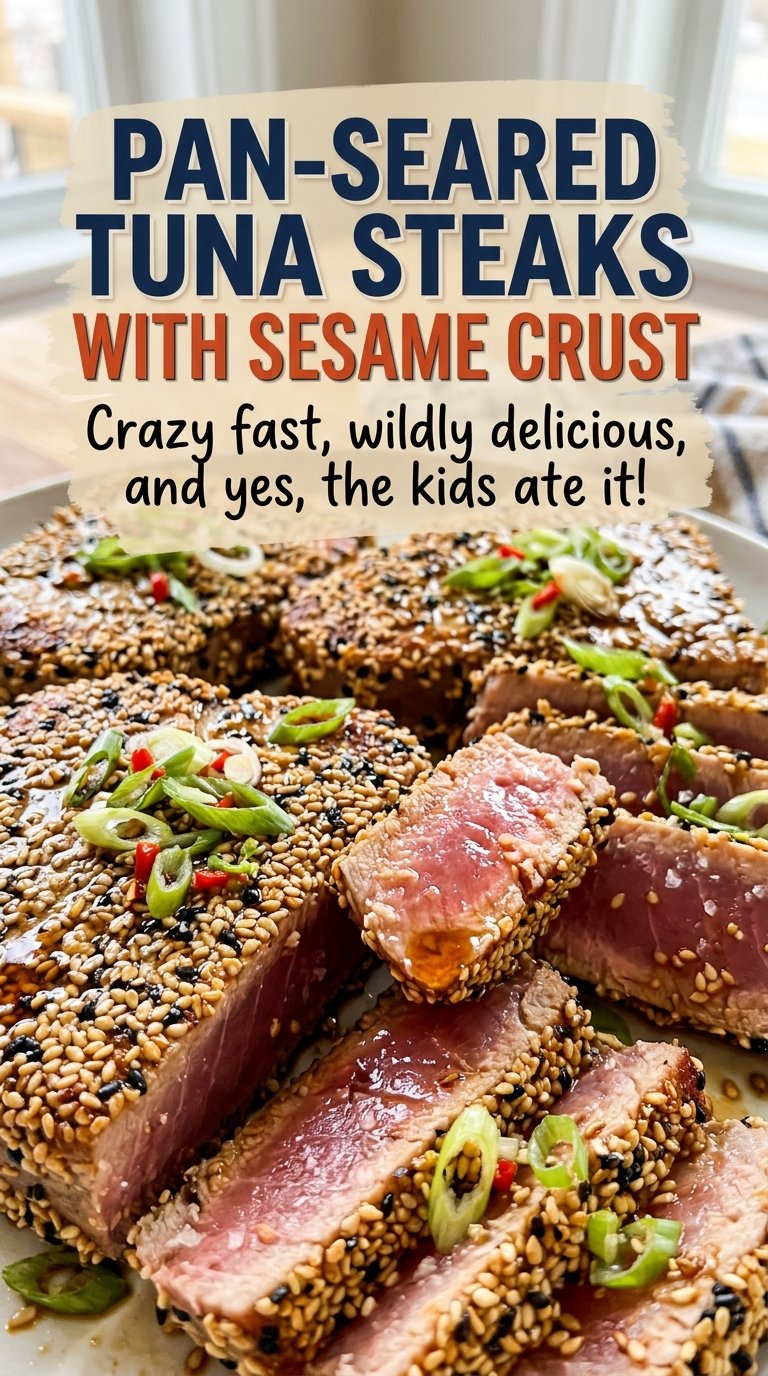
- Tuna steaks — Steaks with an even thickness cook more predictably than pieces that taper sharply at one end. The 1 to 1 1/4-inch thickness gives the sesame coating time to brown while the center cooks. Ask for evenly cut steaks if you’re buying them at a fish counter.
- Low-sodium soy sauce — This brings savory depth to the coating without making the finished fish overly salty alongside the kosher salt. It’s worth choosing low-sodium here; regular soy sauce has a stronger salty taste. For a gluten-free version, use gluten-free tamari as described below.
- Toasted sesame oil — A little gives the brush-on mixture its distinct roasted sesame aroma. Use toasted sesame oil for that flavor; it isn’t the same as neutral cooking oil, and swapping the two would make the coating less fragrant.
- Sesame seeds — Fresh seeds give the crust its nutty crunch and adhere to the thin soy-and-oil coating. If the seeds smell stale or musty, they won’t taste fresh after searing. Black sesame seeds work in place of white ones when you want a darker, more dramatic crust.
- Canola oil — This is the skillet oil, separate from the toasted sesame oil in the coating. Its mild flavor lets the tuna and seeds stay in front, so there’s no need to use a more strongly flavored oil here.
- Lemon — Cut the lemon into wedges so each person can squeeze it over the tuna at the table. Fresh lemon brings a bright finish that balances the savory crust; the wedges also let everyone choose how much acidity they want.
From a Dry Surface to a Set Sesame Crust
Dry the Tuna and Brush on the Soy Mixture
Blot both sides of each steak with paper towels until the surfaces feel dry, not slick. Stir the low-sodium soy sauce and toasted sesame oil together in a small bowl, then brush the mixture over both sides of the tuna. The fish should have a thin, even sheen rather than a puddle of liquid around it. If the steaks are wet, the coating won’t cling as neatly.
Season and Press on the Seeds
Season both sides with kosher salt and black pepper. Press the sesame seeds onto each side so they make contact with the surface instead of sitting loosely on top. Turn the steaks carefully to coat the edges as well where the seeds will reach. A gentle press helps the coating hold through the trip from plate to skillet.
Sear Until the Center Reaches Temperature
Heat a 12-inch skillet over medium-high heat for 2 to 3 minutes, then add the canola oil. Add the tuna and cook for 3 to 5 minutes per side, watching the seeds as they brown. If they darken too quickly, reduce the heat to medium so the center has time to cook without scorching the crust. Check the thickest part with an instant-read thermometer and cook until it reaches 145°F.
Rest on a Plate and Serve with Lemon
Transfer the tuna to a plate and let it rest for 3 minutes. Keep the steaks intact during the rest so the seed coating stays in place. Serve with the lemon wedges, which add a fresh, tart note against the savory sesame crust.
Two Smart Swaps for Sesame-Crusted Tuna
Make It Gluten-Free with Tamari
Replace the low-sodium soy sauce with the same amount of gluten-free tamari. It keeps the savory coating intact, though tamari can taste a little rounder and less sharp than soy sauce. Check that the tamari you choose is labeled gluten-free.
Use Black Sesame for a Darker Crust
Swap black sesame seeds for the white sesame seeds, keeping the same total quantity. The coating still brings a nutty crunch, with a darker appearance and a slightly earthier sesame taste.
Storage and Reheating
- Refrigerator: Store cooked tuna in an airtight container for 3 to 4 days. The sesame crust will soften as it sits.
- Freezer: Freeze the steaks in an airtight container or freezer wrap for up to 2 to 3 months for best quality. Thaw in the refrigerator; expect the fish to be less tender and the crust to lose its crispness.
- Reheating: Reheat only the portion you plan to eat, using short microwave intervals until it reaches 165°F. Longer heating can dry out the tuna, so check it as you go.
Questions I Get Asked About Sesame-Crusted Tuna
Pan-Seared Tuna Steaks with Sesame Crust
Ingredients
Equipment
Method
- Pat the tuna steaks dry with paper towels.
- In a small bowl, stir together the soy sauce and sesame oil.
- Brush the soy sauce mixture over both sides of the tuna steaks.
- Season both sides of the steaks with the salt and pepper.
- Press the sesame seeds onto both sides of the steaks to coat.
- Heat a 12-inch skillet over medium-high heat for 2 to 3 minutes, then add the canola oil.
- Add the tuna and cook for 3 to 5 minutes per side, reducing the heat to medium if the sesame seeds brown too quickly, until the thickest part reaches 145°F on an instant-read thermometer.
- Transfer the tuna to a plate and rest for 3 minutes.
- Serve with the lemon wedges.
