

Smoked Gouda and Chive Deviled Eggs
When a hard-cooked egg peels in one smooth shell, the whole platter feels easier. These smoked Gouda and chive deviled eggs are worth taking that little bit of care over:…
Tip: save now, read later.
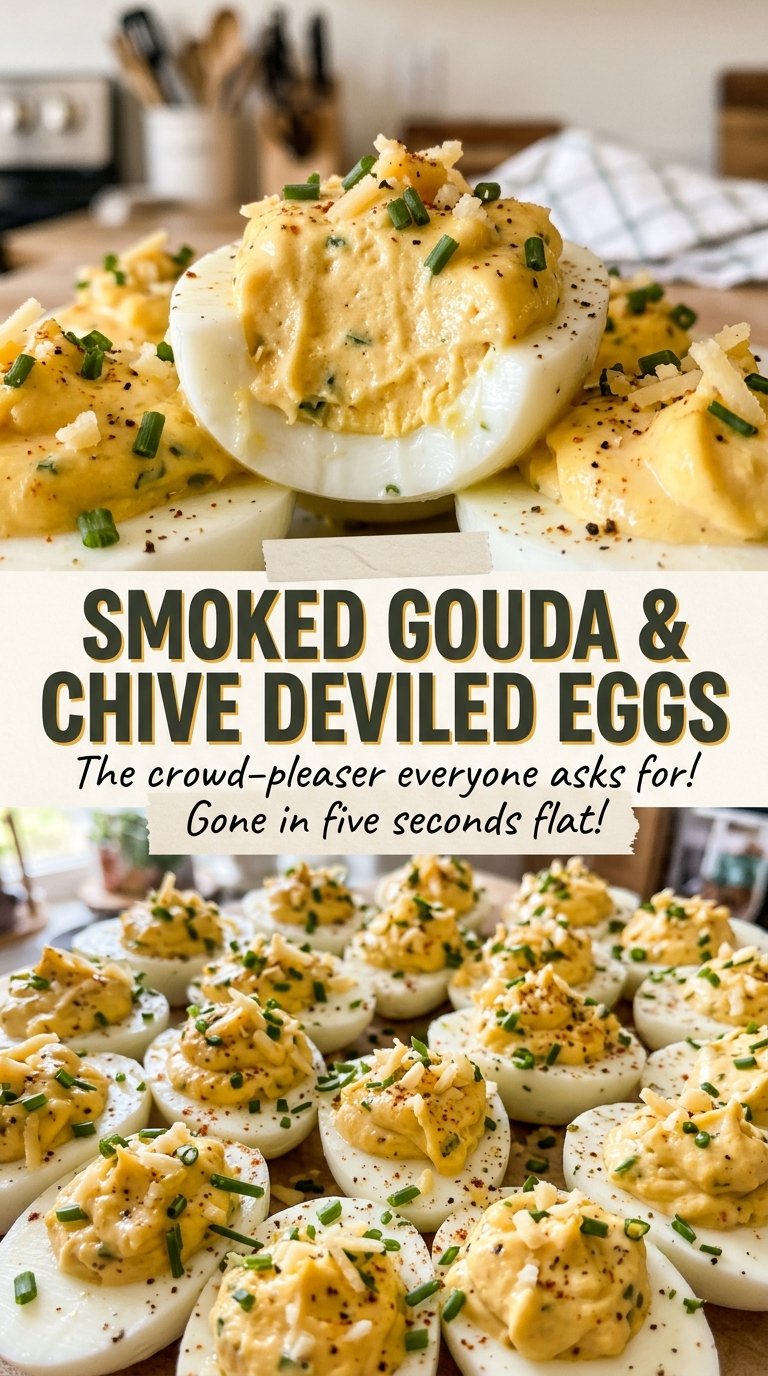
When a hard-cooked egg peels in one smooth shell, the whole platter feels easier. These smoked Gouda and chive deviled eggs are worth taking that little bit of care over: the filling is creamy, the cheese brings a gentle smokiness, and paprika gives each half a tidy finish.
I like the balance here because the filling doesn’t rely on mayonnaise alone. Dijon and cider vinegar cut through the rich yolks and Gouda, while fresh chives bring a clean, oniony note. Grating the cheese finely helps it blend into the yolks instead of leaving you with big chewy pieces. Once filled, the eggs get a short rest in the refrigerator, which gives the mixture time to settle before serving.

Kitchen Note
Give the eggs the full 10 minutes in the ice bath before peeling. Keeping them submerged, and peeling under cold running water, helps the shells release without pulling away big pieces of white.
Save these smoked Gouda and chive deviled eggs for a make-ahead appetizer with a creamy filling and just enough smoky bite.
Why Smoked Gouda Needs a Bright, Tangy Counterpoint
Smoked cheese has a way of taking over a small bite. In deviled eggs, the yolks and mayonnaise are already rich, so piling on more smoke without any contrast can leave the filling tasting heavy. Dijon mustard and cider vinegar do useful work here: they bring sharpness that keeps the Gouda’s savory, smoky flavor in focus rather than letting it flatten everything else.
The order matters, too. First mash the yolks with the mayonnaise, mustard, and vinegar until the base is smooth; then stir in the finely grated cheese and chives. That gives the cheese an even place to settle into, instead of asking it to break up lumps in the yolks. You’ll still taste the Gouda, but the finished filling should be creamy and cohesive, with little flecks of chive rather than a dense cheese paste.
Think of the paprika as a finishing touch, not a second smoky layer. A light sprinkle adds color and a mild peppery note without burying the more delicate chives.
What Smoked Gouda, Dijon, and Chives Each Bring to the Filling
- Large eggs — The size matters because the resting time is calibrated for large eggs; changing sizes can change how firmly the centers set. Fresh eggs work, though eggs that aren’t newly laid often peel a little more easily. There isn’t a useful substitute for the eggs here, since they provide both the filling and the edible cups.
- Mayonnaise — It binds the yolks into a smooth, rich filling. A standard store-brand mayonnaise works well; choose one you like the taste of, since it’s part of the base. Plain Greek yogurt can stand in if you want a tangier, less rich filling, though the texture will be lighter.
- Dijon mustard and cider vinegar — Dijon gives the mixture a rounded mustard bite, while cider vinegar adds a clean acidic lift. Smooth yellow mustard works in place of Dijon, but tastes milder and less complex. White wine vinegar can replace cider vinegar in the same amount for a slightly cleaner, less fruity finish.
- Smoked Gouda — Choose a piece you can grate finely; freshly grated cheese blends more smoothly than thick shreds. A good supermarket Gouda is fine, so there’s no need to seek out an aged specialty cheese. Finely grated smoked cheddar is the closest easy swap, with a sharper, less buttery result.
- Fresh chives and paprika — Chives bring a mild fresh onion flavor, and their fine cut distributes it without making the filling harsh. Look for bright green, perky chives; dried chives won’t give the same fresh lift. Paprika is there for a gentle pepper note and color, so an ordinary sweet paprika is a good choice.
From Neatly Peeled Eggs to a Filling That Holds Together
Set the eggs gently, then cool them well
Arrange the eggs in one layer in a 4-quart saucepan and add cold water to cover them by an inch. Bring the water to a boil over high heat, cover the pan, and take it off the heat; let the eggs stand for 12 minutes. Moving the covered pan off the burner keeps the eggs from continuing to boil, which can make the whites tough. Transfer them to an ice-water bath for 10 minutes, adding cold water as needed to keep them submerged.
Build a smooth yolk base before adding the cheese
Peel the chilled eggs under cold running water, then pat them dry so they’re easier to handle. Halve each one lengthwise, lift the yolks into a medium bowl, and arrange the whites on a serving platter. Mash the yolks with the mayonnaise, Dijon, and cider vinegar until no dry, crumbly pockets remain. Stir in the finely grated Gouda, chopped chives, salt, and black pepper until the mixture looks evenly combined.
Fill the whites and give the topping time to settle
Spoon the filling into the egg-white halves, dividing it among them rather than packing it down hard. A small spoon makes a relaxed, homemade finish; a piping bag gives you a more even swirl. Sprinkle paprika over the filled eggs, then refrigerate them for at least 20 minutes before serving. If the filling is pushed into the whites while it’s still loose, it can look messy around the edges, so use a light hand.
Three Ways to Change the Smoke, Heat, or Dairy
Make the filling sharper with smoked cheddar
Replace the smoked Gouda with finely grated smoked cheddar. You’ll keep the smoke but get a more pronounced, tangy cheese flavor and a little less buttery softness.
Give the paprika a little heat
Use cayenne instead of paprika for the garnish, sprinkling it lightly over the eggs. It brings a more direct heat and less sweetness, so keep the dusting fine if you want the Gouda and chives to stay in the foreground.
Make a dairy-free version
Use a firm dairy-free smoked cheese that you can grate finely in place of the Gouda. The eggs and mayonnaise remain, but the filling will have a less buttery, sometimes firmer texture than the version made with Gouda.
Make-Ahead and Serving
- Refrigerator: Store the finished eggs covered and refrigerated for 3 to 4 days. The whites may firm slightly, and the filling can dry a little at the edges over time.
- Freezer: Don’t freeze assembled deviled eggs. The whites turn watery and rubbery after thawing, and the filling can lose its smooth texture.
- Serving: Set them out shortly before serving and return leftovers to the refrigerator promptly. Discard eggs left at room temperature for more than 2 hours, or more than 1 hour when it’s above 90°F.
Questions That Come Up When Making Smoked Gouda Deviled Eggs
Smoked Gouda and Chive Deviled Eggs
Ingredients
Equipment
Method
- Arrange the eggs in a single layer in a 4-quart saucepan and add 2 quarts cold water, plus more as needed, to cover them by 1 inch.
- Bring the water to a boil over high heat, cover, remove from the heat, and let stand for 12 minutes.
- Transfer the eggs to a bowl of ice water made with 4 cups ice and chill for 10 minutes, adding cold water as needed to keep them submerged.
- Peel the eggs under cold running water and pat them dry.
- Halve the eggs lengthwise, transfer the yolks to a medium bowl, and arrange the whites on a serving platter.
- Mash the yolks with the mayonnaise, Dijon mustard, and cider vinegar until smooth.
- Stir in the finely grated smoked Gouda, finely chopped fresh chives, kosher salt, and black pepper until evenly combined.
- Spoon the filling into the egg-white halves and sprinkle with paprika.
- Refrigerate for at least 20 minutes before serving.
