

Christmas Honey Mustard Glazed Chicken Drumsticks
The honey starts to darken at the edges of the pan before the chicken is ready, which is exactly why I don’t brush this glaze on at the beginning. I…
Tip: save now, read later.
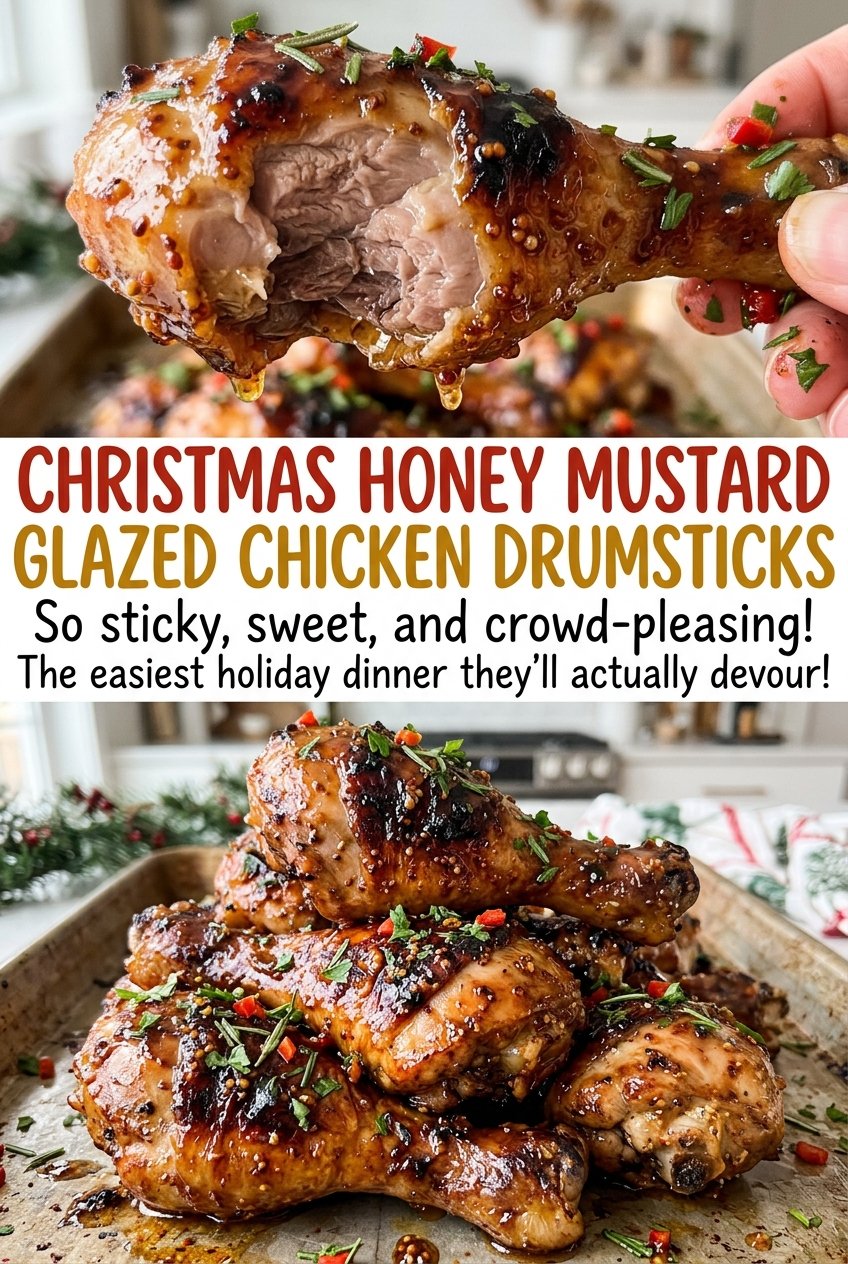
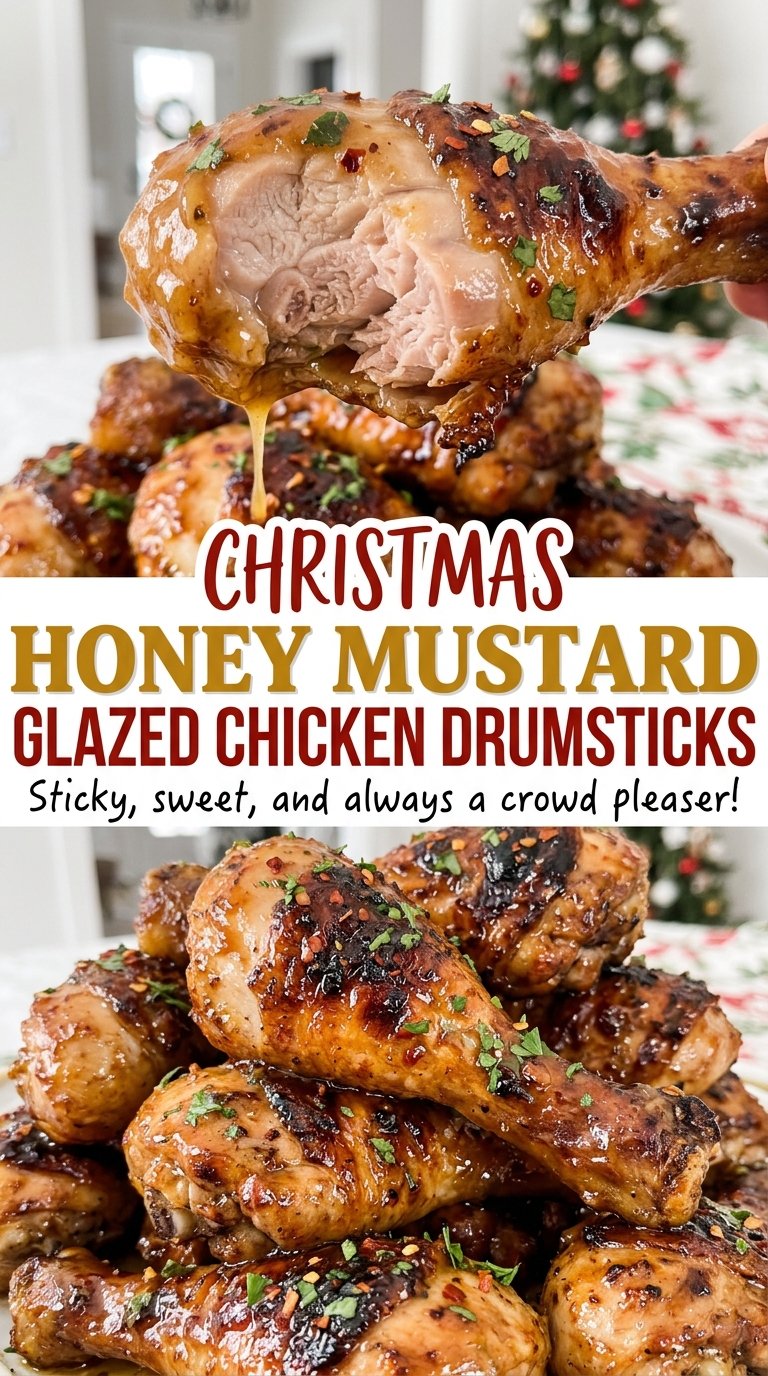
The honey starts to darken at the edges of the pan before the chicken is ready, which is exactly why I don’t brush this glaze on at the beginning. I let the drumsticks roast first, then add the honey-mustard mixture in two coats near the end. That timing gives these Christmas Honey Mustard Glazed Chicken Drumsticks a glossy finish without leaving the sugars exposed to the oven for the whole cook.
The glaze has a little more going on than sweetness: Dijon brings a smooth, sharp mustard flavor, whole-grain mustard leaves tiny pops of texture, and orange zest makes the rosemary smell fresh and fragrant. I toss the drumsticks with oil, salt, and pepper before they go on the pan, so the seasoning is already in place when the glaze goes on. The finished chicken is sticky at the edges, savory underneath, and tender where it matters most.
Kitchen Note
For dark meat that’s more tender than just barely done, I look for 175–185°F in the thickest part of a drumstick. Check near the bone without touching it, since the center is what matters.
Save these Christmas Honey Mustard Glazed Chicken Drumsticks for a festive dinner with a glossy honey-mustard coating and a bright touch of orange.
Why the Honey Glaze Goes on Near the End
Honey gives the coating its shine and sticky finish, but it also browns much faster than the chicken needs to roast. Putting it on at the start would leave it in the oven through the entire cook, where it could darken too far before the drumsticks are tender. Roasting the chicken first gives the skin and surface time to cook without the sweet coating.
Two short glazing rounds solve that timing problem. The first coat gets a head start on the hot chicken, then the second refreshes the surface for the final stretch. Turning the drumsticks between coats exposes the sides that were against the pan, so the glaze reaches around rather than pooling on only one side. You’ll get a lacquered, savory-sweet coating instead of a thick, scorched patch of honey at the bottom of the pan.
The two mustards also help the glaze behave like a coating rather than plain honey. Dijon blends smoothly into the mixture, while whole-grain mustard adds little mustard-seed flecks throughout. Whisking them together with vinegar keeps the sweetness in check, and the orange zest and rosemary give the glaze a fresh, aromatic edge.
What Dijon and Whole-Grain Mustard Each Bring to the Glaze
- Honey — It supplies the glaze’s sweetness and glossy finish. A liquid honey that pours easily is simplest to whisk in; strongly flavored honey will be more noticeable against the mustard.
- Dijon mustard — Dijon gives the glaze its smooth, sharp mustard base. Use a Dijon you like the taste of, since its tang comes through beneath the honey; a mild yellow mustard won’t bring the same bite or texture.
- Whole-grain mustard — The whole seeds create the glaze’s speckled look and a little texture in each bite. It’s worth keeping this distinct from the Dijon rather than blending the two into a single smooth mustard.
- Apple cider vinegar — A small amount cuts through the sweetness and keeps the glaze from tasting flat. Its gentle fruitiness fits the honey and orange without taking over.
- Orange zest — Finely grated zest contributes fragrant citrus oils, not a strong sour taste. Grate only the colored outer peel; the white pith underneath is bitter.
- Fresh rosemary and garlic — Finely chopped rosemary gives the glaze a woodsy, savory note, while minced garlic adds depth. Chop the rosemary small enough to spread through the glaze, and mince the garlic finely so you don’t end up with a large raw-tasting piece on a drumstick.
- Chicken drumsticks — Drumsticks are forgiving dark meat, and their shape makes them easy to turn and coat. Choose pieces that are roughly similar in size so they roast at a similar pace.
- Olive oil, kosher salt, and black pepper — The oil helps coat the chicken and the foil, while salt and pepper season the meat before the sweet glaze arrives. Kosher salt’s larger flakes are easy to distribute when tossing the drumsticks.
Roasting the Drumsticks Before the Glaze Sets
Whisk the Glaze Until It’s Even
In a small bowl, whisk together the honey, Dijon mustard, whole-grain mustard, apple cider vinegar, orange zest, minced garlic, and finely chopped rosemary. Keep whisking until the honey loosens and the mixture looks evenly combined, with the mustard seeds still visible. The glaze should be thick enough to cling to a brush, not separated into a watery ring and a dense center. Set the bowl aside while you prepare the chicken.
Season and Roast on Foil
Heat the oven to 400°F and line an 18×13-inch rimmed baking sheet with foil. Brush the foil with a little of the olive oil, then toss the drumsticks with the remaining oil, kosher salt, and black pepper. Arrange them in a single layer and bake for 25–30 minutes; give them room rather than letting them overlap. The foil catches the sticky drips, and oiling it helps the chicken release when it’s time to turn the pieces.
Turn, Glaze, and Finish
Turn the drumsticks and brush the exposed sides with about half the glaze, then bake for 10 minutes. Turn them again and brush on the remaining glaze, reaching the sides that were facing down. Bake for another 10–15 minutes, until the thickest part of each drumstick reaches at least 165°F. Rest the chicken for 5 minutes before serving so the juices settle and the coating has a moment to cling.
Small Changes That Keep the Chicken’s Glaze Useful
Set Aside a Clean Portion for Dipping
For a dip-friendly version, portion some glaze into a separate bowl before brushing any onto the raw chicken. Keep that untouched portion away from the chicken and use it at the table; the rest goes on in the two coats. This keeps the full mustard-orange flavor available for dipping without using glaze that has touched raw poultry.
Mix the Glaze Ahead
Whisk the glaze earlier in the day and keep it covered in the refrigerator until you’re ready to roast. Give it another whisk before brushing, since the honey and mustard can settle into a thicker mixture while it sits. This shifts the prep out of the cooking window without changing the flavor balance.
Storage and Reheating
- Refrigerator: Store leftover drumsticks in a covered container for 3–4 days. The glaze will firm up when cold and turn sticky again as it warms.
- Freezer: Freeze the cooked drumsticks in an airtight freezer-safe container for up to 3 months. Thaw them in the refrigerator before reheating; the skin won’t be quite as crisp as it is fresh.
- Reheating: Warm the chicken covered in a 325°F oven until heated through, then uncover briefly if you’d like the glaze less soft. Don’t leave it uncovered for the entire reheating time, or the honey coating can darken before the meat warms.
Questions That Come Up While Roasting These Drumsticks
Christmas Honey Mustard Glazed Chicken Drumsticks
Ingredients
Equipment
Method
- Whisk the honey, Dijon mustard, whole-grain mustard, vinegar, orange zest, garlic, and rosemary in a small bowl.
- Heat the oven to 400°F.
- Line an 18x13-inch rimmed baking sheet with foil.
- Brush the foil with a little of the olive oil.
- Toss the drumsticks with the remaining oil, salt, and pepper.
- Arrange the drumsticks in a single layer on the baking sheet.
- Bake for 25-30 minutes.
- Turn the drumsticks and brush the exposed sides with about half the glaze.
- Bake for 10 minutes.
- Turn the drumsticks again and brush with the remaining glaze.
- Bake for 10-15 minutes, until the thickest part of each drumstick reaches at least 165°F; 175-185°F gives more tender dark meat.
- Rest the drumsticks for 5 minutes before serving.
