
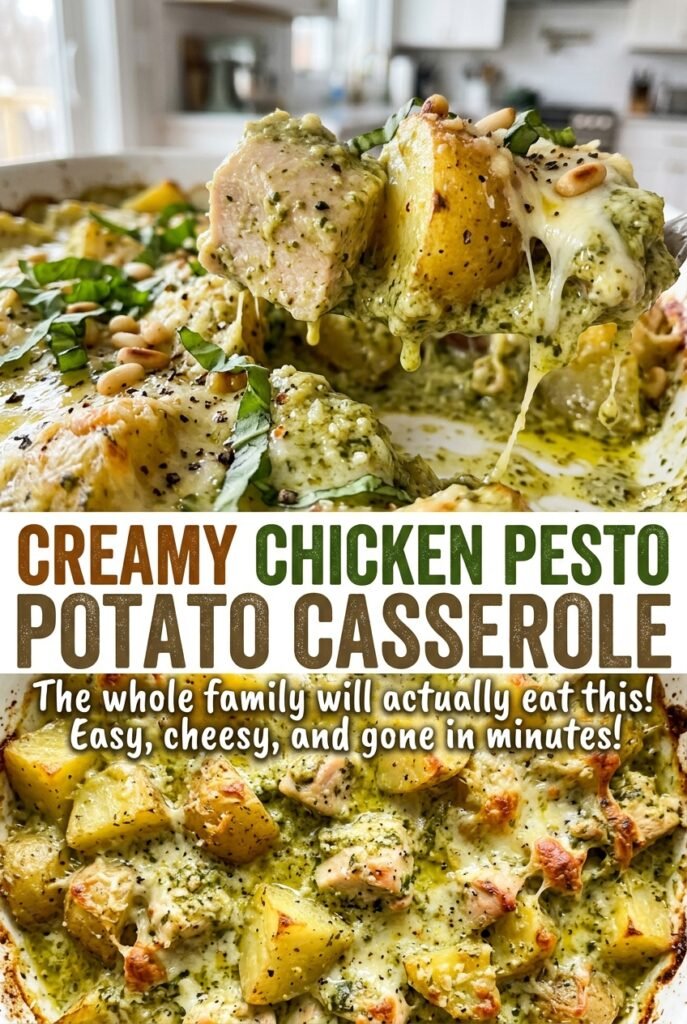
Creamy Chicken Pesto Potato Casserole
When the foil comes off, the top is pale and steamy; give it those final minutes uncovered and the cheese turns golden while the potatoes finish softening. That covered-then-uncovered bake…
Tip: save now, read later.
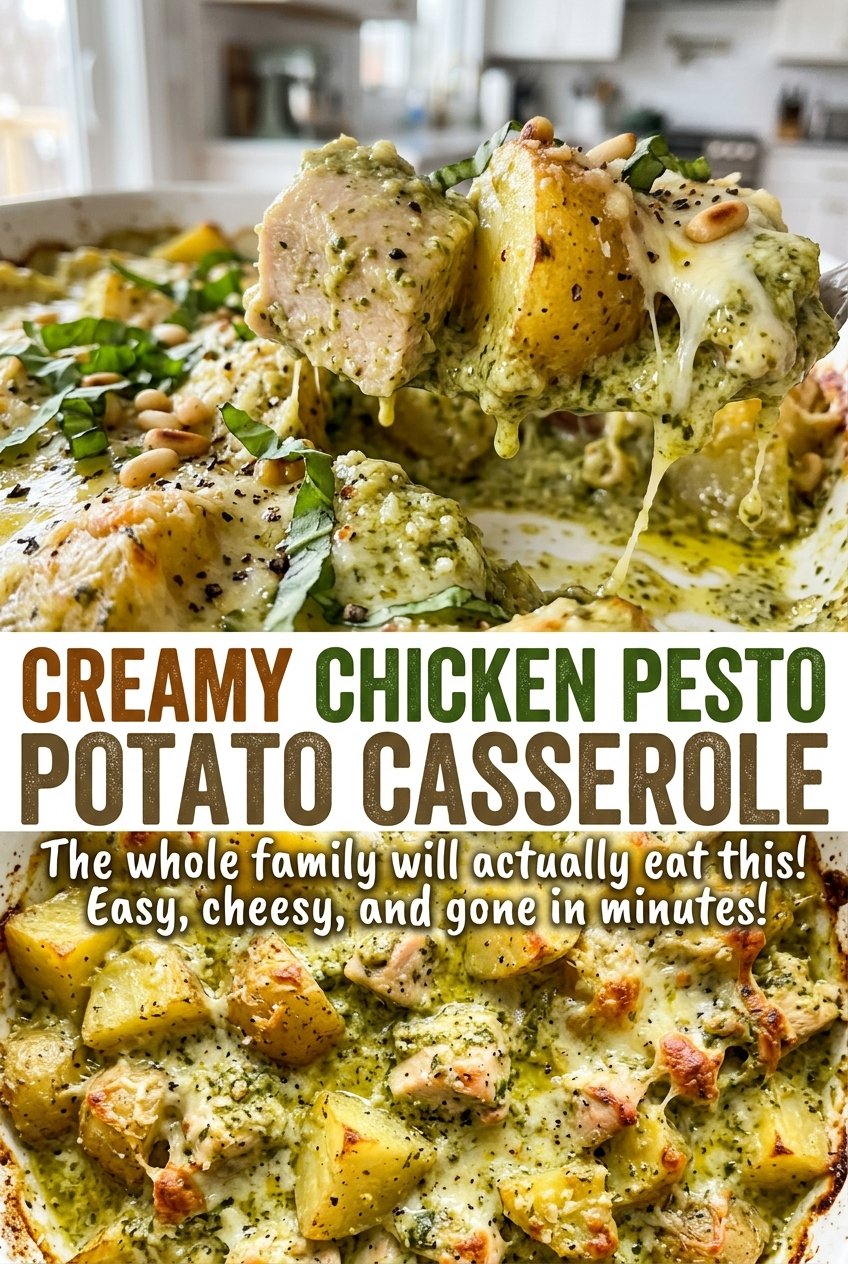
When the foil comes off, the top is pale and steamy; give it those final minutes uncovered and the cheese turns golden while the potatoes finish softening. That covered-then-uncovered bake is what makes this creamy chicken pesto potato casserole feel like a full meal instead of a pan of potatoes with a topping.
I layer the potatoes, cooked chicken, and sauce rather than stirring everything together. The sauce starts with a simple butter-and-flour base, then gets its basil pesto off the heat, so it stays smooth and the pesto’s flavor doesn’t get cooked away. Thin, even potato slices matter here: at 1/8 inch, they cook through in the time the chicken and cheese need. Each serving comes out creamy underneath, with a browned cheese top and tender potato slices all the way through.
Kitchen Note
Take the saucepan off the heat before whisking in the pesto. That small pause keeps the basil flavor bright instead of letting it bubble away in the hot sauce.
Save this creamy chicken pesto potato casserole for a cozy dinner with tender potato layers and a golden mozzarella-Parmesan top.
The Potato Layers Need Sauce Between Them, Not Just on Top
It’s easy to think of a casserole as a filling mixed with sauce and tucked under cheese. Here, keeping the ingredients in layers does a different job. The sauce goes between the potato and chicken layers, so the potatoes aren’t left to cook in a dry stack while the chicken sits in one concentrated pocket.
The potatoes go into the dish raw, which means their thickness and the covered bake both matter. At 1/8 inch, the slices have enough time to soften while the foil holds in steam. The sauce also gives the layers moisture as they cook. If the slices are uneven, the thinner ones can turn tender before the thicker pieces in the center do, so aim for consistent cuts rather than rushing the baking.
Finishing with sauce and then cheese gives the casserole a clear top layer. Once the foil comes off, that cheese can brown without leaving the inside exposed for the whole bake. The result is a casserole with distinct potato and chicken layers, not a stirred-together mixture.
Why Yukon Golds and Basil Pesto Shape the Whole Casserole

- Yukon Gold potatoes — They turn creamy and tender but hold their shape well enough to make distinct layers. Peel them and slice evenly to the specified thickness; a mandoline makes uniform slices, but a sharp knife works if you take your time. Russets soften more readily and can make the layers less defined.
- Basil pesto — Pesto brings the concentrated basil, garlic, and cheese flavors that season the creamy sauce. Since its flavor is front and center, use a pesto you like eating on its own; the inexpensive jarred kind works, though brands vary in saltiness and intensity. Stir it in after the saucepan comes off the heat.
- Whole milk and chicken broth — Whole milk gives the sauce body, while low-sodium broth adds savory depth without making the finished casserole too salty alongside pesto and cheese. Skim milk makes a thinner, less rich sauce; keep the whole milk for the texture this bake needs.
- Cooked shredded chicken — The chicken is already cooked before it goes into the dish, so it only needs to warm through as the potatoes bake. Shred it into bite-size pieces so it distributes between the layers rather than forming a dense slab.
- Mozzarella and Parmesan — Mozzarella melts into the stretchy, browned top, while Parmesan brings a saltier, more savory finish. Freshly shredded mozzarella tends to melt more evenly, but pre-shredded works when convenience matters.
Build a Smooth Pesto Sauce Before the Potatoes Go In
Cook the Flour Base Until It Smells Nutty
Melt the butter in a medium saucepan over medium heat, then whisk in the flour. Keep whisking for 1 minute so the flour cooks through and no dry pockets remain. It should look like a smooth paste rather than a loose pool of butter. If you spot floury lumps at this stage, keep whisking before adding liquid.
Whisk in the Liquid Gradually
Pour in the chicken broth and milk a little at a time, whisking as you go. Bringing the liquid in gradually helps the flour mixture blend smoothly instead of forming stubborn lumps. Bring the sauce to a gentle simmer, then cook it for 4 to 6 minutes while whisking. It’s ready when it coats the back of a spoon, not when it has reduced to a stiff paste.
Layer the Casserole Evenly
Heat the oven to 375°F and coat a 9×13-inch baking dish with nonstick cooking spray. Whisk the pesto, kosher salt, and black pepper into the sauce after removing it from the heat. Arrange half the potatoes in the dish, followed by half the chicken and half the sauce; repeat those layers with the remaining ingredients, ending with sauce. Spread the mozzarella and Parmesan evenly across the top so the cheese browns across the whole dish.
Bake Covered, Then Let the Top Brown
Cover the dish tightly with foil and bake for 45 minutes. Remove the foil and bake for another 15 to 20 minutes, until a knife pierces the potatoes easily in the center and the cheese is golden. Check the center of the casserole reaches 165°F. If the center potatoes still feel firm, they need more baking time; don’t judge tenderness by the edges alone.
Give the Layers Time to Set
Let the casserole rest for 10 minutes before serving. That pause helps the sauce settle around the potato layers instead of running immediately across the plate. Use a sharp-edged spatula or serving spoon to lift portions through the layers. The first scoop may not look perfectly squared off, but the casserole will be creamy and easier to serve after its rest.
Three Changes That Keep the Casserole’s Structure Intact
Make the sauce gluten-free
Replace the all-purpose flour with the same amount of a cup-for-cup gluten-free flour blend, and use gluten-free chicken broth, pesto, and plain cooked chicken. Whisk the flour blend into the butter just as you would the regular flour, then simmer until the sauce coats a spoon. The finished sauce may be a touch less silky, but it still binds the layers.
Trade basil pesto for sun-dried tomato pesto
Use the same amount of sun-dried tomato pesto in place of the basil pesto. It shifts the casserole toward a deeper, tangier tomato flavor while keeping the same creamy sauce and layered format. Since prepared pestos differ in saltiness, taste the sauce before adding the full amount of salt.
Use provolone for a sharper cheese top
Swap provolone for the mozzarella in the same amount and keep the Parmesan. Provolone still melts over the casserole but has a more pronounced, savory taste, so the pesto comes through a little differently. Choose mild provolone if you want the cheese to stay in the background.
Storage and Reheating
- Refrigerator: Store leftovers in an airtight container for 3 to 4 days. The potatoes soften further and the sauce thickens as it chills.
- Freezer: I don’t recommend freezing the finished casserole. The potatoes can turn mealy and the milk-based sauce may separate when thawed.
- Reheating: Reheat individual portions in the microwave until steaming hot throughout, or cover an oven-safe portion to warm it gently. Leaving it uncovered too long can dry the chicken and cheese.
Questions That Come Up When the Potatoes Go In Raw
Creamy Chicken Pesto Potato Casserole
Ingredients
Equipment
Method
- Melt the butter in a medium saucepan over medium heat, then whisk in the flour and cook, whisking, for 1 minute.
- Gradually whisk in the chicken broth and milk. Bring to a gentle simmer and cook, whisking, for 4 to 6 minutes, until thick enough to coat the back of a spoon.
- Remove the saucepan from the heat and whisk in the pesto, salt, and pepper.
- Heat the oven to 375°F and coat a 9x13-inch baking dish with nonstick cooking spray.
- Layer half the potatoes, half the chicken, and half the sauce in the dish; repeat with the remaining potatoes, chicken, and sauce, finishing with the sauce.
- Sprinkle the mozzarella and Parmesan evenly over the top.
- Cover the dish tightly with foil and bake for 45 minutes.
- Remove the foil and bake for 15 to 20 minutes, until the potatoes are tender when pierced in the center, the top is golden, and the casserole reaches 165°F in the center.
- Let the casserole rest for 10 minutes before serving.
