
Cinnamon Roll Pumpkin Bread
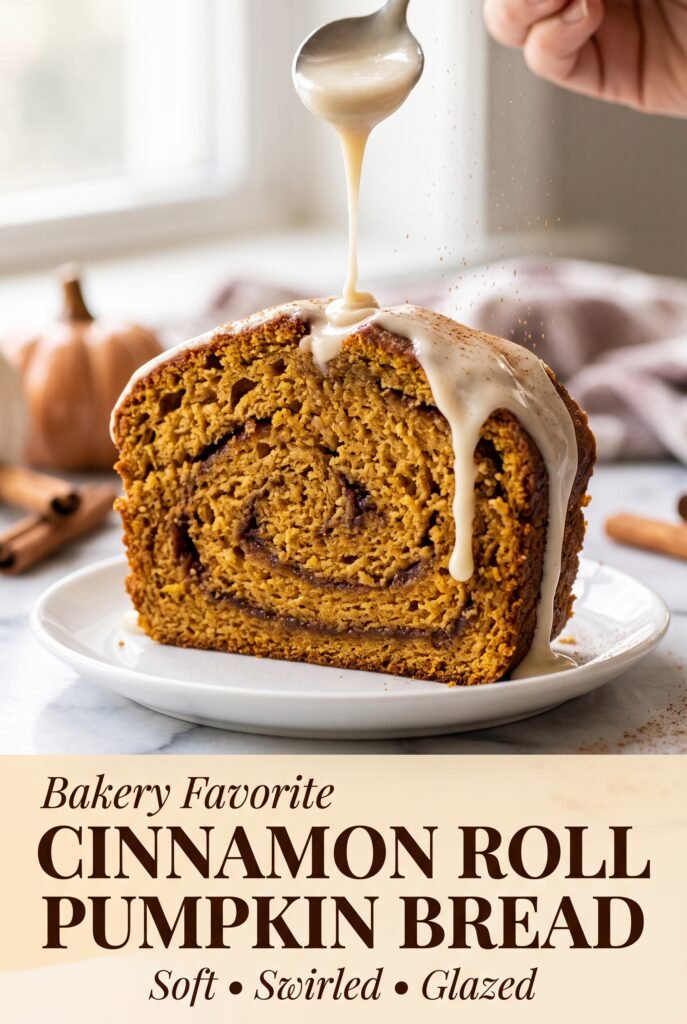
Soft pumpkin bread with cinnamon ribbons running through every slice has a way of disappearing faster than almost anything else on the counter. This version leans into that contrast on…
Tip: save now, read later.
Soft pumpkin bread with cinnamon ribbons running through every slice has a way of disappearing faster than almost anything else on the counter. This version leans into that contrast on purpose: a moist, tender crumb from pumpkin and sour cream, plus a buttery cinnamon swirl that bakes into little pockets of brown sugar goodness instead of sinking into one heavy layer at the bottom. The cream cheese glaze finishes it with the same sweet tang you’d expect from a good cinnamon roll, just without the fuss of yeast or shaping dough.
The trick is keeping the batter thick enough to hold the swirl. Pumpkin purée and sour cream give the loaf moisture, but the oil and melted butter keep it soft even after it cools. The swirl itself stays better defined when you layer it gently and drag the knife through only a few times; if you overdo it, the sugars dissolve into the batter and you lose that ribboned look.
Below, I’ve included the details that matter most: how to keep the loaf from turning dense, why the glaze should go on only after cooling, and a few easy swaps if you need to work with what’s already in your pantry.
The swirl stayed in clean ribbons instead of disappearing into the loaf, and the cream cheese glaze set up just enough that it didn’t slide off every slice. I baked it for 63 minutes and it came out perfectly moist without being gummy.
Love the cinnamon ribbons and cream cheese glaze in this pumpkin bread? Save it to Pinterest for the mornings when you want something cozy, soft, and bakery-style without making cinnamon rolls from scratch.
The Swirl Only Works When the Batter Stays Thick
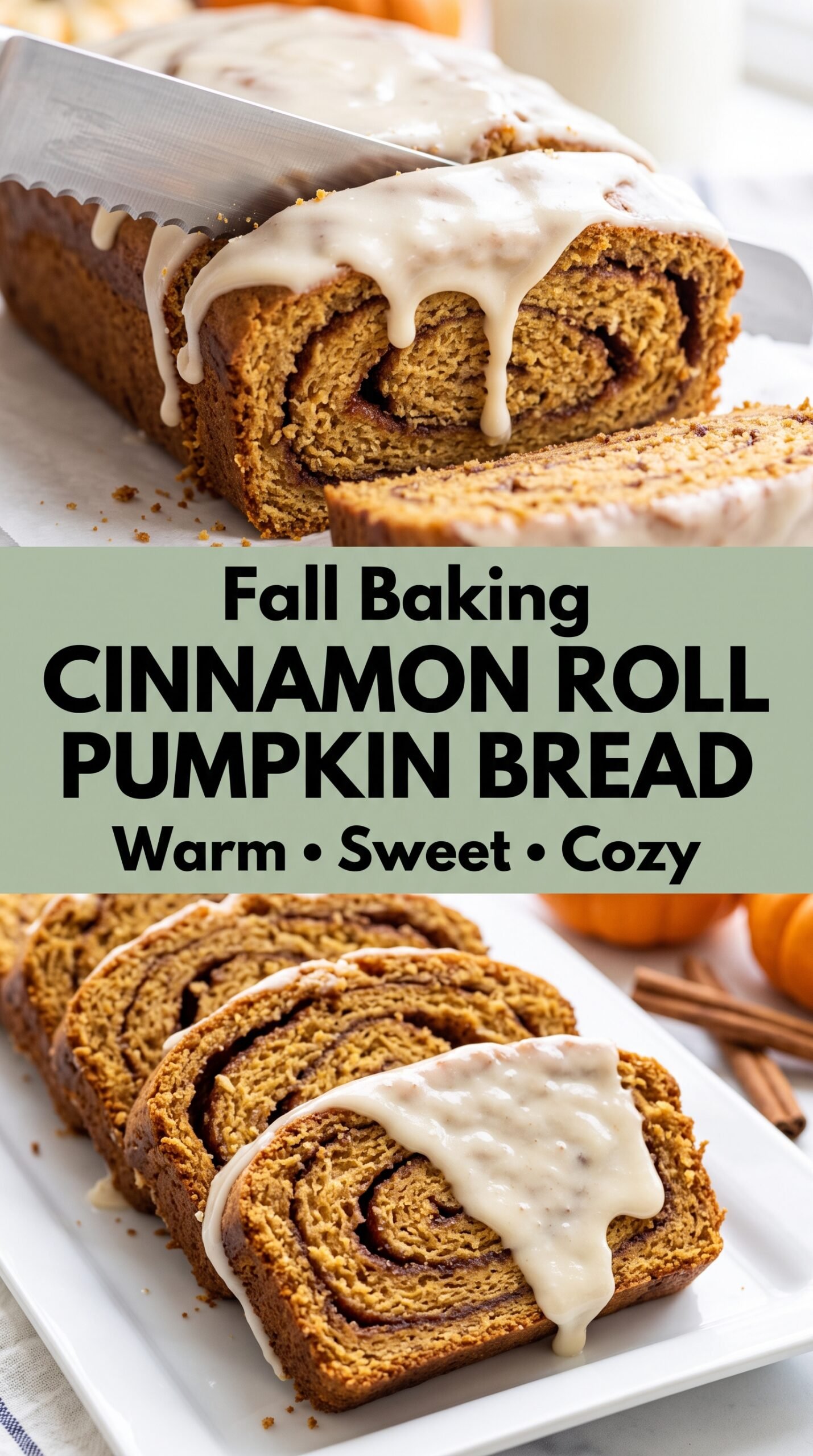
Cinnamon swirl bread fails most often for one simple reason: the batter is too loose to hold the layers. When that happens, the cinnamon sugar sinks straight down and the loaf bakes up with a dark bottom and not much swirl in the middle. The pumpkin, sour cream, and two fats in this recipe create a batter that spreads slowly, which gives the ribboned cinnamon mixture time to stay suspended instead of disappearing.
The other thing that matters here is how you swirl it. You want movement, not blending. Two or three lazy passes with a knife are enough to create those marbled streaks; if you keep stirring, the sugar melts into the batter and the whole loaf turns muddy.
- Pumpkin purée — This is the backbone of the texture. Use plain pumpkin purée, not pumpkin pie filling, or the loaf will be overly sweet and spiced before you’ve even added the cinnamon swirl.
- Sour cream — This adds moisture and a little tang, which keeps the bread from tasting flat. Plain full-fat Greek yogurt works in a pinch, but the crumb will be a touch firmer.
- Vegetable oil plus melted butter — Oil keeps the loaf soft after it cools, while butter adds flavor. You need both here; swapping all the fat for one or the other changes the texture in a noticeable way.
- Brown sugar in the swirl — Light brown sugar melts into a glossy cinnamon layer that tastes closer to a cinnamon roll filling than plain granulated sugar would. Pack it firmly when measuring so the swirl doesn’t come up short.
The Part of the Bake That Decides Whether It Stays Tender
Mix the wet ingredients until smooth
Beat the eggs with both sugars first so the mixture loosens and looks glossy, then add the oil, melted butter, pumpkin, sour cream, and vanilla. The batter should look thick and even, with no streaks of egg or pockets of sour cream. If the butter is too hot, it can scramble the eggs or make the batter greasy, so let it cool for a minute before it goes in.
Fold in the dry ingredients just until the flour disappears
Add the flour mixture in one or two additions and fold gently with a spatula. Stop as soon as you stop seeing dry flour; overmixing builds gluten and gives you a tight, bready loaf instead of a soft slice. A few small streaks are fine because the last turns of folding and the oven will take care of them.
Build the cinnamon layers without overworking them
Pour half the batter into the pan, spoon half the cinnamon mixture over it, then repeat. Use a butter knife to make broad figure-eight swirls through the top third of the batter, not all the way to the bottom. If you plunge the knife too deeply or swirl too many times, the filling drops and the loaf loses its marbled look.
Bake until the center is set, then cool before glazing
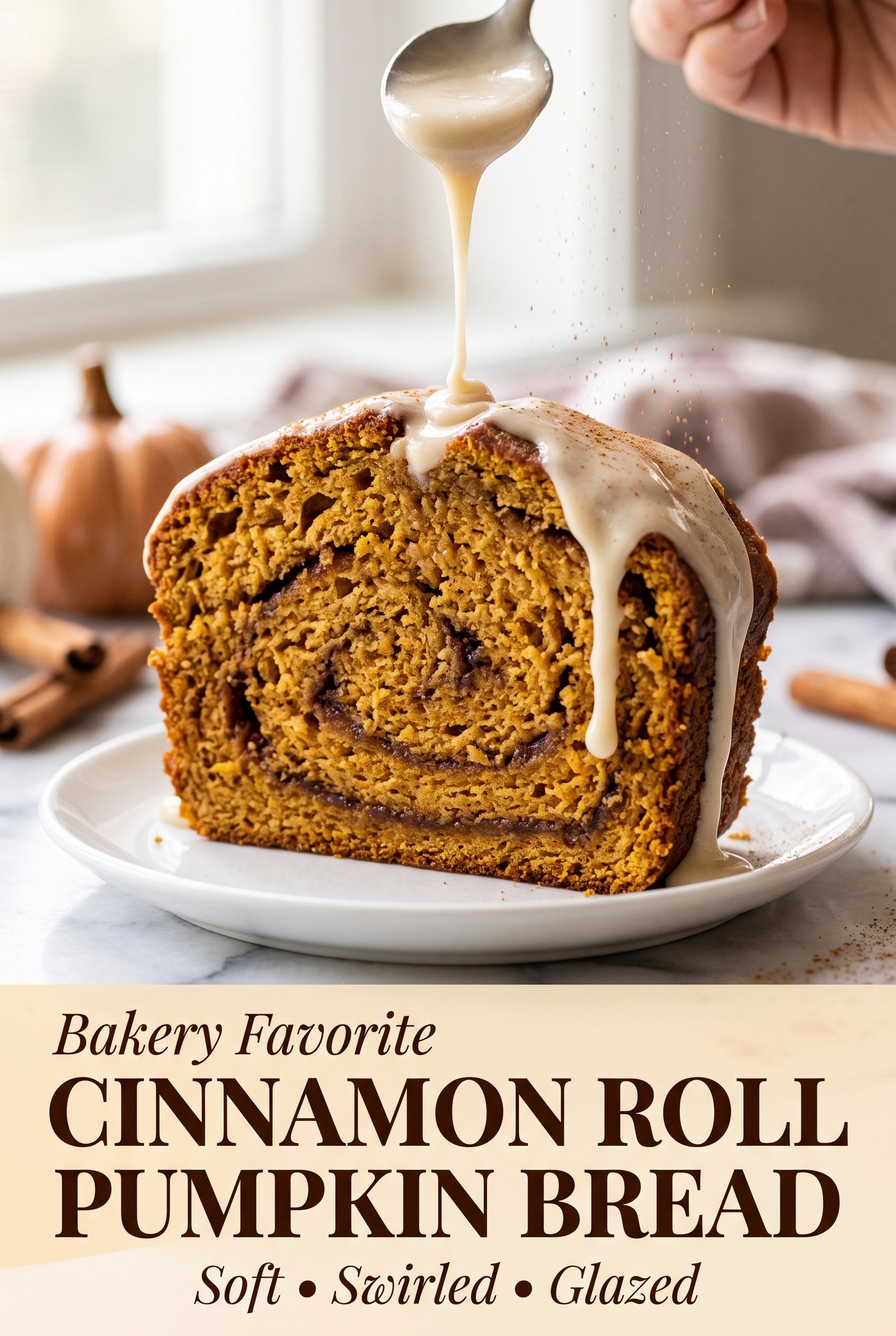
Start checking around the 60-minute mark, but trust the loaf more than the clock. The top should spring back lightly, the edges should pull just a little from the pan, and a tester in the center should come out with only a few moist crumbs. Let it cool completely before glazing or the cream cheese topping will melt into the crust instead of sitting in thick drips.
Three Ways to Make This Pumpkin Bread Work for Your Kitchen
Dairy-Free Pumpkin Bread
Swap the sour cream for plain dairy-free yogurt and use a plant-based butter for the swirl and glaze. The crumb stays moist, though the glaze will be a little softer and less tangy than the original cream cheese version.
Gluten-Free Version
Use a good 1:1 gluten-free baking flour blend that already includes xanthan gum. The loaf will still be tender, but it usually needs a few extra minutes in the oven and should cool fully before slicing so it doesn’t crumble.
Less Sweet, More Breakfast-Friendly
Skip the glaze and reduce the granulated sugar by 2 tablespoons if you want a loaf that leans more toward pumpkin bread than dessert. The cinnamon swirl still gives each slice enough sweetness that you won’t miss much, especially if you serve it warm with butter.
Storage and Reheating
- Refrigerator: Store covered for up to 4 days. The glaze firms up in the fridge and the crumb stays moist, though the cinnamon layer will be a little denser on day two.
- Freezer: Freeze the unglazed loaf or individual slices for up to 2 months. Wrap tightly in plastic, then foil, and thaw at room temperature so the bread doesn’t collect condensation.
- Reheating: Warm slices in the microwave for 10 to 15 seconds or in a low oven until just heated through. Don’t overheat glazed slices or the icing will melt away and the bread can dry out at the edges.
Answers to the Questions Worth Asking
Cinnamon Roll Pumpkin Bread
Ingredients
Equipment
Method
- Preheat the oven to 350°F. Grease and line a 9×5-inch loaf pan with parchment paper so the loaf releases cleanly.
- Whisk together all-purpose flour, baking soda, baking powder, salt, ground cinnamon, pumpkin pie spice, and ground nutmeg in a medium bowl until evenly speckled.
- Beat eggs, granulated sugar, and light brown sugar, packed until smooth and glossy. Mix in vegetable oil, unsalted butter, melted, pumpkin purée, sour cream, and vanilla extract until the batter looks uniform.
- Fold the dry ingredients into the wet ingredients until just combined, with no visible dry flour. Do not overmix so the loaf stays soft.
- Stir together light brown sugar, ground cinnamon, and unsalted butter, melted for the cinnamon swirl until a thick, spreadable mixture forms.
- Pour half of the pumpkin batter into the prepared loaf pan. Spoon half of the cinnamon mixture over the batter and gently swirl with a butter knife.
- Pour the remaining pumpkin batter into the pan and top with the remaining cinnamon mixture. Gently swirl again so ribbons are visible after baking.
- Bake at 350°F for 60–70 minutes, until a toothpick inserted into the center comes out clean and the loaf is golden brown.
- Cool in the pan for 15 minutes, then transfer the loaf to a wire rack and cool completely. Drizzling warm bread can make the glaze run.
- Beat cream cheese, powdered sugar, milk, and vanilla extract until smooth. Drizzle generously over the cooled bread before slicing and serving.
