
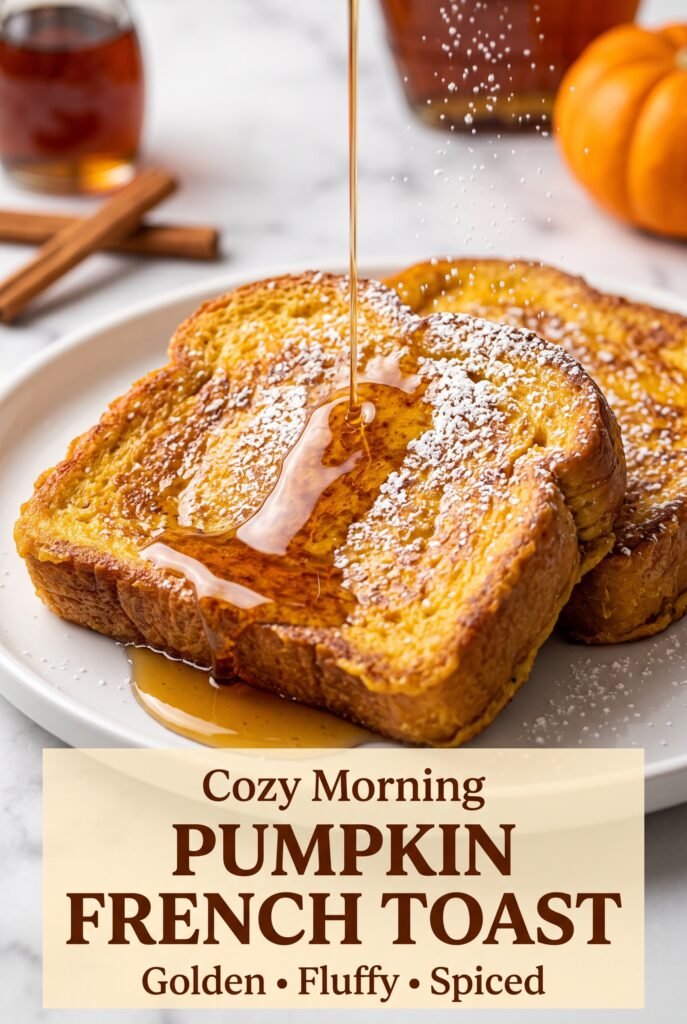
Pumpkin French Toast
Pumpkin French toast is the kind of breakfast that turns ordinary bread into something soft, custardy, and deeply golden at the edges. The pumpkin puree brings more than flavor here;…
Tip: save now, read later.
Pumpkin French toast is the kind of breakfast that turns ordinary bread into something soft, custardy, and deeply golden at the edges. The pumpkin puree brings more than flavor here; it gives the egg mixture a thicker, silkier body that clings to thick slices of brioche or challah instead of sliding off. The result is a slice that stays tender in the center while the outside cooks into a crisp, buttery crust.
What makes this version work is balance. There’s enough pumpkin pie spice to taste warm and round, but not so much that it takes over the maple syrup and vanilla. The bread matters, too. Thick, sturdy slices soak up the custard without collapsing, which is why enriched bread gives you that bakery-style texture instead of a soggy middle.
Below, I’ve included the timing that keeps the bread from turning mushy, plus the small pan cues that tell you when it’s ready to flip. Once you’ve made it this way, it’s hard to go back to plain French toast.
The custard soaked in just enough, and the slices came out golden with that soft pumpkin center I was hoping for. I used challah and the edges crisped up beautifully without falling apart.
Save this pumpkin French toast for the mornings when you want custardy brioche, warm spice, and a maple finish that feels a little special.
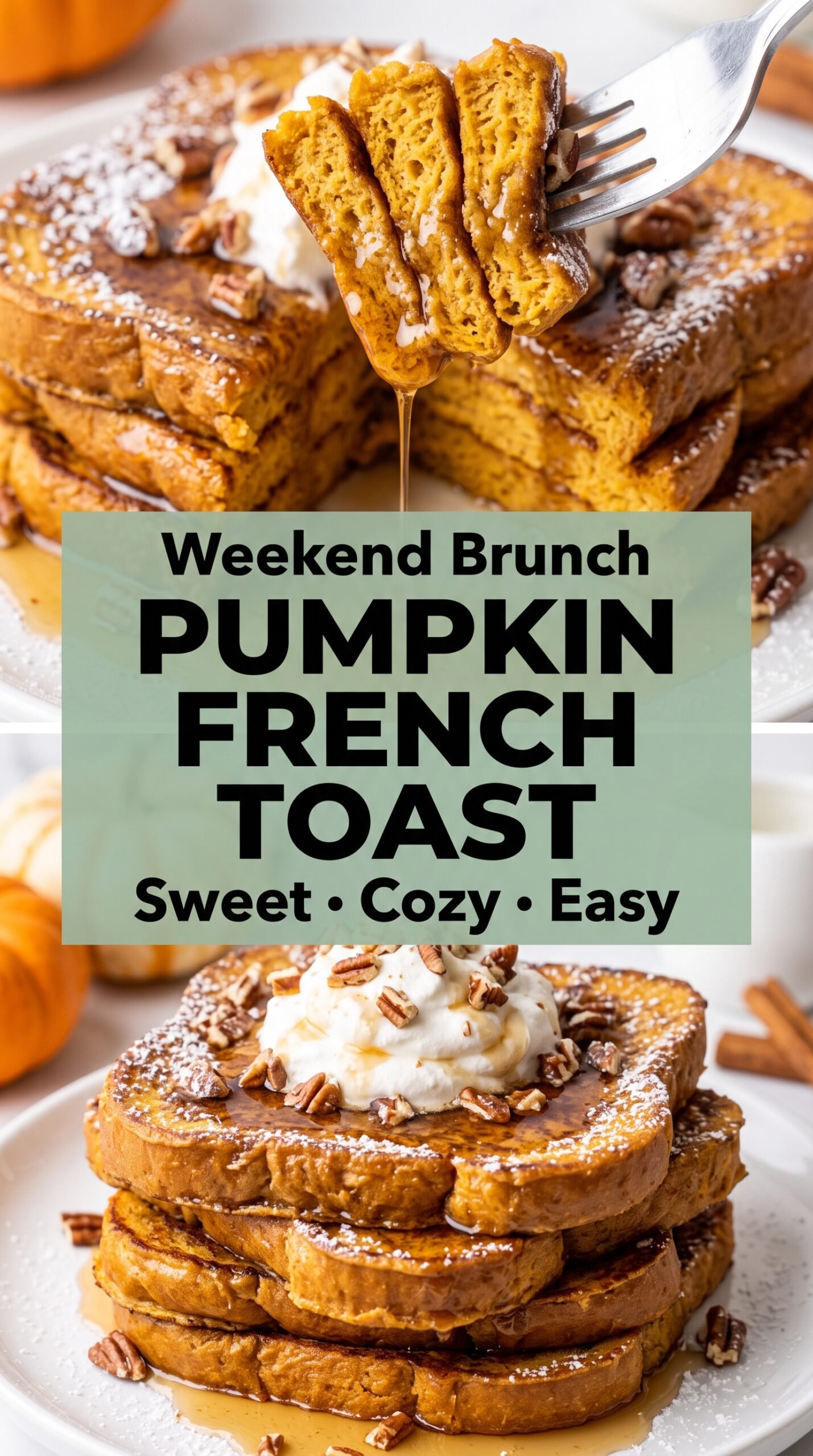
The Custard Needs Bread That Can Take a Soak
Pumpkin French toast falls apart when the bread is too soft or too thin. The custard in this recipe is richer and thicker than a plain egg-and-milk mix, so it needs slices that can hold their shape after a short soak. Brioche and challah are ideal because their structure keeps the center tender without turning gummy.
The other place people go wrong is heat. If the skillet runs too hot, the outside browns before the custard sets, and you end up with a wet middle. Medium heat gives the eggs time to cook through while the pumpkin sugars and butter develop that deep, toasted crust.
- Thick brioche or challah — The best bread here because it absorbs custard evenly and stays plush. If you only have sandwich bread, use it when it’s slightly stale and cut the soak time down so it doesn’t collapse.
- Pumpkin puree — This adds body and a subtle earthy sweetness. Use plain pumpkin puree, not pumpkin pie filling, which is already sweetened and seasoned.
- Whole milk — The fat keeps the custard smooth and gives the French toast a richer finish. You can swap in half-and-half for an even more luxurious result, or use 2% milk if that’s what you have; the toast will still work, just a little less plush.
- Maple syrup — A small amount in the custard echoes the syrup you’ll pour on top and keeps the spice from tasting dusty. Use real maple syrup here, not pancake syrup, because the flavor gets baked into the bread.
- Butter — This is what gives you the crisp, browned exterior. If the pan starts to dry out, add a little more butter between batches so the slices don’t stick and the edges keep browning evenly.
Cooking the Pumpkin Custard Until It Sets, Not Scrambles
Whisk the custard until it’s completely smooth
Start by whisking the eggs, milk, pumpkin puree, maple syrup, vanilla, spices, and salt until there are no streaks of pumpkin left. Any little clumps will show up on the bread and cook unevenly. The mixture should look thick but pourable, like a loose batter. If it sits too long, whisk again before dipping because the pumpkin can settle.
Soak each slice long enough to flavor it, not drown it
Dip the bread for about 20 to 30 seconds per side. You want the custard to work into the crumb without saturating the whole slice to the point where it tears when you lift it. If the bread is extra fresh, it may need a few extra seconds; if it’s very soft, shorten the soak and let the skillet do more of the work.
Cook over medium heat until the center is set
Melt the butter in a skillet or griddle and lay the bread down once it shimmers. Cook each side for 3 to 4 minutes until deep golden and the surface looks dry around the edges. If the slices brown too fast, lower the heat; if they stay pale after several minutes, the pan isn’t hot enough. The finished toast should spring back lightly when pressed in the center.
Serve while the crust is still crisp
Move the French toast to a platter as each batch finishes and keep it warm in a low oven if needed. The crust softens as it sits, so this is best served right away with warm maple syrup, powdered sugar, and pecans. If you want whipped cream or orange slices on top, add them at the table so they stay fresh and bright.
Three Ways to Make It Fit What You Have
Dairy-Free Pumpkin French Toast
Use an unsweetened oat milk or almond milk and swap the butter for a neutral oil or plant-based butter. Oat milk gives the closest texture because it has a little body, while almond milk makes the custard slightly lighter. The toast still browns well, but the finished slices won’t taste quite as rich.
Gluten-Free Version
Use a sturdy gluten-free brioche-style bread if you can find it, or any thick sliced loaf that toasts well. Gluten-free bread usually absorbs custard faster, so shorten the dip time and handle the slices gently when flipping. The flavor stays the same, but the texture works best when the bread is toasted a touch more deeply.
Extra-Spiced Brunch Version
Add a little extra cinnamon and a pinch of cardamom if you want the spice to read louder against the maple syrup. Cardamom gives the toast a bakery-style warmth, but keep it subtle so it doesn’t overpower the pumpkin. This version works well when you’re serving it with coffee or a big brunch spread.
Storage and Reheating
- Refrigerator: Store leftovers in an airtight container for up to 3 days. The crust softens as it rests, but the flavor stays good.
- Freezer: It freezes well. Cool the slices completely, layer them with parchment, and freeze in a sealed bag for up to 2 months.
- Reheating: Reheat in a 350°F oven or toaster oven until warm and lightly crisp again. The biggest mistake is using the microwave, which makes the bread spongy and mutes the browned edges.
Questions I Get Asked About This Recipe
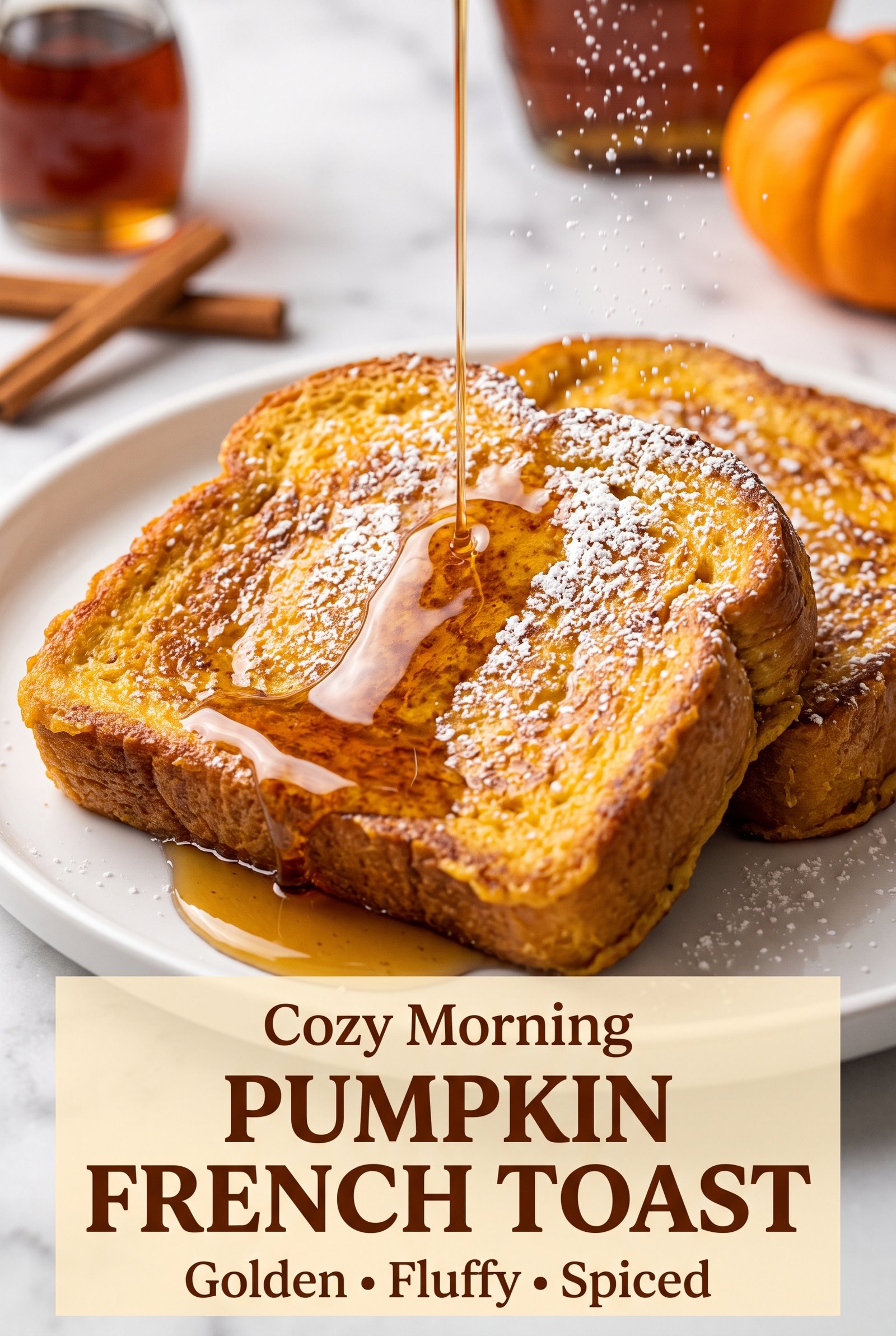
Pumpkin French Toast
Ingredients
Equipment
Method
- Whisk together the eggs, whole milk, pumpkin purée, pure maple syrup, vanilla extract, pumpkin pie spice, ground cinnamon, ground nutmeg, and salt in a shallow dish until smooth.
- Dip each slice of thick brioche or challah bread into the pumpkin mixture for 20–30 seconds per side, allowing the bread to absorb the custard without becoming overly soft.
- Heat 1 tablespoon of unsalted butter in a large skillet or griddle over medium heat until melted and lightly foaming.
- Cook each soaked slice for 3–4 minutes per side, adding the remaining unsalted butter as needed, until each piece is deep golden brown and cooked through.
- Transfer the pumpkin French toast to a serving platter or sheet pan and keep warm while cooking the remaining slices.
- Serve immediately with warm maple syrup, a dusting of powdered sugar, chopped pecans, whipped cream if desired, and fresh orange slices if desired.
