
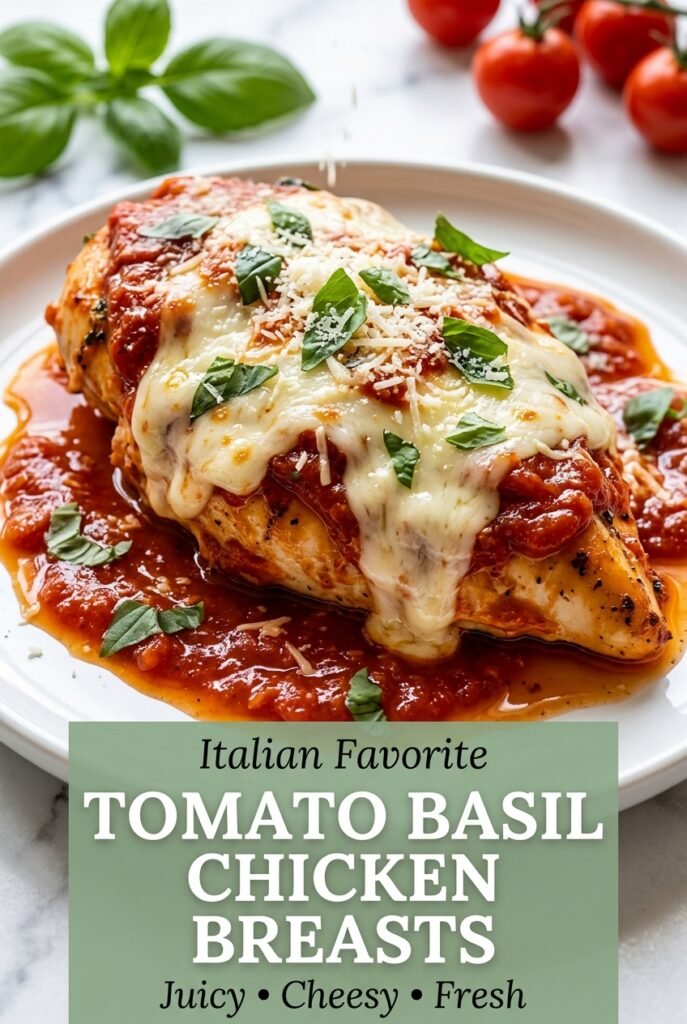
Tomato Basil Chicken Breasts
Tomato Basil Chicken Breasts hit that sweet spot between weeknight simple and dinner-party worthy. The chicken stays juicy under a layer of bright tomato-garlic sauce, and the mozzarella melts into…
Tip: save now, read later.
Tomato Basil Chicken Breasts hit that sweet spot between weeknight simple and dinner-party worthy. The chicken stays juicy under a layer of bright tomato-garlic sauce, and the mozzarella melts into a stretchy, savory blanket that pulls the whole pan together. It tastes like you worked harder than you did.
What makes this version work is the order. Searing the chicken first builds flavor in the pan, then the tomatoes go in with just enough broth to loosen everything into a sauce that clings instead of turning watery. Fresh basil gets stirred in near the end so it stays fragrant, and the cheese goes on after the sauce has had a chance to reduce a little. That keeps the topping creamy instead of greasy.
Below, I’ve included the timing cues that matter most, plus a few swaps for when you want to stretch the dish, lighten it up, or make it fit what you already have in the kitchen.
The sauce thickened up beautifully and the basil stayed fresh-tasting instead of getting lost. I served it over pasta and the chicken stayed juicy even after baking.
Love juicy chicken with melted mozzarella and tomato basil sauce? Save this skillet dinner for the nights when you want something cozy without a sink full of dishes.
The Sear Is Doing More Than Browning the Chicken
With a skillet recipe like this, the biggest mistake is treating the chicken and sauce like separate jobs. They’re not. The browned bits left behind after searing are what give the tomato sauce depth, and if you rush past that step, the sauce tastes flat no matter how much garlic and basil you add.
The other place people go wrong is cooking the tomatoes too fast. Cherry tomatoes need a few minutes in the pan to soften and burst before the sauce gets that glossy, spoonable texture. If the skillet is too hot, the garlic can burn before the tomatoes even start to break down. Keep the heat at a steady medium and let the pan work.
- The chicken gets better color when it starts completely dry. Moisture is the enemy of a proper sear.
- The sauce should simmer until the juices look slightly reduced and the tomatoes slump. That’s the point where it will cling to the chicken instead of running to the bottom of the plate.
- Adding the cheese too early can make it oily. Wait until the chicken goes back into the skillet so the sauce is already in place.
What Each Ingredient Is Actually Doing in This Dish

- Chicken breasts — Boneless, skinless breasts give you a lean, quick-cooking base, but they need even thickness or they’ll dry out before the center is done. Pounding the thick end a little helps the whole piece cook at the same pace.
- Cherry tomatoes plus diced tomatoes — The cherry tomatoes bring sweetness and shape, while the canned diced tomatoes build the body of the sauce. Draining the can keeps the sauce from turning soupy.
- Fresh basil — This is not just garnish. Stirring it in near the end gives the dish that clean, peppery finish dried basil can’t match. If you only have dried, use a smaller amount earlier in the simmering stage, but the flavor will be more muted.
- Mozzarella and Parmesan — Mozzarella gives the melt, Parmesan sharpens the sauce and keeps the topping from tasting one-note. Pre-shredded mozzarella works here, though freshly grated Parmesan melts and tastes better.
- Chicken broth — Just a splash helps deglaze the pan and loosen the tomatoes into sauce. Water will work in a pinch, but it won’t bring the same savory backbone.
Building the Sauce Before the Cheese Goes On
Seasoning and Searing the Chicken
Pat the chicken dry before you season it. That dry surface is what gives you a deep golden crust instead of pale chicken that steams in the pan. Let the oil heat until it shimmers, then add the chicken and leave it alone long enough to develop color. If it sticks at first, it usually needs another minute; once it sears properly, it releases more cleanly.
Softening the Tomatoes Into Sauce
After the chicken comes out, the garlic goes into the same skillet for a short, fragrant bloom. Stir it for just 30 seconds, then add the tomatoes and broth. You want a lively simmer, not a hard boil. The tomatoes should collapse, the juices should thicken, and the pan should smell sweet and garlicky instead of sharp.
Finishing With Cheese in the Oven
Return the chicken to the skillet and spoon the sauce over the top before adding the mozzarella and Parmesan. This keeps the cheese anchored on the chicken instead of melting into the pan. Bake just until the cheese is melted and the chicken reaches 165°F in the thickest part. Overbaking is the fastest way to lose the juicy texture that makes this dish worth making.
Three Ways to Work This Into Your Week
Make it dairy-free without losing the saucy finish
Skip the mozzarella and Parmesan, then finish with a drizzle of good olive oil and a few extra basil leaves. The dish loses the stretchy top, but the tomato-garlic base still carries plenty of flavor. If you want a little richness back, add a spoonful of dairy-free pesto at the end.
Turn it into a lower-carb dinner
Serve the chicken over zucchini noodles, cauliflower mash, or roasted broccoli instead of pasta. The sauce is naturally low in starch, so you don’t need to change much. Keep the chicken portions modest and the sauce generous so the plate still feels satisfying.
Use chicken thighs for a juicier version
Boneless thighs stay tender even if they cook a little longer, which makes them forgiving if your skillet runs hot. They bring a richer, more savory bite than breasts, though the final dish will feel a little heavier. Add a few extra minutes in the oven if needed and still check for doneness with a thermometer.
Storage and Reheating
- Refrigerator: Store leftovers in an airtight container for up to 3 days. The chicken stays tasty, though the cheese softens more as it sits.
- Freezer: It freezes, but the mozzarella texture changes after thawing. If you plan to freeze it, do it without the fresh basil garnish and expect a softer sauce when reheated.
- Reheating: Warm it covered in a 325°F oven until heated through, or use a skillet over low heat with a splash of broth. High heat dries out the chicken and makes the cheese separate.
Answers to the Questions Worth Asking
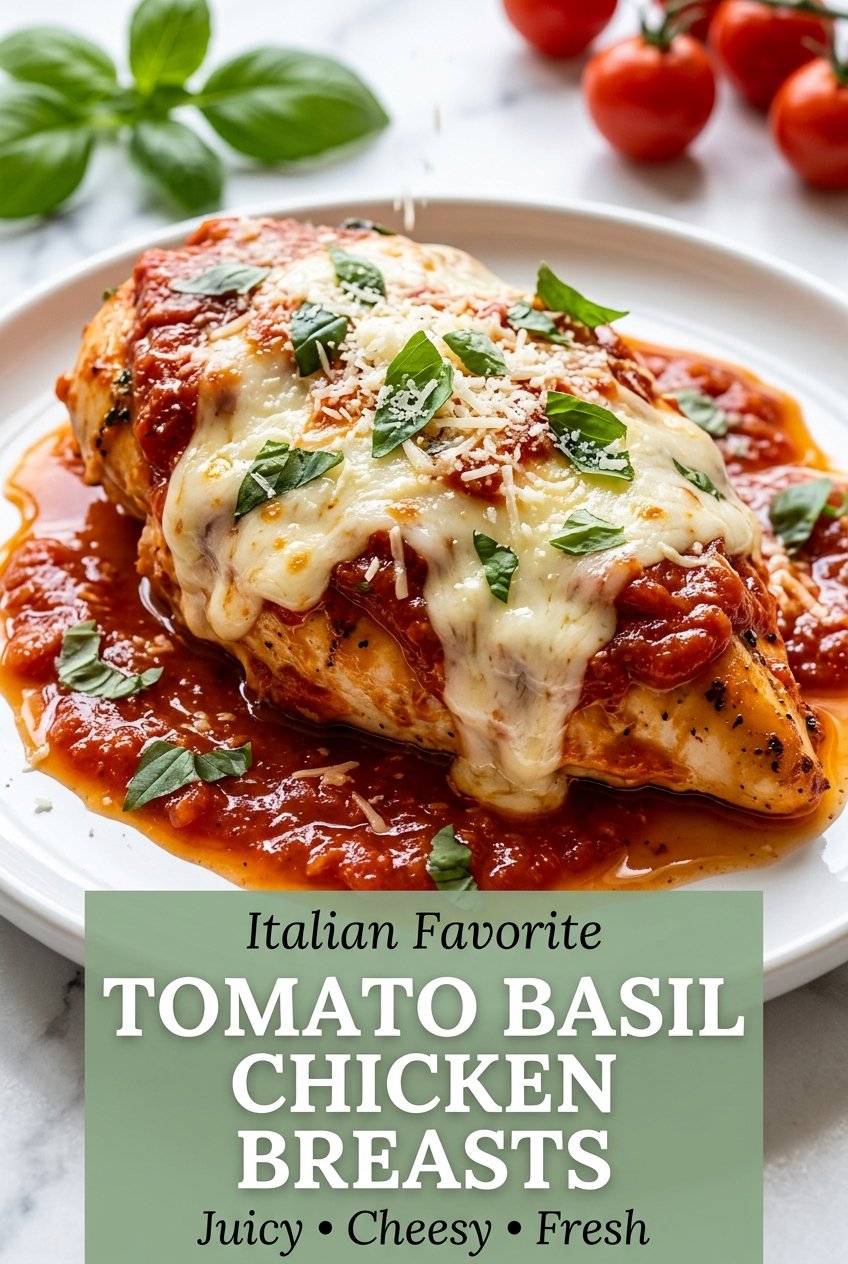
Tomato Basil Chicken Breasts
Ingredients
Equipment
Method
- Pat the chicken breasts dry, then season both sides with kosher salt, black pepper, garlic powder, Italian seasoning, and smoked paprika.
- Heat 2 tablespoons of olive oil in a large oven-safe skillet over medium-high heat until shimmering.
- Sear the chicken for 5–6 minutes per side until golden brown; transfer the chicken to a plate.
- Add 1 tablespoon of olive oil to the skillet and sauté the garlic for 30 seconds until fragrant.
- Stir in the cherry tomatoes, diced tomatoes (drained), Italian seasoning, crushed red pepper flakes, and chicken broth.
- Simmer for 5–7 minutes until the tomatoes soften and the sauce thickens slightly.
- Stir in the chopped fresh basil.
- Return the chicken to the skillet and spoon the tomato sauce over each breast.
- Sprinkle the mozzarella and Parmesan evenly over the chicken.
- Transfer the skillet to a 400°F oven and bake for 10–12 minutes until the cheese is melted and bubbly and the chicken reaches an internal temperature of 165°F.
- Garnish with fresh basil leaves, additional freshly grated Parmesan cheese, and cracked black pepper before serving.
