

Classic Cubano Sandwich
The first press tells you whether the heat is right: the bread should turn golden while the cheese softens, not darken before the middle warms. I keep the skillet over…
Tip: save now, read later.
The first press tells you whether the heat is right: the bread should turn golden while the cheese softens, not darken before the middle warms. I keep the skillet over medium-low and work in pairs, pressing each sandwich with a second heavy skillet. That steady contact gives a crisp crust without flattening the filling into a thin layer.
For these classic Cubano sandwiches, I roast a whole pork shoulder in orange-and-lime mojo, then slice only what I need for the rolls. Shoulder takes longer than a lean roast, but it rewards that patience with tender slices that hold up against ham, Swiss, and dill pickles.
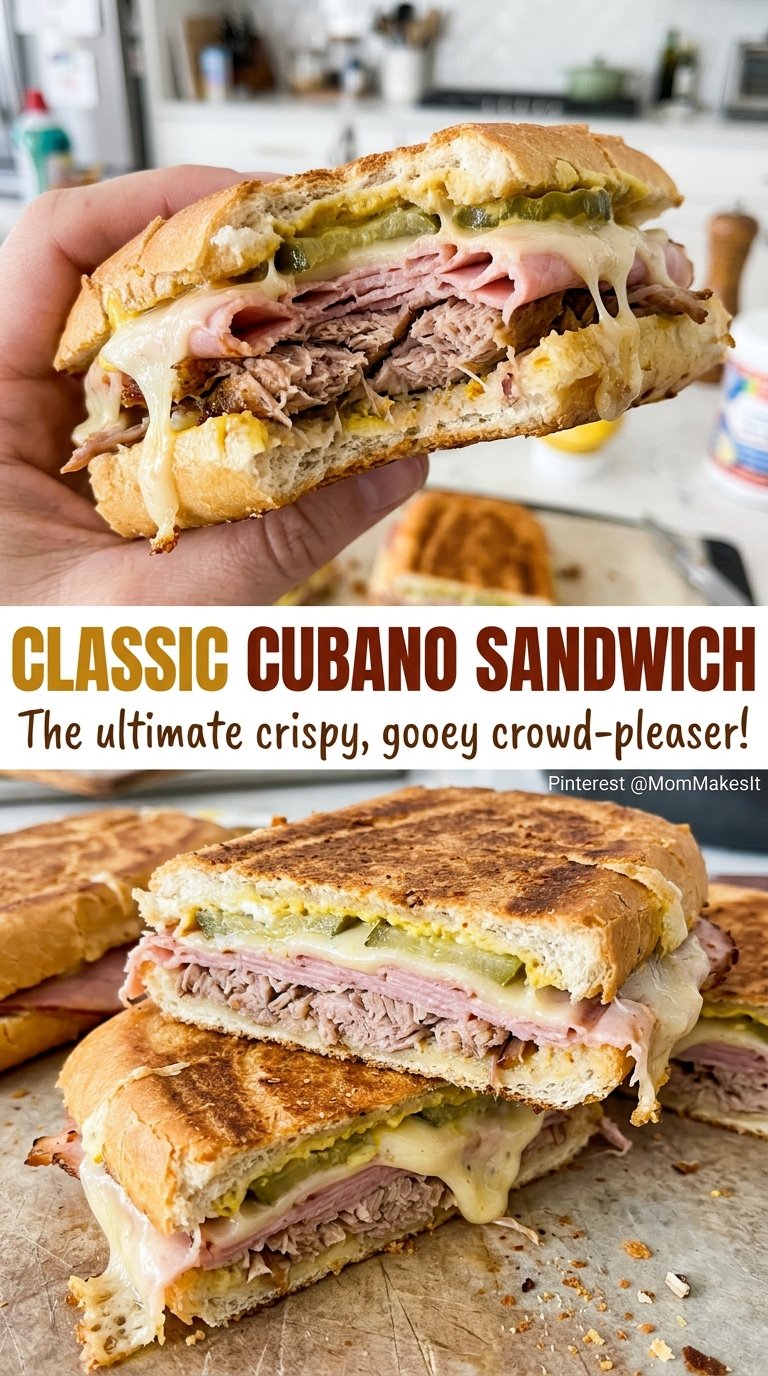
The layers bring their own balance: mustard adds a sharp edge, the pickles cut through the rich pork, and melted Swiss helps everything settle into the warm roll. Once the outside is crisp and the cheese has melted, each bite has a little tang, a little salt, and plenty of tender mojo pork.

Kitchen Note
Give the pork its full 20-minute rest in the Dutch oven before slicing. Cutting into it right away lets more of the juices run out onto the board instead of staying with the meat.
Save this Classic Cubano Sandwich for its crisp pressed bread, tangy pickles, and tender mojo pork.
Why Cubano Pork Has to Go Past the Usual Roast Finish
A pork shoulder can look cooked long before it feels ready to slice. If you stop at the point you might choose for a lean roast, the shoulder can still be tight and chewy. Its connective tissue needs time at a higher temperature to soften, which is what makes the finished meat tender rather than merely cooked through.
For this sandwich, look for both signs: the pork should reach 195°F to 205°F and feel fork-tender. The temperature gives you a useful range, but the fork tells you whether the texture has caught up. If the meat resists when you test it, it hasn’t reached the texture this sandwich needs.
That tender texture matters once the pork is sliced and pressed between the other fillings. The sandwich gets only a few minutes in the skillet, so that short press isn’t meant to finish cooking a firm roast. Starting with pork that yields easily keeps the filling tender while the bread crisps around it.
What the Mojo, Swiss, and Pickles Each Bring to the Press
- Pork shoulder — Boneless shoulder is the right cut for a long, covered roast because it becomes fork-tender with time. A lean loin won’t give you the same yielding texture under this method.
- Orange juice, lime juice, and garlic — Together they give the mojo its bright, savory aroma. Fresh juice has a livelier edge, while bottled juice works when that’s what you have; mince the garlic finely so it disperses through the marinade.
- Oregano and cumin — Dried oregano and ground cumin season the pork without crowding the citrus. Use the ground cumin called for here; whole seeds won’t distribute the same way through the marinade.
- Cuban rolls — Their soft interior compresses under the skillet while the outside turns crisp. If Cuban rolls aren’t available, soft French rolls of a similar size are a practical stand-in, though their crust tends to be chewier.
- Swiss cheese and deli ham — Sliced Swiss melts easily into the filling, and thin deli ham keeps the layers from becoming bulky. Emmental can stand in for Swiss with a slightly nuttier taste; choose thinly sliced ham rather than thick-cut pieces.
- Dill pickle chips — Drain them well before layering so extra brine doesn’t run into the bread. Dill sandwich slices cut into smaller pieces work if chips aren’t on hand; sweet pickles change the sandwich’s balance.
- Yellow mustard and softened butter — Yellow mustard brings a mild tang on the cut sides of the rolls. Dijon can replace it in the same quantity for a sharper bite, and softened butter spreads more evenly over the outside than cold butter.
Marinating, Roasting, and Pressing Without Drying the Sandwich
Coating the Pork in Mojo
Whisk the orange juice, lime juice, olive oil, minced garlic, oregano, cumin, kosher salt, and black pepper in a 5- to 6-quart Dutch oven. Add the pork shoulder and turn it until the marinade coats the roast. Cover and refrigerate it for 8 to 24 hours, turning the roast once during that time. Keeping the roast whole makes it easier to handle and helps it stay intact through the long cook.
Roasting Until the Shoulder Yields
Heat the oven to 325°F, then roast the pork covered for 2 1/2 to 3 1/2 hours. The meat should reach 195°F to 205°F and be fork-tender, not just browned on the surface. Keep the Dutch oven covered as it roasts so the pork cooks in the moist environment created by the marinade. If the fork still meets resistance, use tenderness—not the clock alone—as your cue.
Resting and Slicing Across the Grain
Leave the roast in the Dutch oven to rest before you slice it. Set aside 12 ounces of pork for the sandwiches, and cut those slices thinly across the grain. Slicing across the visible muscle fibers shortens them, making each piece easier to bite through inside the pressed roll. Keep the remaining pork separate for another use.
Layering and Pressing Two at a Time
Split the Cuban rolls and spread the cut sides with yellow mustard. Layer Swiss cheese, ham, sliced mojo pork, and drained pickle chips inside each roll, using two slices of cheese per sandwich. Spread softened butter over the outsides, then heat a 12-inch skillet over medium-low. Cook two sandwiches at a time with a second heavy skillet pressing on top, for 3 to 4 minutes per side, until the bread is golden and crisp and the cheese has melted.
Three Useful Swaps for Classic Cubano Sandwiches
Use soft French rolls when Cuban rolls are hard to find
Choose rolls close to the same size so the filling-to-bread balance stays similar. Their crust is usually chewier, so the pressed sandwich will have a sturdier bite than one made with a soft Cuban roll.
Make the sandwich dairy-free with plant-based swaps
Replace the Swiss with dairy-free Swiss-style slices and use plant-based butter on the outside of the rolls. The sandwich keeps its crisp pressed format, though the dairy-free slices may melt less smoothly than Swiss.
Make a gluten-free version with sturdy rolls
Use gluten-free rolls that can hold a filling without crumbling, and handle them gently when splitting and pressing. They often brown and crisp differently from Cuban rolls, so watch the bread closely as it cooks.
Storage and Reheating
- Refrigerator: Refrigerate leftover pork or sandwiches within 2 hours and use within 3 to 4 days. The bread softens as it sits, especially if the pickles are already inside.
- Freezer: Freeze the cooked pork in an airtight container for 2 to 3 months. Don’t freeze assembled sandwiches; the bread and pickles turn soft after thawing.
- Reheating: Reheat leftover pork to 165°F, then build and press the sandwich in a skillet. For an already assembled sandwich, use a skillet over medium-low heat rather than the microwave, which softens the bread.
Questions That Come Up Before the First Cubano Press
Classic Cubano Sandwich
Ingredients
Equipment
Method
- Whisk the orange juice, lime juice, olive oil, garlic, oregano, cumin, salt, and pepper in a 5- to 6-quart Dutch oven.
- Add the pork and turn to coat; cover and refrigerate for 8 to 24 hours, turning the roast once.
- Heat the oven to 325°F.
- Roast the pork, covered, for 2 1/2 to 3 1/2 hours, until it reaches 195°F to 205°F and is fork-tender.
- Rest the pork in the Dutch oven for 20 minutes.
- Slice 12 ounces thinly across the grain for the sandwiches.
- Split the rolls and spread the cut sides with mustard.
- Layer Swiss cheese, ham, sliced pork, and pickle chips inside each roll, using 2 slices of cheese per sandwich.
- Spread butter on the outsides of the rolls.
- Heat a 12-inch skillet over medium-low heat.
- Cook 2 sandwiches at a time, pressing them with a second heavy skillet, for 3 to 4 minutes per side, until the bread is golden and crisp and the cheese is melted.
