

Classic Eggplant Parmesan
When the eggplant hits hot oil, the coating should sizzle right away and turn golden before the slices have time to soak up much oil. That’s the part I watch…
Tip: save now, read later.
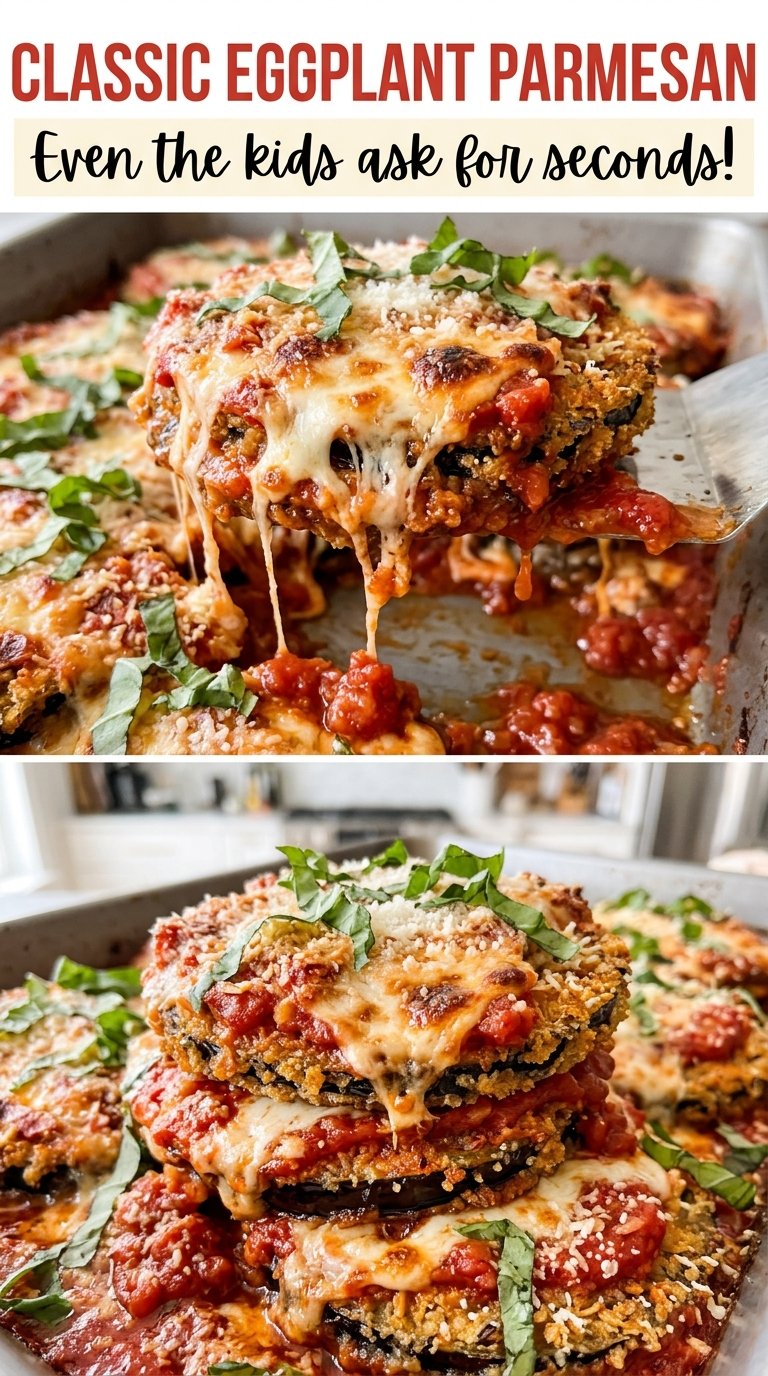
When the eggplant hits hot oil, the coating should sizzle right away and turn golden before the slices have time to soak up much oil. That’s the part I watch closely when I make classic eggplant Parmesan: a well-browned crust gives the layers some backbone under the tomato sauce and melted cheese.
I keep the rounds at a steady half-inch thickness and bread them in order, so the flour, egg, and Italian-seasoned crumbs cling in an even coat. The sauce simmers separately while I fry, then the layers go into one baking dish. You get tender eggplant, bubbling tomato sauce, and cheese browned in spots without turning the whole dish into a soft, heavy stack.

Kitchen Note
I get the cleanest portions when I give the dish the full 15-minute rest after baking. The bubbling sauce settles and the cheese firms just enough for the layers to hold together when you serve it.
Save this classic eggplant Parmesan for a night when you want crisp, breaded rounds tucked between tomato sauce and golden cheese.
Why the Breaded Eggplant Goes Soft Before the Cheese Turns Golden
Eggplant Parmesan gets soggy when the breaded slices go into the dish pale or the layers are buried under too much sauce. Frying each round until it’s golden first gives the coating a head start. It won’t stay crisp like a plain fried slice once it’s layered and baked, but it should keep its shape and offer a little texture against the tender eggplant and sauce.
The assembly matters, too. A cup of sauce on the bottom keeps the first layer from sticking, while the eggplant and cheese build the body of the dish. Spoon the sauce over the layers rather than flooding them; the sauce should accompany the breaded rounds, not wash their coating away. The 9×13-inch dish gives the eggplant room to sit in layers instead of being packed into a deep, crowded stack. If the sauce is still thin after simmering, give it the full cooking time so it thickens before assembly.
Why Low-Moisture Mozzarella and Fine Parmesan Matter Here
- Eggplant — Choose firm, unbruised eggplants that feel heavy for their size. The rounds need to hold their shape through breading, frying, and baking; patting their cut surfaces dry helps the flour coat them instead of clumping. There’s no need to buy the largest eggplants you see if they’re soft or marked.
- Italian-seasoned breadcrumbs — They bring both the coating and its seasoning, so each slice has more going on than a plain crumb crust. Press them on gently after dipping in the egg so they adhere without packing the coating into a dense shell. For a gluten-free version, use gluten-free flour and Italian-seasoned gluten-free breadcrumbs in the same breading order.
- Low-moisture mozzarella — This melts into the layers without releasing as much liquid as fresh mozzarella. A standard grocery-store package works well; there’s no need to seek out specialty cheese. Smoked low-moisture mozzarella is a useful swap if you want a gentle smoky note, though it will make the dish taste less traditional.
- Parmesan — Finely grated cheese spreads evenly between the eggplant and melts into the sauce, rather than leaving large, chewy shreds. A wedge grated at home has a more pronounced savory taste, but a good-quality finely grated Parmesan is convenient and works. Keep the texture fine so it distributes through the layers.
- Crushed tomatoes — Canned crushed tomatoes give the sauce a consistent base and thicken as they simmer uncovered. A basic can is fine here; you don’t need a premium variety. Whole or diced tomatoes won’t give the same smooth, spoonable sauce without changing the texture.
- Vegetable oil — Use a neutral oil for frying so the eggplant and seasoned crumbs stay at the center of the flavor. Regular vegetable oil is the practical choice; an expensive oil won’t improve this part of the dish.
Fry Each Round Before You Build the Layers
Let the Garlic and Tomatoes Simmer
Warm the olive oil in a medium saucepan over medium heat, then add the minced garlic and stir for about 30 seconds, just until fragrant. Don’t let it brown; browned garlic can taste bitter in the finished sauce. Stir in the crushed tomatoes, oregano, kosher salt, and black pepper, then bring the sauce to a gentle simmer. Cook it uncovered for 15 to 20 minutes, stirring occasionally, until it looks slightly thickened rather than watery.
Set Up a Clean Breading Line
Cut the eggplants crosswise into half-inch rounds and pat them dry with paper towels. Set out three shallow dishes: flour in the first, eggs beaten with water in the second, and breadcrumbs in the third. Coat each round in flour, dip it in the egg mixture, then cover it with breadcrumbs, pressing gently so the crumbs stick. Keep the coating even; bare patches are where the eggplant can fry unevenly.
Fry Until the Coating Is Golden
Heat the vegetable oil in a 12-inch skillet to about 350°F and work in batches. If the skillet is crowded, the rounds won’t brown as evenly, so leave space around them as they fry. Cook each round for 2 to 3 minutes per side, looking for a golden-brown coating rather than a pale, soft crust. Transfer the cooked eggplant to a wire rack set over a baking sheet while you finish the remaining batches.
Layer in the 9×13-Inch Dish and Bake
Heat the oven to 375°F and spread 1 cup of sauce across the bottom of a 9×13-inch baking dish. Arrange half the eggplant over it, spoon about 1 cup of sauce on top, and add half the mozzarella and Parmesan; repeat with the remaining eggplant, sauce, and cheeses. Bake for 25 to 30 minutes, until the sauce bubbles and the cheese is golden in spots. Scatter the chopped basil over the top after baking.
Two Swaps That Change the Dish Without Losing Its Structure
Make It Gluten-Free
Replace the all-purpose flour with gluten-free all-purpose flour and use Italian-seasoned gluten-free breadcrumbs. Bread and fry the rounds the same way; the coating will still give the eggplant a crisp, savory outside, though the exact browning can vary by brand.
Use Smoked Mozzarella for a Smoky Edge
Swap the low-moisture mozzarella for smoked low-moisture mozzarella and keep the Parmesan as it is. The cheese will still melt into the layers, but its smoke comes through in every bite and nudges the casserole away from the classic flavor.
Storage and Reheating
- Refrigerator: Keep leftovers covered for 3 to 4 days. The breading softens as it sits, but the flavors settle together.
- Freezer: Freeze portions in airtight containers for up to 3 months. Thaw them overnight in the refrigerator; the eggplant will be softer after freezing.
- Reheating: Cover a portion with foil and warm it in a 350°F oven until hot throughout. Remove the foil near the end if you’d like the cheese to dry out and brown a little; microwaving works, but makes the coating softer.
The Eggplant Parmesan Questions That Come Up at the Stove
Classic Eggplant Parmesan
Ingredients
Equipment
Method
- Heat the olive oil in a medium saucepan over medium heat.
- Add the garlic and cook for about 30 seconds, stirring, until fragrant.
- Stir in the crushed tomatoes, dried oregano, kosher salt, and black pepper; bring to a gentle simmer and cook uncovered for 15 to 20 minutes, stirring occasionally, until slightly thickened.
- Pat the eggplant rounds dry with paper towels. Set up three shallow dishes with the all-purpose flour, eggs beaten with the water, and Italian-seasoned breadcrumbs.
- Coat each eggplant round in flour, dip it in the egg, then coat it in breadcrumbs, pressing gently so the crumbs adhere.
- Heat the vegetable oil in a 12-inch skillet to about 350°F, working in batches. Fry the eggplant for 2 to 3 minutes per side until golden brown, then drain on a wire rack set over a baking sheet.
- Heat the oven to 375°F and spread 1 cup of sauce in the bottom of a 9x13-inch baking dish.
- Arrange half the eggplant in the dish, spoon over about 1 cup of sauce, and sprinkle with half the mozzarella and Parmesan. Repeat with the remaining eggplant, sauce, and cheeses.
- Bake for 25 to 30 minutes, until the sauce is bubbling and the cheese is golden in spots. Scatter the fresh basil over the top and let the dish rest for 15 minutes before serving.
