
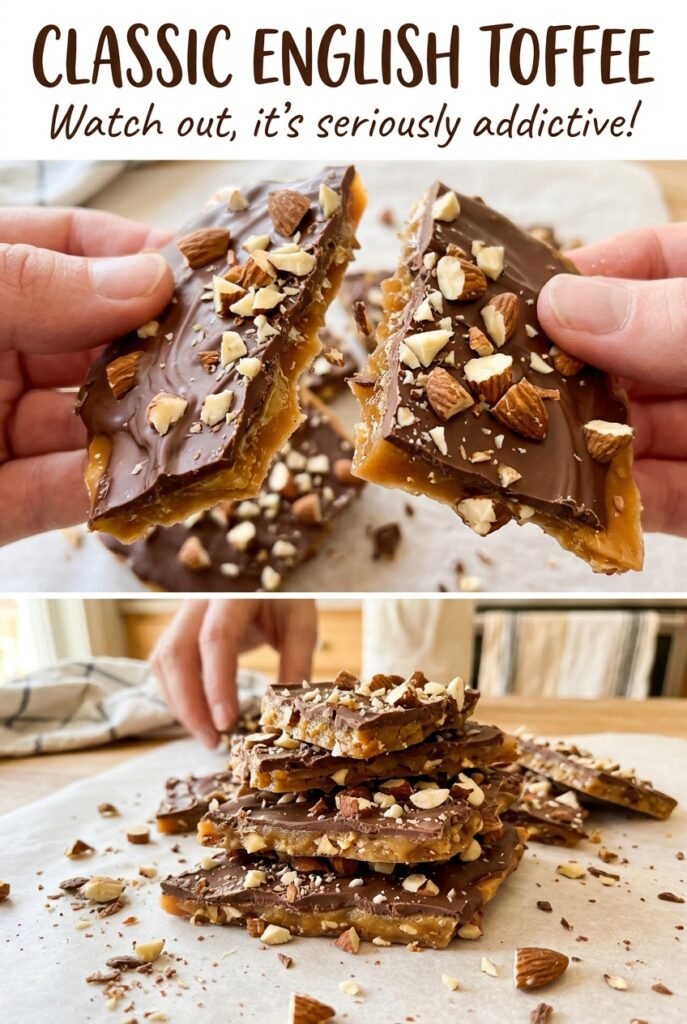
Classic English Toffee
When the butter and sugar are bubbling together, the mixture can look ready long before it will break into crisp pieces. I used to rely on the color, but a…
Tip: save now, read later.
When the butter and sugar are bubbling together, the mixture can look ready long before it will break into crisp pieces. I used to rely on the color, but a candy thermometer gives a much clearer answer: classic English toffee needs to reach 300°F. That temperature is what takes it from soft and sticky to a firm candy with a clean snap.
I keep the pan moving over medium heat and stir constantly, then finish the hot toffee with semisweet chocolate and toasted almonds. The chocolate melts from the heat underneath, so there’s no need to turn on another burner or fuss with a separate sauce. Once the chocolate is spread and the almonds are scattered over the top, the whole pan cools into thin, breakable shards with a buttery center and a crisp finish.
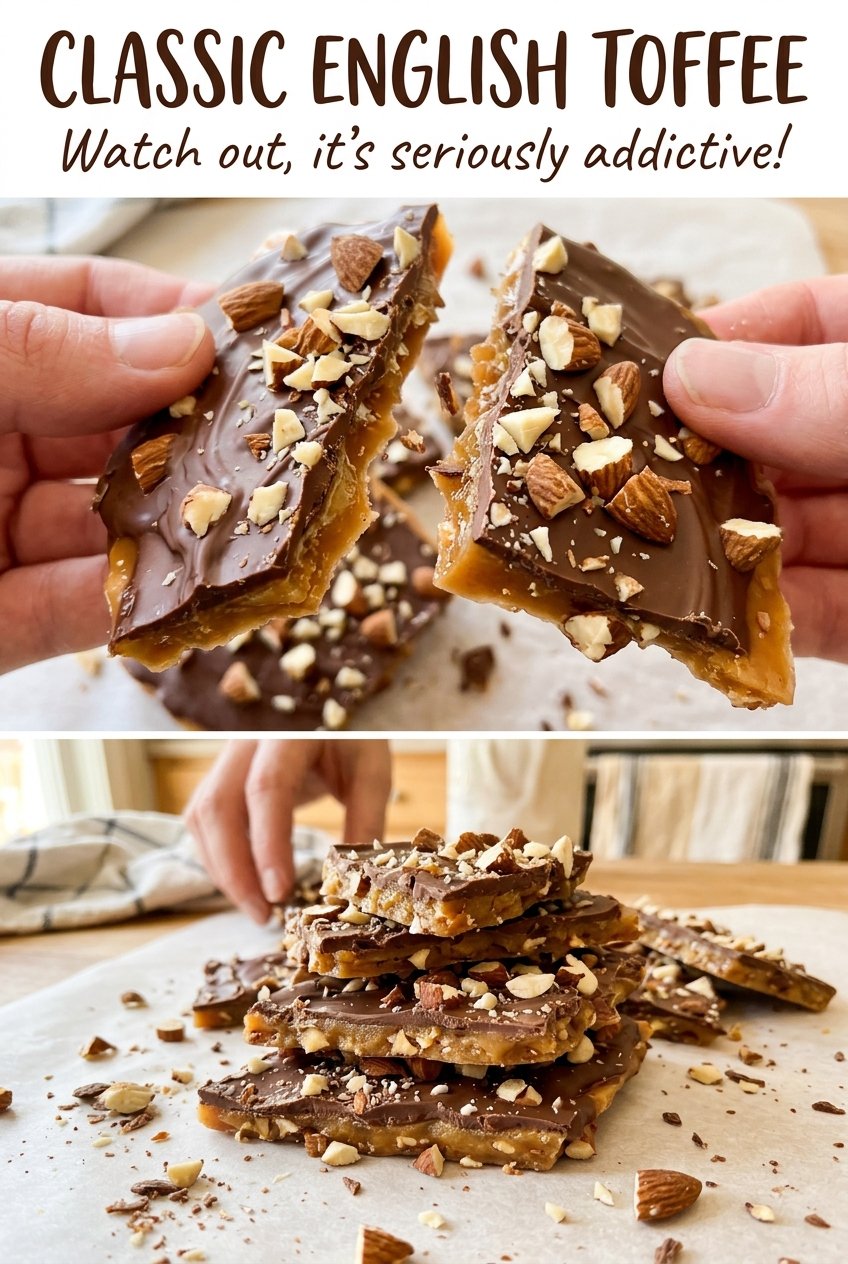
Kitchen Note
I set the prepared pan and topping ingredients within reach before the saucepan goes on the stove. Once the toffee is cooked, there isn’t time to search for the chocolate or almonds.
Save this classic English toffee for a crisp, buttery candy topped with melted chocolate and toasted almonds.
Why 300°F Is the Line Between Crisp Toffee and Sticky Candy
Butter, sugar, and water don’t turn into crisp toffee just because they look thick or deeply colored. The mixture has to reach 300°F, the hard-crack stage, so enough moisture has cooked off for the candy to set firmly as it cools. Stop short and the finished pieces can stay chewy or tacky instead of snapping. Push well past the target and the sugar can taste scorched.
That’s why I treat the thermometer as the deciding cue, not the shade of the mixture. Color can shift with the pan and the stove, and it’s hard to judge the endpoint while you’re stirring. Keep the heat at medium and stir continuously so the mixture heats evenly as the temperature climbs. The 10-to-15-minute window is a useful estimate, but the reading tells you when this batch is ready to leave the stove.
Use a heavy saucepan with enough room to stir comfortably. A steady pace matters more than stirring hard; scrape around the pan as you go so the mixture doesn’t sit undisturbed in one spot. When it reaches 300°F, take it off the heat and move directly into the finishing steps.
What Gives This Toffee Its Buttery Snap and Chocolate-Almond Top
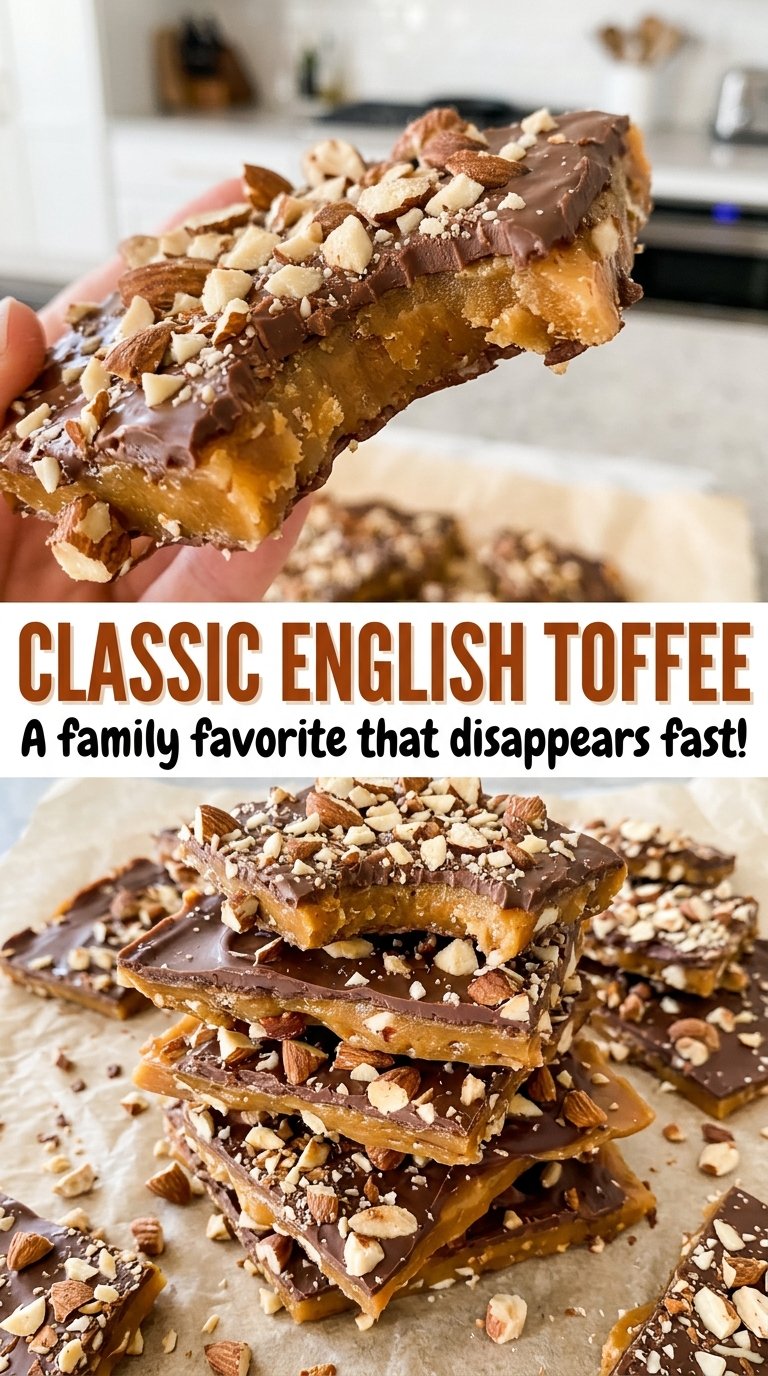
- Unsalted butter — Butter gives the candy its rich, rounded flavor, while using unsalted butter lets you control the salt separately. If salted butter is what you have, use it and leave out the added salt; the salt level in salted butter varies by brand. There’s no need to buy an expensive butter for this batch, but use fresh butter without a stale or freezer-like smell.
- Granulated sugar and water — Granulated sugar sets into the crisp candy structure, and the water helps it dissolve as the mixture heats. Brown sugar isn’t a close swap: its molasses and extra moisture change the flavor and the way the candy cooks. Measure the granulated sugar carefully rather than scooping a packed cup.
- Salt and vanilla extract — The salt keeps the sweet butter and chocolate from tasting one-note. Vanilla adds warmth after the pan comes off the heat, so use an extract you enjoy, though a standard grocery-store bottle works well here.
- Semisweet chocolate chips — Semisweet chocolate gives the topping enough cocoa flavor to balance the candy underneath. A familiar grocery-store bag is fine; choose chips you like eating, since their flavor is easy to notice on the finished pieces.
- Chopped toasted almonds — Toasted almonds bring a dry, crisp crunch against the smooth chocolate. The toasted part matters: raw almonds have a milder, less developed flavor. Chopping them before topping the candy also makes each piece easier to break and bite.
How to Cook the Toffee Without Guessing at the Finish
Prepare the Pan and Cook to the Thermometer Reading
Line a 9×13-inch rimmed metal baking pan with parchment before starting. Put the butter, sugar, water, and salt in a heavy 3-quart saucepan and cook over medium heat, stirring constantly. The mixture will bubble as it cooks; keep stirring rather than raising the heat to hurry it along. It’s ready when the candy thermometer reaches 300°F, usually after 10 to 15 minutes.
Add Vanilla and Spread the Hot Toffee
Take the saucepan off the heat before stirring in the vanilla. The mixture is extremely hot, so stir carefully and keep your hands clear of splashes. Pour it into the prepared pan right away, then spread it evenly across the parchment. Work steadily, since the toffee starts firming as it cools.
Melt the Chocolate and Let the Slab Set
Sprinkle the chocolate chips over the hot toffee and leave them undisturbed for 2 minutes. Spread the softened chocolate into an even layer, then scatter the chopped toasted almonds over the top. Let the pan cool at room temperature until the toffee is completely firm, about 2 hours. Break the set slab into pieces once it feels solid throughout.
Two Simple Ways to Change the Chocolate-Almond Finish
Use bittersweet chips for a darker top
Replace the semisweet chocolate chips with the same amount of bittersweet chips. The finished top tastes less sweet and more cocoa-forward, while the buttery toffee and almond crunch stay the same.
Make a nut-free batch
Leave off the chopped toasted almonds and keep the chocolate topping as it is. You’ll lose the toasted crunch, but the candy still sets into crisp pieces with a smooth chocolate finish.
Storage and Reheating
- Refrigerator: Store in an airtight container for up to 2 weeks. Chilling isn’t necessary, and condensation when the container is opened can make the surface tacky.
- Freezer: Freeze airtight for up to 2 months, with parchment between layers so the pieces don’t stick together. Thaw in the closed container before opening to limit condensation.
- Reheating: No reheating is needed; serve the candy at room temperature. Don’t microwave the pieces, since the chocolate can soften unevenly.
Questions That Come Up When Making English Toffee
Classic English Toffee
Ingredients
Equipment
Method
- Line a 9x13-inch rimmed metal baking pan with parchment paper.
- Combine the butter, sugar, water, and salt in a heavy 3-quart saucepan and cook over medium heat, stirring constantly, until the mixture reaches 300°F on a candy thermometer, about 10 to 15 minutes.
- Remove the pan from the heat.
- Carefully stir in the vanilla.
- Immediately pour the toffee into the prepared pan.
- Spread the toffee evenly.
- Sprinkle the chocolate chips over the hot toffee.
- Let them sit for 2 minutes.
- Spread the melted chocolate evenly.
- Sprinkle the almonds over the chocolate.
- Let the toffee cool at room temperature until completely firm, about 2 hours.
- Break the toffee into pieces.
