
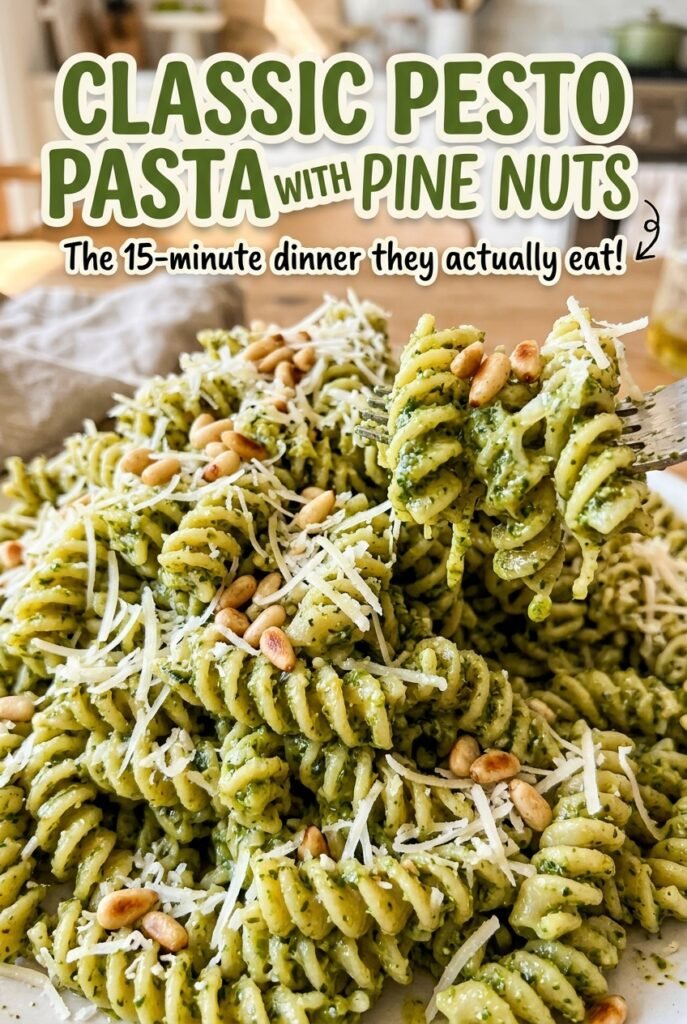
Classic Pesto Pasta with Pine Nuts
When hot spaghetti meets pesto, the basil scent rises before you’ve even finished tossing. The first time I made this, I poured in too much pasta water at once and…
Tip: save now, read later.
When hot spaghetti meets pesto, the basil scent rises before you’ve even finished tossing. The first time I made this, I poured in too much pasta water at once and watched the sauce turn loose and slide to the bottom of the bowl. Now I start with a smaller pour, then add more a tablespoon at a time until every strand looks glossy. That’s the difference between pesto sitting under the pasta and classic pesto pasta with pine nuts that’s evenly coated from the first forkful.
The pesto comes together quickly in a food processor, but the pasta water is what helps it cling. Parmesan and Pecorino Romano bring two kinds of savory depth, while pine nuts round out the basil without taking over. Toss everything in a large serving bowl rather than trying to cook the pesto; the hot spaghetti warms it as you mix. You’ll have a bright, fragrant bowl of pasta for four, with no separate sauce pan to wash.
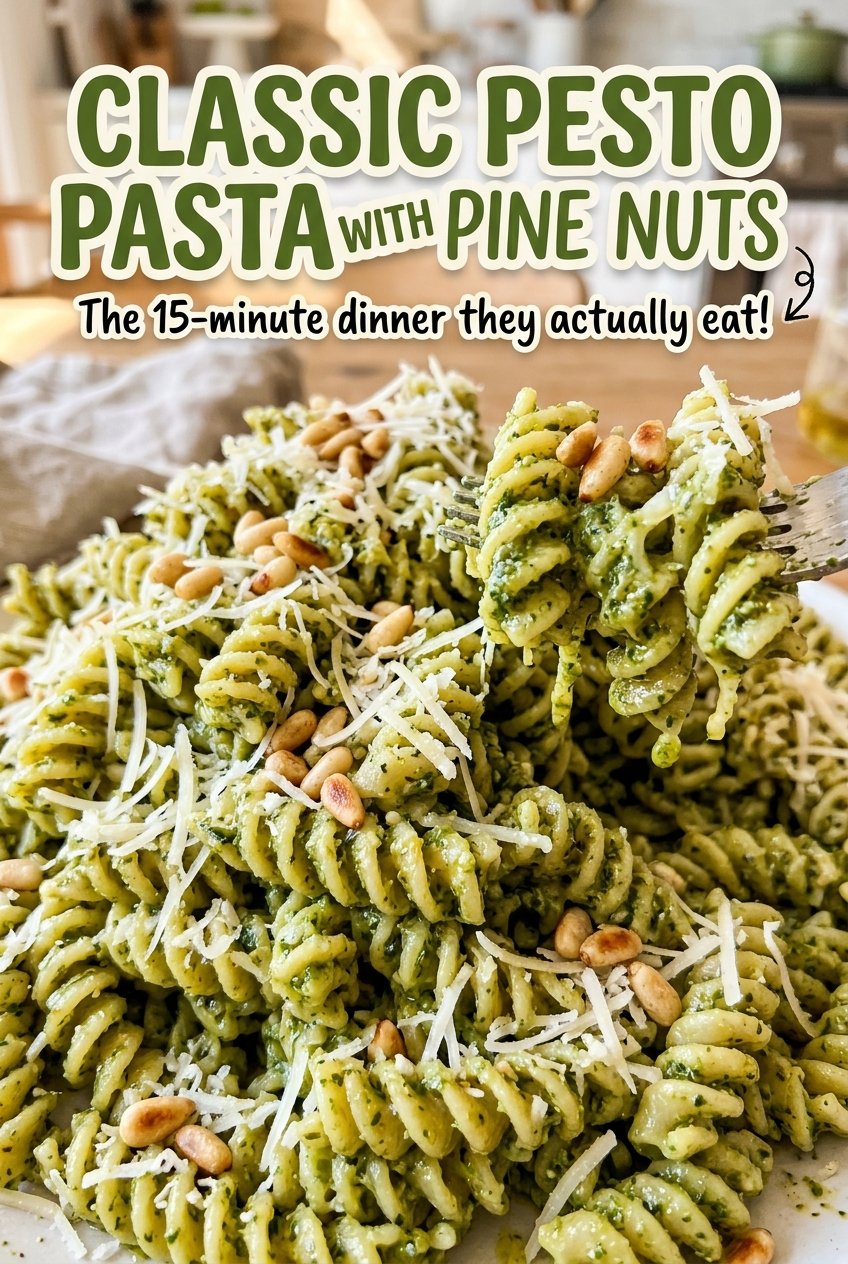
Kitchen Note
Save the pasta water before you drain the spaghetti, even if you think you won’t need it all. Start with the 1/4 cup, then add it a tablespoon at a time; the sauce should cling, not pool in the bottom of the bowl.
Save this classic pesto pasta with pine nuts for a night when you want bright basil flavor and spaghetti coated all the way through.
Why This Pesto Belongs in the Bowl, Not in a Saucepan
Pesto isn’t a sauce that needs to simmer. The basil, cheese, pine nuts, garlic, and olive oil are blended into a fresh, mostly smooth mixture, and the hot pasta brings it to serving temperature as you toss. Putting the pesto over direct heat can dull the fresh basil aroma and leave the oil looking separate. A warm serving bowl gives you room to coat the spaghetti without cooking the pesto further.
The other reason this method works is the pasta water. It carries starch from the spaghetti, so a little can help the oil-based pesto spread into a thin coating instead of gathering in slicks. You’re not aiming for a watery sauce; stop adding liquid when the noodles look evenly dressed and the pesto stays on their surface. If the bowl looks dry as you toss, add another small splash rather than pouring in a large amount all at once.
What the Basil, Two Cheeses, and Pine Nuts Bring to the Pesto
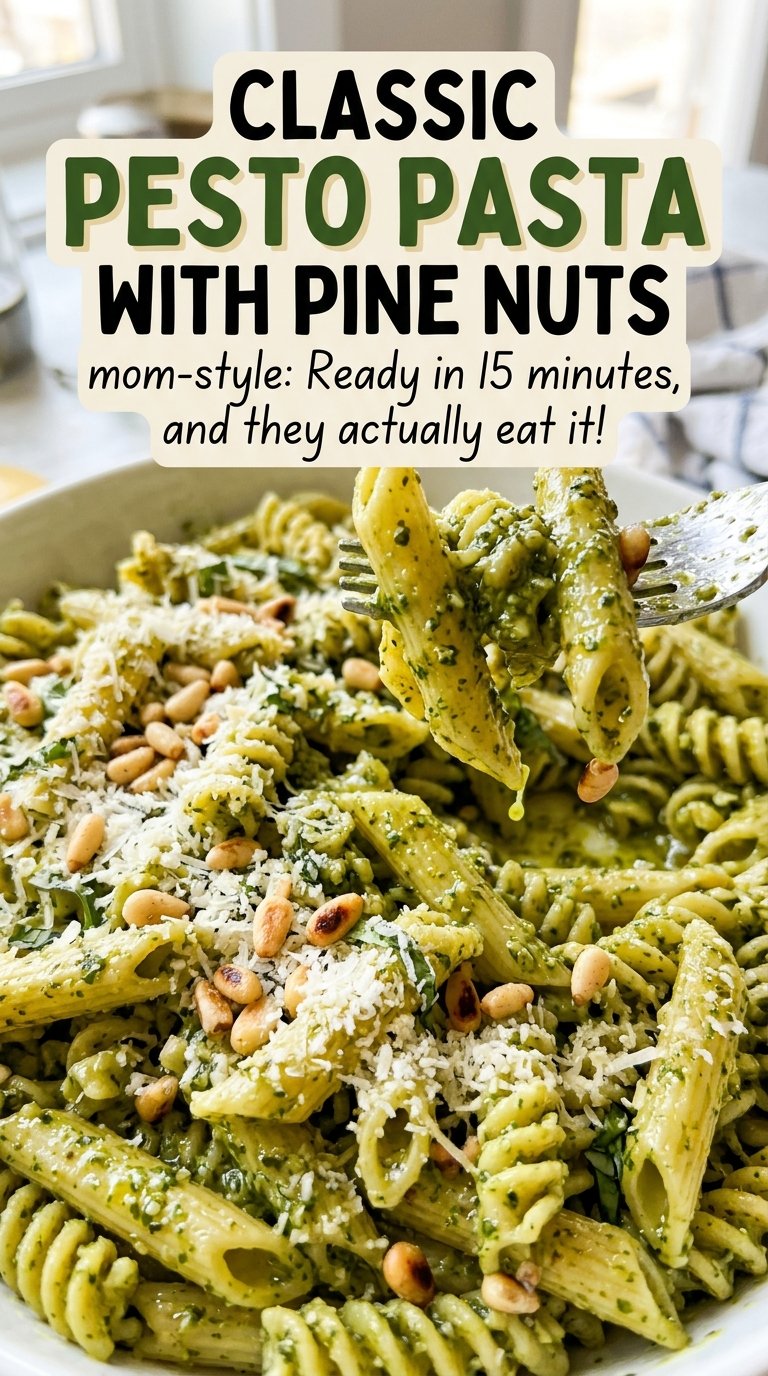
- Fresh basil — It gives the pesto its unmistakable green, herbal character. Choose leaves that look vibrant rather than bruised or limp, and pick off any damaged leaves before processing. If you’re short, replace part of the basil with baby spinach; the pesto will be milder and less aromatic, so keep basil as the main green.
- Pine nuts — Their soft, buttery taste supports the basil without adding a strong competing flavor. Buy fresh pine nuts from a store with good turnover, since older nuts can taste stale or rancid. Walnuts work in the same amount if pine nuts aren’t available, though they make the pesto earthier and less delicate.
- Parmesan and Pecorino Romano — The combination gives the pesto both nutty savoriness and a sharper, saltier edge. Finely grated cheese blends into the oil more evenly than large shreds, so grate it finely before it goes into the processor. Good-quality cheese is worth choosing here because it’s a major part of the sauce; pre-grated cheese is less likely to make a smooth pesto.
- Extra-virgin olive oil — This is the pesto’s body as well as its flavor, so use an oil you enjoy tasting. A harsh or stale oil can dominate the basil. Drizzle it in while the processor runs so it combines gradually instead of sitting in a heavy pool.
- Garlic and spaghetti — One garlic clove gives the pesto a savory backbone without making it aggressively garlicky. Dried spaghetti gives the sauce long strands to cling to; choose a brand you like, and use its package timing as your guide to al dente pasta.
The Order That Gets Every Strand Coated
Pulse the Basil Base
Put the basil leaves, pine nuts, garlic, and kosher salt in the food processor. Pulse until the mixture is finely chopped, scraping down the bowl if large leaves are sticking above the blades. Use short pulses rather than running the processor continuously at this stage; you want the leaves chopped, not pressed into a paste around the sides. If some pieces remain noticeably large, give the mixture another brief pulse before adding the cheese.
Blend in the Cheese and Oil
Add the finely grated Parmesan and Pecorino Romano, then pulse to combine. With the processor running, drizzle in the extra-virgin olive oil and keep processing until the pesto is mostly smooth. A little texture from the nuts and basil is welcome; it doesn’t need to look like a perfectly uniform puree. If oil is collecting around the edges, stop and scrape the bowl so the mixture can blend evenly.
Cook the Spaghetti to Al Dente
Bring the water to a boil in a 6-quart pot, then stir in the kosher salt. Add the dried spaghetti and cook it according to the package directions until al dente. Before draining, reserve 1/2 cup of the pasta water; once it’s gone, you can’t get that starchy liquid back from the pot. Drain the spaghetti without rinsing it, so the pasta stays hot and ready to take on the pesto.
Toss Until the Pesto Clings
Transfer the hot spaghetti to a large serving bowl and add the pesto with 1/4 cup of the reserved pasta water. Toss until the noodles are coated, lifting and turning them through the sauce rather than stirring only at the bottom. If the pesto looks thick or uneven, add more reserved water a tablespoon at a time and toss again. Stop when the spaghetti looks glossy and the sauce coats the strands without collecting underneath.
Two Useful Ways to Adapt the Pasta
Make It Gluten-Free
Replace the dried spaghetti with an equal amount of gluten-free spaghetti and cook it according to its package directions. Gluten-free noodles can be more delicate once cooked, so toss them carefully with the pesto and pasta water. The basil and cheese flavor stays the same, while the strands may have a softer, less elastic bite.
Make a Half Batch
For two servings, halve every ingredient, including the ingredients for the pesto and the pasta. Make the pesto in the same order, then begin tossing with less pasta water and add more gradually if the noodles need it. A smaller batch is easier to coat in a medium serving bowl, and you’ll still get the same fresh basil-and-cheese balance.
Storage and Reheating
- Refrigerator: Store leftover pasta in an airtight container for 3 to 4 days. The noodles will absorb some pesto as they sit, so they’ll be less glossy and may seem firmer when cold.
- Freezer: Freezing the finished pasta is possible, but the spaghetti will soften and the pesto may separate as it thaws. Freeze it in an airtight container for up to 2 months and thaw it in the refrigerator before reheating.
- Reheating: Warm it gently in a skillet over low heat with a small splash of water, tossing until the noodles loosen and warm through. High heat can make the oil separate and leave the pasta greasy, so avoid rushing it over a hot burner.
Questions That Come Up When Making Pesto Pasta
Classic Pesto Pasta with Pine Nuts
Ingredients
Equipment
Method
- In a food processor, pulse the basil, pine nuts, garlic, and salt until finely chopped.
- Add the Parmesan and Pecorino Romano and pulse to combine.
- Drizzle in the olive oil while processing until the pesto is mostly smooth.
- Bring the water to a boil in a 6-quart pot.
- Stir in the salt.
- Add the spaghetti and cook according to the package directions until al dente.
- Reserve 1/2 cup of the pasta water, then drain the spaghetti.
- Toss the hot spaghetti with the pesto and 1/4 cup of the reserved pasta water in a large serving bowl.
- Add more pasta water a tablespoon at a time if needed until the pasta is evenly coated.
