

Creamy Mushroom Chicken Thighs
Golden-seared chicken thighs tucked into a garlicky mushroom cream sauce is the kind of skillet dinner that earns repeat status fast. The skin stays crisp on top while the sauce…
Tip: save now, read later.
Golden-seared chicken thighs tucked into a garlicky mushroom cream sauce is the kind of skillet dinner that earns repeat status fast. The skin stays crisp on top while the sauce turns silky underneath, with enough mushroom depth to keep every bite tasting rich instead of heavy. Parmesan gives the sauce body and a salty finish that pulls the whole pan together.
The trick here is to build the sauce in the same skillet after the chicken has browned. Those dark bits left behind are concentrated flavor, and the mushrooms need room to brown before the broth goes in. If you rush either part, the sauce tastes flatter and the chicken loses the contrast between crisp skin and tender meat.
Below, I’ll show you how to keep the sauce smooth, when to return the chicken to the pan, and a few smart swaps for making the dish fit what you have on hand.
The sauce thickened up beautifully and the chicken skin stayed crisp even after simmering. I used the exact timing and it came out like a restaurant skillet dinner.
Save these creamy mushroom chicken thighs for the night you want a one-skillet dinner with crisp skin and a silky garlic Parmesan sauce.
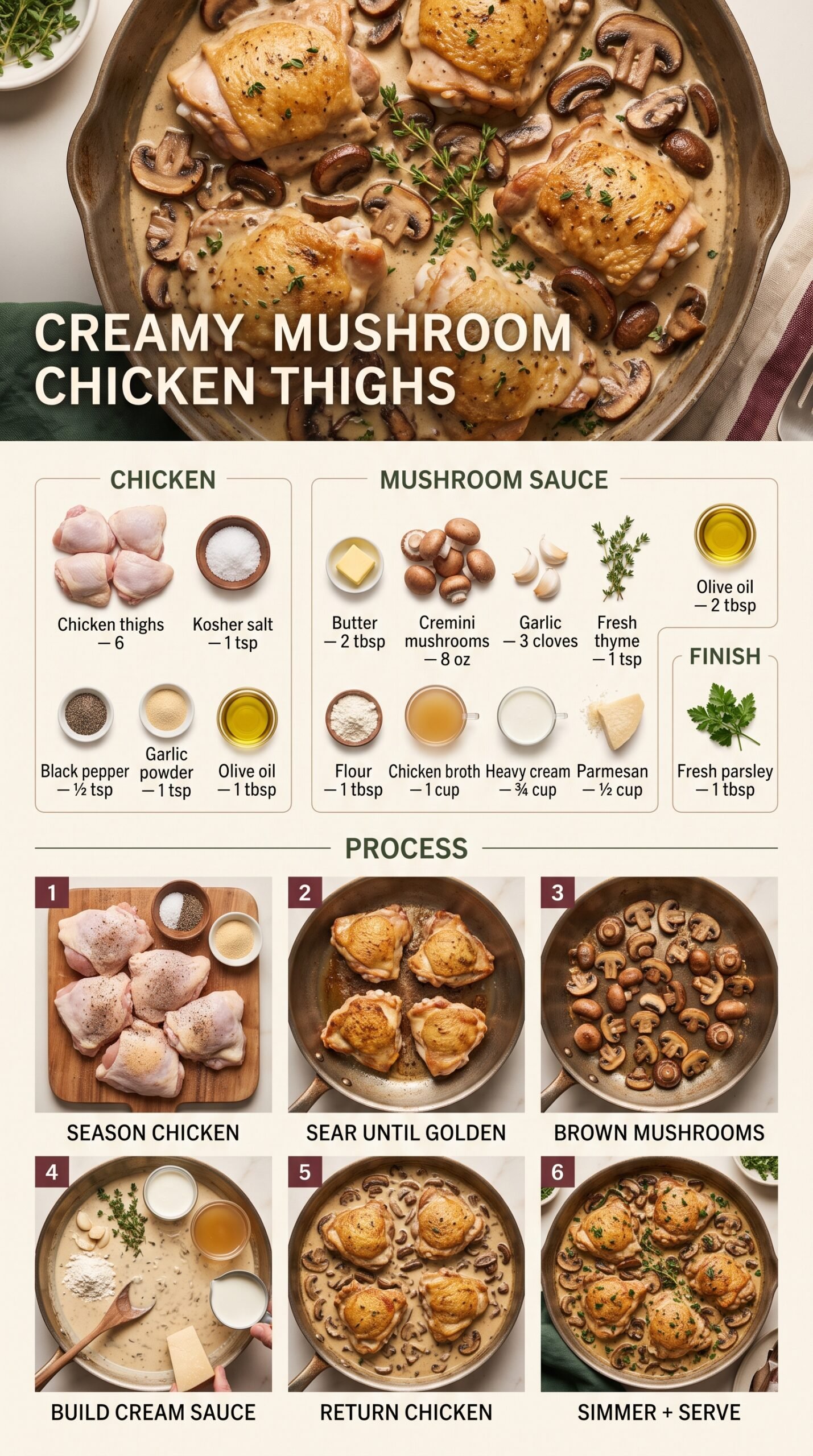
The reason the skin stays crisp while the sauce turns silky
The biggest mistake with creamy chicken thighs is drowning the skin too early. If the chicken simmers in the sauce from the beginning, the skin softens and the coating of flour or seasoning turns gummy instead of staying bronzed. Here, the thighs sear first, then rest while the mushrooms and sauce come together. By the time they go back in, the pan has enough heat to finish the chicken gently without losing that crisp edge.
The other part that matters is heat control. Mushrooms need room to brown before they release all their moisture, and the broth has to go in gradually so the flour can thicken without clumping. Once the cream and Parmesan go in, keep the heat low enough that the sauce stays glossy. A hard boil is what turns a smooth cream sauce grainy.
- Chicken thighs — Bone-in, skin-on thighs are the right cut here because they stay juicy through the final simmer and the skin browns better than boneless pieces. Boneless thighs work in a pinch, but you’ll lose some of the built-in richness and need less simmer time.
- Cremini mushrooms — Their deeper, earthier flavor gives the sauce more backbone than white buttons. Slice them thick enough to hold shape so they brown instead of disappearing into the sauce.
- Heavy cream — This is what gives the sauce its velvety finish and keeps it stable over low heat. Half-and-half can work, but the sauce will be thinner and a little less forgiving.
- Parmesan — Finely grated Parmesan melts in smoothly and helps thicken the sauce. Use the real stuff if you can; pre-shredded cheese often has anti-caking agents that can make the sauce a little grainy.
- Chicken broth — This loosens the pan drippings into a sauce and carries the savory flavor from the seared chicken and mushrooms. Low-sodium broth is the easiest choice because the Parmesan adds its own salt.
How to build the sauce without breaking the cream
Start with a dry, seasoned skin
Pat the chicken thighs dry until the skin feels tacky instead of damp, then season them evenly. Moisture is the enemy of browning, and wet skin will steam before it ever crisps. When the thighs hit the skillet, leave them alone until they release naturally from the pan and show a deep golden crust. If they stick, they’re not ready yet.
Brown the mushrooms before the liquid goes in
After the chicken comes out, the mushrooms go into the same pan with the butter. Let them sit long enough to take on color before stirring too often, because mushrooms first give off water and then brown once that moisture cooks off. Add the garlic and thyme only after the mushrooms have some color; garlic added too soon burns and turns bitter fast.
Thicken the sauce before the cream enters
Sprinkle the flour over the mushrooms and stir it in for about a minute so it loses that raw, dusty taste. Then pour in the broth gradually while stirring, which keeps the sauce smooth instead of lumpy. Once it has thickened slightly, lower the heat before adding the cream and Parmesan. That lower temperature is what keeps the sauce glossy instead of split.
Finish the chicken gently in the sauce
Return the thighs skin-side up so the crisp part stays above the sauce. The goal is to baste the meat, not submerge the skin. Keep the simmer gentle and spoon the sauce around the chicken until it reaches 165°F in the thickest part. If you boil it hard at this stage, the cream can tighten and the skin will go soft.
Ways to adjust this skillet dinner without losing what makes it work
Dairy-free version with coconut cream
Swap the butter for olive oil and use full-fat coconut cream instead of heavy cream. The sauce will be a little sweeter and less classic-tasting, but it stays rich and spoonable. Use nutritional yeast or a dairy-free Parmesan-style alternative if you still want that savory finish.
Gluten-free version
Replace the all-purpose flour with a gluten-free flour blend or 1 teaspoon cornstarch mixed with a splash of broth. Cornstarch gives you a slightly glossier sauce and thickens faster, so add it after the broth has come up to a simmer. The rest of the recipe stays the same.
Boneless chicken thighs or breasts
Boneless thighs shave off some time and still stay tender, while chicken breasts cook faster but dry out if you let them simmer too long. If you use breasts, sear them well and pull them as soon as they reach 165°F. Their leaner texture needs the sauce more than the bone-in thighs do.
Storage and Reheating
- Refrigerator: Store leftovers in an airtight container for up to 3 days. The sauce will thicken as it chills, and the skin won’t stay crisp.
- Freezer: It freezes, but the cream sauce can separate a little when thawed. If you plan to freeze it, pull the chicken before the final garnish and reheat gently.
- Reheating: Warm it slowly in a covered skillet over low heat with a splash of broth or cream. High heat is what breaks the sauce and toughens the chicken, so give it time to loosen back up.
The questions people ask before they make this skillet
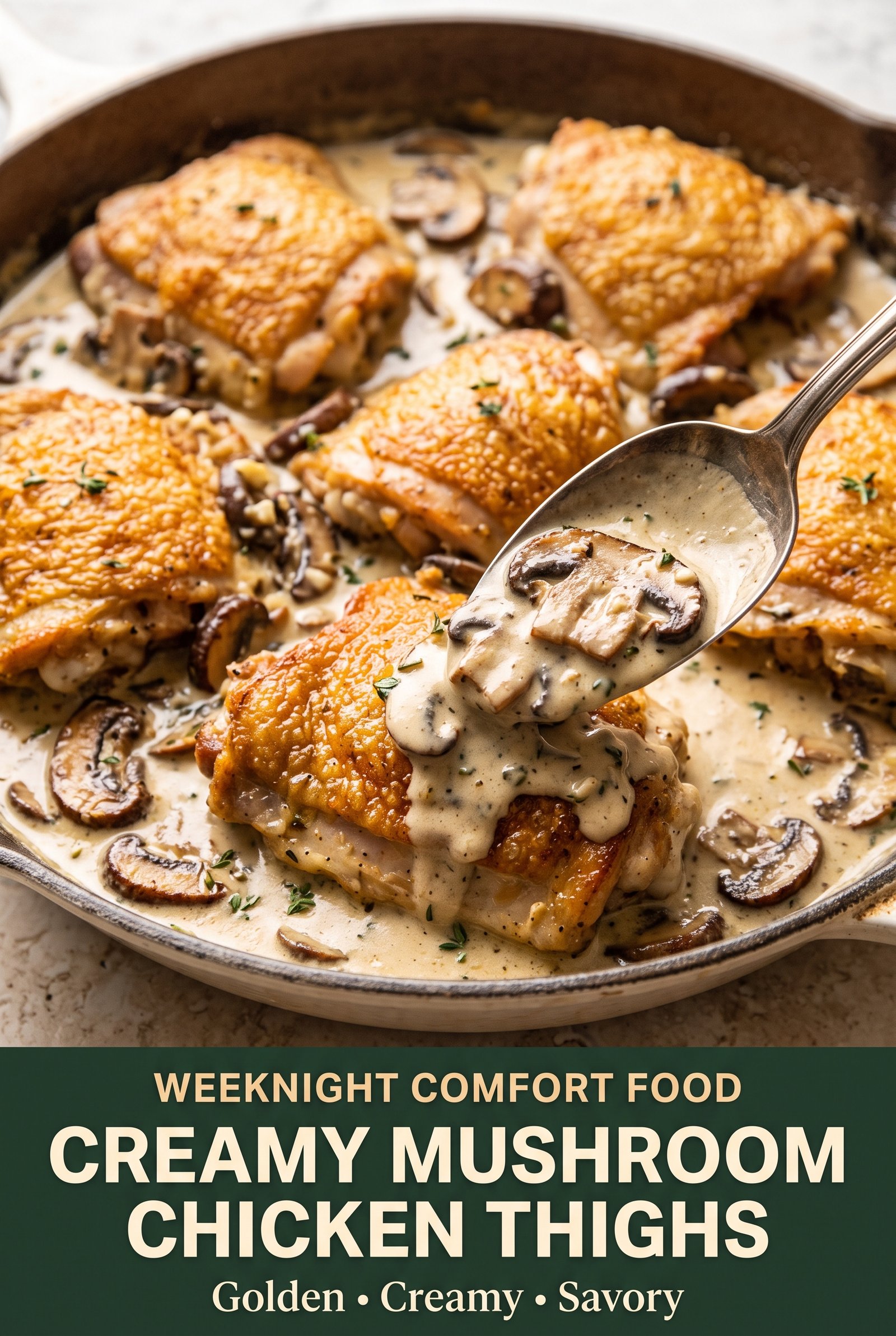
Creamy Mushroom Chicken Thighs
Ingredients
Equipment
Method
- Pat the chicken thighs dry with paper towels. Season both sides with kosher salt, black pepper, and garlic powder.
- Heat the olive oil in a large skillet over medium-high heat. Sear the chicken thighs skin-side down for 6–8 minutes until deeply golden.
- Turn the chicken and cook for another 4–5 minutes until browned. Transfer the chicken to a plate.
- Reduce the heat to medium. Melt the butter in the same skillet.
- Add the sliced cremini mushrooms and cook for 5–6 minutes until browned and tender. Stir occasionally so they color evenly.
- Stir in the garlic and fresh thyme. Cook for 30–60 seconds until fragrant.
- Sprinkle the flour over the mushrooms. Stir for 1 minute to cook out the raw flour taste.
- Pour in the chicken broth gradually while stirring. Simmer for 2–3 minutes until slightly thickened.
- Add the heavy cream and Parmesan. Stir until the cheese melts and the sauce becomes smooth and creamy.
- Return the chicken thighs to the skillet, skin-side up. Spoon the mushroom cream sauce around the chicken, keeping most of the crisp skin exposed.
- Simmer gently over medium-low heat for 12–15 minutes until the chicken reaches at least 165°F in the thickest part. Sprinkle with chopped parsley and serve immediately.
