
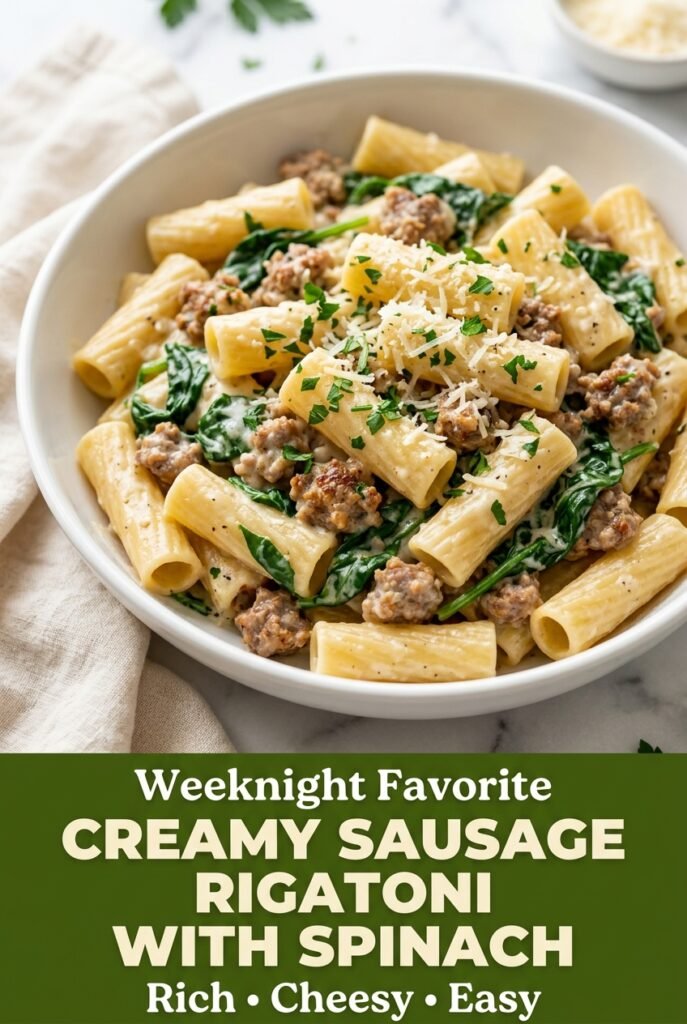
Creamy Sausage Rigatoni with Spinach
Creamy sausage rigatoni with spinach is the kind of skillet pasta that disappears fast because the sauce clings to every ridge and tube of the rigatoni. The sausage brings savory…
Tip: save now, read later.
Creamy sausage rigatoni with spinach is the kind of skillet pasta that disappears fast because the sauce clings to every ridge and tube of the rigatoni. The sausage brings savory depth, the spinach melts right into the cream, and the Parmesan gives the whole pan a salty, silky finish that tastes like it took far more effort than it did.
What makes this version work is the order of the cooking. Browning the sausage first gives you the savory bits that season the sauce, and the broth loosens those browned edges before the cream goes in. The sauce stays smooth because the Parmesan is stirred in over lower heat instead of boiled hard, which keeps it from turning grainy or greasy.
Below, I walk through the little details that matter: how to keep the sauce from getting too thick before the pasta goes in, which substitutions hold up best, and what to do if you want to make it a little lighter without losing the comfort-food feel.
The sauce coated the rigatoni perfectly and stayed creamy even after I added the spinach. My husband went back for seconds before I even sat down.
Creamy sausage rigatoni with spinach is the one-pan pasta to pin for a rich, garlicky dinner with a silky Parmesan sauce and barely any cleanup.
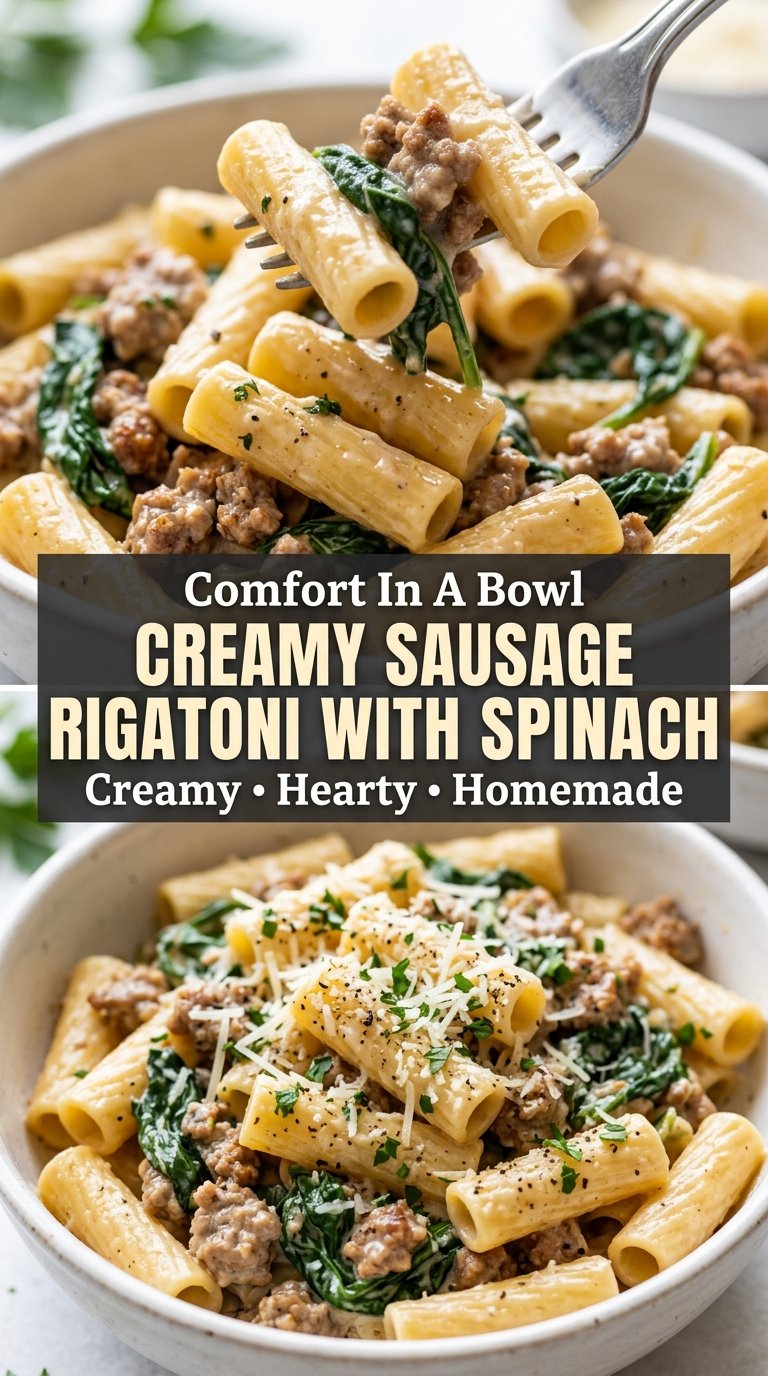
The Step That Keeps the Sauce Creamy Instead of Grainy
The biggest mistake in a cream pasta like this is letting the heat stay too high once the dairy and cheese go in. Heavy cream can handle gentle heat, but Parmesan gets fussy fast. If the pan is bubbling hard when you add the cheese, the sauce can turn sandy or separate before it ever reaches the pasta.
That is why the broth goes in first. It picks up the browned sausage flavor from the pan and gives the sauce a little breathing room before the cream arrives. Once the cheese melts, you want a low, steady simmer, not a boil. The sauce should look glossy and lightly thickened, not tight or pasty.
- Italian sausage brings the main seasoning for the whole dish. Mild sausage keeps the sauce balanced, while hot sausage adds more kick if that’s your style.
- Rigatoni matters here because the tubes catch sauce inside and out. Penne works in a pinch, but rigatoni gives you a better bite and more sauce in every forkful.
- Heavy cream is worth using. Half-and-half can work, but the sauce will be thinner and more likely to break if you rush it.
- Freshly grated Parmesan melts more smoothly than the pre-shredded kind. The bagged stuff often has anti-caking agents that can make the sauce feel gritty.
- Baby spinach goes in at the end so it wilts without overcooking. If you use regular spinach, chop it first and give it a minute longer in the pan.
Building the Sausage Pan Sauce in the Right Order
Browning the Sausage First
Heat the oil in a large skillet and cook the sausage until it is deeply browned and broken into small crumbles. The color matters here; pale sausage gives you a flat sauce, while browned sausage leaves behind the savory bits that make the cream taste seasoned instead of heavy. If there is a lot of fat in the pan, spoon off the excess, but leave enough to cook the onion and garlic.
Softening the Onion and Blooming the Spices
Add the onion and cook it until it turns soft and translucent at the edges. Stir in the garlic, Italian seasoning, smoked paprika, and red pepper flakes just long enough to smell them bloom. If the garlic browns too fast, the whole sauce can turn bitter, so keep the heat moderate and keep the ingredients moving.
Turning the Pan Drippings Into Sauce
Pour in the chicken broth and scrape the bottom of the skillet with a wooden spoon. Those browned bits dissolve into the liquid and carry most of the flavor in the dish. Let the broth simmer briefly before the cream goes in so the pan has a chance to deglaze fully instead of trapping those flavors under a layer of dairy.
Finishing With Cream, Cheese, and Pasta
Lower the heat before adding the cream, then stir in the Parmesan until the sauce turns smooth and glossy. Add the spinach and let it wilt just until it collapses, then toss in the drained rigatoni. If the sauce looks too tight, splash in a little reserved pasta water; the starch helps the sauce cling without thinning it into soup.
Make It Spicier With Hot Italian Sausage
Swap the mild sausage for hot Italian sausage and keep the red pepper flakes optional. The sauce gets a little more edge without changing the creamy texture, and the heat reads as background warmth instead of a sharp burn.
How to Make It a Little Lighter
Use half-and-half instead of heavy cream and add the Parmesan a little more slowly over low heat. The sauce will still cling, but it won’t be as plush or stable, so keep the simmer gentle and don’t let it boil once the dairy is in.
A Gluten-Free Version That Still Tastes Right
Use your favorite gluten-free rigatoni and cook it just shy of done so it doesn’t fall apart when tossed with the sauce. The sauce itself is already gluten-free as written, but a pasta that holds its shape is the difference between hearty and mushy.
Storage and Reheating
- Refrigerator: Store leftovers in an airtight container for up to 4 days. The pasta will absorb some sauce as it sits, so it gets thicker in the fridge.
- Freezer: This freezes, but the cream sauce can separate a little after thawing. If you do freeze it, cool it completely, pack it tightly, and reheat gently with a splash of broth or cream.
- Reheating: Warm it on the stove over low heat with a spoonful or two of broth, milk, or cream. High heat is the mistake that breaks the sauce and turns the pasta dry before the center is hot.
Questions I Get Asked About This Recipe
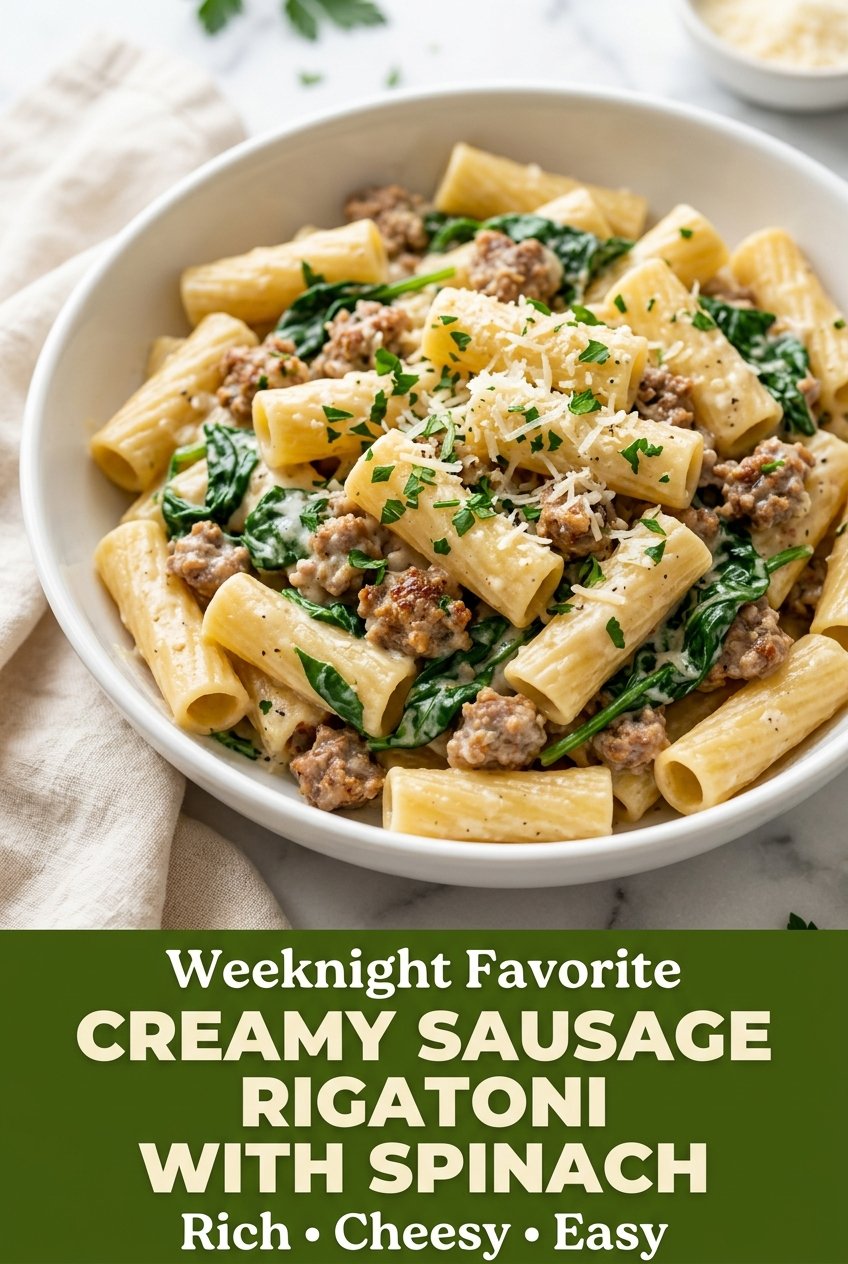
Creamy Sausage Rigatoni with Spinach
Ingredients
Equipment
Method
- Bring a large pot of salted water to a boil, and keep it at a rolling boil. Cook the rigatoni according to the package directions until al dente.
- Reserve 1/2 cup pasta water, then drain the rigatoni. Set both aside so you can loosen and coat the sauce.
- Heat 1 tbsp olive oil in a large skillet over medium-high heat until shimmering. Add the Italian sausage and cook for 6–8 minutes, breaking it into crumbles, until browned.
- Stir in the diced onion and cook for 3–4 minutes until softened and translucent. Scrape up any browned bits that form on the pan.
- Add the minced garlic, Italian seasoning, smoked paprika, and crushed red pepper flakes (if using). Cook for 30 seconds until fragrant, stirring constantly.
- Pour in the chicken broth and simmer for 2 minutes, scraping up browned bits from the pan. Let the liquid reduce slightly for extra flavor.
- Reduce the heat to medium-low, then stir in the heavy cream. Gently simmer for 3–4 minutes until the sauce looks thick enough to coat pasta.
- Add the Parmesan cheese and stir until melted into a smooth, creamy sauce. If it gets too thick, stir in a little reserved pasta water.
- Fold in the baby spinach and cook for 1–2 minutes until wilted. Keep stirring just until the leaves turn bright green and tender.
- Add the cooked rigatoni and toss until every piece is coated in the sauce. Stir in a splash of the reserved pasta water if needed to loosen the sauce.
- Season with kosher salt and black pepper, tasting as you go. Garnish with chopped fresh parsley and extra grated Parmesan before serving.
