
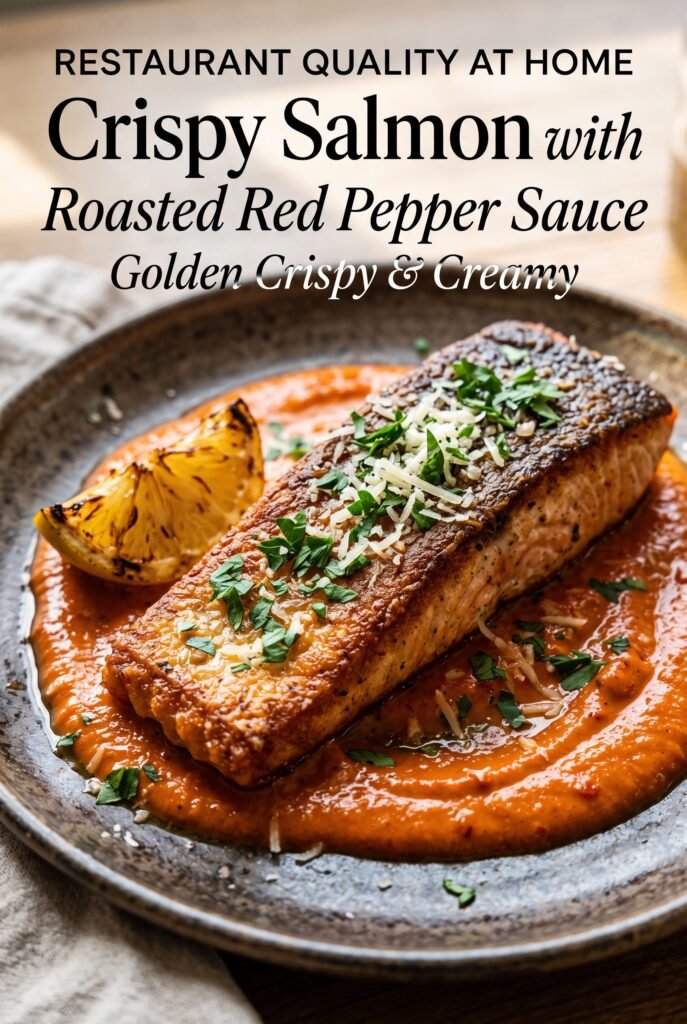
Crispy Salmon with Roasted Red Pepper Sauce
Crispy salmon with roasted red pepper sauce lands on the plate with the kind of contrast that keeps it in regular dinner rotation: crackly skin, tender fish, and a silky…
Tip: save now, read later.
Crispy salmon with roasted red pepper sauce lands on the plate with the kind of contrast that keeps it in regular dinner rotation: crackly skin, tender fish, and a silky sauce that tastes like it took much longer than it did. The salmon gets a hard sear in a hot skillet, which gives you that deep, crisp skin instead of the pale, rubbery finish that happens when the pan isn’t hot enough or the fish goes in damp.
The sauce is built from jarred roasted peppers, garlic, broth, cream, and Parmesan, then blended until smooth and simmered just long enough to thicken slightly. That short simmer matters. If you cook it too long after the cream goes in, it can tighten up or turn heavy instead of staying glossy and spoonable. The smoked paprika ties the salmon and sauce together without making the whole dish taste smoky in an obvious way.
Below, I’ve included the one searing detail that makes the skin crisp, the ingredient swaps that still keep the sauce balanced, and the questions that come up most often when people make this kind of pan-seared salmon at home.
The salmon skin turned out properly crisp, and the roasted red pepper sauce was silky without being heavy. I served it with rice and the sauce clung to everything beautifully.
Crispy Salmon with Roasted Red Pepper Sauce is the kind of dinner you’ll want to pin for the nights when you want a restaurant-style plate without a lot of cleanup.
The Reason the Salmon Skin Stays Crisp Instead of Going Soft
The biggest difference between crisp salmon skin and flabby salmon skin is moisture. Pat the fillets dry until the surface feels tacky, not damp. Then let the skin side cook first and leave it alone long enough to render and brown. If you move it too early, the skin tears before it has a chance to release cleanly from the pan.
Medium-high heat works here because the salmon needs enough heat to crisp the skin before the flesh overcooks. The mistake most people make is flipping too soon or turning the heat down right after the fish goes in. You want the skin to sizzle steadily, not aggressively spit, and you want the flesh to turn opaque about two-thirds of the way up the side before you even think about flipping.
- Dry fillets — moisture is the enemy of crisp skin, so paper towels matter here.
- Skin-on salmon — skinless fillets will still work, but you lose the best textural contrast in the dish.
- Smoked paprika — it adds warmth and color to both the fish and the sauce without overpowering the peppers.
- Garlic powder plus onion powder — this gives the salmon a seasoned crust without burning fresh garlic in the pan.
What Each Ingredient Is Doing in the Sauce
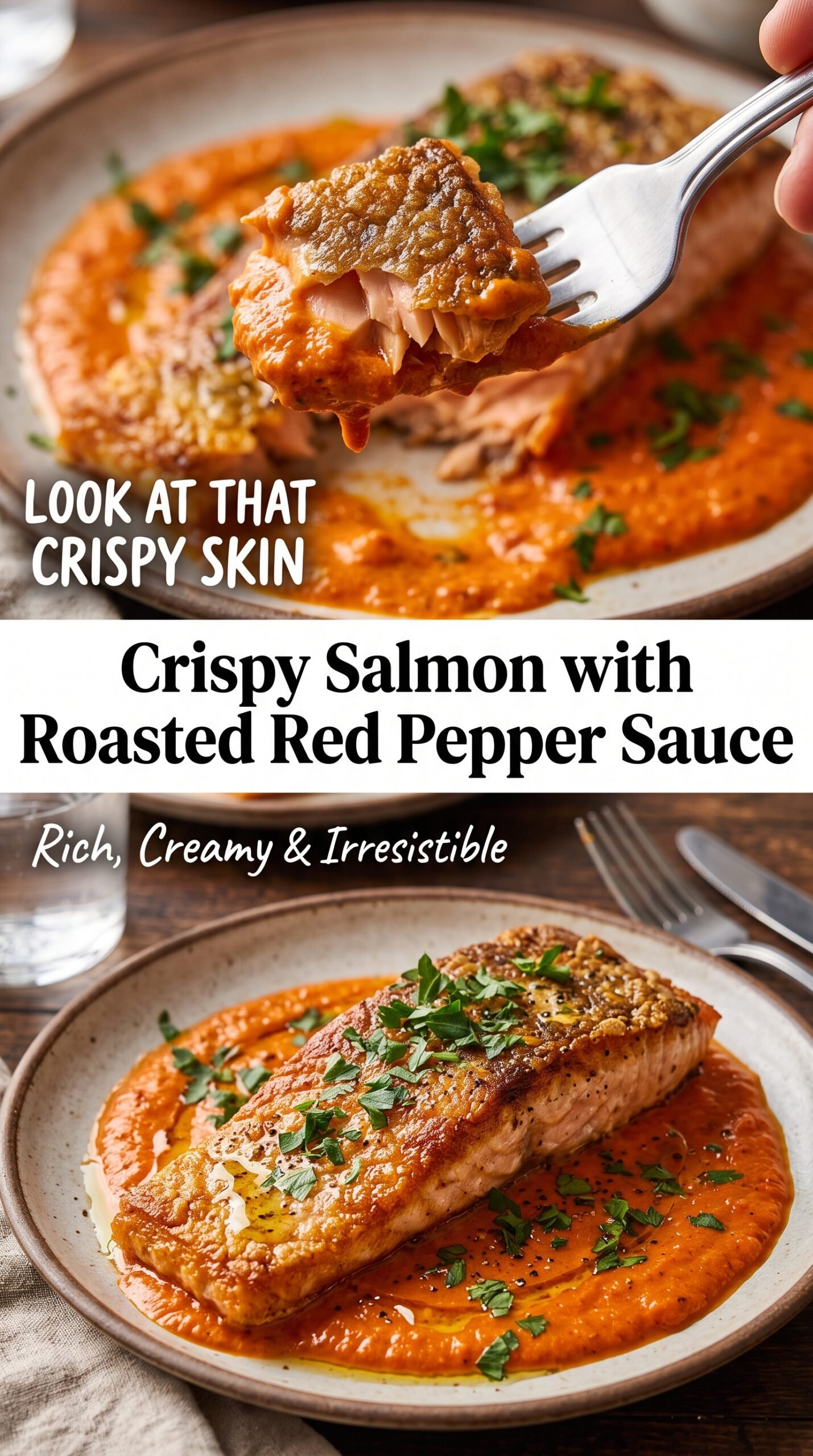
Roasted red peppers bring the sweet, mellow base of the sauce. Jarred peppers work well here because they’re already soft enough to blend into a smooth sauce, and the flavor is consistent. Drain them well so the sauce doesn’t turn watery.
Heavy cream gives the sauce body and that glossy finish that clings to the salmon. Half-and-half will make the sauce lighter, but it won’t thicken the same way, so you’ll need more simmer time and the result won’t be quite as rich.
Parmesan sharpens the sauce and helps it thicken. Use finely grated cheese, not a coarse shred, so it melts evenly instead of turning grainy. Chicken broth loosens the peppers before blending and keeps the sauce from becoming too dense. If you need a pescatarian version, use vegetable broth and the sauce still works beautifully.
Butter and garlic start the sauce with a little richness and depth. Cook the garlic for only about 30 seconds; once it takes on color, it can turn bitter and throw off the sweetness of the peppers.
How to Build the Sauce in the Same Pan Without Breaking It
Start with the salmon and leave the browned bits behind
Cook the salmon first, then move it to a plate and use the same skillet for the sauce. Those browned bits on the bottom carry a lot of flavor, and they’ll dissolve into the peppers once the broth goes in. If the pan looks too dry or scorched, lower the heat before adding the butter so the garlic doesn’t burn on contact.
Blend until the peppers are fully smooth
After the peppers and broth warm through, blend until there are no visible flecks left unless you like a little texture. An immersion blender is the easiest option because it keeps everything in the pan, but a countertop blender works too. If you use a blender, vent the lid and hold it down with a towel because hot sauce expands fast.
Finish with cream and Parmesan over low heat
Return the sauce to the skillet, then stir in the cream, Parmesan, Italian seasoning, and smoked paprika over low heat. High heat is the fastest way to make the sauce split or look grainy. It should go from thin to lightly coat-the-spoon thick in a few minutes, and it should still pour easily around the salmon.
Dairy-Free Version
Swap the heavy cream for full-fat canned coconut milk and use olive oil instead of butter. The sauce will be a little softer and carry a faint coconut note, but the roasted peppers still keep it grounded and savory. Skip the Parmesan or use a dairy-free Parmesan-style substitute that melts smoothly.
Gluten-Free Check
This dish is naturally gluten-free as written if your broth and Parmesan are certified gluten-free. The only place people get tripped up is with jarred roasted peppers or seasoning blends that hide additives, so read the label once and you’re covered.
No-Skin Salmon
You can use skinless fillets if that’s what you have, but sear them for a minute or two less so they don’t dry out. You’ll lose the crisp skin, so serve the salmon over the sauce rather than on top of it to keep the fish from overcooking while it sits.
Make It Spicier
Add a pinch of red pepper flakes with the garlic or blend in a few pickled cherry peppers with the roasted red peppers. That gives the sauce a sharper edge without changing the creamy texture, and it plays well with the richness of the salmon.
Storage and Reheating
- Refrigerator: Store leftovers in an airtight container for up to 2 days. The salmon skin will soften, but the fish and sauce still reheat well.
- Freezer: The salmon freezes, but the sauce doesn’t hold up well once frozen and thawed because the cream can separate. Freeze the fish only if needed and make the sauce fresh.
- Reheating: Warm the salmon gently in a covered skillet over low heat or in a 300°F oven. Reheat the sauce separately over low heat and whisk in a splash of broth if it thickens too much. Don’t blast everything in the microwave or the salmon will dry out and the sauce can break.
Questions I Get Asked About This Recipe
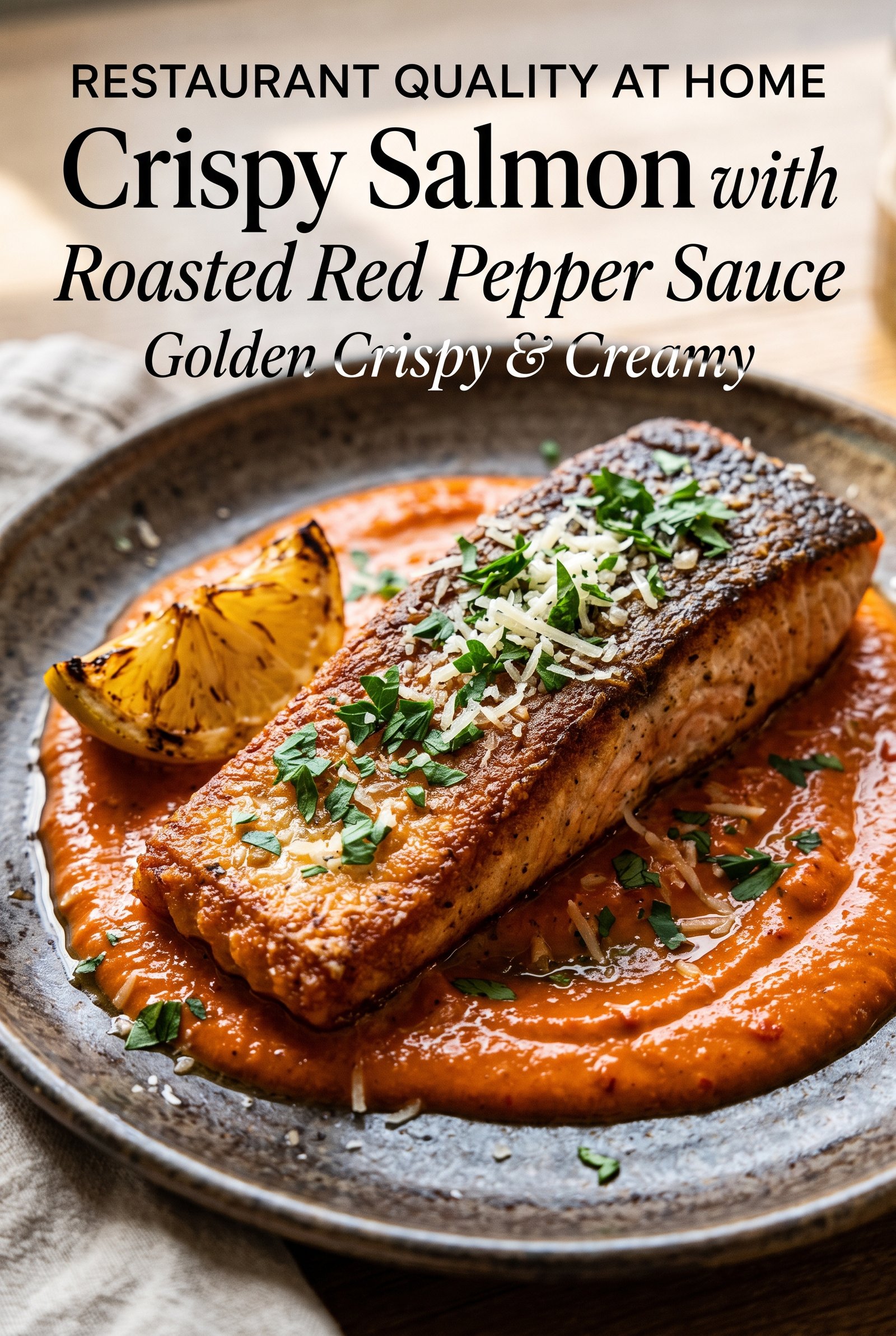
Crispy Salmon with Roasted Red Pepper Sauce
Ingredients
Equipment
Method
- Pat the salmon fillets completely dry with paper towels.
- Season both sides with garlic powder, smoked paprika, onion powder, dried oregano, kosher salt, and black pepper.
- Heat olive oil in a large skillet over medium-high heat.
- Place the salmon skin-side down and cook for 5-6 minutes until the skin is crisp, with a steady sizzle.
- Flip and cook another 3-4 minutes until the salmon flakes easily, keeping the fillets flat in the pan.
- Remove the salmon and keep warm.
- In the same skillet, melt the butter and sauté the garlic for 30 seconds until fragrant.
- Add the roasted red peppers and chicken broth, then blend until smooth using an immersion blender or by transferring carefully to a blender.
- Return the sauce to the skillet and stir in the heavy cream, Parmesan cheese, Italian seasoning, and smoked paprika.
- Simmer for 3-4 minutes until slightly thickened, stirring occasionally for a glossy consistency.
- Spoon the roasted red pepper sauce onto serving plates and top with the crispy salmon.
- Garnish with fresh parsley, extra Parmesan cheese, and lemon wedges.
