
Crockpot Mississippi Pot Roast Sliders
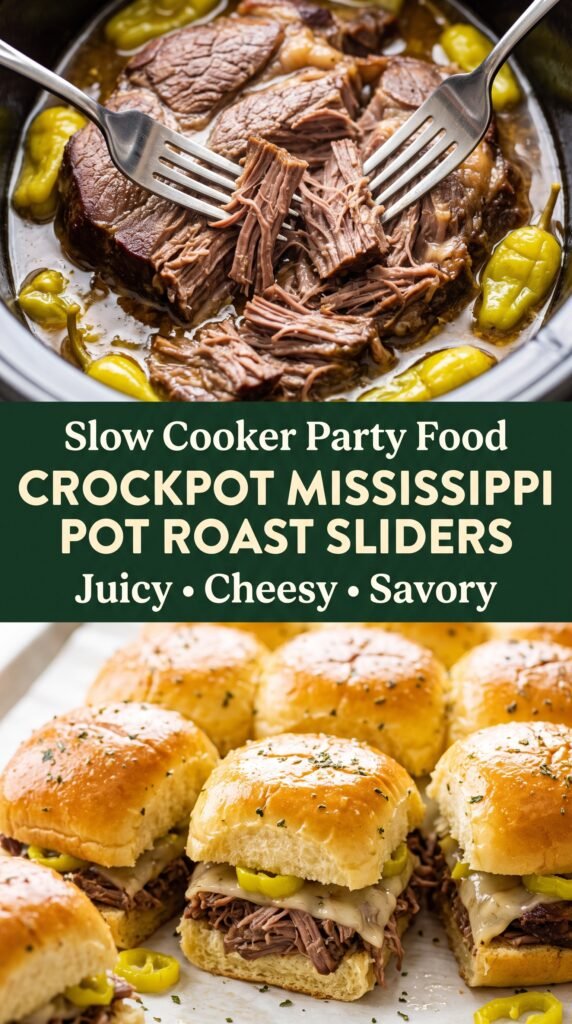
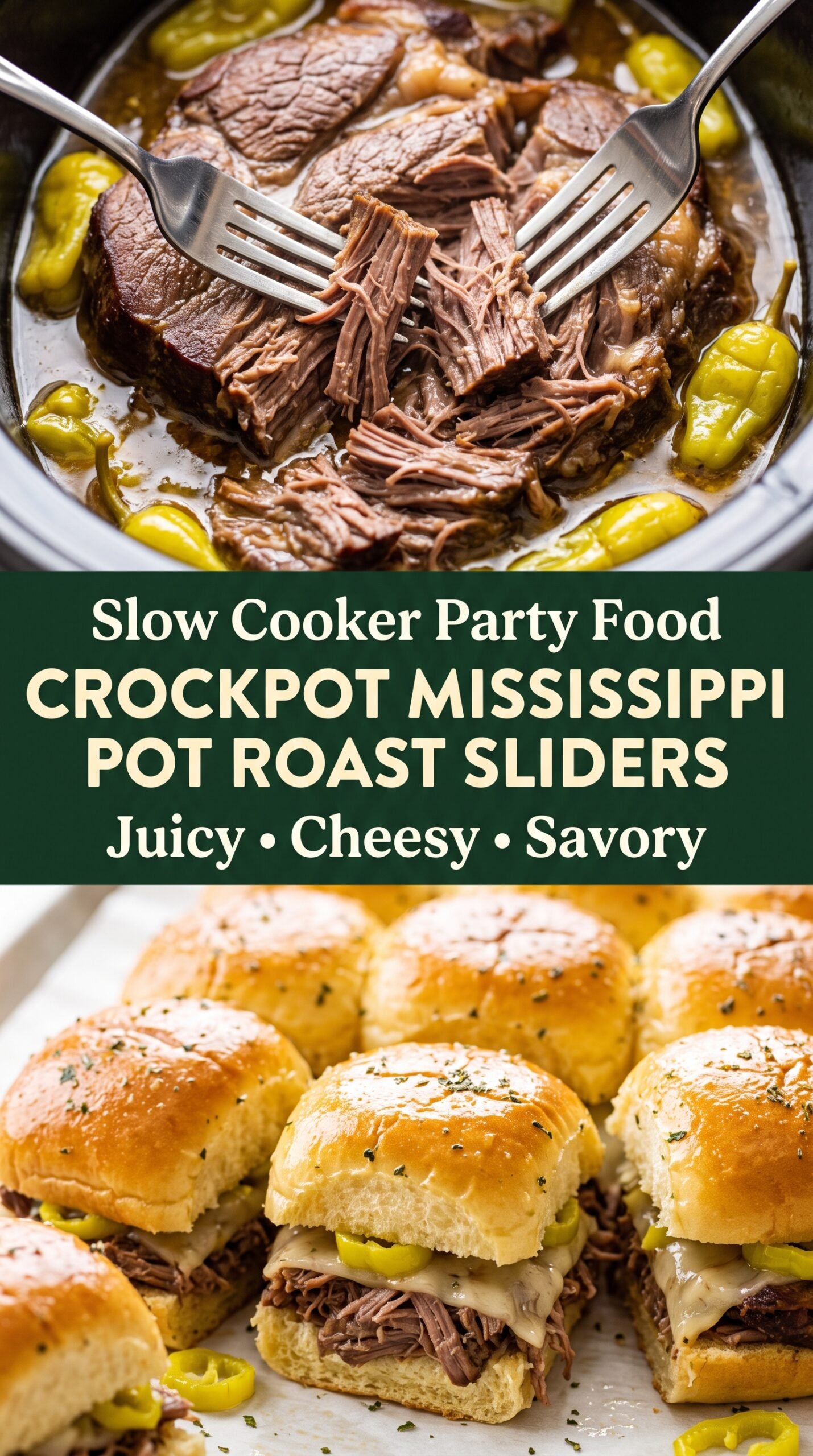
These Crockpot Mississippi Pot Roast Sliders hit that sweet spot between messy and irresistible: tender shredded beef, sharp pepperoncini, melted provolone, and buttery rolls that toast up at the edges…
Tip: save now, read later.
These Crockpot Mississippi Pot Roast Sliders hit that sweet spot between messy and irresistible: tender shredded beef, sharp pepperoncini, melted provolone, and buttery rolls that toast up at the edges while the center stays soft. The slow cooker does the heavy lifting, then the oven finish turns the whole pan into pull-apart sliders with just enough structure to hold together for the first bite.
What makes this version work is the balance. The roast gets a quick sear for deeper flavor, then the ranch seasoning, au jus mix, and pepperoncini brine build a savory, tangy cooking liquid that keeps the beef juicy instead of bland. If you’ve ever had slow cooker beef turn out flat or dry, the brine and butter here fix that fast. The sliders also avoid the soggy-bottom problem by getting filled just before baking, so the rolls toast instead of steaming.
Below, I’ve included the small details that matter most: how to keep the beef moist after shredding, why the pepperoncini go in the pot instead of on top at the end, and what to change if you want to stretch the filling a little farther without losing the signature Mississippi roast flavor.
The beef shredded up so easily and the pepperoncini flavor came through without taking over. I baked the sliders until the cheese was bubbling and the tops were golden, and my family ate half the pan before I even sat down.
Save these Mississippi pot roast sliders for the night you want tender beef, tangy pepperoncini, and toasted cheesy tops without a lot of hands-on work.
The Sear Is What Keeps the Crockpot Flavor Deep, Not Flat
A slow cooker will make a chuck roast tender, but it won’t create the browned, beefy flavor that makes the sandwich taste finished. That comes from the sear. When the roast hits a hot skillet, the surface browns and the fond left in the pan carries straight into the meat once it starts cooking down in the crockpot.
If you skip that step, the sliders still work, but they taste more like shredded pot roast than Mississippi pot roast. The other trap is overcooking on high heat until the beef turns stringy and dry around the edges. Chuck roast is forgiving, but it still needs time and enough liquid around it to stay plush.
- Chuck roast — This cut has enough fat and connective tissue to break down into tender shreds after hours in the slow cooker. Leaner cuts can turn dry before they get soft.
- Ranch seasoning and au jus mix — These are doing the heavy flavor work and give you the classic Mississippi pot roast taste without building a sauce from scratch. Store-brand packets work fine here.
- Pepperoncini and brine — The peppers bring gentle heat and tang, but the brine is what seasons the meat and keeps the filling from tasting heavy. If you’re short on brine, use a splash of pickle juice, though the flavor will shift a bit.
- Provolone — It melts smoothly and adds a mild creamy layer that doesn’t fight the beef. Mozzarella works in a pinch, but it’s milder and less savory.
- Hawaiian-style slider rolls — Their slight sweetness plays well with the salty beef and sharp pepperoncini. Any soft pull-apart roll will work, but drier buns won’t hold up as well once the filling goes in.
Build the Beef, Then Bake the Sliders Fast
Getting the Roast Browned
Season the chuck roast lightly, then sear it in olive oil until each side has a deep brown crust. You’re not trying to cook it through at this point; you’re building flavor and keeping the finished beef from tasting boiled. If the pan looks crowded or the meat sticks, leave it alone a little longer and it will release once it browns.
Letting the Slow Cooker Do the Work
Move the roast to the crockpot, add the seasonings, pepperoncini, brine, and butter, then cover and cook until the meat falls apart with almost no resistance. On low, that usually means 8 to 9 hours; on high, 5 to 6 hours. If the roast still resists shredding, it needs more time, not more force.
Shredding and Moistening the Filling
Pull the beef apart with two forks and stir in enough of the cooking juices to keep it glossy and moist. This is where dry sliders are prevented. If you drain the liquid away, the meat will taste good in the pot and dull in the sandwich, so keep some of that rich, peppery juice with the shredded beef.
Assembling and Baking
Split the connected rolls, layer on the beef, add a few pepperoncini slices and provolone, then cap with the top half of the rolls. Brush the seasoned butter over the tops and bake until the cheese melts and the rolls turn golden. If you bake too long, the bottoms dry out before the cheese finishes melting, so start checking early.
Make It Spicier Without Changing the Base Recipe
Add a few extra pepperoncini slices inside the sliders and spoon a little more brine over the shredded beef before assembling. That bumps up the tang and heat without changing the texture of the filling. If you want a bigger kick, add crushed red pepper to the butter topping instead of putting it into the slow cooker, where it can turn the beef harsh.
Use Cheese That Melts Cleanly
Provolone gives you the best balance of melt and flavor, but Swiss or mozzarella will also work. If you use cheddar, the sliders get sharper and a little heavier, and the cheese can separate more as it bakes. For the cleanest pull-apart texture, stick with a mild slicing cheese.
Gluten-Free Version
Use a gluten-free gravy mix and ranch seasoning, then swap in sturdy gluten-free slider rolls or small sandwich buns. The beef itself stays the same, but the bread matters more here because gluten-free buns can dry out faster under the butter topping. Toast them lightly before filling if they tend to get soft.
Storage and Reheating
- Refrigerator: Store the beef separately from the assembled sliders for up to 4 days. The rolls soften quickly once filled, so keep leftovers wrapped tightly and expect a softer bottom bun.
- Freezer: The shredded pot roast freezes well for up to 3 months. Freeze it with a little cooking liquid in a sealed container, then thaw overnight in the fridge before reheating.
- Reheating: Warm the beef in a covered skillet or microwave with a spoonful of the reserved juices so it stays moist. Reheat assembled sliders in a 325°F oven until hot; the common mistake is blasting them at high heat, which dries out the bread before the center warms through.
Answers to the Questions Worth Asking
Crockpot Mississippi Pot Roast Sliders
Ingredients
Equipment
Method
- Season the chuck roast lightly with kosher salt and black pepper.
- Heat the olive oil in a skillet over medium-high heat and sear the roast for 3–4 minutes per side until deeply browned.
- Transfer the browned beef to the crockpot and sprinkle the ranch seasoning mix and au jus gravy mix evenly over the roast.
- Add the pepperoncini peppers, pepperoncini brine, and 4 tbsp unsalted butter, then cover the crockpot.
- Cook on LOW for 8–9 hours or HIGH for 5–6 hours, until the beef pulls apart easily.
- Shred the beef with two forks, then toss it with enough cooking juices to keep it moist and flavorful.
- Preheat the oven to 350°F.
- Slice the Hawaiian-style slider rolls horizontally while keeping the rolls connected.
- Layer the bottom rolls with shredded Mississippi pot roast, then add sliced pepperoncini and provolone cheese.
- Cover with the top half of the rolls.
- Melt the remaining 2 tbsp unsalted butter and stir in the garlic powder and dried parsley.
- Brush the seasoned butter generously over the rolls.
- Bake for 12–15 minutes at 350°F until the rolls are golden and the provolone is completely melted.
- Slice into individual sliders and serve warm.
