
Garlic Herb Mozzarella Stuffed Chicken Breast
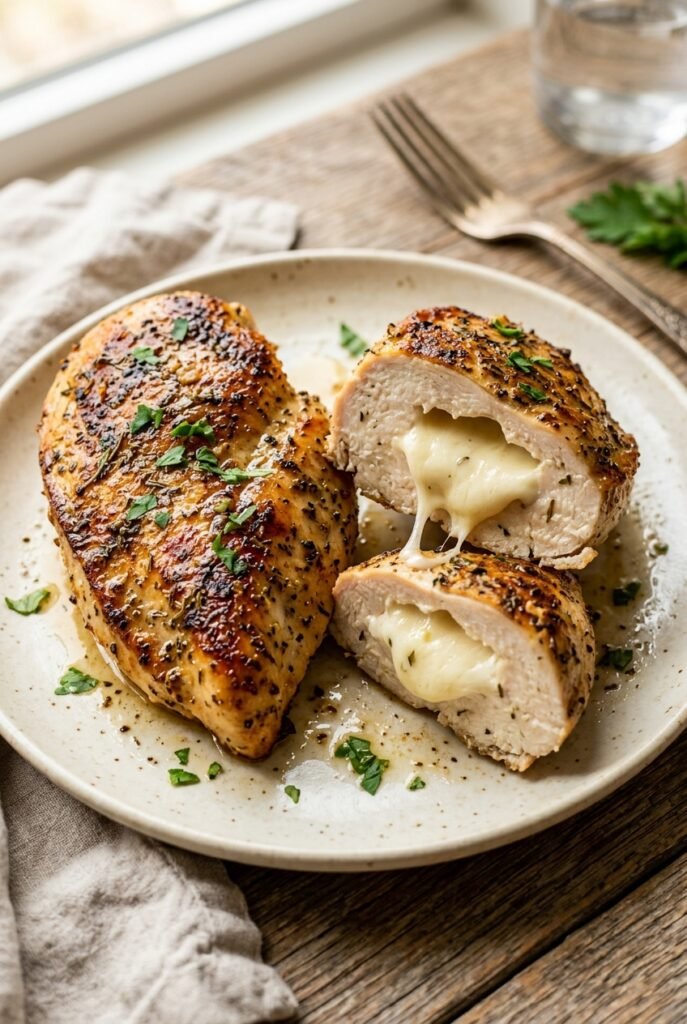
Garlic herb mozzarella stuffed chicken breast lands on the plate with a golden crust outside and a molten, stretchy center that makes plain chicken feel like a dinner worth repeating.…
Tip: save now, read later.
Garlic herb mozzarella stuffed chicken breast lands on the plate with a golden crust outside and a molten, stretchy center that makes plain chicken feel like a dinner worth repeating. The trick is keeping the filling controlled enough to stay inside the pockets while the chicken cooks through, so every slice opens up with mozzarella instead of leaking onto the pan.
This version works because the chicken is seasoned on the outside and lightly inside the pocket, which builds flavor in layers instead of leaving the filling to do all the work. The mozzarella is paired with Parmesan, basil, parsley, and garlic, so the center tastes seasoned, not just gooey. A quick sear before baking gives you color and helps the chicken hold together before it goes into the oven.
Below, I’ve included the part most recipes skip: how to keep the cheese from escaping, when to stop stuffing, and what to do if you want to adapt this for different tastes or dietary needs.
The mozzarella stayed tucked inside and the chicken came out so juicy. I loved that the garlic butter browned on top without making the filling leak everywhere.
Save this garlic herb mozzarella stuffed chicken breast for the night you want juicy chicken with a melty center and barely any cleanup.
The Small Pocket That Keeps the Cheese Where It Belongs
The biggest mistake with stuffed chicken is slicing the pocket too wide or stuffing it until the breast looks ready to burst. That gives the mozzarella an easy exit before the chicken finishes cooking. A deep pocket works better than a full butterfly cut here because it gives you room for filling while leaving enough meat to seal around the edges.
The second thing that matters is the sear. That first blast of heat does more than add color; it firms the outside of the chicken so the pocket is less likely to open in the oven. If the pan is crowded or the chicken is wet, you’ll steam the surface instead of browning it, and the filling is more likely to leak.
- Keep the pocket shallow at the edges. Leave enough chicken intact to trap the filling.
- Don’t overfill. Two mozzarella strips and a spoonful of the herb mixture are enough.
- Let the chicken rest after baking. Slicing too soon sends the cheese straight onto the board.
What Each Ingredient Is Actually Doing in This Dish
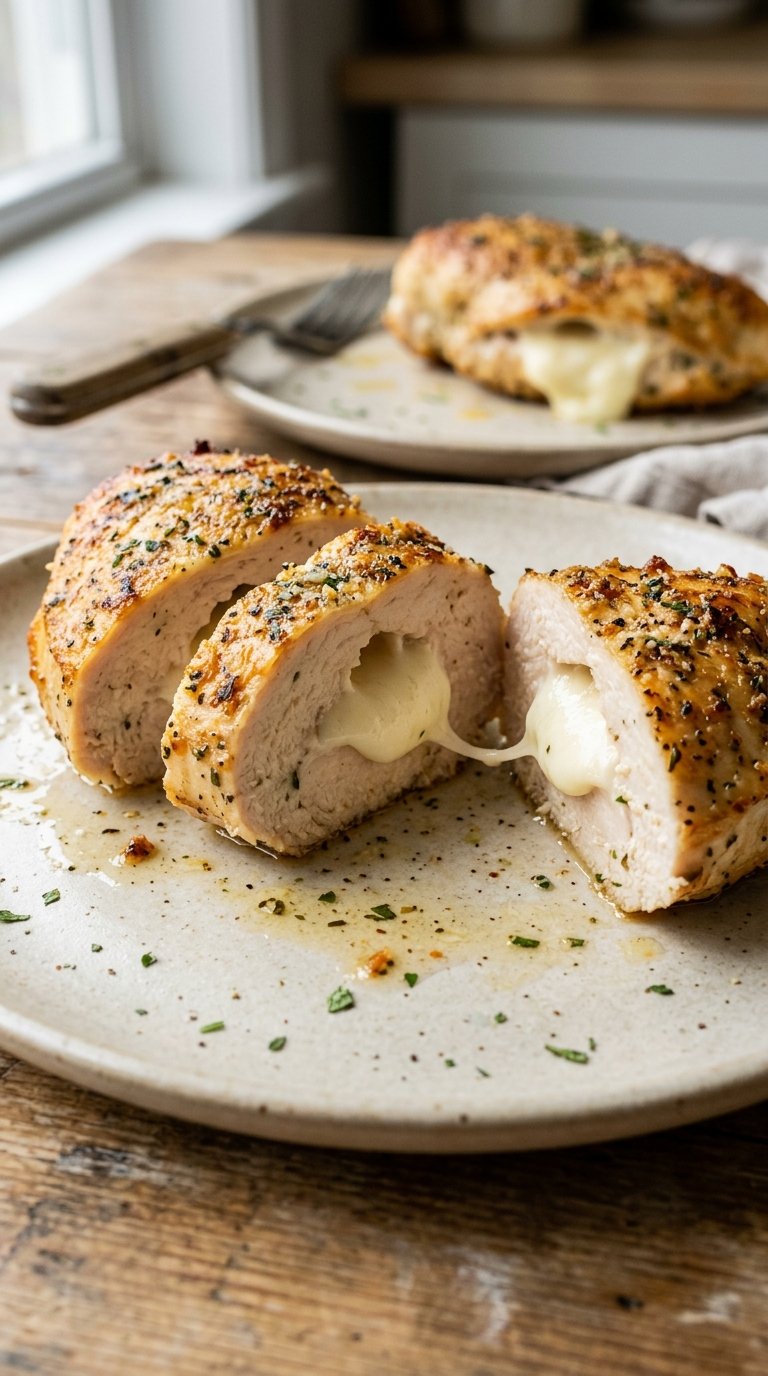
- Boneless, skinless chicken breasts — Use larger, even-sized breasts so you can cut a pocket without tearing through the side. If one side is much thicker, a light pound on the thick end helps it cook more evenly.
- Low-moisture whole-milk mozzarella — This is the cheese that gives you the stretch and the clean melt. Fresh mozzarella holds more water and tends to flood the pan, so it’s not the best choice here.
- Parmesan — There are two jobs here: it seasons the filling and adds a little saltiness that keeps the center from tasting flat. Freshly grated Parmesan melts into the herbs better than the pre-shredded kind.
- Fresh basil and parsley — The fresh herbs brighten the filling and keep it from tasting heavy. Dried herbs won’t give the same lift, though you can use a smaller amount in a pinch.
- Garlic butter — Brushing the tops with butter and garlic before baking gives the chicken a rich finish and helps the seasonings cling. Lemon juice keeps it from tasting greasy and sharpens the final bite.
How to Build the Chicken So the Filling Stays Inside
Cutting the pocket cleanly
Lay the chicken breast flat and use a sharp knife to slice horizontally into the thickest side, stopping before you cut through the opposite edge. You want a deep pocket, not two thin pieces of chicken hanging together by a thread. If the knife starts to drag, switch to shorter, careful strokes instead of forcing it. Torn chicken leaks filling.
Seasoning both layers
Mix the dry seasonings together first, then season the outside of the chicken and lightly inside the pocket. That way every bite tastes seasoned, not just the crust. The inside needs only a light coating because the mozzarella filling already carries salt and garlic. Heavy seasoning inside can make the filling taste harsh.
Sealing and searing
Press the chicken edges together and use toothpicks if the pocket looks loose. Then sear in hot oil until the first side is deeply golden before you flip it. If the chicken sticks, it isn’t ready to turn yet. A good sear should release with some resistance, not a tug.
Finishing in the oven
Brush on the garlic herb butter, then transfer the skillet to the oven and bake until the thickest part of the chicken reaches 165°F. Don’t aim the thermometer into the cheese or you’ll get a false reading. In the final minutes, a light sprinkle of Parmesan gives the top a better color, and a brief broil can fix a pale surface fast.
Three Ways to Adjust This Without Losing the Good Part
Gluten-Free Dinner That Still Feels Complete
This recipe is naturally gluten-free as written, so nothing needs to be swapped. Just keep an eye on any packaged seasoning blends if you don’t mix your own, since some include anti-caking agents or hidden starches that can change the surface of the chicken.
Dairy-Free Version With Less Stretch and More Flavor
Swap the mozzarella for a firm dairy-free meltable cheese and use dairy-free butter or olive oil on top. You won’t get the same stretchy center, but the garlic-herb seasoning still carries the dish. Choose a cheese that slices cleanly so it doesn’t disappear into the filling as it warms.
Add a Little Heat Without Taking Over the Garlic
The red pepper flakes inside the filling are the easiest place to bring in heat. You can also add a pinch of cayenne to the dry seasoning, but go light or it will overshadow the basil and Parmesan. This is the kind of recipe where a little heat works better than a loud one.
Make It Ahead for a Faster Weeknight
You can stuff and season the chicken a few hours ahead, then keep it covered in the refrigerator until dinner. The chicken browns better if you let the cold surface sit at room temperature for 15 to 20 minutes before searing, but don’t leave it out long enough for the filling to warm up.
Storage and Reheating
- Refrigerator: Store leftovers in an airtight container for up to 3 days. The chicken stays good, but the cheese center firms up as it chills.
- Freezer: Freeze after baking if needed, wrapped well and stored in a freezer-safe container for up to 2 months. The texture of the mozzarella changes a bit after thawing, but it still works for a second meal.
- Reheating: Reheat covered in a 325°F oven until warmed through. The common mistake is blasting it in the microwave, which tightens the chicken and pushes the cheese out of the pocket.
The Things That Trip People Up With This Dish
Garlic Herb Mozzarella Stuffed Chicken Breast
Ingredients
Equipment
Method
- Preheat the oven to 400°F (205°C). Have a large oven-safe skillet ready.
- Pat the chicken breasts thoroughly dry. This helps the seasoning cling and the surface sear.
- Cut a deep horizontal pocket into the thick side of each chicken breast, leaving about ½ inch intact around the edges where possible. Don’t cut all the way through.
- Combine the kosher salt, black pepper, garlic powder, onion powder, Italian seasoning, and smoked paprika. Season the outside and lightly season inside each pocket.
- Combine Parmesan, chopped basil, chopped parsley, minced garlic, Italian seasoning, and optional red pepper flakes in a bowl. Stir until evenly distributed.
- Place 2 mozzarella strips inside each chicken breast and add about 1 tablespoon of the Parmesan-herb mixture. Don’t overstuff so excess mozzarella doesn’t escape during cooking.
- Press the edges of each chicken breast together to close the pocket. Secure with 2–3 toothpicks if necessary.
- Heat the olive oil in the oven-safe skillet over medium-high heat. Add the stuffed chicken breasts and sear for about 4 minutes on the first side until deeply golden.
- Carefully flip each chicken breast and sear for another 2–3 minutes until deeply golden. Keep the heat at medium-high for a strong sear.
- Combine melted butter, minced garlic, Italian seasoning, and fresh lemon juice. Brush the mixture over the tops of the chicken breasts.
- Transfer the skillet to the oven and bake for about 15–20 minutes until the chicken reaches 165°F (74°C) at the thickest meat portion. Avoid inserting the thermometer directly into the mozzarella center.
- During the final 2–3 minutes, sprinkle the chicken lightly with Parmesan. Broil briefly if needed to create a more attractive golden surface.
- Transfer the chicken to a cutting board and rest for 5–7 minutes. This helps prevent all the mozzarella from immediately escaping when sliced.
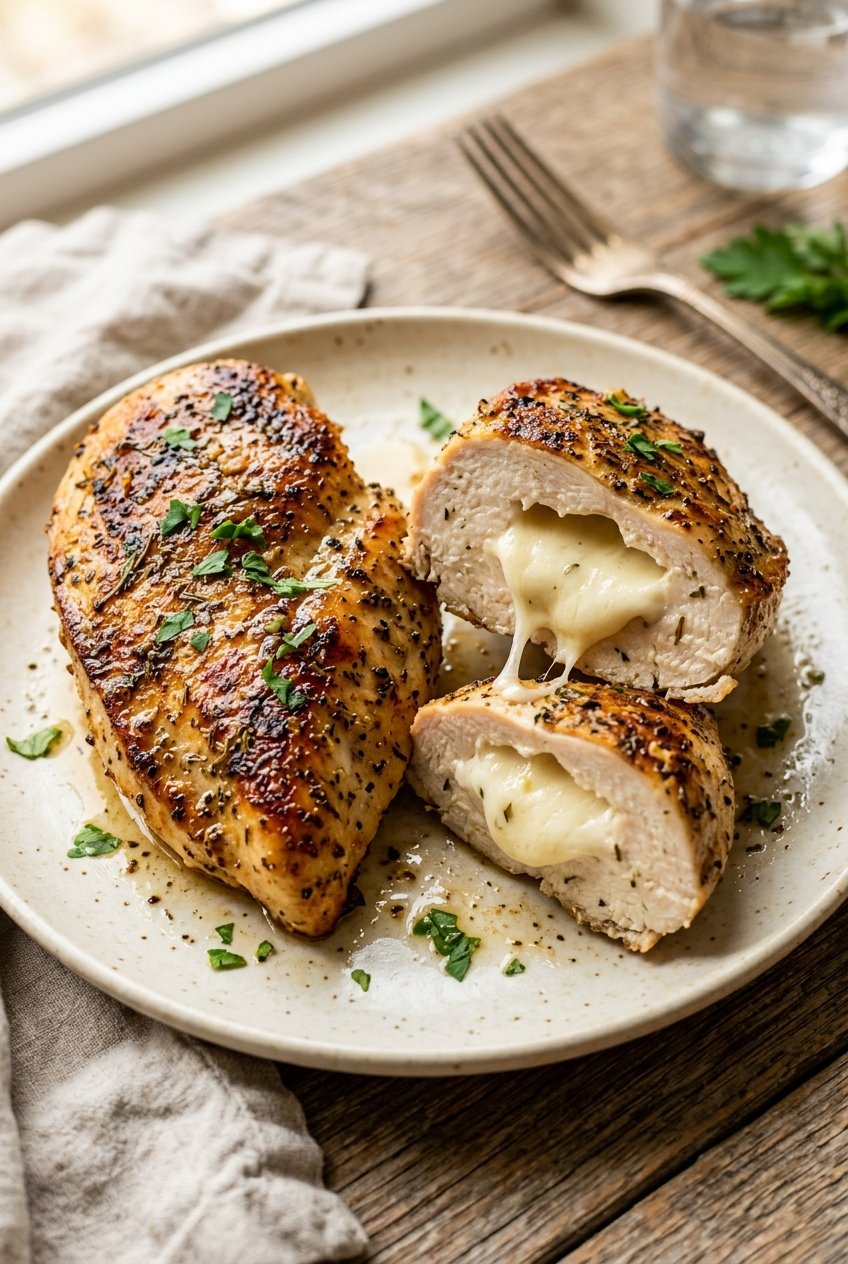
- Remove the toothpicks and slice one breast diagonally through the center to reveal the molten mozzarella filling. Finish with chopped parsley or a few small basil leaves.
