
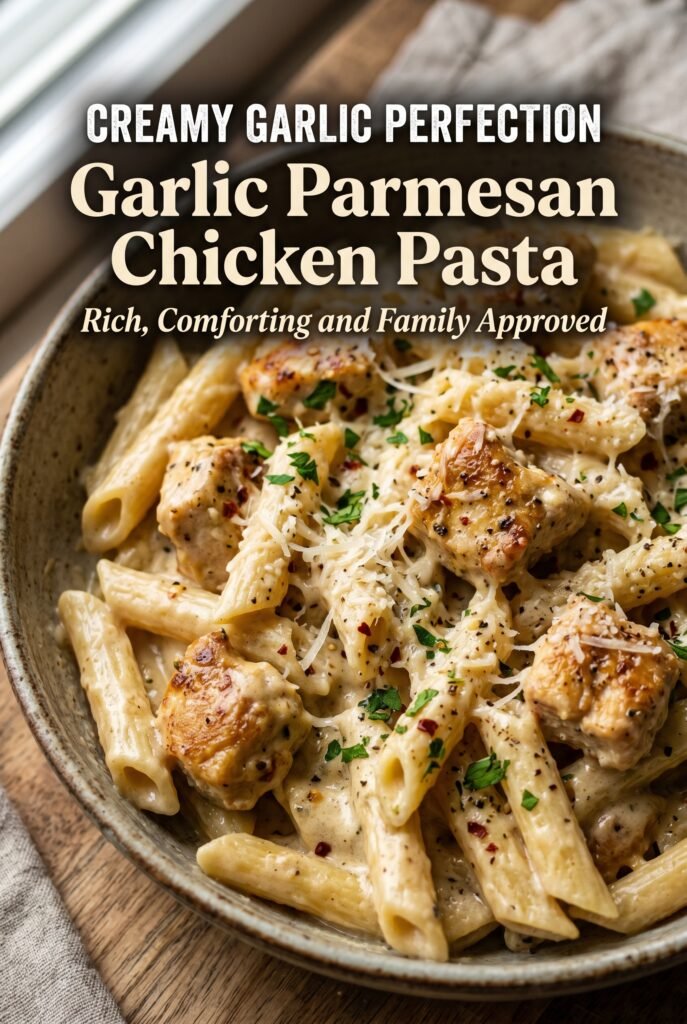
Garlic Parmesan Chicken Pasta
Creamy garlic Parmesan chicken pasta earns a permanent place in the dinner rotation because it lands in that sweet spot between comforting and practical. The sauce clings to every ridge…
Tip: save now, read later.
Creamy garlic Parmesan chicken pasta earns a permanent place in the dinner rotation because it lands in that sweet spot between comforting and practical. The sauce clings to every ridge of the penne, the chicken stays tender, and the whole pan tastes like something you’d get at a good neighborhood restaurant without needing a separate sauce pan or a long ingredient list.
What makes this version work is restraint. The chicken is seasoned before it ever hits the skillet, so it has flavor on its own instead of depending on the sauce to do all the work. Then the garlic gets just a short turn in butter before the cream goes in, which keeps it mellow and fragrant instead of sharp or bitter. Freshly grated Parmesan matters here because pre-shredded cheese often brings anti-caking agents that can turn the sauce grainy.
Below, I’ve laid out the small details that keep the sauce smooth and the pasta properly coated, plus a few swaps for when you need to work with what’s already in the kitchen. The difference between decent and really good here is mostly timing and heat control.
The sauce stayed silky and never turned grainy, and the chicken stayed juicy even after tossing everything together. I used the red pepper flakes and it gave the pasta just enough heat without overpowering the garlic.
Keep this creamy garlic Parmesan chicken pasta close for nights when you want a rich, one-pan dinner that coats the pasta beautifully.
The Reason the Sauce Stays Smooth Instead of Turning Grainy
The biggest failure point in garlic Parmesan pasta is heat. If the cream is boiled hard or the cheese goes into a pan that’s too hot, the sauce can separate into a greasy mess or turn sandy from the cheese. This version stays smooth because the garlic is briefly bloomed first, the cream is brought up gently, and the Parmesan goes in after the pan has cooled just enough to protect it.
The other thing that matters is the order. The chicken gets cooked and removed before the sauce starts, which leaves behind browned bits that deepen the flavor. Those bits dissolve into the cream and give the whole dish more body than a sauce built from scratch in a clean pan.
- Chicken breasts — Cube them evenly so they cook at the same pace. Larger pieces can stay juicy, but mixed sizes leave you with dry bites and underdone ones in the same skillet.
- Fresh garlic — This is the backbone of the sauce, and fresh cloves beat jarred garlic here. Jarred garlic can taste flat after it simmers in cream.
- Heavy cream — This is what gives the sauce its silkiness and stability. Half-and-half works in a pinch, but the sauce will be thinner and a little less forgiving when you add the cheese.
- Freshly grated Parmesan — Grate it yourself if you can. The pre-grated kind often has starches that keep it from melting cleanly.
What Each Ingredient Is Doing in the Pan
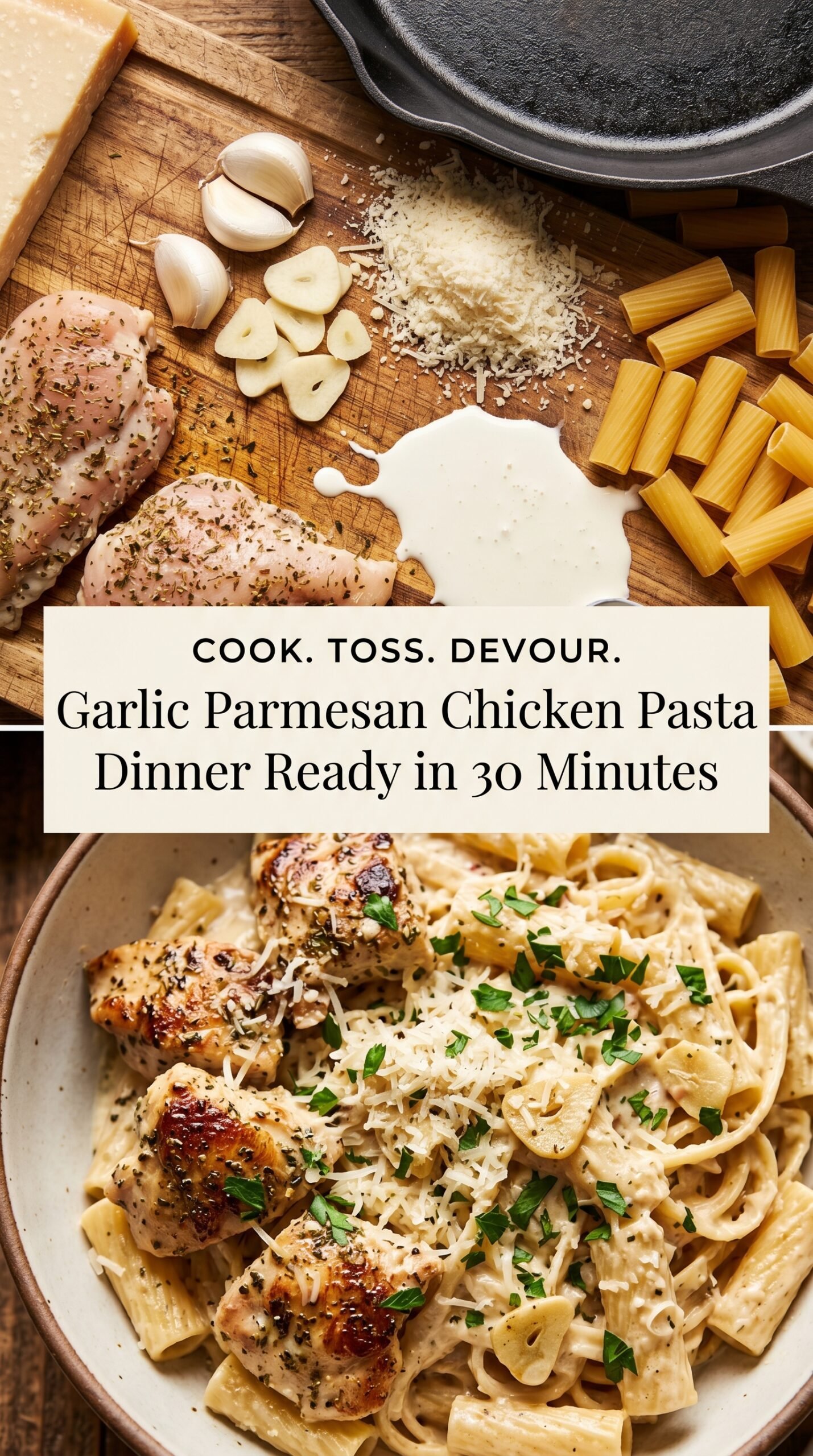
The pasta choice matters more than people think. Penne holds onto the sauce in the ridges and catches little bits of chicken and Parmesan in every bite. If you swap in spaghetti or linguine, the sauce still works, but you lose some of that cling that makes the dish feel so cohesive.
The olive oil and butter each have a job. The oil helps the chicken brown without scorching, and the butter gives the sauce a rounder, richer finish once the garlic goes in. If you use only butter, it can brown before the chicken gets enough color; if you use only oil, the sauce tastes a little flatter.
- Italian seasoning — It gives the chicken and sauce a little herb support without turning the dish into something crowded. If your blend is heavy on oregano, use a touch less so it doesn’t push the garlic out of balance.
- Red pepper flakes — Optional, but a small pinch wakes up the cream and keeps the dish from tasting one-note. Skip them for kids or add more if you want a little heat at the end.
- Parsley — This is more than garnish. It cuts through the richness and gives the finished plate a fresh edge right before serving.
The 20 Minutes That Matter Most
Cooking the Pasta First
Cook the pasta until it’s just al dente, then drain it while it still has a little bite. It will spend a few more minutes in the sauce, and if you cook it all the way through at the start, it can go soft by the time dinner hits the table. Save a small splash of pasta water if you want extra insurance for loosening the sauce later.
Browning the Chicken
Heat the oil until it shimmers, then add the chicken in a single layer. If the skillet is crowded, the chicken steams before it browns and you lose the flavor that makes the final dish taste developed. Let the pieces sit long enough to get color before stirring, then cook until the centers are no longer pink and the surface looks lightly golden.
Building the Garlic Cream Sauce
Use the same skillet. That’s where the flavor is. Melt the butter, stir in the garlic for about 30 seconds, and stop as soon as it smells fragrant; if it browns, the sauce takes on a bitter edge that can’t be fixed later. Add the cream and seasoning, let it simmer gently, then whisk in the Parmesan off the heat or over very low heat until the sauce turns glossy and smooth.
Finishing the Pan
Return the chicken and pasta to the skillet and toss until every piece is coated. If the sauce looks too tight, loosen it with a splash of pasta water or a little extra cream. The finished sauce should cling to the noodles in a thick, even layer rather than puddling at the bottom of the pan.
Three Ways to Make This Work With What You Have
For a gluten-free dinner
Use a sturdy gluten-free penne or rotini and cook it just shy of done so it doesn’t break apart when tossed with the sauce. The texture will be a little softer than wheat pasta, but the sauce still clings well if you stop cooking the noodles before they get mushy.
For a lighter sauce
Swap part of the heavy cream for whole milk or half-and-half, but keep at least some cream in the pan or the sauce loses its body. You’ll get a thinner finish and a little less richness, which works if you want the garlic and Parmesan to taste sharper.
For a vegetable-heavy version
Stir in sautéed spinach, steamed broccoli florets, or roasted mushrooms at the end. Add them after the sauce is finished so they warm through without watering it down, and keep in mind that mushrooms add an earthier note while spinach mostly disappears into the cream.
For leftovers that reheat well
Store the pasta with a small splash of cream or milk so the sauce doesn’t tighten into a paste in the fridge. The dish keeps its best texture for about 3 days, freezes poorly because cream sauces can separate, and reheats best over low heat on the stove with a spoonful of liquid stirred in as it warms.
Answers to the Questions Worth Asking
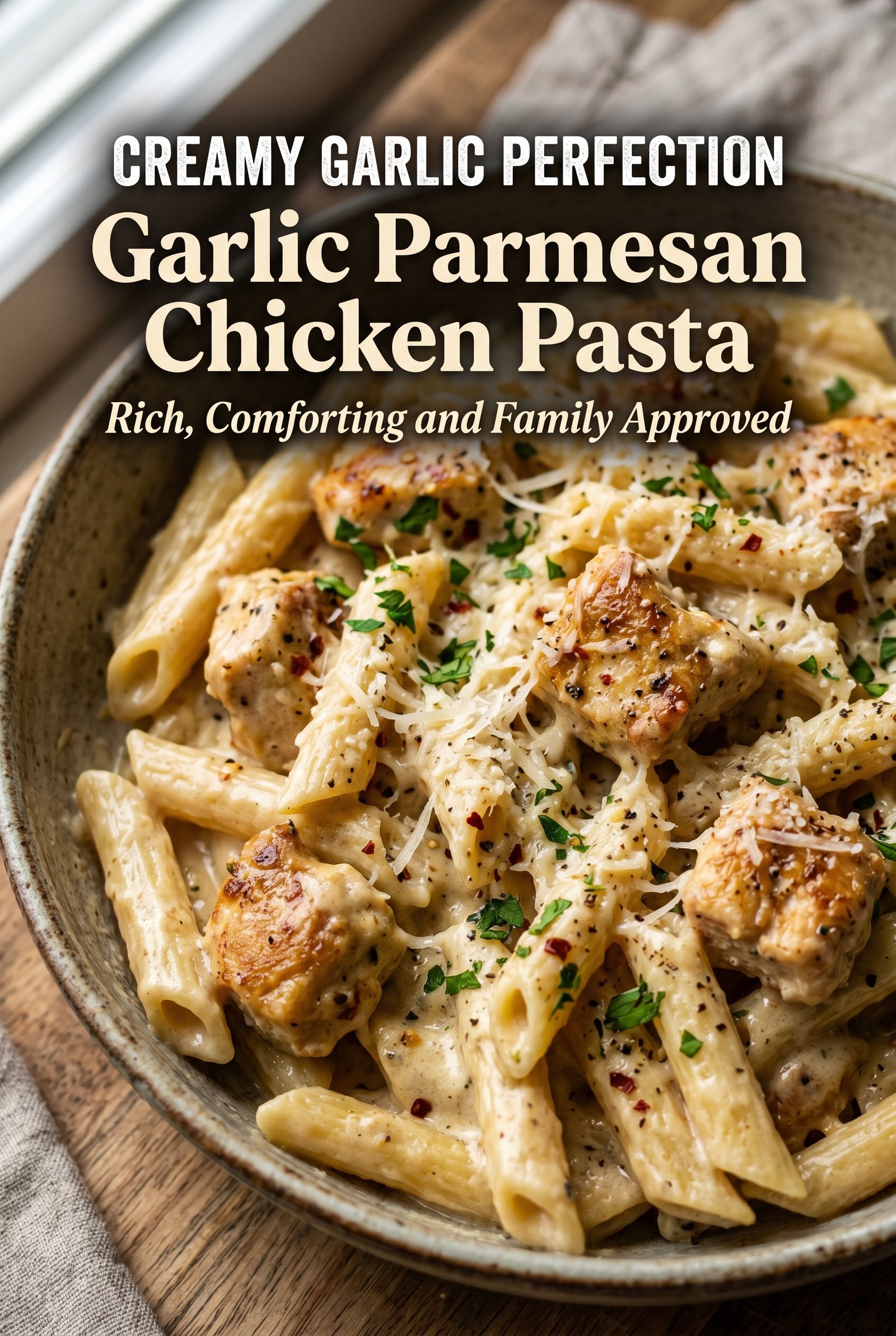
Garlic Parmesan Chicken Pasta
Ingredients
Equipment
Method
- Cook penne pasta according to package directions until al dente, stirring occasionally to prevent sticking.
- Drain the pasta and set aside while you cook the chicken and sauce.
- Season the cubed chicken with Italian seasoning, garlic powder, salt, and black pepper.
- Heat olive oil in a large skillet over medium-high heat until shimmering.
- Cook the chicken for 6–8 minutes, stirring occasionally, until golden and cooked through.
- Remove the chicken from the skillet and set aside.
- Melt butter in the same skillet over medium heat.
- Add the minced garlic and cook for 30 seconds until fragrant.
- Stir in heavy cream and Italian seasoning.
- Simmer for 3–4 minutes, stirring, until slightly thickened.
- Whisk in Parmesan cheese until smooth, then season with salt and pepper.
- Return the chicken to the skillet and warm it in the sauce for 1–2 minutes.
- Add the cooked pasta and toss until fully coated and creamy.
- Garnish with chopped fresh parsley and extra Parmesan cheese before serving.
